How to Manage Carbon Steel Price Volatility in Procurement Contracts
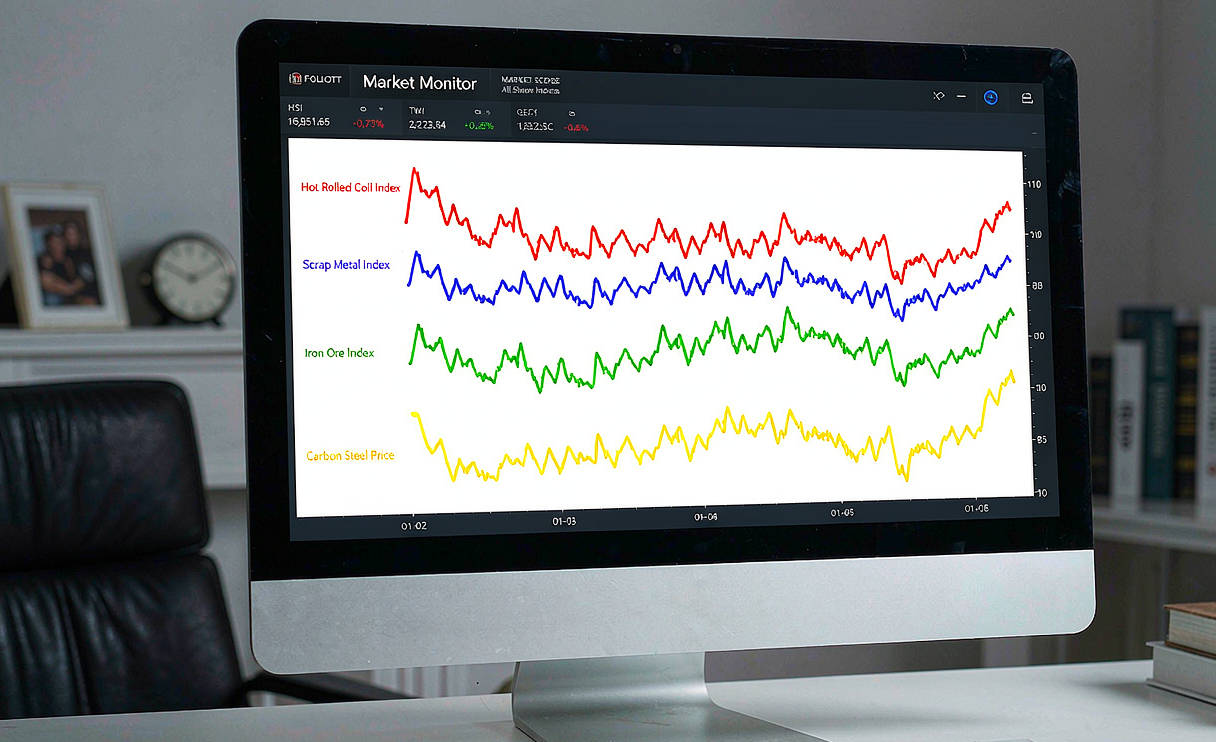
Carbon steel prices move daily. Raw-material costs for iron ore, scrap, coking coal and ferroalloys, plus energy, freight and exchange rates, can shift a quotation by 5–10% in a matter of weeks. For buyers who sign annual contracts or place large project orders, price volatility is one of the biggest sourcing risks. This guide explains practical contract clauses and procurement strategies that protect both buyer and seller while keeping supply stable.
We cover index-based pricing, price-adjustment clauses, hedging tools, flexible delivery schedules, safety stock and payment terms. The goal is to give procurement teams a playbook for negotiating carbon steel contracts that are fair, enforceable and resilient to market swings.
1. Why Carbon Steel Prices Are So Volatile
Carbon steel is a commodity product with a transparent global market. Several factors drive short-term price movement:
- Iron ore and scrap — together these make up 50–70% of steel production cost.
- Coking coal and energy — blast-furnace and electric-arc-furnace operations are energy-intensive.
- Freight and logistics — container and bulk-shipping rates affect landed cost, especially for importers.
- Exchange rates — most global steel is quoted in USD, so currency swings change local-currency cost.
- Trade policy — tariffs, quotas and anti-dumping duties can alter regional supply and pricing overnight.
- Seasonal demand — construction and infrastructure demand peaks in spring and autumn in many markets.
2. Index-Based Pricing Clauses
An index-based clause ties the contract price to a published steel price index, such as Platts, CRU, MEPS or a regional benchmark like Myspic in China. The price is fixed at the time of order or shipment based on the average index over a defined window, for example the average of the previous 30 days.
Example wording:
“The base price shall be adjusted by the percentage change in the [Platts Hot-Rolled Coil Index] between the contract date and the bill-of-lading date, capped at +/- 8% of the original contract value.”
Caps and floors are essential. Without them, a spike in raw-material costs could make the contract uneconomic for the seller, while a crash could hurt the buyer. A typical collar is +/- 5% to 10%.
3. Price-Adjustment Formulas
For long-term contracts, buyers and sellers often agree a formula that adjusts the unit price based on changes in raw-material costs. A simplified formula might look like this:
New Price = Base Price × (a × IO/IO₀ + b × SC/SC₀ + c × FE/FE₀)
Where IO is the current iron ore index, SC is the scrap or coking coal index, FE is the ferroalloy or energy component, and a + b + c = 1. The zero-subscript values are the base indices at contract date. This approach is common in automotive and appliance supply agreements.

4. Fixed-Price vs. Flexible-Delivery Contracts
A fixed-price contract gives budget certainty but transfers all price risk to the supplier. Suppliers will quote a risk premium, making the initial price higher. A flexible-delivery contract lets the buyer call off quantities within a window at prices updated monthly or quarterly. This reduces risk premiums and can lower average cost.
| Contract type | Best for | Buyer risk | Seller risk |
|---|---|---|---|
| Fixed price, firm delivery | Short-term projects, budget certainty | Low | High |
| Index-linked, fixed volume | Annual programs, fair cost pass-through | Medium | Medium |
| Flexible call-off, index price | Uncertain demand, volatile markets | Medium | Low |
| Spot + framework | Project spikes, opportunistic buying | High | Low |
5. Hedging and Financial Instruments
Large buyers can hedge steel price exposure using exchange-traded or over-the-counter instruments. The London Metal Exchange offers steel rebar and HRC futures; regional exchanges in China and the United States offer hot-rolled coil contracts. Hedging is not practical for every buyer, but for companies that consume thousands of tonnes per year it can smooth earnings and support fixed-price customer contracts.
6. Payment Terms and Risk Sharing
Payment terms affect how price risk is shared. Common structures include:
- 30% TT deposit, 70% before shipment — transfers price risk to the buyer once the deposit is paid.
- Letter of credit at sight — gives the seller payment security while the buyer pays after documents are presented.
- Open account 30/60/90 days — favors the buyer but is usually reserved for established relationships.
- Escrow or third-party inspection payment — splits risk and is useful for first orders.
For volatile periods, consider splitting a large order into multiple smaller shipments. This reduces exposure to a single price point and lets you average the market.
7. Safety Stock and Demand Planning
Carrying 4 – 8 weeks of safety stock for standard grades can buffer short-term price spikes and delivery delays. The holding cost must be weighed against the cost of production stoppages or emergency spot purchases. For customized dimensions or specialized grades, safety stock is harder because the material is not easily resold.
FAQ
Should I fix prices for a full year?
Only if your supplier is willing and you are prepared to pay a risk premium. Most long-term contracts use index-linked or formula-based pricing with caps and floors.
Which steel price index should I use?
Choose an index that matches your product form and region. Platts and CRU are widely used globally; Myspic and Shanghai SteelHome are common for China-origin material. Define the exact index name and averaging period in the contract.
How often should prices be reviewed?
Monthly or quarterly reviews are typical for active contracts. For very volatile markets, some buyers negotiate weekly reviews with limited adjustment bands.
Can Huaxia Steel offer fixed-price contracts?
Yes, for standard grades and sizes we can quote fixed-price contracts with defined delivery windows. For long-term or large-volume agreements we also offer index-linked pricing to share market risk fairly.
What should I do if a supplier refuses any price-adjustment clause?
Be cautious. A supplier that absorbs unlimited price risk may cut corners, delay shipment or become financially stressed. A balanced clause protects both parties and the relationship.
Protect Your Carbon Steel Budget
Need help structuring a fair, long-term carbon steel supply agreement? Our sales team can propose fixed-price, index-linked or flexible call-off terms based on your forecast and risk appetite. Contact Huaxia Steel for a contract discussion.
8. Regional Price Indices to Know
Different regions use different benchmark prices. Buyers should reference an index that reflects the origin of the steel they purchase. Using the wrong index can create disputes when the formula is triggered.
| Index | Publisher | Region / Product |
|---|---|---|
| Platts HRC | S&P Global | Global hot-rolled coil |
| CRU HRC | CRU Group | Global steel sheet |
| MEPS | MEPS International | Regional carbon steel prices |
| Myspic | Mysteel | China steel composite index |
| SteelHome | SteelHome | China domestic steel prices |
9. Contract Negotiation Tips
Start by understanding your own cost sensitivity and the supplier’s cost structure. A supplier with long-term raw-material contracts may offer fixed prices more readily than one buying on the spot market. Negotiate the trigger thresholds, averaging period and dispute-resolution mechanism before signing. Consider splitting the order into tranches to reduce timing risk.
- Cap adjustments at +/- 5% to 10% per quarter.
- Use a 30- or 60-day moving average to smooth daily volatility.
- Define the exact index name, publication and issue date.
- Set a clear dispute-resolution process with a third-party referee.
- Include force majeure and currency fluctuation clauses.
10. Risk Management Framework
A practical framework has four layers: eliminate risk where possible through standardization, reduce risk through index clauses and flexible volumes, transfer risk via hedging or insurance, and accept residual risk within a defined budget. Document the risk appetite in the procurement policy and review it quarterly.
11. Example: How a Price Cap Saved a Project
A mechanical contractor signed an index-linked contract for 500 tonnes of S275JR plate with a 7% quarterly cap. When iron ore prices surged 18% over three months, the contract price rose only 7%, protecting the project budget. The supplier absorbed part of the spike but retained the order, preserving the relationship. Without the cap, the contractor would have faced a six-figure cost overrun.