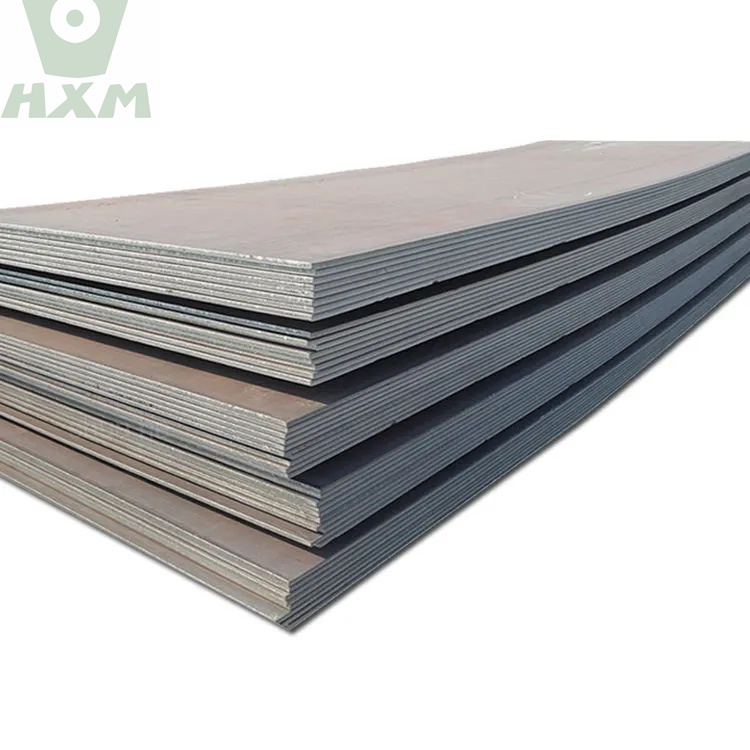
ASTM A572 vs A36 Carbon Steel: 8 Key Differences Every Importer Must Know

ASTM A36 and ASTM A572 are the two most widely specified structural carbon steels in North American and international construction. Both appear on mill catalogs, both are stocked by Chinese exporters, and both generate thousands of procurement inquiries every month.
But they are not interchangeable. Understanding the 8 key differences between A572 and A36 — from yield strength to Chinese mill availability — will help you specify the right grade, avoid overpaying, and prevent costly substitution errors on your next import order.

Difference 1: Yield Strength — A572 Delivers 50 ksi vs. A36 at 36 ksi
The single most important distinction is minimum yield strength:
| Property | ASTM A36 | ASTM A572 Gr. 50 |
|---|---|---|
| Min. Yield Strength | 36 ksi (250 MPa) | 50 ksi (345 MPa) |
| Min. Tensile Strength | 58 ksi (400 MPa) | 65 ksi (450 MPa) |
| Elongation (200 mm) | 20% | 18% |
| Elongation (50 mm) | 23% | 21% |
A572 Grade 50 offers **39% higher yield strength** than A36. This means a structural member designed in A572 can be lighter — saving 15–25% on material weight for equivalent load capacity.
**Sourcing implication:** If your engineering spec calls for A572 Gr. 50, substituting A36 will reduce load capacity and may violate building code requirements. Always verify the grade on the MTC before accepting shipment.

Difference 2: Chemical Composition — Carbon and Manganese Levels
| Element | A36 (max %) | A572 Gr. 50 (max %) |
|---|---|---|
| C | 0.26 | 0.23 |
| Mn | — | 1.35 |
| P | 0.04 | 0.04 |
| S | 0.05 | 0.05 |
| Si | 0.40 | 0.40 |
| V, Nb, N | — | Per Grade spec |
A572 uses controlled micro-alloying (vanadium, columbium/nitrogen) to achieve higher strength at lower carbon content. The lower carbon (0.23% vs. 0.26%) improves weldability, while manganese (up to 1.35%) contributes to strength through solid-solution hardening.
**Buyer note:** Chinese mills producing Q345B (the closest domestic equivalent to A572) naturally meet the manganese requirement. When sourcing A572, confirm the mill includes V/Nb micro-alloying on the MTC — some domestic Q345 producers skip these elements.
Difference 3: Weldability — Both Are Excellent, but Preheat Rules Differ
Both A36 and A572 are classified as “weldable” under AWS D1.1. However, the preheat requirements differ for thicker sections:
| Thickness (mm) | A36 Preheat | A572 Gr. 50 Preheat |
|---|---|---|
| ≤ 19 | None | None |
| 19–38 | None | 50 °C (120 °F) |
| 38–64 | 50 °C (120 °F) | 100 °C (210 °F) |
| > 64 | 100 °C (210 °F) | 150 °C (300 °F) |
A572 requires higher preheat on thick sections because its higher carbon equivalent (CE ≈ 0.42 vs. A36 ≈ 0.34) increases the risk of hydrogen-induced cracking.
**Practical tip:** If your fabricator plans to weld A572 sections above 38 mm without preheat, flag this as a quality risk. Preheat compliance should be in your fabrication contract.
Difference 4: Grade Variants — A572 Has 6 Grades, A36 Has Only One
ASTM A36 is a single-grade specification. ASTM A572 offers six grades:
| Grade | Yield (ksi) | Tensile (ksi) | Common Application |
|---|---|---|---|
| Gr. 42 | 42 | 60 | Light structural, bridges |
| Gr. 50 | 50 | 65 | Most popular — general structural |
| Gr. 55 | 55 | 70 | Higher-load beams |
| Gr. 60 | 60 | 75 | Heavy columns, offshore |
| Gr. 65 | 65 | 80 | Special high-strength members |
**Import sourcing reality:** Chinese mills most commonly produce A572 Gr. 50 (equivalent to Q345B). Grades 55, 60, and 65 are less available from stock and typically require mill rolling with 3–6 week lead times. If you need Gr. 60 or 65, negotiate lead time upfront.
Difference 5: Price Premium — A572 Costs 5–12% More Than A36
Based on 2025–2026 export FOB quotes from major Chinese ports (Shanghai, Tianjin):
| Product | A36 FOB ($/ton) | A572 Gr. 50 FOB ($/ton) | Premium |
|---|---|---|---|
| Plate 6–20 mm | $580–640 | $620–700 | +6–9% |
| Plate 20–60 mm | $640–720 | $700–800 | +8–12% |
| Round bar 25–80 mm | $620–680 | $670–750 | +7–10% |
The premium reflects higher alloying costs (Mn, V/Nb) and lower mill availability. For large orders (>200 tons), the premium narrows because mills can schedule dedicated rolling campaigns.
**Cost optimization:** If your design allows either grade, calculate whether the 15–25% weight savings from A572 offset the 5–12% price premium. For most structural projects, A572 is cost-neutral or cheaper per unit load capacity.
Difference 6: Chinese Mill Availability — A36/Q235 Is Everywhere, A572/Q345 Is Concentrated
| Factor | A36 (Q235 equivalent) | A572 Gr. 50 (Q345 equivalent) |
|---|---|---|
| Number of mills producing | 200+ | 80–100 |
| Stock availability | Very high (most traders) | Moderate (specialized traders) |
| Typical MOQ for stock | 5 tons | 10–20 tons |
| Mill rolling MOQ | 50 tons | 100+ tons |
| Lead time (stock) | 7–10 days | 10–15 days |
A36/Q235 is the default structural steel in China. It is available from virtually every mill and trader. A572/Q345 requires more specialized sourcing — best done through exporters with direct mill relationships.
**Recommendation:** When sourcing A572 from China, work with an exporter who can provide mill-direct pricing and MTC traceability. Trading companies that merely resell Q345 stock often cannot guarantee A572 chemical compliance.
Difference 7: Applicable Standards and Cross-Reference Table
| Standard | A36 Equivalent | A572 Gr. 50 Equivalent |
|---|---|---|
| ASTM | A36 | A572 Gr. 50 |
| GB (China) | Q235B | Q345B |
| JIS (Japan) | SS400 | SM490 |
| EN (Europe) | S235JR | S355JR |
| ISO | E235B | E355B |
**Critical warning:** Q345B is *approximately* equivalent to A572 Gr. 50, but it does not guarantee the same minimum yield in all orientations. Chinese GB standards allow a wider property range. Always verify that the MTC reports yield values meeting ASTM A572 minimums, not just Q345B domestic minimums.
Difference 8: Typical Procurement Errors — Substitution Risks
| Error | Risk Level | Consequence | Prevention |
|---|---|---|---|
| Accepting A36 when spec requires A572 | **HIGH** | Structural under-capacity, code violation | Check MTC yield values before acceptance |
| Using Q235B in place of A572 | **HIGH** | 36 ksi vs. 50 ksi yield — dangerous underspec | Require ASTM-grade MTC, not GB-only |
| Ordering A572 Gr. 50 but receiving Gr. 42 | **MODERATE** | 42 ksi yield — may not meet design | Specify exact grade in PO and verify on MTC |
| Assuming all “Q345” meets A572 Gr. 50 | **MODERATE** | Property scatter in Q345B | Request ASTM compliance letter from mill |
Sourcing Checklist: A572 vs A36 Import Order
Before placing your next structural steel order:
- ✅ Confirm the required grade (A36 or A572 Gr. 50) with your engineer
- ✅ Specify ASTM standard, not just Chinese GB, on the purchase order
- ✅ Request MTC showing both yield and tensile values per ASTM minima
- ✅ If ordering A572, confirm the mill can produce Gr. 50 (not just Q345B)
- ✅ Negotiate lead time — A572 stock is less available than A36
- ✅ Include a substitution clause: “No grade substitution without written approval”
- ✅ Budget 5–12% price premium for A572 over A36 at comparable thickness
FAQ
**Q: Can I substitute A572 Gr. 50 for A36 in a design that only requires 36 ksi?**
A: Yes — A572 exceeds all A36 minimum requirements. However, it costs more and may require higher preheat for welding thick sections. If cost is the primary driver and the design only needs 36 ksi, A36 is the economical choice.
**Q: Is Q345B the exact equivalent of A572 Gr. 50?**
A: No. Q345B has a nominal yield of 345 MPa (50 ksi), but GB/T 1591 allows wider tolerances than ASTM A572. Some Q345B batches may test below 345 MPa in certain orientations. For ASTM-compliant projects, require the mill to certify A572 compliance on the MTC.
**Q: Which grade is better for welded structural connections?**
A: A36 is easier to weld on thick sections (lower preheat requirements). A572 Gr. 50 is weldable but needs preheat above 19 mm thickness. Both are acceptable under AWS D1.1 with proper procedures.
**Q: Does A572 cost more to ship from China than A36?**
A: FOB price differs (5–12% premium for A572), but freight cost per ton is identical for the same product shape. Since A572 allows lighter designs, total shipping cost may actually be lower for equivalent structural capacity.
**Q: How do I verify the grade on arrival?**
A: Cross-check three things: (1) MTC grade designation, (2) yield strength value vs. ASTM minimum, (3) chemical composition vs. ASTM limits. If any field is ambiguous, request a third-party lab test before accepting delivery.
Get the Right Grade from Huaxia Steel
Whether your project requires the economy of A36 or the higher strength of A572 Gr. 50, **Huaxia Steel** supplies both grades with full ASTM-compliant MTCs, third-party inspection, and flexible MOQs from mill-direct sources.
**[Contact us for a structural steel quote →](https://www.huaxia-steel.com/contact/)** — specify A36 or A572 Gr. 50, thickness range, and quantity. We will confirm grade compliance, MTC availability, and FOB pricing within 24 hours.