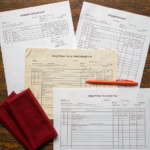
When you import carbon steel across international borders, the physical product is only half the shipment. The other half — the export documentation package — is what proves the steel meets your specification, what clears customs, and what protects you in case of dispute or rejection. Missing or incorrect documentation is one of the top three reasons carbon steel shipments get held at port, incur demurrage charges, or fail to meet the buyer’s letter of credit (LC) terms.
This guide covers every document in a standard carbon steel export documentation package: the mill test certificate (MTC), certificate of origin (COO), commercial invoice, packing list, bill of lading (B/L), insurance certificate, fumigation certificate, and any application-specific certifications. We will explain what each document contains, who issues it, and what to verify before your cargo leaves port.
Why Complete Export Documentation Matters for Steel Importers
Incomplete or non-compliant documentation creates a cascade of cost and delay problems:
Customs delays: Average demurrage charge is $150-400/day for a 40ft container; detention charges at inland yards add another $80-150/day.
LC discrepancies: Each LC discrepancy costs $80-300 in bank negotiation fees and risks non-payment if not cured within 5-10 banking days.
Tariff misclassification: Wrong HS code on the COO can cost 2-8% extra duty and may trigger anti-dumping or countervailing duty (AD/CVD) audits.
Project rejection: Missing MTC can lead the buyer’s QC team to reject the entire shipment on arrival, returning the steel at the buyer’s cost.
Insurance disputes: Without a marine insurance certificate and the underlying MTC, the cargo insurer may deny claims for transit damage or off-spec material.
A well-prepared documentation package takes 30 minutes at the mill, 1-2 days at the freight forwarder, and 1-3 days at the issuing bank. Investing that time correctly at origin saves weeks of delay and thousands of dollars at destination.
Document 1: Mill Test Certificate (MTC / MTC EN 10204 3.1)
The Mill Test Certificate (MTC) is the single most important document in a steel shipment. It certifies that the specific heat (batch) of steel from which your material was produced has been tested and meets the specified grade, chemical composition, and mechanical properties.
Per EN 10204, there are four types of inspection documents:
Type
Description
Issued By
Acceptance for Import
2.1
Works certificate — compliance to order, no test results
Manufacturer
Insufficient for most imports
2.2
Test report — non-specific test results from same product type
Manufacturer
Acceptable for non-critical applications
3.1
Specific test report — actual test results from the supplied batch
Mill independent of production (mill QC dept)
Standard for most international trade
3.2
Specific test report validated by independent third party
Mill + buyer’s inspector or classification society
Mill name, address, and authorized signature with stamp
Compliance statement: “Complies with [standard/specification]” with revision year
Buyer verification checklist for MTC:
Heat number on MTC matches the heat number stenciled/painted on the physical product
Quantity on MTC matches the actual delivered quantity (within ±2%)
All specified mechanical and chemical tests are present and meet specification
Standard revision is current (e.g., ASTM A36-19, not A36-08)
Mill is accredited to ISO 9001 and the issuing laboratory is accredited to ISO 17025
Document 2: Certificate of Origin (COO)
The Certificate of Origin is an official document declaring the country in which the goods were manufactured. It is required by most countries to determine import duty rates, eligibility for free trade agreements (FTAs), and compliance with anti-dumping or sanctions regimes.
Types of COO:
Non-preferential COO: Issued by the exporter’s local chamber of commerce. Used when no FTA applies and country of origin is required for general customs purposes.
Preferential COO (Form A, EUR1, RCEP, etc.): Issued under a specific FTA that grants reduced or zero duty if origin rules are met. The most common is the China-ASEAN FTA Form E for ASEAN imports, RCEP Form for Asia-Pacific, and EUR1 for EU imports.
What must be on the COO:
Exporter and consignee full details (name, address, contact)
Country of origin and country of destination
Detailed goods description (with HS code, quantity, unit value)
Means of transport and route (vessel name, B/L number, port of loading/discharge)
Authorized signature, stamp, and date from issuing authority
Critical detail for steel: The COO description must be specific — “Carbon steel plate, ASTM A36, hot rolled” — not generic. Customs officers at destination may challenge a generic description and require re-issuance, delaying clearance by 3-7 days.
Document 3: Commercial Invoice
The commercial invoice is the seller’s bill for the goods. It is the primary document used by customs to assess import duties and VAT/GST, and by the buyer’s bank to release payment under an LC.
Standard content:
Exporter and importer full details (name, address, tax ID, contact)
Invoice number and date
LC number (if applicable) and proforma invoice reference
Detailed product description (grade, size, quantity, unit price, total value)
Incoterms 2020 (FOB, CFR, CIF, EXW, etc.) with named port of loading/discharge
Currency of payment
Payment terms (T/T, LC, DP, DA, etc.)
Authorized signature and company stamp
Common LC discrepancy: The unit price on the commercial invoice must match the LC exactly. A 1-cent difference or different currency triggers an LC discrepancy and may delay payment by 7-10 days while the discrepancy is cured.
Document 4: Packing List
The packing list provides itemized detail on the physical packaging of the shipment — essential for customs inspection and for the buyer’s receiving team to verify the cargo against the invoice.
For carbon steel exports, the packing list must show:
Total number of packages (bundles, coils, plates on pallets, etc.)
Package number (e.g., Bundle 1/30, Coil 1/15)
Gross weight, net weight, and dimensions of each package
Quantity per package (e.g., 20 plates, 5 tons net per bundle)
Heat numbers and grade per package (or at least per major lot)
Container number and seal number (if containerized)
Total summary at the bottom (total packages, total weight, total measurements)
For containerized steel — most common for 20ft and 40ft container shipments — the packing list should also note the load plan: which bundles in which container, and the placement to optimize weight distribution and unloading sequence.
Document 5: Bill of Lading (B/L)
The Bill of Lading is the contract of carriage between the shipper and the ocean carrier. It serves three functions: (1) receipt of cargo by the carrier, (2) evidence of the contract of carriage, and (3) document of title — the holder of the B/L has the right to take possession of the cargo at destination.
Key fields on a steel export B/L:
Shipper (exporter), Consignee (importer), Notify party (usually the importer’s bank or agent)
Vessel name and voyage number
Port of loading and port of discharge
Marks and numbers (container number, seal number, package numbers)
Description of goods and total packages
Gross weight and measurement (CBM)
Freight terms (PREPAID or COLLECT)
Number of originals issued (typically 3 originals)
For LC shipments, the B/L must be:
“Clean” — no carrier-inserted notations of damage or shortage
“On Board” — vessel/voyage confirmed
“Shipped on Board” date within LC shipment validity
Issued in the full set of originals (typically 3/3)
Consigned exactly as the LC specifies (to order of issuing bank, etc.)
Document 6: Marine Insurance Certificate
If the Incoterm is CIF or CIP, the seller must provide a marine insurance certificate covering the cargo during transit. Standard coverage is Institute Cargo Clauses (C) which covers major casualties but not partial damage. For full “all-risks” coverage, Institute Cargo Clauses (A) is recommended, typically adding 0.2-0.4% of cargo value.
For LC shipments, the insurance certificate must:
Cover 110% of the CIF value (per UCP 600 Article 28)
Be in the same currency as the LC
Be issued by an insurer acceptable to the issuing bank
Cover the full transit from port of loading to port of discharge (and warehouse to warehouse if ICC A)
Wooden pallets, dunnage, and wooden crates used to package steel must be fumigated or heat-treated per ISPM 15 (International Standards for Phytosanitary Measures No. 15) to prevent the spread of wood-boring insects across borders. The proof is the fumigation certificate or the ISPM 15 mark stamped on the wood.
Most steel exports use steel-to-steel packaging (no wood), so fumigation is not required. However, plate and sheet often ship on wooden pallets or in wooden crates — those packages need ISPM 15 compliance, or customs will reject the entire container and require re-packaging at the importer’s cost ($1,500-4,000 per container).
Document 8: Application-Specific Certifications
Beyond the standard 7 documents above, some applications require additional certifications:
Application
Required Document
Issuing Body
Pressure vessel (ASME)
EN 10204 3.2 MTC + ASME U2/U3 form
Authorized Inspector (AI)
Offshore structural
EN 10204 3.2 + DNV/ABS/LR certification
Classification society
EU CE marking (EN 1090)
Declaration of Performance (DoP) + CE label
Notified Body (FPC certified mill)
US AISC fabrication
AISC fabrication certification, MTC
AISC + mill
Nuclear (ASME III)
NBBI NB Certificate, 3.2 MTC
National Board + mill
Bridge steel (AASHTO)
AASHTO M270 compliance, MTC
Mill with AISC cert
For most commodity carbon steel — A36 plate, A53 pipe, A500 structural tubing — the standard 7 documents are sufficient. For specialized applications, factor in 2-6 weeks of additional certification time and 1-3% additional cost.
1. What is the difference between an MTC and a certificate of conformance (C of C)?
An MTC (Mill Test Certificate) contains actual test results from the specific heat of steel — chemical composition, mechanical properties, and the test methods used. A Certificate of Conformance (C of C) is a generic statement that the material “conforms to” a specification without showing test results. For critical applications (pressure vessel, structural, marine), insist on the actual MTC 3.1, not a C of C. Some service centers issue C of C based on the mill MTC they have on file — verify that the heat number on the C of C matches a valid 3.1 MTC.
2. How do I verify that an MTC is genuine and not falsified?
Three verification methods: (1) Check the mill’s accreditation on the issuing laboratory’s scope of accreditation (accreditation body websites like ANAB, A2LA, UKAS, CNAS have searchable databases). (2) Email the mill’s quality department directly with the heat number and ask for verification — most large mills respond within 24 hours. (3) Check the chemical composition consistency: if the reported Mn/S ratio is < 10 or > 100 (impossible for a clean heat), the MTC is likely fabricated. Independent third-party inspection (SGS, Bureau Veritas, TÜV) on 10-20% of shipments is the gold standard for high-value cargo.
3. Can the COO be backdated or issued after the shipment has sailed?
No. The Certificate of Origin must be issued by the origin chamber of commerce before the goods are exported and must reference the actual export shipment date, vessel, and B/L number. Some countries allow retroactive issuance with a penalty fee, but most will not. For preferential COO (Form E, EUR1, Form A, etc.), the issuance rules are even stricter — typically within 3-12 months of the export date depending on the specific FTA. Late issuance will cause the buyer to lose the preferential duty rate (often 2-8% of CIF value).
4. What happens if the MTC shows a different heat number than the plate marking?
Stop the receiving process and segregate the affected material. This is a major non-conformance that may indicate either a documentation error by the mill, mixed-up shipments, or potential fraud. The buyer should immediately request the mill to re-issue a corrected MTC with the matching heat number, or provide written confirmation that the heat number was mis-stamped. If the mill cannot reconcile the discrepancy within 7 days, the buyer should commission an independent chemical analysis (spectrographic test, $50-150 per sample) on the disputed material. If the actual chemistry matches the MTC, the issue is just a paperwork error; if it does not, the material is misrepresented and the contract is breached.
5. How many sets of original documents do I need?
Standard international practice: 3 originals + 3-5 copies of the full document set. The originals are distributed as: 1 set for the buyer’s bank (LC negotiation), 1 set for the buyer’s customs broker at destination, 1 set for the buyer’s records. Copies are for the seller’s records, the freight forwarder, the consignee, and reserve copies if any are lost in transit. For LC shipments, the B/L must be issued in the full set of originals (typically 3/3) — partial sets cannot negotiate the LC.
Conclusion: Documentation as Part of Your Steel Procurement Process
A complete carbon steel export documentation package is not overhead — it is risk management. The mill test certificate protects you from off-spec material, the certificate of origin secures your preferential duty rate, the B/L gives you title to the cargo, and the insurance certificate protects against transit loss. Each document works together to ensure that what you ordered is what arrives, and that any problem is recoverable through insurance or LC recourse.
At Huaxia-Steel, every export shipment includes a complete documentation package: EN 10204 3.1 MTC, China Chamber of Commerce COO, signed commercial invoice, detailed packing list, telex-released B/L, and (for CIF shipments) marine insurance certificate. Our team pre-checks every document set before B/L release to ensure LC compliance. Request a quotation and we will provide a sample document set with our proforma invoice.
Working on a project that requires special certifications — CE marking, DNV, ASME, AISC fabrication, or a specific third-party inspection regime? Our team has supported projects in over 60 countries and can coordinate the full certification chain with mill and inspection bodies.
If you require further information about our metal sheet products or architectural projects, please don’t hesitate to leave your contact details and message here.
Our team of experts will respond within 24 hours to continue the discussion and provide you with any additional information you requires.