Carbon Steel Non-Destructive Testing (NDT): Ultrasonic, Magnetic Particle & Dye Penetrant Guide
When you import carbon steel for structural, pressure-equipment, or safety-critical use, you cannot afford hidden defects. A single subsurface crack in a weld or forging can lead to catastrophic failure. Non-destructive testing (NDT) lets you verify material integrity without damaging the part — which is exactly why it is written into most international steel standards.
This guide explains the three NDT methods most relevant to carbon steel buyers — Ultrasonic Testing (UT), Magnetic Particle Testing (MT), and Dye Penetrant Testing (PT) — how they work, what they detect, and when to specify each.
What Is NDT and Why It Matters for Buyers
NDT covers inspection techniques that leave the component fit for service. For carbon steel, the most common defects are:
- Internal: porosity, inclusions, lack of fusion, subsurface cracks (best found by UT).
- Surface-breaking: cracks, laps, seams, fold lines (best found by MT or PT).
Standards such as ASTM A578 (UT of plates), ASTM E709 (MT), and ASTM E165 (PT) define acceptance criteria. Your purchase order should reference the specific method and acceptance level.
1. Ultrasonic Testing (UT)
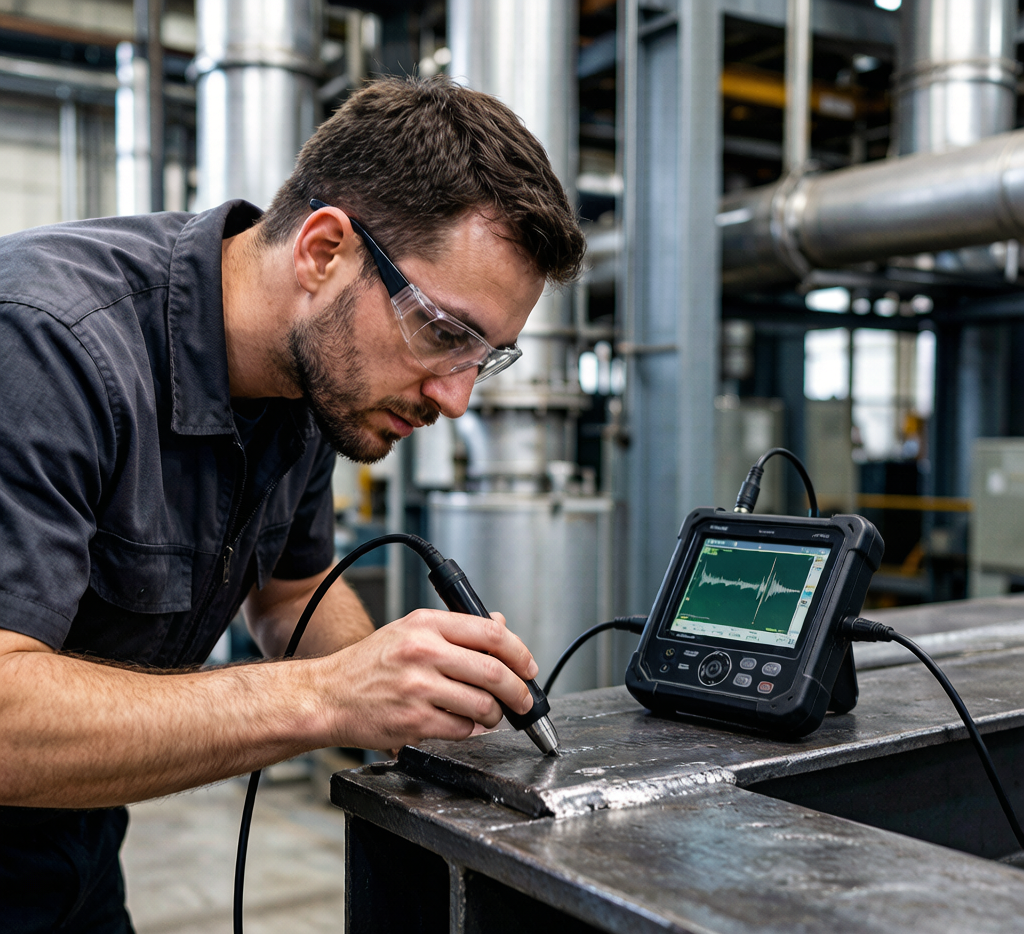
UT sends high-frequency sound waves (typically 1-5 MHz) into the steel via a transducer. Internal discontinuities reflect the waves back, and the inspector reads the echo on a screen to locate and size flaws.
What UT detects
- Internal laminations and inclusions in plates
- Lack of fusion and slag in welds
- Subsurface cracks and voids
- Wall thickness measurement (corrosion monitoring)
Strengths and limits
UT sees inside the material and provides depth information, but it requires a skilled operator, a clean couplant (gel), and works best on smooth, parallel surfaces. It cannot detect tight surface cracks as well as MT/PT.
| Parameter | Typical Value |
|---|---|
| Frequency | 1-5 MHz |
| Min detectable flaw | ~1-2 mm (depends on grain) |
| Standard | ASTM A578 / A435 (plate), AWS D1.1 (weld) |
2. Magnetic Particle Testing (MT)
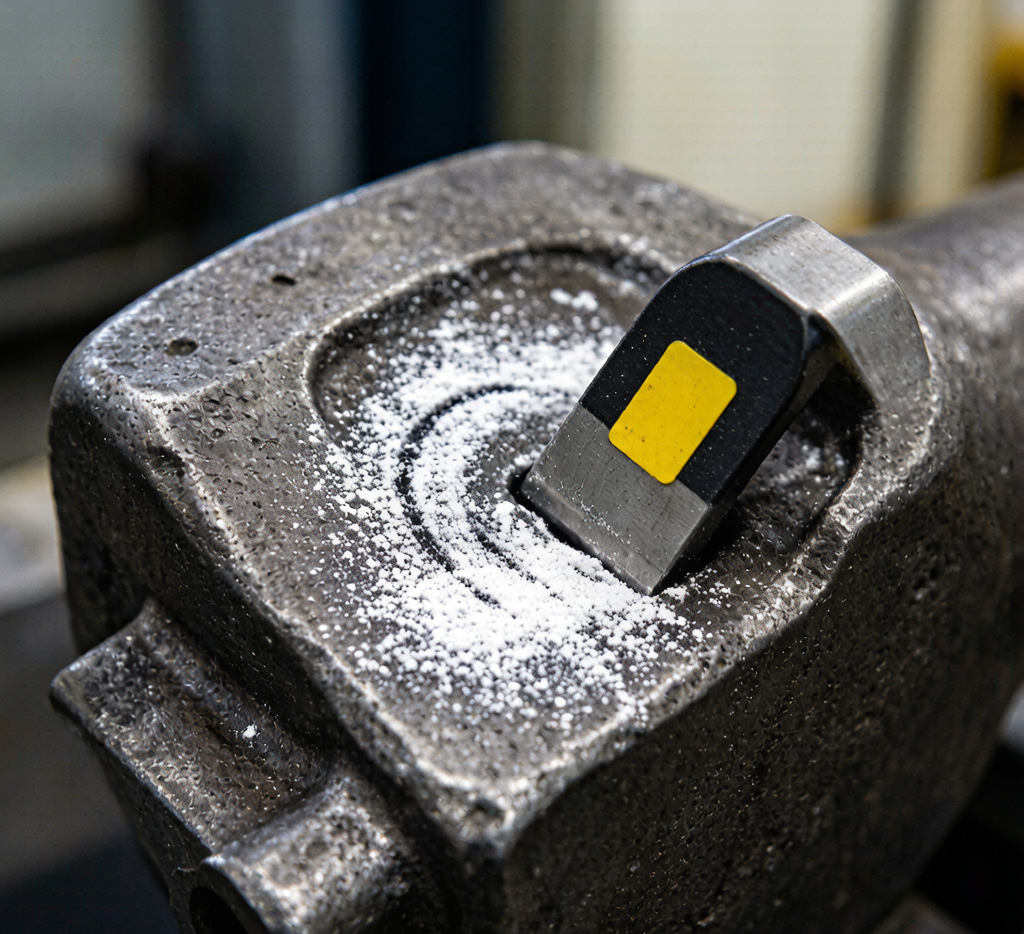
MT is used only on ferromagnetic materials — which includes all carbon and low-alloy steels. The part is magnetized, and fine iron particles (dry powder or wet fluorescent) are applied. Surface or near-surface defects disturb the magnetic field, drawing particles into a visible indication.
What MT detects
- Surface-breaking cracks (fatigue, grinding, heat-treat)
- Near-surface discontinuities (up to ~3 mm deep)
- Seams, laps, and quenching cracks on bars and forgings
Strengths and limits
MT is fast, inexpensive, and extremely sensitive to surface cracks. Its limitation: it only works on magnetic steel and cannot inspect non-ferrous materials or deep internal flaws.
3. Dye Penetrant Testing (PT)
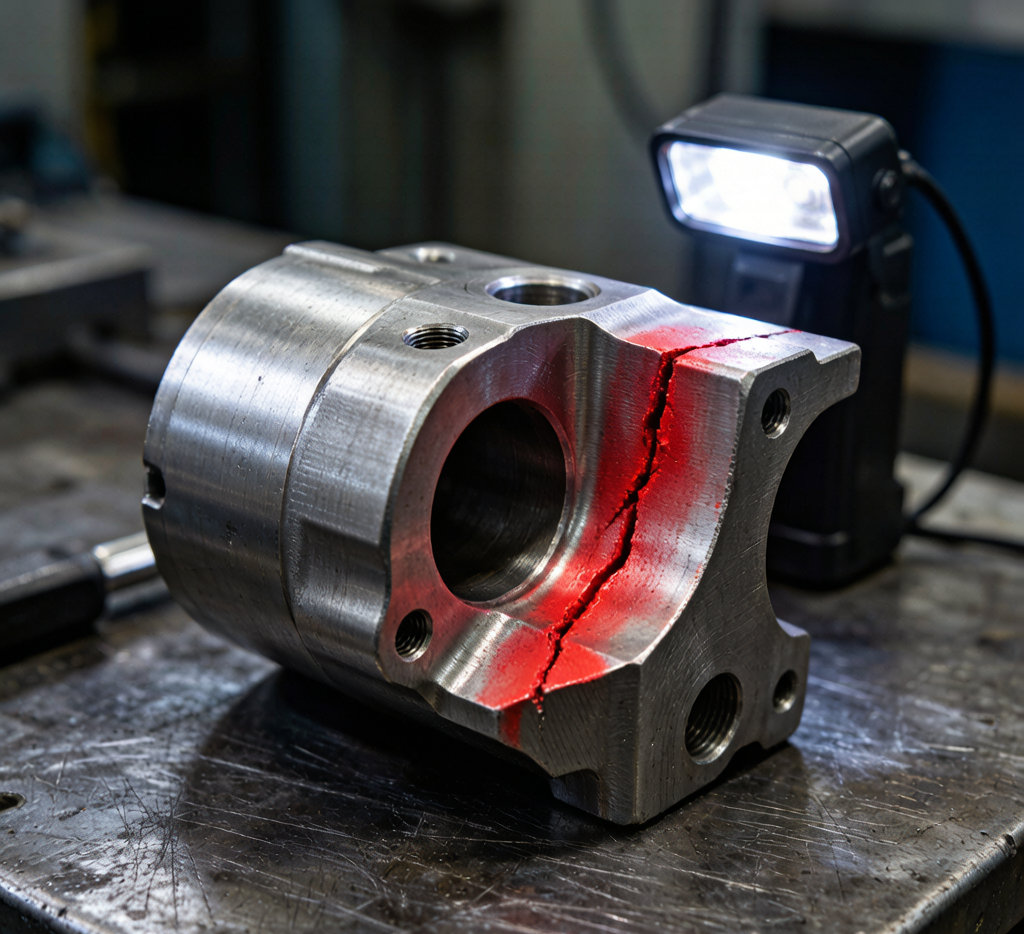
PT works on any non-porous material, including carbon steel, stainless steel, and aluminum. A colored (red) or fluorescent dye is drawn into surface-breaking defects by capillary action, then a developer pulls the dye back out to reveal the indication.
What PT detects
- Surface-breaking cracks, porosity, and seams
- Defects on non-magnetic materials where MT cannot be used
Strengths and limits
PT is cheap, portable, and material-agnostic, but it only finds surface defects and requires a clean, degreased surface. It will not reveal subsurface flaws that MT or UT would catch.
UT vs MT vs PT: How to Choose
| Method | Detects | Best for | Material |
|---|---|---|---|
| UT | Internal flaws | Plates, welds, thickness | Any |
| MT | Surface + near-surface | Bars, forgings, castings | Ferromagnetic only |
| PT | Surface only | Any smooth surface | Any non-porous |
Specifying NDT in Your Purchase Order
To avoid disputes, your PO should state the exact requirement, for example:
“Plates to be 100% ultrasonically tested per ASTM A578 Level B. All welds MT per ASTM E709, acceptance per ASME Section VIII.”
Frequently Asked Questions
Can NDT replace a mill test certificate?
No. The MTC verifies chemistry and mechanical properties; NDT verifies freedom from critical defects. Both are complementary and should appear together for critical parts.
Which method is cheapest?
PT and MT are the lowest-cost surface methods. UT is more expensive per item but is the only way to verify internal soundness.
NDT-Certified Carbon Steel from Huaxia-Steel
We support UT, MT, and PT inspection with third-party verification (SGS, BV, TUV) on request, and every critical shipment ships with full test documentation. Contact our team to specify the inspection level your project requires.