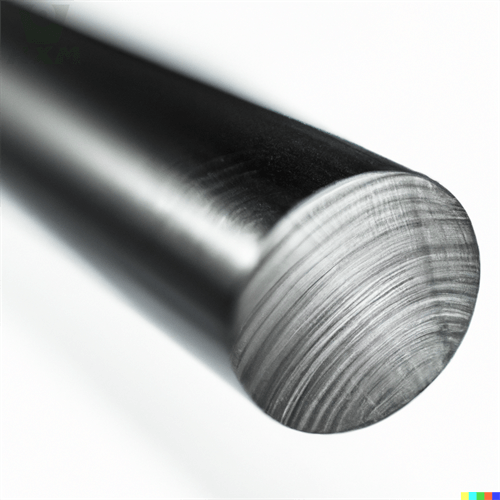
S50C carbon steel plate is a medium-high carbon steel (JIS G4051 standard) containing 0.47-0.53% carbon, offering excellent strength, wear resistance, and heat treatment response. It is widely used for machine components, tooling, die plates, shafts, gears, and structural parts requiring high hardness and tensile strength. Huaxia-Steel supplies S50C steel plate in thicknesses from 6mm to 200mm, in as-rolled, annealed, normalized, and quenched-and-tempered conditions.
Product Overview: S50C Steel Plate
S50C sits at the upper end of the medium-carbon steel range. With approximately 0.50% carbon, it offers a balance of strength and toughness that makes it suitable for both heat-treated and as-supplied applications. In the annealed condition, S50C is machinable with conventional tooling. After quenching and tempering, it achieves hardness levels of 28-55 HRC depending on tempering temperature, providing excellent wear resistance for tooling, die plates, and wear components.
| Property | Specification |
|---|---|
| Standard | JIS G4051 (Japan) — equivalent to AISI/SAE 1050, DIN C50, GB 50 |
| Carbon content | 0.47-0.53% |
| Thickness range | 6mm to 200mm (plate), up to 300mm available |
| Width | 1,000mm to 2,500mm (standard), up to 3,500mm available |
| Length | 2,000mm to 12,000mm (standard), custom available |
| Delivery condition | As-rolled, annealed, normalized, quenched and tempered |
Chemical Composition
| Element | S50C (JIS G4051) | AISI 1050 | C50 (DIN 17200) | 50 (GB/T 699) |
|---|---|---|---|---|
| Carbon (C) | 0.47-0.53 | 0.48-0.55 | 0.47-0.55 | 0.47-0.55 |
| Silicon (Si) | 0.15-0.35 | 0.15-0.35 | ≤0.40 | 0.17-0.37 |
| Manganese (Mn) | 0.60-0.90 | 0.60-0.90 | 0.60-0.90 | 0.50-0.80 |
| Phosphorus (P) | ≤0.030 | ≤0.040 | ≤0.045 | ≤0.035 |
| Sulfur (S) | ≤0.035 | ≤0.050 | ≤0.045 | ≤0.035 |
| Chromium (Cr) | ≤0.20 | — | — | ≤0.25 |
| Nickel (Ni) | ≤0.20 | — | — | ≤0.30 |
| Copper (Cu) | ≤0.30 | — | — | ≤0.25 |
Specification Table: Plate Dimensions and Weight
| Thickness (mm) | Standard Width (mm) | Standard Length (mm) | Weight (kg/m²) | Weight per Plate (kg)* |
|---|---|---|---|---|
| 6 | 1,500 / 2,000 | 6,000 | 47.1 | 424 / 565 |
| 8 | 1,500 / 2,000 | 6,000 | 62.8 | 565 / 754 |
| 10 | 1,500 / 2,000 / 2,500 | 6,000 | 78.5 | 707 / 942 / 1,178 |
| 12 | 1,500 / 2,000 / 2,500 | 6,000 | 94.2 | 848 / 1,130 / 1,413 |
| 15 | 2,000 / 2,500 | 6,000 | 117.8 | 1,413 / 1,766 |
| 20 | 2,000 / 2,500 | 6,000 | 157.0 | 1,884 / 2,355 |
| 25 | 2,000 / 2,500 | 6,000 | 196.3 | 2,355 / 2,944 |
| 30 | 2,000 / 2,500 | 6,000 / 12,000 | 235.5 | 2,826-5,652 |
| 40 | 2,000 / 2,500 | 6,000 / 12,000 | 314.0 | 3,768-9,420 |
| 50 | 2,000 / 2,500 | 6,000 / 12,000 | 392.5 | 4,710-11,775 |
| 80 | 2,000 / 2,500 | 6,000 | 628.0 | 7,536-9,420 |
| 100 | 2,000 / 2,500 | 6,000 | 785.0 | 9,420-11,775 |
| 150 | 2,000 / 2,500 | 6,000 | 1,177.5 | 14,130-17,663 |
| 200 | 2,000 / 2,500 | 6,000 | 1,570.0 | 18,840-23,550 |
*Weight based on 2,500mm width x standard length. Density: 7.85 g/cm³.
Mechanical Properties by Delivery Condition
| Condition | Tensile Strength (MPa) | Yield Strength (MPa) | Elongation (%) | Hardness (HBW) | Hardness (HRC equiv.) |
|---|---|---|---|---|---|
| As-rolled | 620-780 | 370-440 | 14-18 | 180-230 | 10-20 |
| Annealed | 570-700 | 330-400 | 18-24 | 170-210 | 7-16 |
| Normalized | 590-740 | 340-410 | 16-22 | 175-220 | 9-18 |
| Quenched + Tempered (200°C) | 1,200-1,500 | 1,000-1,300 | 4-6 | 380-480 | 42-50 |
| Quenched + Tempered (400°C) | 900-1,100 | 780-950 | 8-12 | 290-350 | 30-38 |
| Quenched + Tempered (600°C) | 720-850 | 550-700 | 14-18 | 220-270 | 18-26 |
Hardening guide: Austenitize at 820-850°C, quench in water or oil (water for sections <40mm, oil recommended for thicker sections to minimize distortion/cracking risk). Temper immediately after quenching. Tempering temperature determines final hardness: 200°C = 48-52 HRC (wear parts, dies), 400°C = 32-38 HRC (springs, medium-duty shafts), 600°C = 20-26 HRC (machinery components requiring toughness).
Applications by Industry
| Industry | Component | Condition | Key Property |
|---|---|---|---|
| Die & mold making | Base plates, bolster plates, die holders | Annealed or normalized | Flatness, machinability |
| Automotive | Gears, shafts, spindles, axle components | QT 400-600°C | Core strength + surface wear |
| Machinery | Clutch plates, brake discs, cam plates | QT 200-400°C | Wear resistance |
| Tooling | Jigs, fixtures, press brake tooling | Normalized | Dimensional stability |
| General engineering | Flanges, spacers, wear strips, keys | As-rolled or normalized | General strength |
| Oil & Gas | Valve components, pump shafts | QT | Strength + moderate corrosion |
Heat Treatment Guidelines
S50C responds well to all conventional heat treatment processes:
- Annealing: Heat to 800-830°C, hold for 1 hour per 25mm of thickness, furnace cool at <50°C/hour to 600°C, then air cool. Target hardness: 170-210 HBW.
- Normalizing: Heat to 840-870°C, hold for 1 hour per 25mm of thickness, air cool. Target hardness: 175-220 HBW. Refines grain structure after forging or hot rolling.
- Hardening: Austenitize at 820-850°C, hold for 30 min per 25mm of thickness, quench in water (thin sections) or oil (thick sections/complex shapes). Water-quenched hardness: 58-62 HRC. Oil-quenched: 55-60 HRC.
- Tempering: Temper immediately after quenching — do not allow quenched S50C to sit untempered as it is susceptible to quench cracking. Temper time: 1 hour per 25mm thickness minimum.
- Stress relieving: Heat to 550-650°C, hold for 1 hour per 25mm, cool in still air. For components machined after welding or heavy rough machining.
Quality Assurance
- Chemical analysis: Ladle and product analysis per heat — C, Mn, Si, P, S, Cr, Ni, Cu
- Mechanical testing: Tensile test per plate (or per heat lot <20 MT) — yield, tensile, elongation, reduction of area
- Hardness testing: Brinell hardness (HBW 10/3000) at multiple locations per plate
- Ultrasonic testing: Available per EN 10160, ASTM A578, or customer specification (Class S0-S3 or E0-E4)
- Flatness: Per EN 10029 or customer specification (normal flatness, improved flatness, or restricted flatness)
- Surface inspection: Visual inspection per EN 10163-2 (Class A, B, or C) for surface imperfections
- EN 10204 3.1 MTC: Full certification with chemistry, mechanicals, UT report (if applicable), and heat treatment records
Packaging and Shipping
| Plate Thickness | Package Type | Plates per Bundle | Bundle Weight |
|---|---|---|---|
| 6-15mm | Steel-strapped bundle | 5-20 | 2-5 MT |
| 16-40mm | Steel-strapped bundle | 3-10 | 3-6 MT |
| 50-100mm | Loose or small bundle | 1-3 | 3-8 MT |
| 100-200mm | Individual (edge-protected) | 1 | 5-15+ MT |
All plates are protected with a rust-preventive oil coating. Export packaging includes VCI paper between plates (for ground or machined surfaces), edge protectors, and steel strapping. Thin plates (<10mm) are packed on wooden pallets. Each plate or bundle carries a weatherproof tag with heat number, grade, dimensions, and weight. Plates are loaded in 20' or 40' containers; extremely thick or wide plates (150mm+ or 3000mm+ width) may require breakbulk shipping depending on port handling capabilities.
FAQ
What is the difference between S50C and AISI 1045?
S50C (0.47-0.53% C) has slightly higher carbon than AISI 1045 (0.43-0.50% C), giving S50C approximately 5-10% higher as-quenched hardness and better wear resistance. However, this comes at the cost of slightly lower toughness and machinability. For most general engineering applications, 1045 is preferred for machinability; S50C is preferred when maximum hardness and wear resistance are the priority.
Can S50C be welded?
S50C is not readily weldable with standard procedures. The high carbon equivalent (CE 0.58-0.72) creates a hard, brittle HAZ and high risk of hydrogen-induced cold cracking. If welding is unavoidable, preheat to 250-350°C, use low-hydrogen electrodes (E7018 or E8018-B2), maintain interpass temperature at 250-350°C, and post-weld stress relieve at 600-650°C immediately after welding. Even with these precautions, welded S50C is not recommended for dynamically loaded or safety-critical components.
What is the typical lead time for S50C plate?
Standard thicknesses (6-100mm) in as-rolled or normalized condition typically ship within 2-4 weeks from mill stock. Annealed condition adds 3-5 days to lead time. Quenched and tempered (QT) S50C plate requires an additional 7-14 days depending on section thickness and the specific tempering temperature specified. For urgent requirements, stock-size plates in common thicknesses (10-50mm) can ship within 3-5 working days from our warehouse inventory.
How does S50C compare to S45C for die plates?
S50C offers approximately 10-15% higher hardness than S45C (1045) in both the as-rolled and heat-treated conditions. For die plates and tooling bases, S50C provides better wear resistance under abrasive conditions and less tendency to bruise or indent under concentrated loads. However, S45C has better machinability and lower raw material cost. Choose S50C when the tooling will see high-cycle production or abrasive wear; choose S45C for lower-volume or prototype tooling where machinability and cost are priorities.
Conclusion
S50C carbon steel plate is the workhorse medium-high carbon steel for machine components, die plates, tooling, and wear parts. With 0.50% carbon content, it delivers the optimal balance of strength, hardness, and heat treatment response for demanding mechanical applications. Available in thicknesses from 6mm to 200mm, in as-rolled, annealed, normalized, and quenched-and-tempered conditions, S50C can be tailored to a wide range of application requirements.
Need S50C carbon steel plate for your tooling or machinery project? Contact Huaxia-Steel for factory-direct pricing, custom cut-to-size, full heat treatment records, and global shipping from ISO-certified Chinese mills.