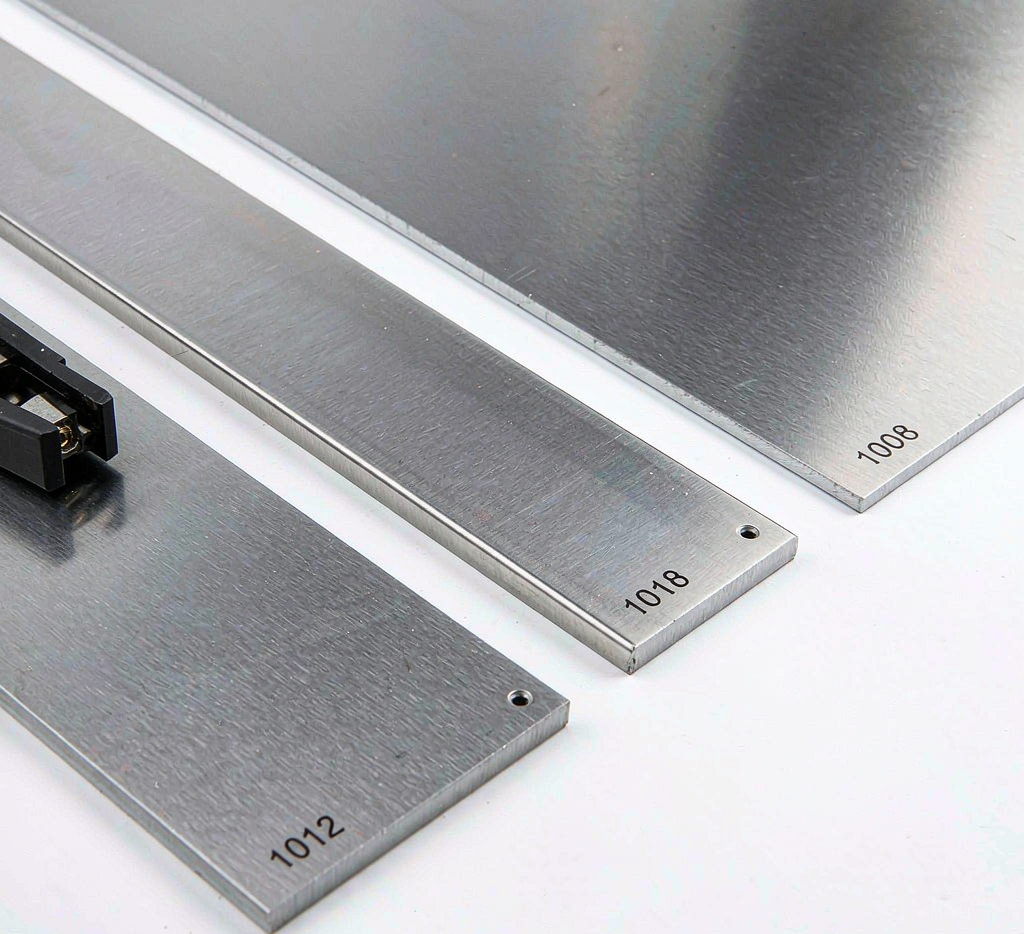
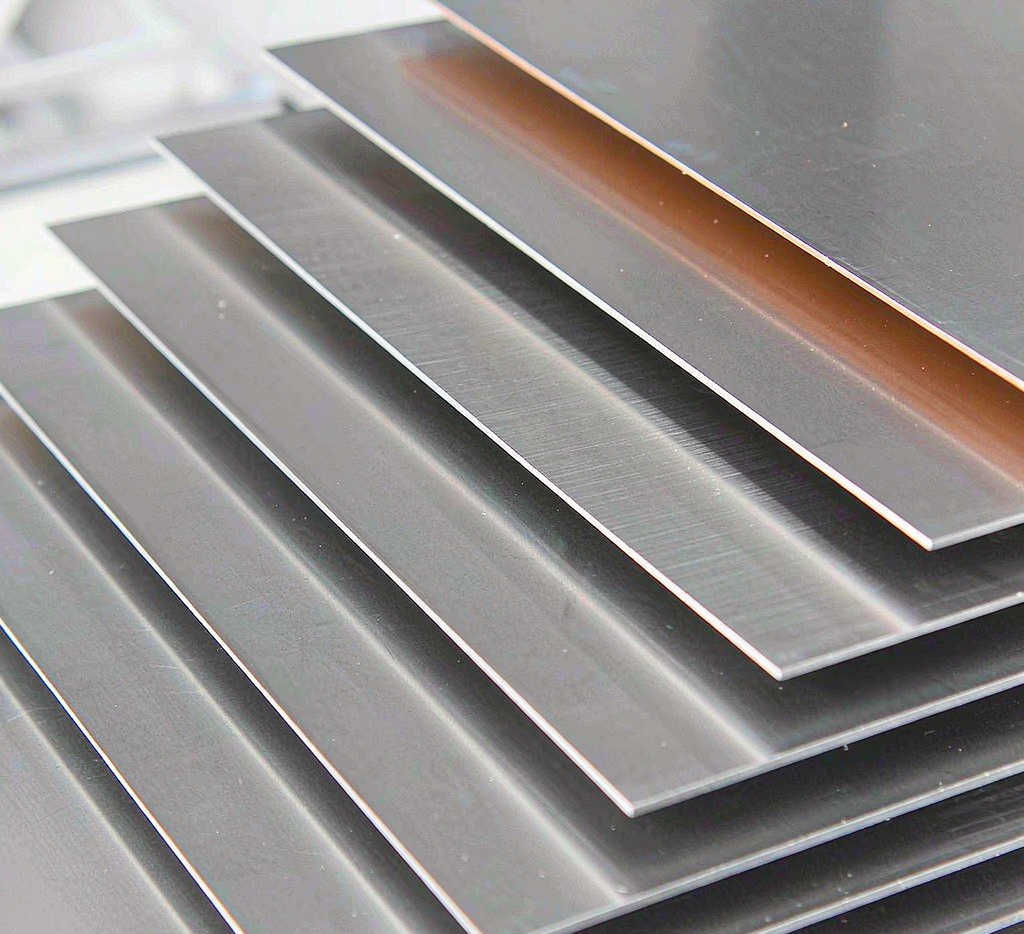
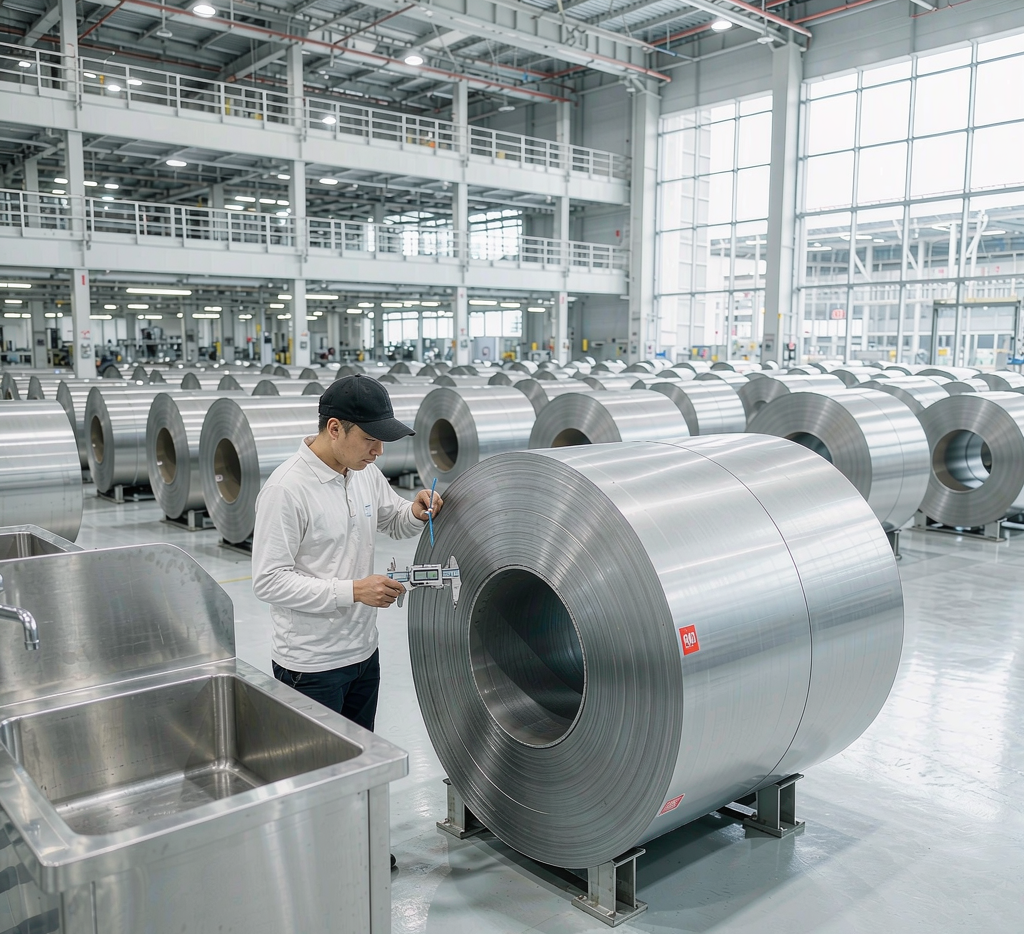
AISI 1008, 1010, and 1012 are low-carbon steel grades widely used for stampings, deep-drawn parts, cold-formed sections, and general fabrication. These grades sit at the bottom of the carbon steel spectrum, offering excellent formability, weldability, and surface finish at low cost. Yet small differences in carbon content influence strength, hardness, and forming limits. This comparison helps procurement and engineering teams choose the right grade for automotive panels, appliance parts, fasteners, and precision components.
1. Chemical Composition and Carbon Influence
The main difference among these three grades is carbon content. Higher carbon raises strength and hardness but reduces ductility and deep-drawing performance. All three grades remain highly weldable and are often supplied in cold-rolled, annealed, or skin-passed conditions.
| Element | AISI 1008 (%) | AISI 1010 (%) | AISI 1012 (%) |
|---|---|---|---|
| C (max) | 0.10 | 0.08-0.13 | 0.10-0.15 |
| Mn | 0.30-0.50 | 0.30-0.60 | 0.30-0.60 |
| P (max) | 0.040 | 0.040 | 0.040 |
| S (max) | 0.050 | 0.050 | 0.050 |
| Si | 0.10-0.30 | 0.10-0.30 | 0.10-0.30 |
AISI 1008 is the most formable of the three and is preferred for complex deep-drawing operations. AISI 1010 offers a balance between formability and strength, making it the most commonly specified grade for general stamping. AISI 1012 provides slightly higher strength for parts that need a bit more load capacity while still forming well.
2. Mechanical Properties in Cold-Rolled and Annealed Conditions
Because these grades are usually purchased in cold-rolled or annealed strip and sheet, the mechanical properties depend heavily on processing. The following table shows typical values for commercial-quality cold-rolled annealed material.
| Property | AISI 1008 CR Annealed | AISI 1010 CR Annealed | AISI 1012 CR Annealed |
|---|---|---|---|
| Tensile Strength (MPa) | 290-380 | 320-420 | 340-440 |
| Yield Strength (MPa) | 170-240 | 180-280 | 200-300 |
| Elongation (%) | 38-45 | 35-42 | 32-40 |
| Hardness (HRB) | 35-50 | 40-55 | 45-58 |
For deep-drawing grades, suppliers often report r-value (plastic strain ratio) and n-value (strain-hardening exponent). Higher r-values indicate better resistance to thinning during drawing, while higher n-values indicate better stretch-forming capability. Drawing-quality grades of 1008 and 1010 can achieve r-values above 1.5 and n-values above 0.20.
3. Formability and Deep-Drawing Behavior
AISI 1008 is the first choice for complex deep-drawn parts such as automotive fenders, appliance panels, and metal containers. Its low carbon content minimizes work hardening and allows material to flow into deep die cavities without tearing. As carbon increases through 1010 to 1012, forming limits decrease slightly and springback increases.
Typical forming applications include:
- AISI 1008: Deep-drawn cans, complex automotive panels, fine-blanked parts
- AISI 1010: Brackets, panels, enclosures, stamped fasteners, furniture parts
- AISI 1012: Structural stampings, tabs, clips, and parts requiring higher stiffness
4. Weldability and Surface Finish
All three grades weld excellently by resistance spot welding, MIG, TIG, and laser welding. Because carbon content is very low, preheat is unnecessary and hydrogen-induced cracking risk is minimal. These grades are widely used in automotive body-in-white assemblies where thousands of spot welds are made.
Cold-rolled sheets of 1008, 1010, and 1012 provide smooth, bright surfaces suitable for painting, plating, powder coating, and galvanizing. For exposed panels, extra-smooth or temper-rolled finishes are specified to improve appearance and paint adhesion.
5. Cost, Availability, and Procurement Notes
AISI 1010 is the most widely produced and therefore the most economical in many markets. AISI 1008 may carry a small premium in drawing-quality specifications due to tighter chemistry and inclusion control. AISI 1012 is slightly less common in sheet form but readily available as wire rod, bar, and structural sections.
Equivalent international grades include:
- JIS G3141: SPCC, SPCD, SPCE (loosely aligned with 1008/1010 drawing qualities)
- DIN EN 10130: DC01, DC03, DC04
- GB/T 5213: DC01, DC03, DC04
- ASTM A1008: CS Type A/B/C, DS Type A/B
FAQ
Which grade is best for deep drawing?
AISI 1008 is generally best for deep drawing due to its very low carbon content and excellent ductility. For moderately deep parts, drawing-quality AISI 1010 is also suitable and often more economical.
Can AISI 1012 be used for automotive panels?
AISI 1012 can be used for simple panels and structural stampings but is less suitable for complex deep-drawn automotive panels than 1008 or drawing-quality 1010. It is more commonly found in structural sections, wire rod, and fasteners.
What is the difference between AISI 1010 and SAE 1010?
There is no practical difference. AISI (American Iron and Steel Institute) and SAE (Society of Automotive Engineers) share the same four-digit numbering system for carbon and alloy steels. The terms are often used interchangeably.
Does Huaxia-Steel supply these grades in coil and sheet?
Yes. We supply AISI 1008, 1010, and 1012 cold-rolled coil and sheet, hot-rolled coil, and hot-dip galvanized products. Mill test certificates, dimensional reports, and forming-test data are available on request.
Need low-carbon steel for stamping, drawing, or fabrication? Contact Huaxia-Steel for AISI 1008, 1010, and 1012 coil, sheet, and strip with competitive mill-direct pricing and global delivery.