Hot Rolled vs Cold Finished Carbon Steel Bar: Process, Properties, Selection
Carbon steel bar is one of the most commonly procured carbon steel products, used for machining, shafts, axles, fasteners, and general engineering. When buyers order “carbon steel round bar” they encounter two broad categories with very different properties, tolerances, and prices: hot rolled and cold finished. The distinction matters because it changes machinability, dimensional tolerance, surface finish, residual stress, mechanical properties, and ultimately cost.
Hot rolled bar is the default mill-state product. Cold finished bar is hot rolled bar that has been further processed (drawn, turned, ground, or polished) to improve surface, tolerance, and mechanical properties. Each route is suited to different end uses, and mis-selection leads to excess machining, premature tool wear, or out-of-tolerance parts.
This guide compares hot rolled and cold finished carbon steel bar across processing route, tolerances, surface finish, mechanical properties, machining behavior, and price. It then helps you pick the right product for your application and avoid the most common procurement mistakes.
1. What is Hot Rolled Carbon Steel Bar?
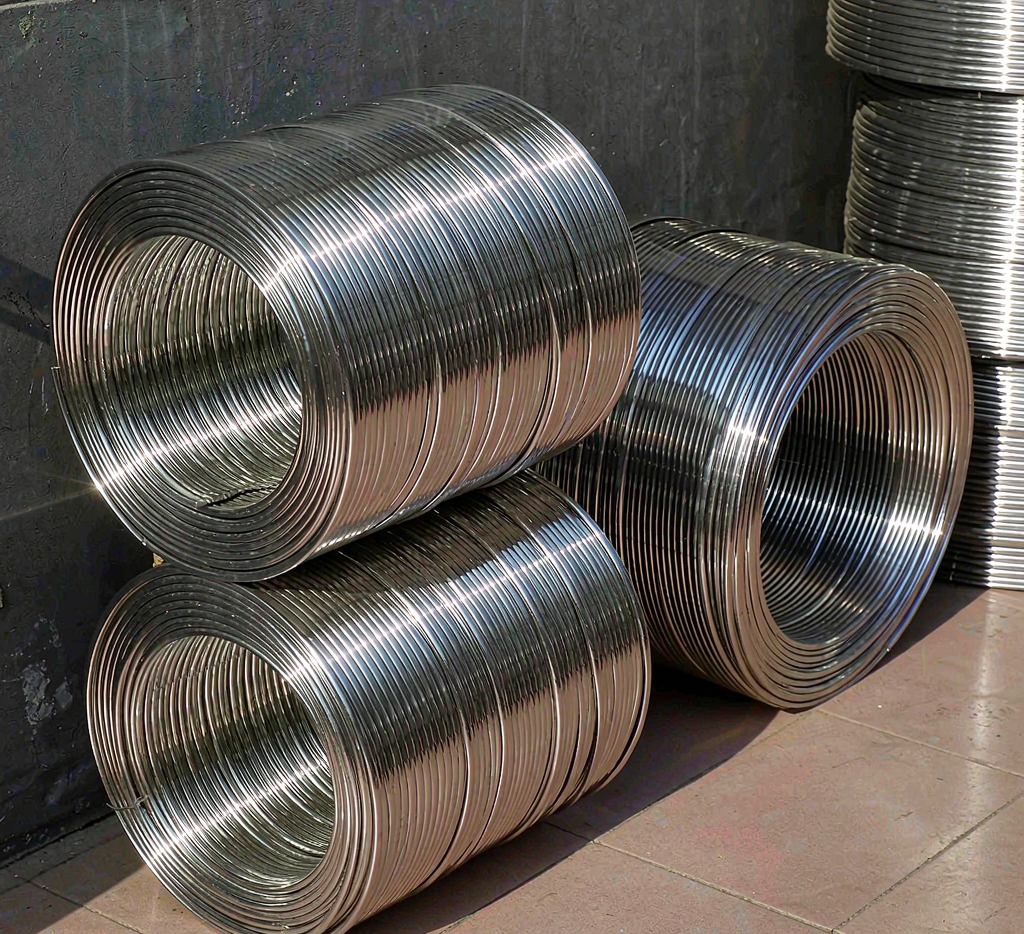
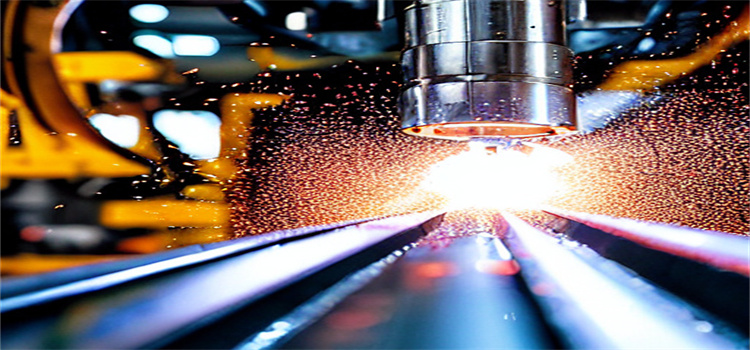
Hot rolled bar is produced by heating a continuously-cast billet to 1,100-1,250 °C and passing it through a series of rolling stands that progressively reduce the cross-section to the final size. The bar exits the last stand at 900-1,000 °C and is cooled on a cooling bed, then cut to length and bundled.
Key characteristics of hot rolled bar:
- Tolerance: Loose, per ASTM A29 or EN 10058. Diameter tolerance is typically +/- 0.5 mm to +/- 1.5 mm depending on size.
- Surface: Mill scale (Fe3O4) firmly bonded, normal mill marks, occasional surface decarburization up to 0.1 mm deep.
- Straightness: Practical, but typically 2-4 mm/m. Suitable for sawing, flame cutting, and applications where straightness is not critical.
- Mechanical: Properties meet the standard but are not enhanced by the rolling process. Yield and tensile are at the lower end of the achievable range.
- Internal structure: Coarse-grained, normalized-equivalent (but not strictly normalized). Some directional grain effects from the rolling reduction.
- Price: Lowest in this product category. The base material from which all cold finished products start.
Hot rolled bar is the right choice for general structural applications, forging feedstock, anchor bolts, foundation hardware, rebar-grade applications, and any use where the bar will be further machined, forged, or heat-treated.
2. What is Cold Finished Carbon Steel Bar?
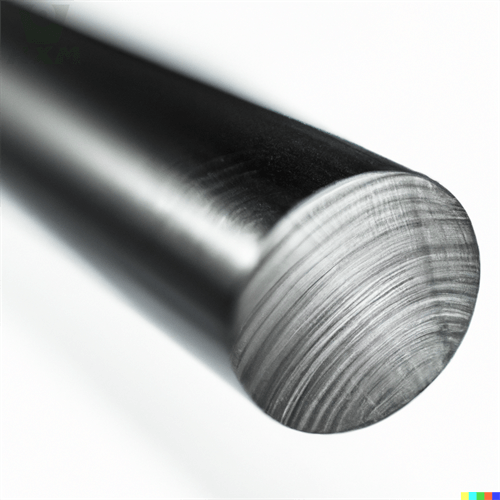
Cold finished bar is hot rolled bar that has been re-processed at room temperature to improve dimensional accuracy, surface, and mechanical properties. The main cold finishing processes are:
- Cold drawn (CD): The hot rolled bar is pulled through a hardened die to reduce the section by 1-3 percent. Improves tolerance, surface, and tensile strength. Adds 10-20 percent to price.
- Cold rolled (CR): For flat bar. Same principle as drawing but through rolls.
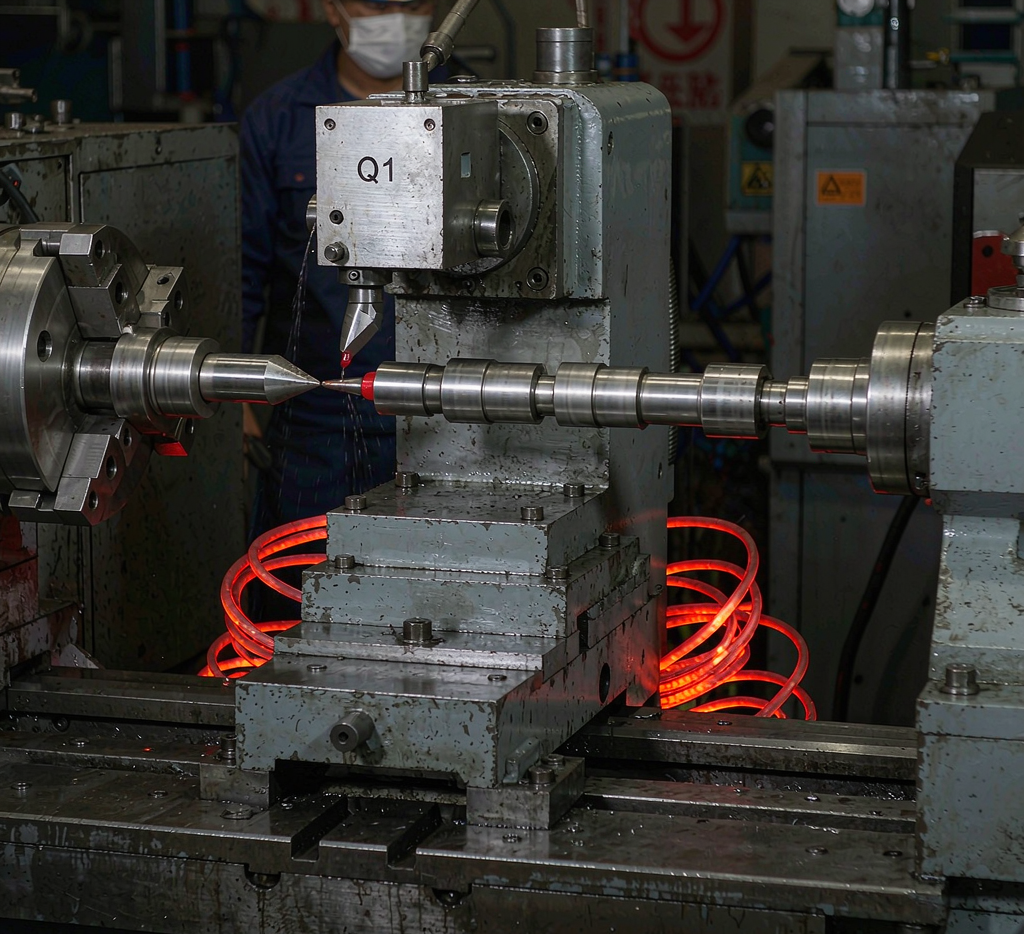
- Turned and polished (T&P): A hot rolled bar is rotated against a cutting tool to remove 0.5-3 mm from the surface. Eliminates mill scale and decarburization. Tolerance similar to drawn. Adds 8-15 percent.
- Ground and polished (G&P): After turning, the bar passes under a grinding wheel to achieve precision tolerance (h9 or tighter) and a mirror-grade finish. Adds 25-40 percent.
- Peeled and reeled: Similar to T&P but with a final straightening pass. Common for shaft applications.
- Bright drawn: Drawn through a die with lubrication, leaving a bright surface (no mill scale). Equivalent to “cold drawn” in most markets.
Cold finished bar has tighter tolerance, better surface, higher tensile strength (from cold work strain hardening), and improved machinability in many cases. It is the standard product for CNC machining, shaft production, and precision parts.
3. Side-by-Side Comparison
| Property | Hot Rolled | Cold Finished (Drawn) |
|---|---|---|
| Diameter tolerance | +/- 0.5 to +/- 1.5 mm (ASTM A29) | +/- 0.05 mm (h9 / h10) |
| Ovality | up to 70 percent of tolerance band | within 50 percent of tolerance band |
| Surface roughness | mill scale, Ra 25-50 µm | smooth, bright, Ra 0.8-3.2 µm |
| Surface decarburization | up to 0.1 mm on each face | none (process removes it) |
| Yield strength | standard (e.g. 1018 = 220 MPa YS) | +15 to +30 percent above hot rolled |
| Tensile strength | standard (e.g. 1018 = 400 MPa TS) | +10 to +25 percent above hot rolled |
| Elongation | 25-30 percent | 10-20 percent (cold work hardening) |
| Hardness (1018) | approx. 70 HRB | approx. 85-95 HRB |
| Residual stress | low | high (requires stress relief for some parts) |
| Machinability | good for rough cut | better for finish cut, longer tool life |
| Price index (1018 25 mm round) | 100 (baseline) | 110-120 (drawn) / 130-150 (T&P) / 150-180 (G&P) |
| Typical size range | 10-300 mm diameter | 3-100 mm diameter (drawn) / up to 250 mm (turned) |
| Standards | ASTM A29, EN 10060, JIS G4051 | ASTM A108, EN 10277, JIS G3128 |
The biggest practical differences are dimensional tolerance, surface finish, and machining performance. Cold finished bar reduces machining stock allowance, extends tool life, and yields tighter final part tolerances.
4. When to Use Hot Rolled Bar
Use hot rolled carbon steel bar when:
- The application tolerates loose dimensional tolerance (forged parts, structural anchor bolts, lifting lugs, general fabrications).
- The bar will be further processed – hot forged, heat-treated, normalized, or flame cut.
- Surface finish does not matter (the part is coated, painted, plated, or hidden).
- Decarburization can be removed by machining or by shot blasting before heat treatment.
- Minimum cost is the priority.
- Large diameter is needed (> 100 mm): cold finishing becomes expensive at very large diameters.
Typical applications: foundation bolts, rebar dowels, handrail posts, machine bases, agricultural tines, mining components, forging billets.
5. When to Use Cold Finished Bar
Use cold finished carbon steel bar when:
- The part is CNC turned, Swiss-screwed, or precision machined – tighter tolerance reduces or eliminates secondary grinding.
- Surface finish is a customer requirement (shafts that run in bearings, hydraulic spools, polished dowel pins).
- No decarburization is allowed in the finished part – critical for parts that will be induction hardened or case hardened at the surface.
- Higher strength is needed without heat treatment – cold work strain hardening adds 15-30 percent strength over hot rolled.
- The bar feeds a high-speed automated machining line – tool life and chip control are critical.
Typical applications: drive shafts, hydraulic spools, fasteners (cap screws, studs), pins, axles, automotive components, hydraulic fittings.
6. Special Considerations
6.1 Residual stress in cold drawn bar
Cold drawing introduces residual tensile stress at the surface and compressive stress at the core. For parts that will be case hardened, induction hardened, or that carry cyclic loads, the residual stress can cause distortion after machining or premature fatigue failure. Specify stress-relieved cold drawn bar (drawn, then heated to 500-650 °C) for such applications. The label is “cold drawn, stress relieved” or per ASTM A108 with stress relief supplementary requirement.
6.2 Decarburization in hot rolled bar
Hot rolling in air produces a decarburized layer 0.05-0.15 mm deep. This layer has lower hardness and lower fatigue strength. For parts that are heat-treated after machining (e.g. through-hardened to 50 HRC), the decarburized layer must be removed before heat treatment, or it will appear as a soft skin after quenching. Cold finished or turned bar avoids this problem.
6.3 Straightness
Hot rolled bar has inherent bow up to 4 mm/m. For most forging and fabrication uses this is fine. For shaft production, straightness of 0.5 mm/m or better is required – use straightened cold drawn or peeled and reeled bar.
6.4 Weldability
Hot rolled bar in 1018, 1020, A36 chemistry has excellent weldability. Cold drawn bar is also weldable, but the cold work hardening makes the HAZ slightly harder and less ductile. For critical welded assemblies in cold drawn bar, normalize after welding.
7. Standards and Specifications
Common standards for hot rolled carbon steel bar include:
- ASTM A29: Standard specification for steel bars, carbon and alloy, hot wrought, general requirements.
- EN 10060: Hot rolled round steel bars for general purposes – tolerances and dimensions.
- JIS G4051: Carbon steels for machine structural use.
- GB/T 702: Hot rolled round steel bars – dimensions, shape, weight, tolerances.
Common standards for cold finished carbon steel bar include:
- ASTM A108: Standard specification for steel bar, carbon and alloy, cold finished.
- EN 10277: Bright steel products – technical delivery conditions.
- JIS G3128: Cold finished carbon and alloy steel bars.
- DIN 1652 / 1654: Bright steel made of mild steel (withdrawn, replaced by EN 10277).
For each, surface condition (cold drawn, turned, ground), tolerance class (h6, h7, h9, h10, h11), and heat treatment condition (as finished, stress relieved, annealed) are specified as supplementary requirements.
8. Pricing and Procurement
Order hot rolled bar in:
- Standard mill lengths: 6.0-6.1 m for small bars, 3-12 m for large. Long-length hot rolled bars are available up to 18 m.
- Mill test certificate per EN 10204 3.1 with full chemistry and mechanical trace.
- Bundle quantity per heat number, bundled and tagged at the mill.
Order cold finished bar in:
- Random mill lengths (typically 3-6 m) or cut-to-length pieces.
- Specific tolerance class (h6, h7, h9, h10).
- Surface condition (cold drawn, T&P, G&P).
- Supplementary requirements: stress relief, decarburization test, ultrasonic test, specific mechanical range.
For carbon steel bar exported to Europe, North America, or the Middle East, the most common grades are 1018, 1020, 1026, 1035, 1045 (AISI/SAE) and S235JR, S355JR, C45, 42CrMo4 (EN/DIN). For Chinese domestic or Asia export, Q235, Q345, 45#, 35#, 20# are the workhorses.
9. Frequently Asked Questions
Q: Can cold finished bar be hot rolled and supplied in the same size at a small quantity?
A: Cold finished bar is normally ordered in mill-quantity multiples (typically 500 kg to 1 t per size). For small quantities (under 200 kg) the supplier often keeps stock in popular sizes like 1018 25 mm CD.
Q: Is cold drawn bar harder than hot rolled bar of the same grade?
A: Yes – typically 15-30 percent harder due to cold work strain hardening. The actual hardness depends on drawing reduction. For example, 1018 hot rolled is roughly 70 HRB; cold drawn is roughly 85-90 HRB.
Q: Does cold drawing affect the steel’s chemistry?
A: No. Cold drawing is a mechanical process that does not change the chemistry. The grade designation is the same (1018 cold drawn is still 1018 chemistry).
Q: Can I weld cold drawn bar without stress relief?
A: Yes, but the weld zone and HAZ will be slightly harder and more brittle due to the prior cold work. For critical welds, normalize after welding or use hot rolled bar.
Q: Which is better for CNC machining?
A: Cold finished (especially cold drawn or T&P) is much better for CNC machining. Tight tolerance means less stock to remove, and the bright surface means predictable tool wear. Hot rolled bar can be machined but requires more passes and produces more scale-laden chips.
Q: What is the maximum size for cold drawn bar?
A: Practical maximum is around 100-120 mm diameter for drawn. Above that, drawn bar becomes uneconomical and “turned and polished” (T&P) takes over up to 250 mm. Larger diameters stay as hot rolled.
10. Summary
Hot rolled and cold finished carbon steel bar are not competing products – they serve different roles in the supply chain. Hot rolled bar is the low-cost, loose-tolerance default for fabrication and forging feedstock. Cold finished bar is the precision product for machining, shafts, and parts where tolerance, surface, and mechanical strength matter.
Choosing the wrong product means paying too much for unneeded precision, or machining too much stock out of hot rolled bar. Specify hot rolled when the application tolerates loose tolerance and the bar will be further processed. Specify cold finished when the bar feeds CNC machines, becomes a visible shaft, or carries fatigue loads.
For export orders, ensure the mill test certificate matches the product form and the specified standard, and clarify the tolerance class, surface condition, and supplementary requirements before issuing the purchase order.
Huaxia-Steel supplies both hot rolled and cold finished carbon steel bar in 1018, 1020, 1045, S235JR, S355JR, C45, Q235, Q345, and 45# grades. Mill-direct pricing, EN 10204 3.1 MTC, container or bulk shipment worldwide. Request a quote with grade, size, tolerance, quantity, and destination port for a factory-direct price.
Related Images