If you’ve ever received three quotes for the same steel order — one FOB, one CIF, one EXW — and wondered why the prices look so different, you’re not alone. The Incoterm chosen changes who’s responsible for freight, insurance, customs, and risk. It can also change the actual unit price by 8–15% on a single container.
This guide breaks down FOB, CIF, and EXW for carbon steel specifically, shows the real cost differences, and helps you choose the right Incoterm for your situation.
Incoterms 2020: The Three You’ll See Most in Steel
The International Chamber of Commerce publishes 11 Incoterms. For carbon steel exports from China, three dominate:
| Incoterm | What It Means | Who Pays Freight | Who Pays Insurance | Who Bears Risk in Transit |
|---|---|---|---|---|
| EXW (Ex Works) | Seller makes goods available at their factory | Buyer | Buyer | Buyer (from seller’s gate) |
| FOB (Free On Board) | Seller loads goods onto the vessel at origin port | Buyer | Buyer | Buyer (after loading) |
| CIF (Cost, Insurance, Freight) | Seller pays freight and insurance to destination port | Seller | Seller | Seller (until port of arrival), then buyer |
Other Incoterms you may encounter in steel trade:
- FCA (Free Carrier) — similar to FOB but for any transport mode, not just sea
- CFR (Cost and Freight) — like CIF but buyer arranges insurance
- DAP (Delivered at Place) — seller delivers to buyer’s named place
- DDP (Delivered Duty Paid) — seller pays everything, including destination duty
For most carbon steel orders from Asia, FOB is the default, CIF is the convenience option, and EXW is the price-comparison baseline.
EXW: Ex Works — The Cheapest-Looking Price
What It Means
The seller makes the steel available at their factory or warehouse. The buyer is responsible for everything: inland transport to port, export clearance, ocean freight, insurance, import clearance, and delivery to final destination.
Cost Breakdown for a Typical 25-Ton Container (HR Plate, China → Long Beach)
| Cost Element | Who Pays | Typical Amount (USD) |
|---|---|---|
| FOB product cost (HR plate at mill) | Seller (in the EXW-equivalent price) | $14,000 |
| Inland trucking to port (Yantian) | Buyer | $400 |
| Export customs clearance in China | Buyer | $80 |
| THC (Terminal Handling Charge) at origin | Buyer | $200 |
| Ocean freight (Yantian → Long Beach) | Buyer | $1,800 |
| Marine insurance (0.3% of CIF value) | Buyer | $50 |
| THC at destination | Buyer | $250 |
| Customs clearance in US (including AD duty) | Buyer | $4,000 (25% Section 232 on $16,000 CIF) |
| Drayage from port to warehouse | Buyer | $400 |
| Total Landed Cost | $21,180 |
When EXW Makes Sense
- You have your own freight forwarding and customs brokerage infrastructure
- You’re buying from multiple suppliers and consolidating shipments
- You want maximum control over shipping line, transit time, and routing
- You have volume to negotiate competitive ocean freight rates
- You’re a large trader or distributor
When EXW Is a Bad Idea
- You’re a small-to-medium buyer making 1–3 purchases per year
- You don’t have a freight forwarder relationship in the seller’s country
- You can’t get competitive ocean freight rates on small volumes
- You have no experience with Chinese export customs procedures
FOB: Free On Board — The Industry Standard
What It Means
The seller delivers the steel to the vessel at the named port of origin and loads it on board. The seller handles export clearance. The buyer takes over from the moment the steel crosses the ship’s rail at the origin port.
Cost Breakdown for the Same 25-Ton Container
| Cost Element | Who Pays | Typical Amount (USD) |
|---|---|---|
| FOB product cost + inland + export clearance | Seller (in the FOB price) | $14,480 |
| Ocean freight (Yantian → Long Beach) | Buyer | $1,800 |
| Marine insurance | Buyer | $50 |
| THC at destination | Buyer | $250 |
| Customs clearance in US | Buyer | $4,000 |
| Drayage from port to warehouse | Buyer | $400 |
| Total Landed Cost | $20,980 |
The FOB price ($14,480) is slightly higher than the EXW-equivalent ($14,000 + $400 + $80 + $200 = $14,680). Wait — that’s not right. The reason is that sellers usually discount their FOB price because they handle export clearance more efficiently than a one-off foreign buyer would. The FOB price often ends up $50–$200/box lower than EXW + buyer’s inland/clearance costs.
When FOB Makes Sense
- This is the default for most international steel trade
- You want control over shipping and insurance
- You have a freight forwarder and customs broker
- You’re importing regularly enough to negotiate ocean freight
- You want to choose the shipping line and transit time
When FOB Is Less Than Ideal
- You’re a first-time importer without established logistics partners
- The volume is too small to negotiate good freight rates (e.g., LCL shipments)
- The destination is landlocked (FOB only works for port-to-port)
- You need door-to-door service
CIF: Cost, Insurance, and Freight — The Convenience Option
What It Means
The seller pays for ocean freight and insurance to the named port of destination. The seller is responsible for the goods until they arrive at the destination port. The buyer handles import clearance, duty, and inland transport from the port.
Cost Breakdown for the Same 25-Ton Container
| Cost Element | Who Pays | Typical Amount (USD) |
|---|---|---|
| CIF product cost (including ocean freight + insurance) | Seller (in the CIF price) | $16,330 |
| THC at destination | Buyer | $250 |
| Customs clearance in US | Buyer | $4,000 |
| Drayage from port to warehouse | Buyer | $400 |
| Total Landed Cost | $20,980 |
The CIF price ($16,330) is higher than the FOB price ($14,480) by $1,850 — which is roughly the ocean freight ($1,800) plus insurance ($50). On a per-ton basis, that’s about $74/ton for the seller’s logistics service.
The Risk Question
Under CIF, the seller is responsible for the goods until they reach the destination port. If the steel is damaged at sea, the seller (or their insurance) pays. This is a meaningful benefit for buyers who don’t have marine cargo insurance relationships.
However: Under CIF, the seller chooses the insurance provider and policy terms. The coverage may be minimal (typically 110% of CIF value, basic risks only). If you want broader coverage, you may need to buy your own additional insurance.
When CIF Makes Sense
- You don’t have established freight forwarding relationships
- You’re a first-time importer
- The volume is small (LCL or one-off container)
- You want the seller to take transit risk
- You’re buying from a trader who offers better freight rates than you can get on your own
When CIF Is a Bad Idea
- You have a strong freight forwarder relationship (you can save $50–$200/box)
- You want to choose your own insurance provider
- The seller’s freight mark-up is excessive (some sellers add 10–20% on top of actual freight)
- You’re a high-volume buyer who can negotiate directly with shipping lines
Comparing the Three Side-by-Side
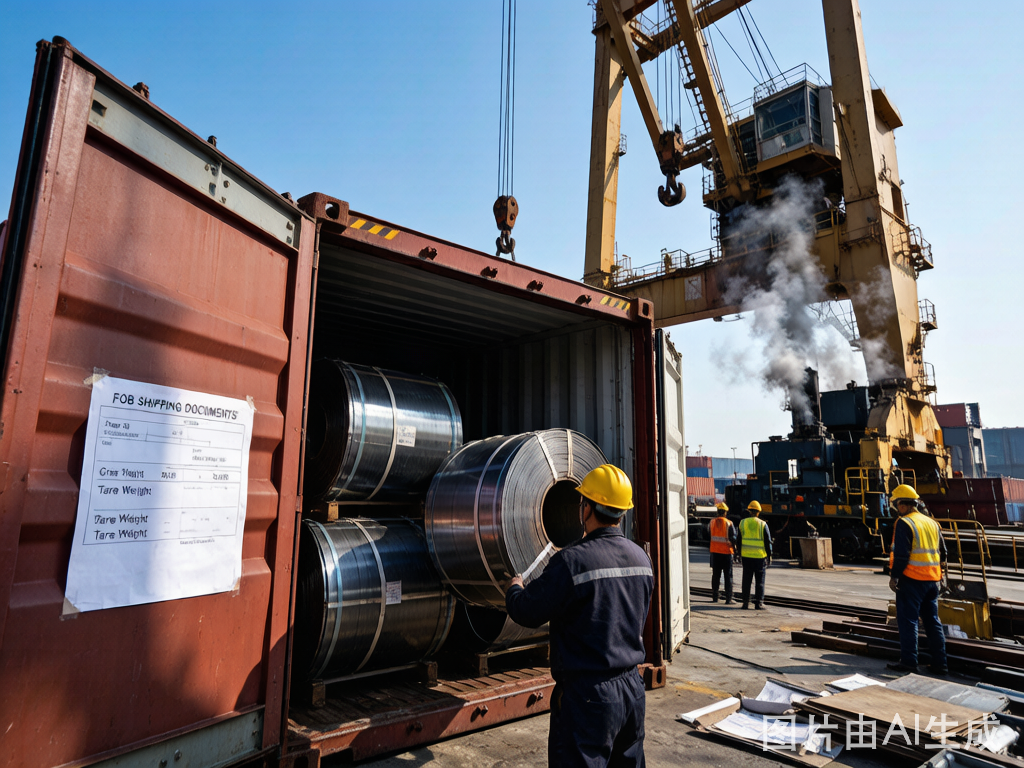
Cost Comparison for 25-Ton Container of HR Plate (China → US West Coast)
| Element | EXW | FOB | CIF |
|---|---|---|---|
| Product at mill | $14,000 | — | — |
| Inland + export clearance | — | included | — |
| FOB product | — | $14,480 | — |
| Ocean freight | — | — | included |
| Insurance | — | — | included |
| Quoted Price | $14,000 | $14,480 | $16,330 |
| Buyer-paid ocean freight | $1,800 | $1,800 | — |
| Buyer-paid insurance | $50 | $50 | — |
| THC origin | $200 | — | — |
| THC destination | $250 | $250 | $250 |
| Inland trucking (origin) | $400 | — | — |
| Export clearance (China) | $80 | — | — |
| US customs + duty | $4,000 | $4,000 | $4,000 |
| Drayage | $400 | $400 | $400 |
| Buyer’s Total Cost (Landed) | $21,180 | $20,980 | $20,980 |
| Effective Premium over EXW | — | -$200 | -$200 |
Key insight: The total landed cost is nearly identical across all three. The difference is in who pays, who arranges, and who bears risk. The headline price is misleading — what matters is the total cost of ownership.
What’s Actually in the “Quoted Price”?
When a Chinese supplier quotes $580/ton FOB Yantian, that number usually includes:
- Raw material (steel mill cost)
- Rolling and processing
- Mill profit
- Inland transport to port
- Export customs clearance
- Loading onto vessel
It does not include:
- Ocean freight
- Marine insurance
- THC at destination
- Import duty
- Final delivery to your warehouse
When the same supplier quotes $700/ton CIF Long Beach, the difference covers ocean freight and insurance. The product is the same.
Watch for Hidden Mark-ups
Some sellers, especially trading companies, add a 15–25% mark-up on the ocean freight when quoting CIF. They book at $1,800/box and quote $2,200/box as the freight component. To verify, ask for the shipping line booking confirmation before paying.
Risk Transfer: When Does Title and Risk Change?
This is the part most buyers underestimate. The Incoterm defines when risk transfers from seller to buyer:
| Incoterm | Risk Transfer Point |
|---|---|
| EXW | At the seller’s factory gate (or named place) |
| FOB | When goods are loaded on the vessel at origin port |
| CIF | When goods cross the ship’s rail at origin port (despite seller paying freight to destination) |
Important: Under CIF, the risk transfers at the origin port — same as FOB. Even though the seller pays for freight and insurance to the destination, the buyer owns the risk once the steel is on the vessel. If the ship sinks, the buyer’s goods are at risk (covered by insurance, but the buyer files the claim).
This surprises many first-time importers. CIF is not equivalent to DAP or DDP. The seller is not responsible for goods once they’re loaded on the vessel.
Which Incoterm Should You Choose?
Use FOB if:
- You import steel regularly (4+ times per year)
- You have a freight forwarder and customs broker you trust
- You can negotiate competitive ocean freight rates
- You want control over shipping line, transit time, and route
- You want to choose your own marine insurance provider
FOB is the right default for most medium-to-large buyers.
Use CIF if:
- You’re a new or occasional importer
- Your order is small (single container, LCL, or sample order)
- You don’t have a freight forwarder relationship
- You want the seller to handle logistics
- You trust the seller to book reasonable freight (verify with their shipping documents)
CIF is fine for small orders and first-time buyers, but verify the freight cost.
Use EXW if:
- You have your own logistics infrastructure in the seller’s country
- You’re consolidating shipments from multiple suppliers
- You want maximum control over inland transport and export clearance
- You have a freight forwarder office in the seller’s region
EXW is rarely the right choice for foreign buyers without local presence.
Special Cases
| Situation | Best Incoterm |
|---|---|
| Container shipped by rail to Central Asia / Russia | CFR or DAP (FOB is for sea only) |
| Truck delivery from China to Vietnam/Thailand | DAP or DDP (CIF is for sea only) |
| Air freight for urgent small orders | FCA (CIF is for sea only) |
| LCL (less than container load) | FOB is still common, but CIF often works better for small volumes |
| Door-to-door to your warehouse | DDP (seller pays everything, including duty) |
Common Mistakes to Avoid
1. Comparing FOB and CIF Head-to-Head
A FOB quote of $580/ton is not directly comparable to a CIF quote of $700/ton. The CIF price includes ocean freight and insurance. Compare on a landed cost basis (CIF + duty + inland to warehouse).
2. Ignoring Currency Risk
Steel prices are typically quoted in USD. If your local currency is volatile, the FOB vs CIF choice may be less important than the FX hedging strategy. CIF transfers less FX risk to you (one transaction vs multiple), but it also means less control over timing of FX conversion.
3. Forgetting Insurance
Under FOB, you must arrange marine insurance. If you skip it, any transit damage is on you. Marine cargo insurance for steel is typically 0.2–0.4% of CIF value — cheap, but essential. Make sure the policy covers:
- General average
- Particular average
- War and strikes (for high-risk routes)
- Theft and non-delivery
4. Misunderstanding Title Transfer
Risk and title are not the same. The Incoterm defines risk transfer. Title (ownership) transfers based on the sales contract, which may be different. Make sure your purchase contract clearly states when ownership transfers — usually coincident with risk, but not always.
5. Not Verifying Freight Charges
CIF quotes can hide inflated freight. Ask for the booking confirmation. If the seller won’t show you, you have a problem.
6. Ignoring Demurrage and Detention
If the buyer doesn’t pick up the container at the destination port quickly, demurrage charges start accumulating (typically $75–$150/day for steel containers). This is the buyer’s risk under all three Incoterms (EXW, FOB, CIF).
Practical Negotiation Tips
- Always request multiple Incoterm quotes. Ask the same supplier for EXW, FOB, and CIF on the same order. The price difference tells you the actual freight cost.
- Negotiate on FOB and book freight yourself if you import regularly. You can often save 10–15% on freight by booking directly with a carrier instead of letting the seller mark it up.
- Lock in freight rates early. Ocean freight rates fluctuate. If you’re booking a sale forward, get a freight rate sheet from your forwarder for the same period.
- Specify the port of discharge in the Incoterm. “FOB Shanghai → Long Beach” is unambiguous. “FOB China” or “FOB Asia” is not.
- Use Incoterm 2020, not older versions. Incoterms are updated periodically. Make sure your contract specifies “Incoterms 2020” to ensure the latest definitions apply.
- For DDP, get a clear breakdown of duty and taxes. If the seller quotes DDP, they should show you the import duty, VAT, and any other charges. If they can’t, the DDP price is probably inflated.
FAQ
What is the difference between FOB and CIF?
Under FOB, the buyer pays for ocean freight and insurance separately. Under CIF, the seller pays for both. Risk transfers at the same point in both — when goods are loaded on the vessel at origin. CIF is more convenient for the buyer but usually costs more.
Is FOB cheaper than CIF?
Not necessarily. FOB has a lower quoted price because freight and insurance aren’t included. But the total landed cost is often similar. CIF is often slightly more expensive (5–10%) because the seller adds a service fee.
What does FOB Yantian mean?
FOB Yantian means the seller delivers the goods to the vessel at the Port of Yantian (Shenzhen, China). The buyer takes over from there.
What is the best Incoterm for first-time steel importers?
CIF. The seller handles freight and insurance. Once you establish your own logistics partners, you can switch to FOB to save money.
Can I use FOB for air freight or inland transport?
No. FOB is specifically for sea and inland waterway transport. For other modes, use FCA (Free Carrier) instead.
Who handles customs clearance under CIF?
The seller handles export clearance. The buyer handles import clearance. This applies to all three Incoterms (EXW, FOB, CIF) in this guide.
What is the difference between FOB and CFR?
CFR (Cost and Freight) is the same as CIF except the buyer arranges insurance, not the seller. CFR is rarely used for steel because buyers prefer either FOB (they handle both freight and insurance) or CIF (the seller handles both).
How much should marine insurance cost for a steel shipment?
Typically 0.2–0.4% of CIF value for a standard all-risk policy. For a $20,000 shipment, that’s $40–$80. Most policies are sold as annual open covers covering all your shipments.
Conclusion
The Incoterm you choose is not just a line item on a purchase order — it determines who handles logistics, who bears risk, and who absorbs cost surprises. FOB is the right default for established buyers with logistics partners. CIF is the right choice for new or occasional buyers who want a turnkey experience. EXW is rare in cross-border steel trade and usually only makes sense for buyers with their own infrastructure in the seller’s country.
Whatever Incoterm you choose, always compare on a landed cost basis — not on the headline price. The $50/ton difference between FOB and CIF quotes may not be a real difference once you account for who pays what.
Looking for FOB or CIF pricing on carbon steel from China? Request a quote from Huaxia Steel — we offer flexible Incoterms (EXW, FOB, CFR, CIF, DAP, DDP) with full HS code classification, certificates of origin, and door-to-door logistics support.