16 Gauge Steel: Everything You Need to Know (2025/2026 Complete Technical Guide)
In the world of sheet metal, 16 gauge steel occupies a pivotal position — thick enough for structural integrity, yet formable enough for precision manufacturing. It is the gauge of choice for heavy-duty kitchen equipment, load-bearing construction components, automotive structural parts, and industrial machinery enclosures. But what exactly defines 16 gauge steel? How thick is it across different material types? And in the shifting global steel market of 2025–2026, what should buyers and engineers know before making purchasing decisions?
This definitive guide answers every question. Drawing on the latest 2025/2026 industry data, international standards, and real-world engineering practice, we cover thickness specifications, material comparisons, fabrication techniques, pricing trends, and supplier selection — with a special focus on how Huaxia Steel delivers reliable 16 gauge carbon steel solutions to global clients.
What Is 16 Gauge Steel? — Precise Thickness by Material Type
The gauge measurement system, originating from 19th-century industrial practices, uses an inverse numbering scale: the smaller the gauge number, the thicker the sheet. At 16 gauge, we enter the “heavy-duty” end of the mid-range sheet metal spectrum — significantly thicker than the 20-24 gauge commonly found in HVAC ducts and light enclosures, yet not as heavy as 10-14 gauge structural plate.
According to the U.S. Standard Gauge (USSG) for ferrous metals and the Brown & Sharpe (B&S/AWG) system for non-ferrous metals, here are the exact 2025/2026 reference thickness values:
| Material Type | Thickness (Inches) | Thickness (mm) | Applicable Standard | Key Characteristic |
|---|---|---|---|---|
| Carbon Steel (Cold-Rolled) | 0.0598″ | 1.52 mm | USSG | Most economical; paint/coat required |
| Stainless Steel (304/316) | 0.0625″ | 1.59 mm | USSG | Superior corrosion resistance; premium |
| Galvanized Steel | 0.0635″ | 1.61 mm | USSG / ASTM A653 | Zinc coating for outdoor durability |
| Aluminum | 0.0508″ | 1.29 mm | B&S / AWG | Lightest option; ~65% weight savings |
The differing figures highlight a critical procurement reality: always specify both the gauge AND the material type when ordering. A 16 gauge aluminum sheet is dramatically thinner (1.29 mm) than 16 gauge galvanized steel (1.61 mm), despite sharing the same gauge designation.

16 Gauge vs. Other Gauges: Complete Comparison Chart
Understanding where 16 gauge falls within the broader thickness spectrum is essential for making informed material selection decisions. Below is a direct comparison against commonly used neighboring gauges:
| Gauge | Carbon Steel (in) | Carbon Steel (mm) | vs. 16 Gauge | Typical Use Cases |
|---|---|---|---|---|
| 10 Gauge | 0.1345″ | 3.42 mm | ~125% thicker | Heavy structural beams, pressure vessels |
| 12 Gauge | 0.1046″ | 2.66 mm | ~75% thicker | Load-bearing frames, machinery bases |
| 14 Gauge | 0.0747″ | 1.90 mm | ~25% thicker | Heavy furniture, industrial shelving |
| 16 Gauge | 0.0598″ | 1.52 mm | — Reference — | Kitchen equipment, construction, auto body |
| 18 Gauge | 0.0478″ | 1.21 mm | ~20% thinner | Light furniture, appliance panels |
| 20 Gauge | 0.0359″ | 0.91 mm | ~40% thinner | Ductwork, light enclosures |
The key takeaway: 16 gauge provides approximately 20% more thickness than 18 gauge and roughly 60% more than 20 gauge. This difference translates directly into greater structural rigidity, dent resistance, load-bearing capacity, and sound dampening — all critical factors in heavy-use applications like commercial kitchens, industrial enclosures, and automotive structural components.
Types of 16 Gauge Steel: Choosing the Right Material for 2025/2026 Projects
1. 16 Gauge Carbon Steel (Cold-Rolled) — The Cost-Effective Workhorse
Cold-rolled carbon steel at 16 gauge (1.52 mm) is the most widely specified material for indoor manufacturing and general fabrication. It offers an unmatched combination of strength, formability, and affordability.
- Standards (2025/2026): ASTM A1008, ASTM A1011, SPCC (JIS G3141), DC01 (EN 10130)
- Typical Mechanical Properties: Tensile strength 270–410 MPa, Yield strength 140–280 MPa, Elongation ≥ 28%
- Best For: Automotive body panels, office furniture, electrical enclosures, machinery guards, general fabrication
- Surface Finish: Matte, oiled — excellent substrate for powder coating, painting, or plating
- 2025/2026 Cost Note: Prices have stabilized after the 2024 downturn; carbon steel HRC in Asia trades around $500–550/ton FOB as of Q1 2026
2. 16 Gauge Stainless Steel (304/316) — The Premium Performer
At 1.59 mm thickness, 16 gauge stainless steel is the gold standard for applications demanding hygiene, corrosion resistance, and long-term durability. Grade 304 is the general-purpose choice; grade 316 adds molybdenum for superior resistance to chlorides and chemicals.
- Standards (2025/2026): ASTM A240/A480, EN 10088-2, JIS G4304
- Typical Properties (304): Tensile strength ≥ 515 MPa, Yield strength ≥ 205 MPa, Hardness ≤ 201 HB
- Key Advantage: The chromium oxide passive layer provides “self-healing” corrosion resistance — no coating required
- Best For: Commercial kitchen sinks and countertops, food processing equipment, medical device housings, architectural panels, marine hardware (316 grade)
- Available Finishes: 2B (smooth matte), BA (bright annealed), No.4 (brushed), No.8 (mirror)
3. 16 Gauge Galvanized Steel — Built for the Outdoors
Hot-dip galvanized 16 gauge steel (1.61 mm including zinc coating) combines the strength of carbon steel with a metallurgically bonded zinc layer that provides sacrificial corrosion protection. Even if the coating is scratched, the surrounding zinc continues to protect the steel substrate.
- Standards (2025/2026): ASTM A653 (G60, G90 coating designations), EN 10346, JIS G3302 (SGCC)
- Coating Weight: G90 = 0.90 oz/ft² total both sides (most common for outdoor use); Z275 = 275 g/m²
- Service Life: 30–50+ years in rural environments, 15–25 years in urban/industrial settings (per 2025 galvanizing industry data)
- Best For: Roofing and wall panels, structural framing, outdoor storage tanks, agricultural equipment, traffic signage, utility enclosures
4. 16 Gauge Aluminum — When Weight Matters Most
At 1.29 mm and roughly one-third the weight of steel, 16 gauge aluminum is the material of choice for aerospace, transportation, and applications where every kilogram counts.
- Common Alloys (2025/2026): 5052-H32 (marine grade, excellent corrosion resistance), 6061-T6 (structural, heat-treatable), 3003-H14 (general purpose)
- Key Advantage: ~65% lighter than equivalent steel gauge, naturally corrosion-resistant
- Limitations: Lower strength (~200–290 MPa tensile for 5052/6061), higher material cost per kg, more challenging to weld
- Best For: Aircraft skins, truck trailer bodies, boat hulls, architectural decorative panels, electronic enclosures

Top 10 Applications of 16 Gauge Steel in 2025/2026
The versatility of 16 gauge steel drives its adoption across virtually every manufacturing sector. Here are the ten most significant current applications:
- Commercial Kitchen Equipment — 16 gauge stainless steel sinks, worktables, and countertops dominate the foodservice industry. The 1.59 mm thickness resists denting from dropped pots, dampens noise, and withstands years of heavy daily use. Leading manufacturers specify 16 gauge over 18 gauge for their premium product lines.
- Automotive Body Panels & Structural Parts — Car doors, hoods, trunk lids, and floor pans are commonly stamped from 16 gauge cold-rolled steel. The thickness provides dent resistance while remaining formable enough for complex stamping dies.
- HVAC and Industrial Ductwork — For larger-diameter commercial ductwork (over 30″ width), SMACNA standards specify 16 gauge galvanized steel for its superior rigidity and pressure-holding capability.
- Building & Construction Framing — Metal studs, tracks, joists, and roof trusses in commercial buildings increasingly use 16 gauge cold-formed steel framing — a segment projected to grow at 4.2% CAGR through 2027 (per 2025 industry reports).
- Industrial Machinery Guards & Enclosures — CNC machine enclosures, conveyor guards, and safety barriers demand 16 gauge for impact resistance and OSHA compliance.
- Storage Tanks & Pressure Vessels (Small to Medium) — Water tanks, fuel storage containers, and chemical holding vessels benefit from 16 gauge thickness for long-term structural integrity.
- Heavy-Duty Shelving & Racking — Industrial warehouse shelving, pallet racking beams, and retail display fixtures made from 16 gauge steel support significant loads without deflection.
- Outdoor Signage & Traffic Equipment — Highway signs, billboard structures, and traffic signal poles rely on 16 gauge galvanized steel for decades of weather exposure.
- Furniture & Interior Design — Heavy-duty office desks, industrial-style dining tables, and modular workstation frames use 16 gauge for a premium feel and lasting durability.
- Railway & Transportation Components — Interior panels, luggage racks, and non-structural railway carriage components are commonly fabricated from 16 gauge carbon or stainless steel.

Advantages and Limitations of 16 Gauge Steel
Key Advantages
| Advantage | Description | Real-World Benefit |
|---|---|---|
| Structural Rigidity | 1.52 mm carbon steel resists bending and deflection under load | Ideal for load-bearing furniture, shelving, and enclosures |
| Dent Resistance | ~20% thicker than 18 gauge; significantly harder to dent | Critical for kitchen sinks, auto body panels, and high-traffic surfaces |
| Sound Dampening | Thicker material reduces vibration and noise transmission | Premium kitchen sinks are noticeably quieter than 18 or 20 gauge alternatives |
| Weld Compatibility | Sufficient thickness for MIG, TIG, and spot welding without burn-through risk | Broad fabrication flexibility across all joining methods |
| Abrasion Resistance | Thicker cross-section withstands more wear before failure | Extends service life in industrial and high-traffic applications |
| Cost-to-Performance Ratio | Significantly more affordable than 14 or 12 gauge while delivering adequate strength | Optimal balance for most commercial and light industrial use |
Limitations
- Weight — A standard 4×8 sheet weighs approximately 65-70 lbs (29-32 kg), which adds shipping cost and requires two-person handling or mechanical lifting aids
- Forming Force — Press brake tonnage requirements are higher than for 18-22 gauge; ensure your equipment is rated for the job
- Not Suitable for Primary Structural Members — Building columns, bridge components, and heavy load-bearing beams require 10-14 gauge or structural steel sections
- Higher Raw Material Cost vs. Thinner Gauges — The ~40% additional material compared to 20 gauge translates directly to higher per-sheet pricing
- Corrosion Vulnerability (Carbon Steel) — Uncoated 16 gauge carbon steel will rust; galvanized or stainless variants are essential for outdoor/moisture exposure
Fabrication Guide: Welding, Cutting, and Forming 16 Gauge Steel
Cutting Methods (2025/2026 Best Practices)
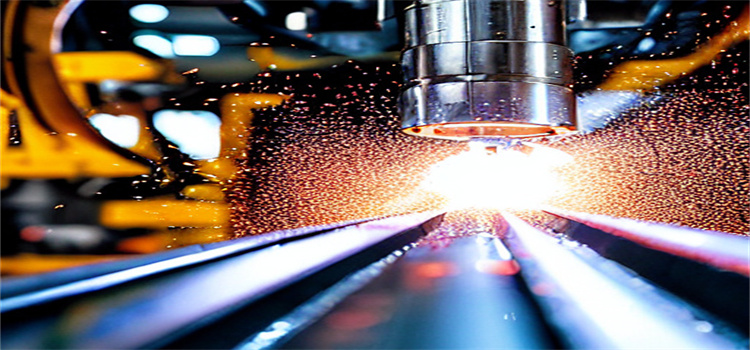
- Fiber Laser Cutting — The preferred method for precision parts. Modern 3-6 kW fiber lasers cut 16 gauge carbon steel at 80-120 inches per minute with kerf widths as narrow as 0.15 mm. Nitrogen assist gas produces oxide-free edges ready for welding or painting.
- Plasma Cutting — Cost-effective for larger parts and thicker materials. Handheld and CNC plasma systems handle 16 gauge easily but produce a wider heat-affected zone (HAZ) than laser.
- Shearing (Guillotine) — Fastest and most economical for straight cuts in high-volume production. A quality shear leaves a clean edge with no HAZ.
- Waterjet Cutting — Ideal for materials sensitive to heat (aluminum, stainless). Zero HAZ, excellent edge quality, but slower than laser for production volumes.
Welding 16 Gauge Steel
At 1.52 mm, 16 gauge is thick enough to be very forgiving for welding — burn-through is rarely an issue with proper technique. Key parameters per process:
| Welding Process | Recommended Parameters | Notes |
|---|---|---|
| MIG (GMAW) | 0.030-0.035″ wire, 75% Ar / 25% CO₂, 100-160 amps, 17-20 volts | Most common for production; short-circuit transfer for thin sections |
| TIG (GTAW) | 3/32″ tungsten (2% thoriated or lanthanated), ER70S-2/6 filler, 80-130 amps | Best aesthetics; ideal for stainless and visible joints |
| Spot Welding | 8-12 kA current, 8-12 cycles, 400-600 lb electrode force | Excellent for automotive and appliance assembly lines |
| Stick (SMAW) | 1/8″ E6013 or E7018 electrode, 80-110 amps | Field repairs and construction; spatter cleanup required |
Forming and Bending
16 gauge carbon steel bends cleanly on press brakes. Recommended V-die opening: 8-12 mm (6-8 x material thickness). Minimum inside bend radius for cold-rolled carbon steel: approximately 1.5 mm (1 x thickness) — tighter radii risk cracking. For stainless steel, increase the minimum radius to 2 x thickness (approximately 3.2 mm) due to higher work-hardening rates.
Global Steel Market Outlook 2025-2026: What Buyers of 16 Gauge Steel Should Know
Understanding the macroeconomic forces shaping steel prices is essential for informed procurement. Here is a concise analysis based on the latest 2025/2026 data from OECD, World Steel Association, and leading industry analysts:
Price Environment (Q1 2026)
Global steel prices entered 2026 at or near the cycle bottom, following a prolonged downturn driven by structural overcapacity — particularly from China, where excess production continues to be exported into global markets. Key figures:
- Global capacity utilization: 78-79% in 2025, with OECD projecting a decline toward ~70% by 2027 as 165 million tons of new capacity comes online
- Asia/Export HRC Prices: Trading around $500-550/ton FOB as of Q1 2026, reflecting weak Chinese demand (down ~1% year-on-year due to the real estate downturn)
- European HRC Prices: Recovering to ~€700/ton (Q1 2026), driven by EU safeguard measures and CBAM carbon pricing expectations
- Raw Material Inputs: Iron ore (62% Fe) trending toward $90/ton in 2026 (down from $100 in 2025), partially offsetting inflationary pressures
2026-2027 Outlook for 16 Gauge Buyers
The steel market is bifurcating into two distinct tracks:
- Protected Western Markets (EU, US, UK): Prices expected to rise 5-12% in H2 2026 as new safeguard quotas and CBAM compliance costs take effect. EU import quotas were cut by ~13 million tons effective July 2026, with excess tariff rates doubled to 50%.
- Asian & Unprotected Markets: Prices expected to remain flat or decline slightly through 2026, recovering only in 2027 as global demand gradually improves (projected +0.7% CAGR through 2028).
Strategic takeaway: For buyers sourcing 16 gauge steel from China and Asia in 2026, the current pricing environment offers a favorable window. Direct factory relationships — such as those maintained by Huaxia Steel with China’s leading mills — provide the most competitive pricing without compromising on quality or delivery reliability.

How to Choose a 16 Gauge Steel Supplier: The Huaxia Steel Advantage
Sourcing 16 gauge steel is about more than price — it is about reliability, quality consistency, and having a partner who understands your manufacturing requirements. Here is a practical supplier evaluation framework, alongside how Huaxia Steel delivers on each criterion:
| Evaluation Criterion | What to Look For | Huaxia Steel Advantage |
|---|---|---|
| Material Range | Carbon steel, galvanized, stainless across 10-26 gauge | Full carbon steel portfolio — low, medium, and high-carbon grades; plus alloy and tool steels |
| International Certifications | ISO 9001, material test certificates (MTC), third-party inspection availability | ISO 9001 certified, SGS-verified products, comprehensive mill test reports with every shipment |
| Custom Processing | Cut-to-size, custom widths, specific coating requirements | Bespoke solutions: custom dimensions, surface treatments, steel grades tailored to your specification |
| Pricing Transparency | Factory-direct pricing, no hidden intermediary markups | 15+ years of direct mill relationships ensure factory-gate pricing with full cost transparency |
| Delivery Reliability | On-time performance, logistics coverage in your region | Global shipping to 80+ countries; 24-hour inquiry response; dedicated logistics coordination |
| Technical Support | Metallurgical advice, grade selection guidance, application engineering | Expert team provides material selection consultation, welding recommendations, and application-specific advice |
Why Partner with Huaxia Steel for Your 16 Gauge Requirements?
Headquartered in Shanghai, China, Huaxia Steel has been a trusted carbon steel and metal supplier for over 15 years. We serve manufacturers, fabricators, and construction companies across the Middle East, Southeast Asia, Europe, the Americas, and beyond. Our 16 gauge steel products are manufactured to the most demanding international standards and shipped with complete documentation.
What you get when you work with Huaxia Steel:
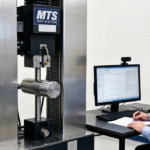
- Verified Quality — Every batch undergoes chemical composition analysis, mechanical property testing (tensile, yield, elongation), dimensional verification, and surface inspection before release. Third-party SGS/BV inspection available on request.
- Competitive Factory-Direct Pricing — Our direct relationships with China’s premier steel mills mean you avoid distributor markups. In the current 2026 market, this translates to real cost savings on every order.
- Custom Specifications — Need 16 gauge steel in a non-standard width, specific temper, or with a particular coating weight? We manufacture to your exact requirements — no minimum order quantity on trial orders.
- Global Logistics — Container loads, break-bulk, or LCL — our logistics team handles documentation, customs clearance coordination, and delivery tracking from mill to your factory door.
- Technical Partnership — Not sure whether 16 gauge carbon steel or 16 gauge galvanized is right for your application? Our metallurgical engineers provide honest, unbiased recommendations based on your specific operational conditions.
Whether you need 16 gauge cold-rolled carbon steel sheets for automotive stamping, 16 gauge galvanized steel for outdoor construction, or 16 gauge stainless steel for commercial kitchen fabrication — Huaxia Steel delivers quality, consistency, and value that global manufacturers have relied on since 2009.
Frequently Asked Questions About 16 Gauge Steel
Q1: How thick is 16 gauge steel in millimeters and inches?
16 gauge carbon steel measures 1.52 mm (0.0598 inches). Stainless steel is slightly thicker at 1.59 mm (0.0625 inches), and galvanized steel at 1.61 mm (0.0635 inches). Always confirm the material type when specifying 16 gauge — the thickness varies significantly by metal.
Q2: Is 16 gauge thicker than 18 gauge?
Yes. In the gauge system, lower numbers mean thicker material. 16 gauge carbon steel (1.52 mm) is approximately 20% thicker than 18 gauge (1.21 mm). This translates to noticeably better dent resistance, load-bearing capacity, and sound dampening — which is why premium kitchen sinks and heavy-duty equipment specify 16 gauge over 18 gauge.
Q3: What is 16 gauge steel best used for?
The top applications in 2025/2026 include commercial kitchen equipment (sinks, countertops), automotive body panels, large-diameter HVAC ductwork, metal building framing, industrial machinery enclosures, heavy-duty shelving and racking, outdoor signage, storage tanks, and premium furniture. It is the go-to gauge when 18 gauge is not strong enough but 14 gauge would be over-engineered.
Q4: How much does a 4×8 sheet of 16 gauge steel weigh?
A standard 4 ft x 8 ft (1220 mm x 2440 mm) sheet of 16 gauge carbon steel weighs approximately 65-70 lbs (29-32 kg). Stainless steel sheets weigh slightly more (~72 lbs / 33 kg), while aluminum sheets weigh approximately 65% less (~23 lbs / 10.5 kg).
Q5: Can you weld 16 gauge steel easily?
Yes — 16 gauge is very weld-friendly. At 1.52 mm, it is thick enough that burn-through is rarely an issue with proper technique. MIG welding is the most common production method (0.030-0.035″ wire, 100-160 amps), while TIG provides superior aesthetics for visible joints on stainless steel. Spot welding is also highly effective for high-volume assembly.
Q6: Is 16 gauge steel good for outdoor use?
16 gauge galvanized steel is excellent for outdoor applications, with a typical service life of 30-50+ years in rural environments. 16 gauge stainless steel (316 grade) is even better for highly corrosive environments like coastal areas. Uncoated 16 gauge carbon steel is not recommended for outdoor use — it will rust without paint, powder coating, or galvanizing.
Q7: What are 16 gauge steel prices in 2026?
As of Q1 2026, 16 gauge carbon steel sheet pricing in the Asian export market ranges from approximately $500-600/ton FOB, depending on grade, quantity, and surface treatment. Galvanized 16 gauge adds a premium of $80-150/ton for the zinc coating. Stainless steel (304 grade) commands a significantly higher price, in the range of $2,200-2,800/ton. For the most current pricing, contact a reputable supplier directly — Huaxia Steel provides up-to-date quotes within 24 hours.
Q8: What is the difference between 16 gauge and 14 gauge steel?
14 gauge carbon steel (1.90 mm) is approximately 25% thicker than 16 gauge (1.52 mm). It offers greater load-bearing capacity and impact resistance, but is also heavier (~85 lbs per 4×8 sheet vs. ~65-70 lbs), more expensive, and requires more forming force. Choose 16 gauge when you need a balance of strength and workability; choose 14 gauge when maximum structural integrity is the priority.
Conclusion: 16 Gauge Steel — The Optimal Balance for Demanding Applications
At 1.52 mm for carbon steel and 1.59 mm for stainless, 16 gauge steel sits at the intersection of strength, formability, and cost-efficiency. It is thick enough to withstand the abuse of a commercial kitchen, the structural demands of building framing, and the precision requirements of automotive stamping — yet it remains economical enough for high-volume production and formable enough for complex geometries.
As the global steel market navigates the post-2025 landscape of trade protections, carbon pricing, and shifting demand patterns, having a reliable, experienced supplier is more important than ever. Huaxia Steel — with 15+ years of carbon steel expertise, ISO 9001 certified quality systems, factory-direct pricing, and worldwide logistics — is ready to be your long-term partner for 16 gauge steel and beyond.
Huaxia Steel — Your Trusted Carbon Steel & Metal Supplier Since 2009. Based in Shanghai, China. Serving manufacturers worldwide.
📞 Phone: +86-021-54725826 | +86-13012867759
🌐 Website: www.huaxia-steel.com
📍 Address: RM557, No.1388 Jiangyue Road, Shanghai, China
⏰ Business Hours: 8:30 – 20:00 (Beijing Time)