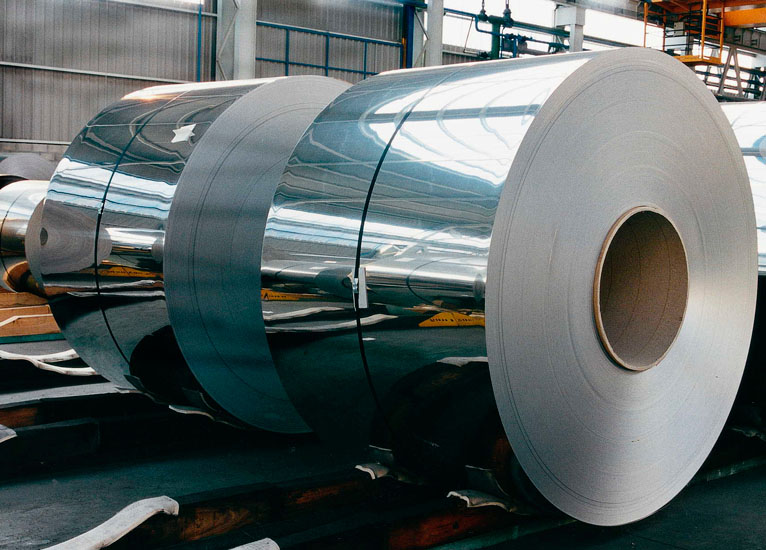
When an engineer reaches for medium carbon steel, chances are they’re thinking of AISI 1045. It’s the workhorse of industrial metalworking — tough enough for gears and shafts, responsive enough to heat treatment, and priced well below alloy alternatives. Yet a surprising number of buyers source it without fully understanding what separates a well-specified 1045 order from one that fails under load.
This guide covers everything you need: exact property data, practical heat treatment parameters, failure modes to avoid, and how to source 1045 at the right spec from a verified supplier.
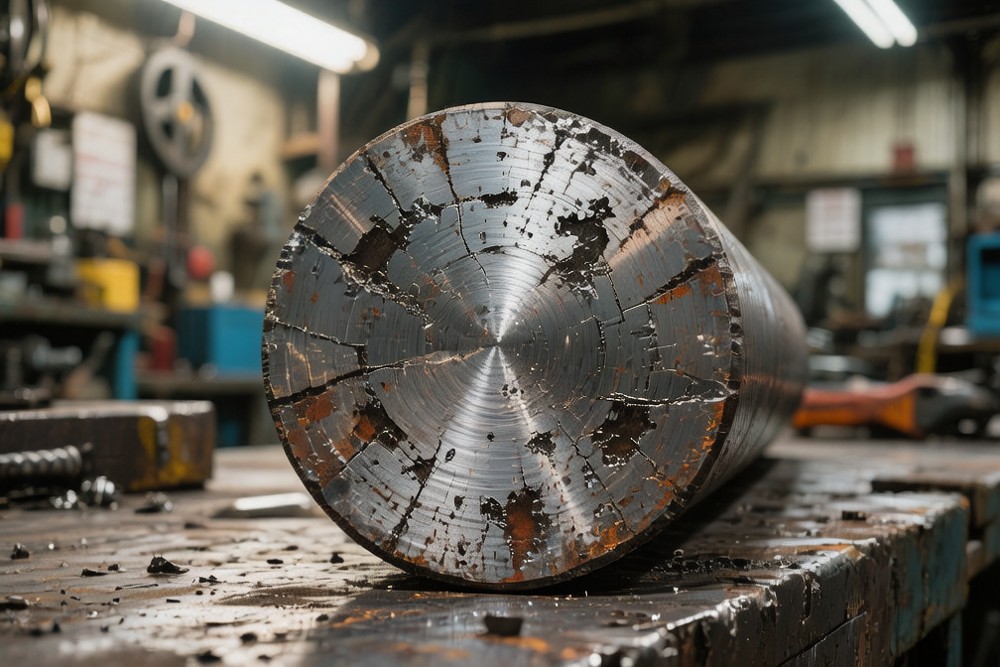
What Is 1045 Carbon Steel?
AISI/SAE 1045 is a medium carbon steel with a carbon content typically between 0.43% and 0.50%. The “10” prefix identifies it as a plain carbon steel (no significant alloying elements beyond manganese), and “45” approximates the carbon percentage in hundredths.
| Carbon Range | Steel Family | Behavior |
|---|---|---|
| 0.05–0.30% | Low carbon (mild steel) | Soft, highly weldable, low strength |
| 0.30–0.60% | Medium carbon (incl. 1045) | Balanced strength, good machinability |
| 0.60–1.00% | High carbon | Hard, wear-resistant, brittle |
Chemical Composition
| Element | Content (%) |
|---|---|
| Carbon (C) | 0.43 – 0.50 |
| Manganese (Mn) | 0.60 – 0.90 |
| Phosphorus (P) | ≤ 0.040 |
| Sulfur (S) | ≤ 0.050 |
| Silicon (Si) | 0.15 – 0.35 |
Global Standard Equivalents
| Standard | Designation |
|---|---|
| AISI/SAE (USA) | 1045 |
| GB/T 699 (China) | 45# (45 steel) |
| DIN (Germany) | C45 / Ck45 |
| JIS (Japan) | S45C |
| BS (UK) | 080M46 |
| ISO | C45E |
This matters when sourcing internationally. Chinese mills produce massive quantities of 45# steel that is equivalent to AISI 1045 — but you need to verify the mill certificate confirms the composition, not just the name.
Mechanical Properties of AISI 1045 Steel
As-Rolled (Hot-Rolled, No Heat Treatment)
| Property | Value |
|---|---|
| Tensile Strength (UTS) | 570–700 MPa |
| Yield Strength (0.2% offset) | 310–380 MPa |
| Elongation (in 50mm) | 14–16% |
| Reduction in Area | 35–45% |
| Brinell Hardness | 163–217 HB |
| Charpy Impact (room temp) | 35–55 J |
Quenched and Tempered (Q&T) at 600°C
| Property | Value |
|---|---|
| Tensile Strength | 750–900 MPa |
| Yield Strength | 650–800 MPa |
| Elongation | 16–20% |
| Hardness | 220–260 HB |
| Charpy Impact | 50–80 J |
Practical note: Q&T at 600°C gives you the best combination of strength and toughness for most shaft and gear applications. Temper below 400°C (“temper embrittlement range”) and impact toughness drops sharply — this is one of the most common specification mistakes buyers make.
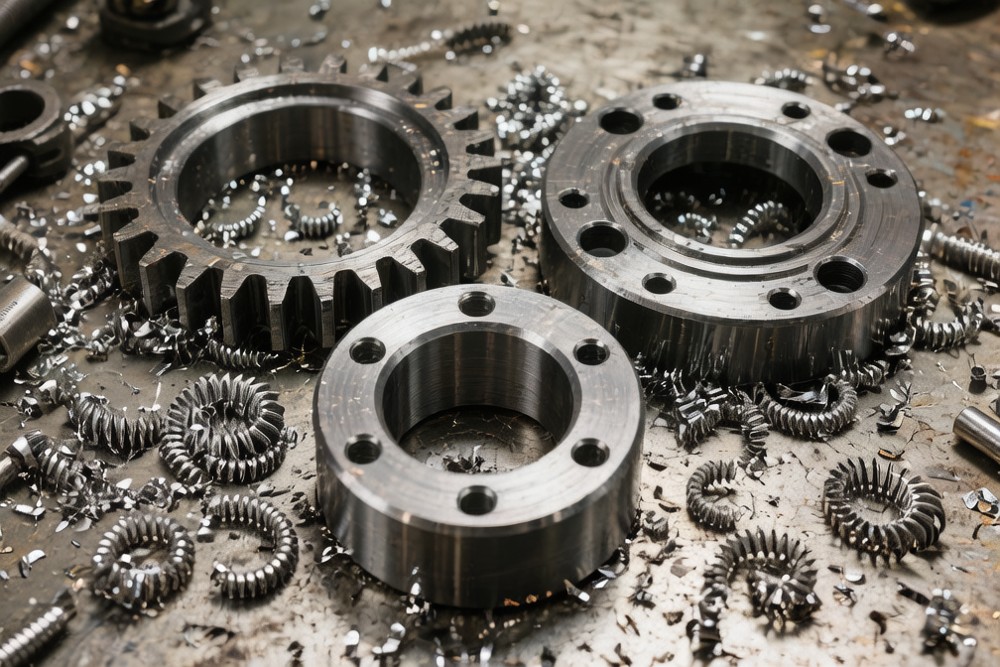
Heat Treatment of 1045 Carbon Steel
Annealing
Purpose: Soften for machining, relieve residual stress, improve ductility.
- Temperature: 790–870°C (full anneal) or 690–750°C (process anneal)
- Soak Time: 1 hour per 25mm of cross-section (minimum 30 minutes)
- Cooling: Furnace cool at ≤28°C/hour to below 315°C, then air cool
- Result: 149–187 HB, excellent machinability
Tempering After Hardening
Always temper after hardening — untempered martensite is brittle and prone to cracking.
| Tempering Temp | Hardness (HRC) | Impact Energy | Typical Use |
|---|---|---|---|
| 150–200°C | 58–62 | Low | Cutting tools, wear plates |
| 300–400°C | 45–55 | Medium-low | Avoid this range (temper embrittlement) |
| 400–500°C | 35–45 | Medium | Springs, heavy-duty tools |
| 550–650°C | 26–35 | High | Shafts, gears, structural parts |
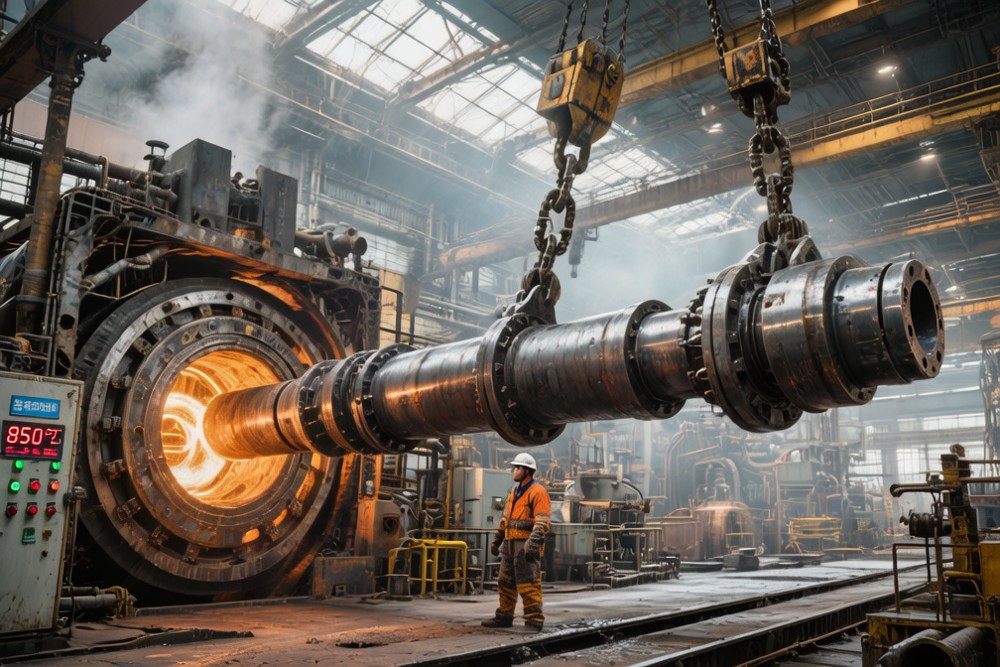
Industrial Applications of 1045 Carbon Steel
Automotive & Transportation
- Crankshafts (induction-hardened journals)
- Axle shafts and half shafts
- Steering knuckles and tie rod ends
- Transmission gears (smaller, lighter-duty types)
- Wheel hubs and spindles
Industrial Machinery
- Machine tool spindles — requires tight tolerances and vibration damping
- Hydraulic cylinder rods — good straightness and machinability
- Coupling flanges and hubs
- Cams and followers (with surface hardening)
- Roller shafts for conveyor systems
Oil & Gas
- Drill collar components
- Pump shafts and impellers
- Valve stems and bonnets
- Flanges for moderate-pressure service
1045 vs. Other Common Grades
| Grade | Carbon % | Tensile (Q&T) | Hardenability | Weldability | Relative Cost |
|---|---|---|---|---|---|
| 1018 | 0.15–0.20 | 400–500 MPa | Low | Excellent | Low |
| 1045 | 0.43–0.50 | 750–900 MPa | Moderate | Requires preheat | Medium |
| 1095 | 0.90–1.03 | 1000–1200 MPa | Good | Poor | Medium |
| 4140 | 0.38–0.43 | 900–1100 MPa | High | Requires preheat | Higher |
| 4340 | 0.38–0.43 | 1100–1300 MPa | Very high | Difficult | High |
Common Failure Modes and How to Avoid Them
1. Brittle Fracture After Heat Treatment
Cause: Tempered in the 300–400°C embrittlement zone, or not tempered at all.
Prevention: Always temper above 450°C unless specifically targeting high hardness.
2. Core Softness on Large Sections
Cause: 1045 hardenability too low for full through-hardening on sections >50mm.
Prevention: For 50mm+ shafts, switch to 4140 or use the 1045H variant.
3. Hydrogen Cracking in Welds
Cause: Insufficient preheat, low-hydrogen filler not used.
Prevention: Preheat per section thickness; use E7018 or equivalent low-hydrogen electrode.
How to Source 1045 Carbon Steel from China
China is the world’s largest producer of 45# steel. When sourcing from Chinese suppliers, verify:
- Mill certificate authenticity: Request SGS or third-party inspection for first orders
- ISO 9001 certification: Confirms quality management system
- Chemical composition test: Cross-check against the spec range above
- Ultrasonic testing (UT): For critical shafts or thick sections
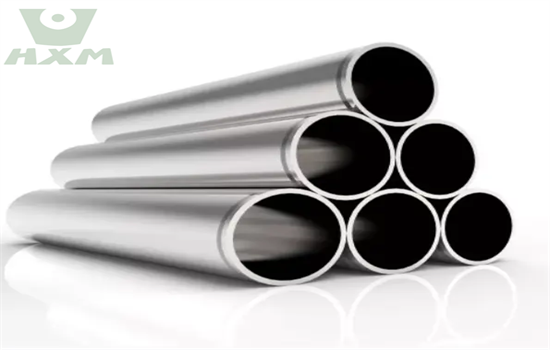
At Huaxia Steel, we supply AISI 1045 in round bar, flat bar, plate, and tube form, with mill certificates, ISO 9001 quality management, and cut-to-size processing. Our typical lead time is 15–25 business days, with flexible MOQ for smaller R&D orders.
Frequently Asked Questions
What is the Rockwell hardness of 1045 steel as-rolled?
Typically 20–26 HRC (163–217 HB) in the hot-rolled condition, depending on section size and cooling rate.
Is AISI 1045 the same as Chinese 45# steel?
In chemical composition, yes — GB/T 699 45# and AISI/SAE 1045 are nearly identical. However, always verify with a mill certificate, as designation equivalence doesn’t guarantee identical processing or quality.
How does 1045 compare to 1018 for a shaft application?
1045 offers roughly 50–70% higher tensile and yield strength after normalization, and significantly higher surface hardness after induction hardening. For any shaft under meaningful load, 1045 is the better choice at modest additional cost.
Conclusion
AISI 1045 carbon steel earns its dominant position through a combination of genuine versatility, predictable heat treatment response, and a cost profile that outpaces alloy steel on most moderate-duty applications. Understanding its hardenability limits and respecting the tempering temperature window will keep most quality problems well upstream.
Ready to source AISI 1045? Huaxia Steel supplies verified medium carbon steel with full mill certification, flexible cut-to-size processing, and worldwide shipping from Shanghai.
Author: Huaxia Steel Technical Team | Updated: June 2025 | Category: Carbon Steel Grades