Carbon Steel HS Code & Export Tariff Guide: 7208, 7210, 7213 for International Buyers
When you ship carbon steel across borders, every customs declaration needs the right HS code. Get it wrong and you face one of three problems: a tariff dispute with customs, a duty assessment far higher than expected, or a shipment stuck at port for weeks while documents are reissued.
This guide gives you the exact HS codes for the most common carbon steel products, the practical tariff rates by major importing region, and the common mistakes that delay shipments.
What Is an HS Code?
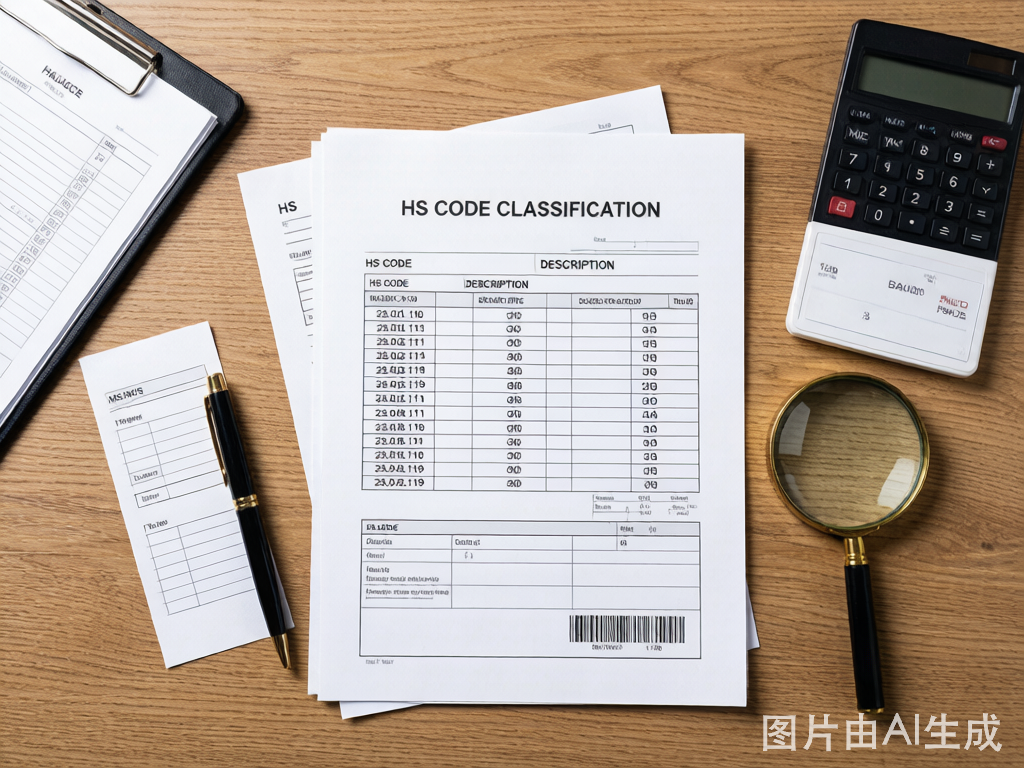
The Harmonized System (HS) is an international classification system maintained by the World Customs Organization (WCO). It uses a 6-digit code to identify products for customs purposes, with countries adding 2–4 more digits for their own tariff schedules.
The structure:
First 2 digits (Chapter): Product category — Chapter 72 covers iron and steel
First 4 digits (Heading): Product group within the chapter
First 6 digits (Subheading): International standard, same worldwide
7–10 digits: National extensions (vary by country)
For carbon steel, virtually all product forms fall under Chapter 72 — Iron and Steel. The wrong chapter (e.g., 7304 for tubes, 7308 for structures) can mean a 5–15% difference in duty.
Carbon Steel HS Codes: The Headings You Need
Here are the HS codes that cover the vast majority of carbon steel procurement:
7208 — Flat-Rolled Products in Coils, Hot-Rolled, Not Clad/Plated
Subheading
Description
Typical Products
7208.10
In coils, hot-rolled, with patterns in relief
Chequer plate, floor plate
7208.25
In coils, hot-rolled, pickled, ≥ 4.75 mm thick
HR plate, hot-rolled strip
7208.26
In coils, hot-rolled, pickled, 3–4.75 mm
Hot-rolled sheet
7208.27
In coils, hot-rolled, pickled, < 3 mm
Hot-rolled sheet (thin)
7208.36–7208.39
In coils, hot-rolled, not pickled, various thicknesses
Standard HR coil
7208.51–7208.59
Not in coils, hot-rolled, various thicknesses
HR plate (cut-to-length)
7209 — Flat-Rolled Products in Coils, Cold-Rolled, Not Clad/Plated
Subheading
Description
Typical Products
7209.15
Cold-rolled, ≥ 3 mm thick
CR plate
7209.16
Cold-rolled, 1–3 mm
CR sheet
7209.17
Cold-rolled, 0.5–1 mm
CR sheet (thin)
7209.18
Cold-rolled, < 0.5 mm
CR strip (thin)
7210 — Flat-Rolled Products, Clad, Plated, or Coated
Subheading
Description
Typical Products
7210.11
Plated or coated with tin
Tinplate
7210.20
Plated or coated with lead
Terne plate
7210.30
Electrolytically plated or coated with zinc
EG (electro-galvanized) sheet
7210.41–7210.49
Otherwise plated or coated with zinc
GI (hot-dip galvanized) sheet
7210.61
Plated or coated with aluminum-zinc alloys
Galvalume sheet
7210.69
Other plated or coated
Al-coated, Zn-Ni coated
7210.70
Painted, varnished, or plastic-coated
Pre-painted (PPGI/PPGL)
7210.90
Other (clad, etc.)
Clad plate
7211 — Flat-Rolled Products, Not Clad/Plated, < 600 mm Wide
Subheading
Description
Typical Products
7211.13
HR, not clad/plated, ≥ 4 mm thick
Narrow HR strip
7211.14
HR, not clad/plated, < 4 mm
Narrow HR strip
7211.19
CR, not clad/plated
Narrow CR strip
7213 — Bars and Rods, Hot-Rolled, in Irregularly Wound Coils
Subheading
Description
Typical Products
7213.10
Concrete reinforcing bars (rebar) with indentations
Rebar
7213.20
Other, of free-cutting steel
Free-cutting bar (e.g., 12L14)
7213.91
Other, circular cross-section, < 14 mm diameter
Wire rod
7213.99
Other
Wire rod (other)
7214 — Other Bars and Rods of Iron or Non-Alloy Steel, Hot-Rolled
Subheading
Description
Typical Products
7214.10
Forged
Forged bar
7214.20
Concrete reinforcing bars (rebar), with indentations
7204 = Ferrous waste and scrap7208 = Flat-rolled iron or non-alloy steel products
A shipment of steel sheet declared as 7204.49 (other waste and scrap) because the broker thought “scrap tolerance” was the right heading will be rejected at port. The MTC and product form must support your HS code declaration.
2. Wrong Subheading — Coil vs Cut-to-Length
The same plate is 7208.51 if it’s a coil and 7208.52 if it’s cut to length. Customs authorities verify physical condition, not just the paperwork. If your commercial invoice says “coil” but the container is loaded with cut plates, expect a hold.
3. Misclassifying Coated Steel
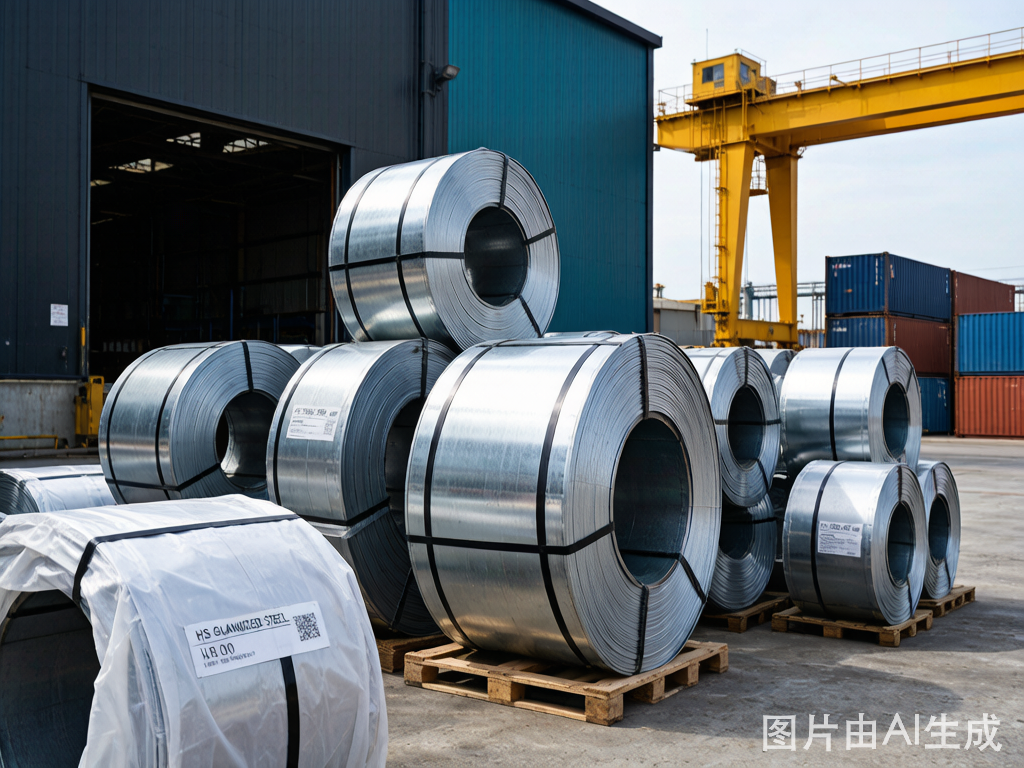
Galvanized (GI), electro-galvanized (EG), galvalume (Zn-Al), and pre-painted (PPGI) are different subheadings:
7210.30 — Electrolytic zinc coating (EG)
7210.41–7210.49 — Hot-dip zinc coating (GI)
7210.61 — Aluminum-zinc alloy coating (Galvalume)
7210.70 — Painted/coated (PPGI/PPGL)
If you misclassify GI as EG (or vice versa), the declared coating weight often doesn’t match the inspection result, triggering a re-inspection.
4. Treating Bars and Tubes Differently
7214 = Bars and rods (solid cross-section)
7304 = Tubes and pipes (hollow cross-section)
A “round bar” is 7214. A “round tube” is 7304. If you buy seamless tubes and your broker codes them as 7214, the duty is wrong and customs will reject the declaration.
5. Forgetting the National Tariff Extensions
The 6-digit HS code is international. The 7th–10th digits are national — and they affect the duty rate. For example:
US HTS: 7208.36.0030 vs 7208.36.0060 have different duty rates depending on value
EU TARIC: 7208 36 00 90 has 0% duty for most countries, but 7208 36 00 10 (origin-restricted) has a different rate
India ITC-HS: 7208.36.00 vs 7208.37.00 split by thickness
Always check the importing country’s full national tariff schedule, not just the international 6-digit code.
Carbon Steel Tariff Rates by Major Importing Region (2026)
These are typical most-favored-nation (MFN) rates for carbon steel. Real rates depend on origin, free trade agreements, and antidumping duties.
Product (HS 6-digit)
US (HTS)
EU (TARIC)
India
Brazil
Turkey
Vietnam
7208.36 (HR coil, < 4.75 mm)
0% (most origins)
0%
7.5%
9.0%
9.0%
0%
7208.37 (HR coil, 3–4.75 mm)
0%
0%
7.5%
9.0%
9.0%
0%
7208.51 (HR plate, cut)
0%
0%
7.5%
9.0%
9.0%
0%
7209.16 (CR sheet)
0%
0%
7.5%
9.0%
9.0%
0%
7210.41 (GI sheet)
0%
0%
7.5%
9.0%
9.0%
5%
7213.91 (wire rod)
0%
0%
7.5%
9.0%
9.0%
0%
7214.20 (rebar)
0%
0%
7.5%
9.0%
9.0%
0%
7214.99 (round bar)
0%
0%
7.5%
9.0%
9.0%
0%
7216.33 (H-beams)
0%
0%
7.5%
9.0%
9.0%
0%
Important: The US applies Section 232 tariffs of 25% on most steel imports from most countries (with quotas and country-specific exceptions). The EU has a Safeguard Measure with tariff-rate quotas. Many countries have antidumping duties on Chinese steel products. Always verify the current applicable rate with your customs broker.
Antidumping and Countervailing Duties: The Hidden Cost
Beyond standard tariffs, carbon steel faces numerous antidumping (AD) and countervailing duties (CVD):
US (Department of Commerce)
Carbon steel plate from China: AD 68.27%, CVD 38.84% (typical combined rate above 100%)
Galvanized steel from China: AD varies by producer, often 60%+
Cold-rolled steel from China: AD 265% on some producers (Yes — 265%, not a typo)
Rebar from China, Mexico, Turkey: AD 30–60%
EU
HR flat steel from China: AD 18.1–73.7% depending on producer
CR steel from China/Russia: AD 15.7–38.1%
Rebar from China: AD 18.4–25.0%
India
HR steel from China/Japan/Korea/Russia/Ukraine/Brazil: AD ranges from $180 to $570/ton
Other
Canada, Mexico, Australia, Brazil, Indonesia, and others all maintain active AD/CVD orders on Chinese carbon steel.
The bottom line: If you’re importing from China, the “tariff” you pay is often the antidumping duty, not the MFN rate. Always check the importing country’s AD/CVD schedule for the specific product and origin before quoting landed cost.
Country-of-Origin Rules: The Critical Detail
HS classification is only half the question. The other half is country of origin — and getting it wrong can be even more expensive than misclassifying the product.
Key Rules
Country of origin = where the product was substantially transformed. For steel, this is typically where the steel was melted and rolled, not where it was cut, coated, or exported from.
Transshipment doesn’t change origin. Shipping Chinese steel through Vietnam or Malaysia doesn’t make it Vietnamese — if the steel was melted in China, the origin is China, and Chinese AD duties apply.
Coating in a third country can change origin in some cases. If Chinese HR coil is galvanized in Vietnam, the country of origin may become Vietnam — but only if the galvanizing process meets the “substantial transformation” test under the importing country’s rules.
Certificates of Origin (Form A, EUR1, RCEP, etc.) must be issued by the actual origin country’s chamber of commerce. Falsified certificates can result in seizure, fines, and criminal liability.
Practical Tip
If your supplier says “we can re-route the shipment through [country] to avoid the duty,” be very careful. Customs authorities in the US, EU, Canada, and Australia actively investigate transshipment. The penalty for fraudulent origin claims is typically 2–5x the duty avoided, plus potential criminal prosecution.
HS Codes and Incoterms: How They Interact
Your HS code and Incoterm work together to determine total landed cost. The HS code controls the duty rate. The Incoterm determines who’s responsible for freight, insurance, and risk.
Incoterm
Seller’s Cost
Buyer’s Cost
HS Code Affects
EXW
Product only
Freight, insurance, duty, clearance
Duty paid by buyer
FCA
Product + delivery to carrier
Freight, insurance, duty
Duty paid by buyer
FOB
Product + loading onto vessel
Freight, insurance, duty
Duty paid by buyer
CIF
Product + freight + insurance
Duty, clearance
Duty paid by buyer
CFR
Product + freight
Insurance, duty
Duty paid by buyer
DAP
Product + freight + insurance to destination
Duty, clearance
Duty paid by buyer
DDP
Everything, including duty
None
Duty paid by seller
Practical implication: With FOB China pricing, the buyer is responsible for all duty. The seller has no liability for misclassification — but a good seller will help verify the correct HS code based on the product. If your broker classifies 7210.41 (GI sheet) as 7210.30 (EG sheet), the duty difference is real money, and it’s your money, not the seller’s.
Practical HS Code Verification Checklist
Before each international shipment, confirm:
HS code is determined by product form, process, and dimensions
National tariff schedule of the importing country has been checked (7–10 digits)
Antidumping/countervailing duty orders have been reviewed for the specific origin
Country of origin is correctly stated on the commercial invoice and certificate of origin
Product description on the invoice matches the actual goods (coil vs plate, galvanized vs painted, etc.)
MTC is included with the shipment and the heat number is documented
Customs broker in the destination country has reviewed the classification before shipping
Free trade agreement benefits are claimed (if applicable) with proper certificates of origin
Incoterm is clearly stated and consistent with the seller’s and buyer’s responsibilities
FAQ
What is the HS code for carbon steel plate?
Carbon steel plate is HS 7208.51 (not in coils, hot-rolled, ≥ 4.75 mm thick) or HS 7208.52 (not in coils, hot-rolled, 3–4.75 mm) depending on thickness. Cold-rolled plate is 7209.15 or 7209.16.
What is the HS code for galvanized steel?
Hot-dip galvanized (GI) is 7210.41–7210.49 depending on thickness. Electro-galvanized (EG) is 7210.30. Pre-painted (PPGI/PPGL) is 7210.70.
What is the HS code for rebar?
Hot-rolled rebar with indentations is 7214.20 (cut lengths) or 7213.10 (in coils). Stainless rebar would fall under a different heading.
What is the difference between HS code and HTS code?
HS code is the 6-digit international standard. HTS (Harmonized Tariff Schedule) is the US national 10-digit extension. The first 6 digits are the same globally; digits 7–10 are country-specific.
Do I need a customs broker to import steel?
In the US, EU, Canada, Australia, and most other major economies, yes. Customs brokerage for steel is specialized — the broker must understand antidumping duty orders, Section 232, and product-specific documentation. A general freight forwarder without steel experience is a risk.
How do antidumping duties work?
Antidumping duties are additional tariffs imposed when a country finds that foreign steel is being sold below “normal value” (often the domestic price in the exporting country). The duty is added on top of the MFN tariff. Rates vary by producer, product, and origin — sometimes over 100%.
Is carbon steel subject to Section 232 tariffs in the US?
Yes. The US Section 232 tariffs apply 25% on most carbon steel imports, with country-specific exemptions and quota arrangements. As of 2026, many countries have quota agreements; check the current status with US Customs or your broker.
What happens if I declare the wrong HS code?
Three common outcomes: (1) the shipment is held at port until the declaration is corrected, (2) the duty is reassessed at a higher rate plus a penalty, or (3) the shipment is seized entirely. Always verify with a qualified customs broker.
Conclusion
HS codes for carbon steel are not bureaucratic noise — they are the key that determines your landed cost, your customs clearance time, and your exposure to antidumping penalties. Get the classification right, verify the national tariff, check for AD/CVD orders, and confirm the country of origin. Then double-check with your broker.
If you’re sourcing from China for export to the US, EU, India, or Brazil, the actual landed duty is often 30–100% above the headline MFN rate because of antidumping. Factor that into your cost model before signing the purchase order, not after the shipment arrives.
Need help classifying your steel shipment or sourcing HS-coded carbon steel from China?Contact Huaxia Steel — we provide accurate commercial invoices with full HS code classification, certificates of origin, and customs documentation support for every export shipment.
If you require further information about our metal sheet products or architectural projects, please don’t hesitate to leave your contact details and message here.
Our team of experts will respond within 24 hours to continue the discussion and provide you with any additional information you requires.