Carbon Steel Inventory Management: Best Practices for Steel Distributors
Carbon Steel Inventory Management: Best Practices for Steel Distributors
Effective carbon steel inventory management directly impacts profitability for distributors, fabricators, and large-scale manufacturers. Unlike consumer goods, steel inventory carries unique challenges: significant capital tie-up, physical degradation risks (rust, deformation), volatile pricing, and substantial storage space requirements.
This guide presents eight proven strategies for optimizing carbon steel inventory — from demand forecasting and classification systems to warehouse layout and risk mitigation.
Fig 1
1. Steel-Specific Inventory Classification
Traditional ABC classification works for steel, but adding dimensional and grade factors improves decision-making.
Cross-reference steel grades (A36, A572, S355, Q235) with product forms (plate, coil, bar, tube) and standard sizes. High-velocity combinations (e.g., A36 plate 6mm × 1500mm × 6000mm) deserve dedicated rack space and automatic reorder points. Slow-moving exotic sizes should be made-to-order or sourced with longer lead times.
2. Demand Forecasting for Carbon Steel
Steel demand correlates with construction cycles, manufacturing output, and commodity pricing — making forecasting both critical and challenging.
Quantitative Methods
Moving averages: Simple 3-6 month rolling average for stable products
Exponential smoothing: Weight recent sales more heavily; alpha parameter 0.2-0.4
Seasonal decomposition: Account for construction seasonality (Q2-Q3 peaks in temperate climates)
Regression analysis: Correlate steel demand with leading indicators (construction permits, PMI, housing starts)
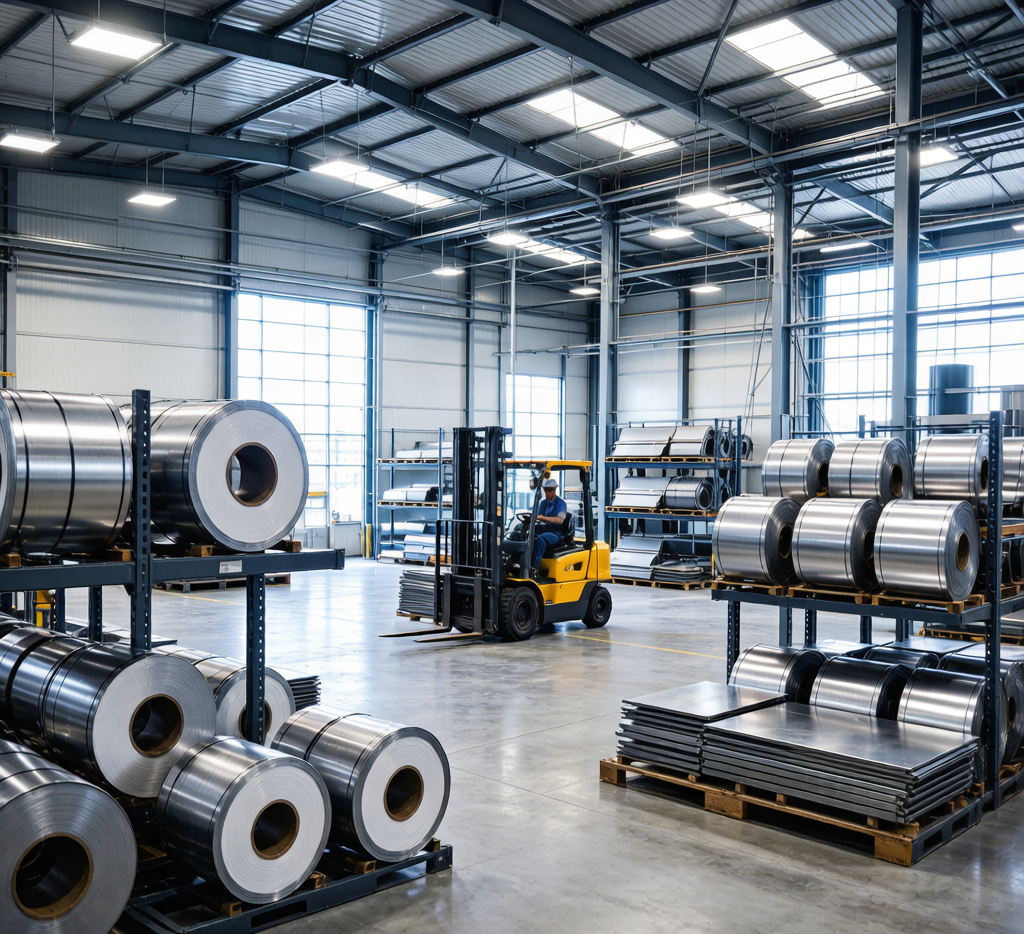
Scrap/returns zone: Segregated area for non-conforming material
Fig 3
5. Rust Prevention and Material Preservation
Carbon steel begins oxidizing immediately when exposed to moisture. Effective preservation protects inventory value.
Environmental Controls
Humidity: Maintain below 60% RH; dehumidifiers for indoor storage
Roof leaks: Regular inspection; immediate repair
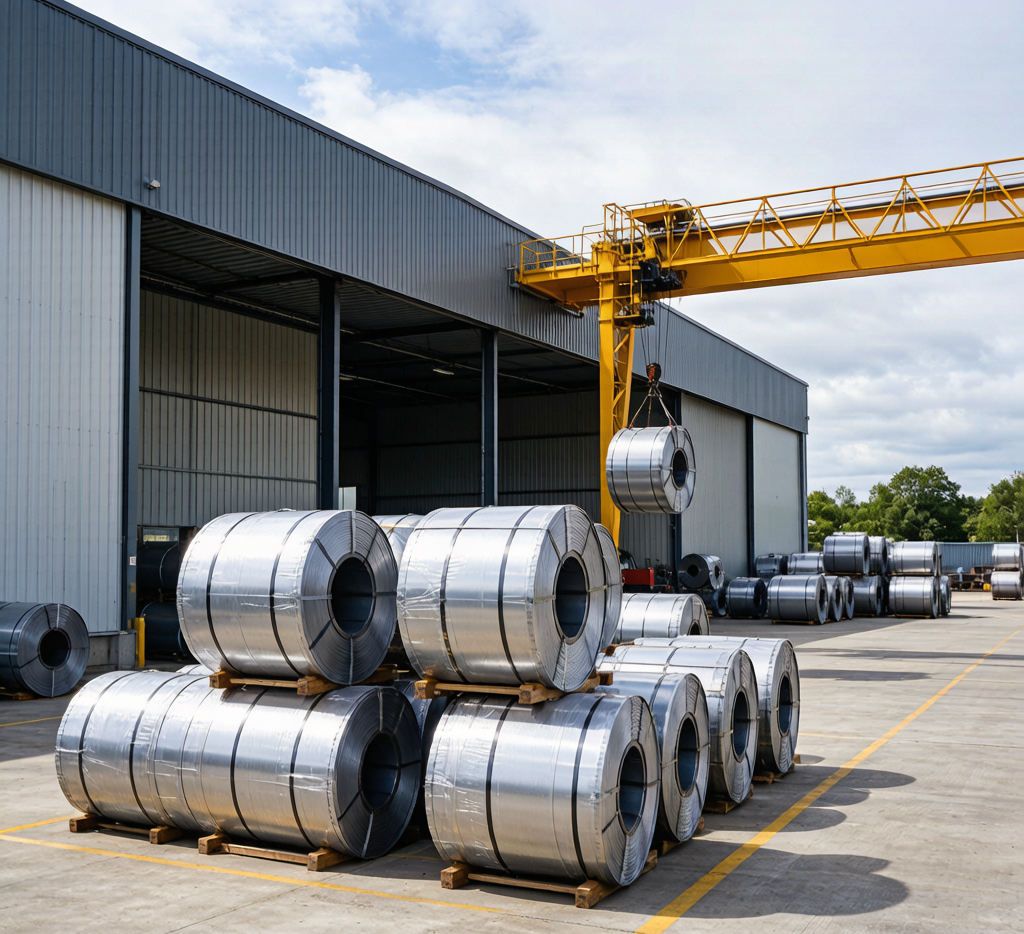
Ground moisture: Elevate stock 150mm+ on pallets or racks
Condensation: Avoid temperature cycling; insulate roofs
Protective Coatings
Coating Type
Duration
Best Application
Water-soluble oil (VCI)
3-6 months
Short-term indoor storage
Slushing oil (heavy)
6-12 months
Medium-term storage, uncoated coils
Protective wrapping (VCI film)
12-24 months
Precision blanks, machined parts
Desiccant + sealed wrapping
24+ months
Export shipment, long-term inventory
Inventory Rotation (FIFO)
Strict first-in-first-out rotation ensures older stock moves before surface degradation progresses. Mark each bundle with receipt date and coat remaining stock monthly if storage exceeds 90 days.
6. Technology Solutions for Steel Inventory
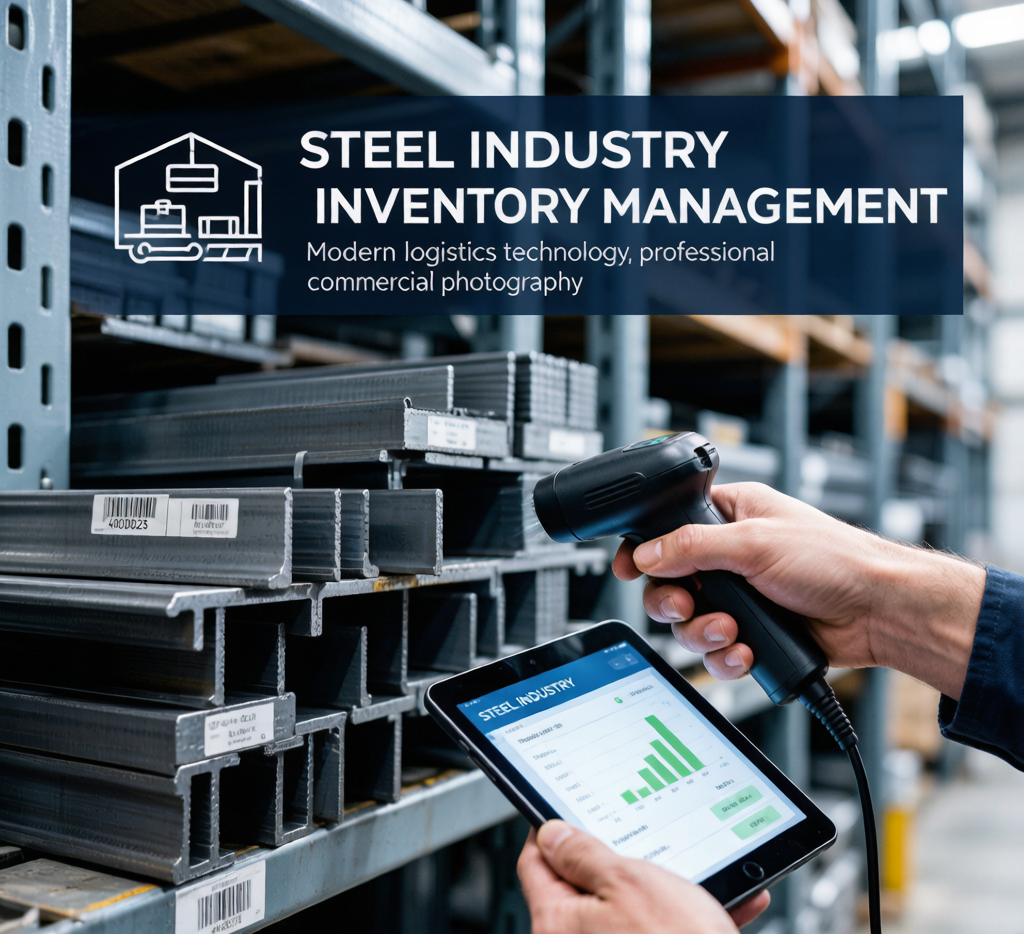
Modern inventory management software addresses steel-specific requirements that generic ERP systems often overlook.
Essential Software Features
Dimensional tracking: Thickness, width, length, weight per piece and bundle
Heat number traceability: Link inventory to mill certificates and test reports
Forward contracts: Lock prices with mills for 3-6 month commitments
Index-based pricing: Link sales to CRU, Platts, or MEPS indices
Inventory valuation method: Weighted average cost smooths price volatility versus FIFO
Supply Disruption Mitigation
Dual sourcing: Maintain relationships with 2-3 suppliers per critical grade
Geographic diversification: Balance domestic and import sources
Strategic stock: Maintain 4-6 weeks of A-item safety stock
Quality Risk Control
Incoming inspection: Verify dimensions, surface condition, and certificates
Segregation: Quarantine non-conforming material immediately
Traceability: Record heat numbers, batch IDs, and supplier for every bundle
FAQ
What is the ideal inventory turnover for carbon steel distributors?
Healthy turnover ranges from 6 to 12 times annually depending on product mix. Commodity grades (A36, Q235) should turn 10-12x; specialty grades (S50C, 65Mn) may turn 4-6x. Turnover below 4x indicates excessive inventory or poor demand alignment; above 15x risks stockouts and rush freight costs.
How do I prevent rust on stored carbon steel coils?
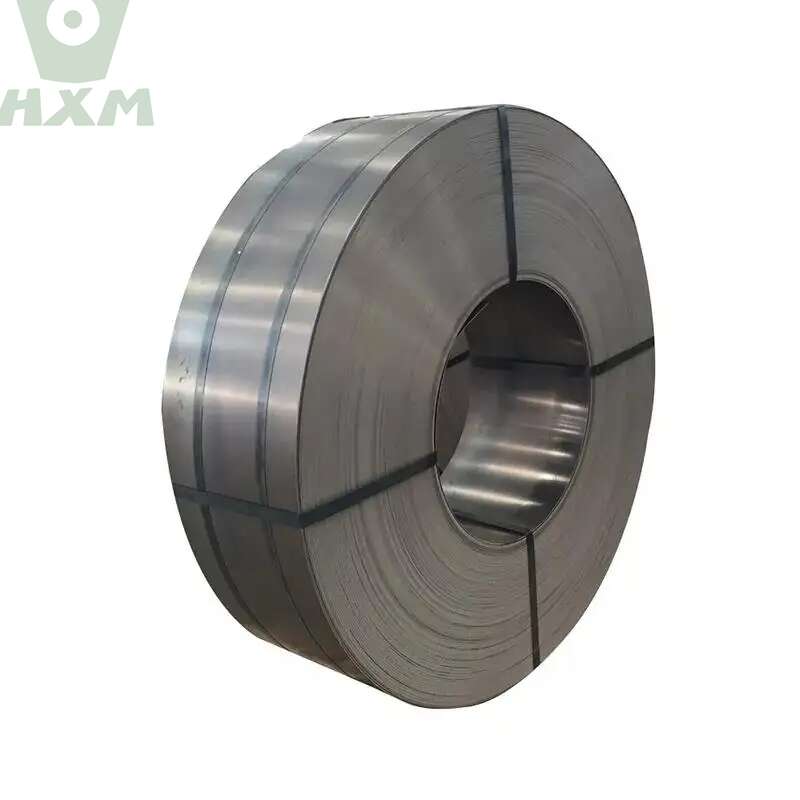
Store coils indoors on elevated cradles with humidity below 60%. Apply slushing oil or VCI coating before storage. For long-term storage (>6 months), use VCI wrapping with desiccant. Rotate stock FIFO and inspect monthly for condensation or packaging damage. Never store directly on concrete — use timber or rubber separators.
Should I use FIFO or weighted average costing for steel inventory?
Weighted average cost (WAC) generally works better for steel because it smooths volatile price fluctuations across periods. FIFO reflects current replacement costs more accurately but creates exaggerated margin swings when prices move rapidly. Most steel distributors use WAC for financial reporting and FIFO for physical rotation.
How much safety stock should I carry for imported carbon steel?
Imported steel with 8-12 week lead times typically requires 6-8 weeks of safety stock for A-items, assuming 95% service level. Break the calculation into transit time variability (add 2-3 weeks buffer) and demand uncertainty (statistical safety stock). Consider pre-positioning strategic stock at port warehouses to reduce effective lead time.
What is the best way to track remnant pieces from cut-to-length operations?
Implement a remnant tracking system that records original heat number, remaining length/weight, and storage location. Tag remnants with barcode labels showing dimensions and grade. Set minimum remnant thresholds (e.g., >2 meters) for re-entry into inventory. Some steel ERP systems automatically create new SKU records for remainders with adjusted weights and dimensions.
Conclusion
Carbon steel inventory management balances service level, capital efficiency, and material preservation in a volatile commodity environment. Success requires grade-specific strategies, robust forecasting, appropriate technology, and disciplined warehouse practices.
The distributors achieving best-in-class performance share common traits: they classify inventory rigorously, maintain 98%+ accuracy, turn stock 8-10x annually, and protect material value through systematic preservation. They also treat inventory data as a strategic asset — using it to negotiate better supplier terms, identify cross-selling opportunities, and reduce working capital requirements.
Need reliable carbon steel supply with predictable lead times? Huaxia-Steel maintains substantial A36, A572, S355, and Q235 inventory with mill-direct sourcing, certified quality, and flexible delivery scheduling. Contact our sales team to discuss your inventory and supply chain requirements.
If you require further information about our metal sheet products or architectural projects, please don’t hesitate to leave your contact details and message here.
Our team of experts will respond within 24 hours to continue the discussion and provide you with any additional information you requires.