A Bill of Materials (BOM) is the DNA of every carbon steel procurement project. Misread a grade, overlook a tolerance or miss a test requirement and you risk delivery delays, rejected shipments and budget overruns. This guide teaches buyers how to read a carbon steel BOM line by line, flag hidden risks and convert technical specifications into enforceable purchase orders.
1. What Is a Carbon Steel BOM?
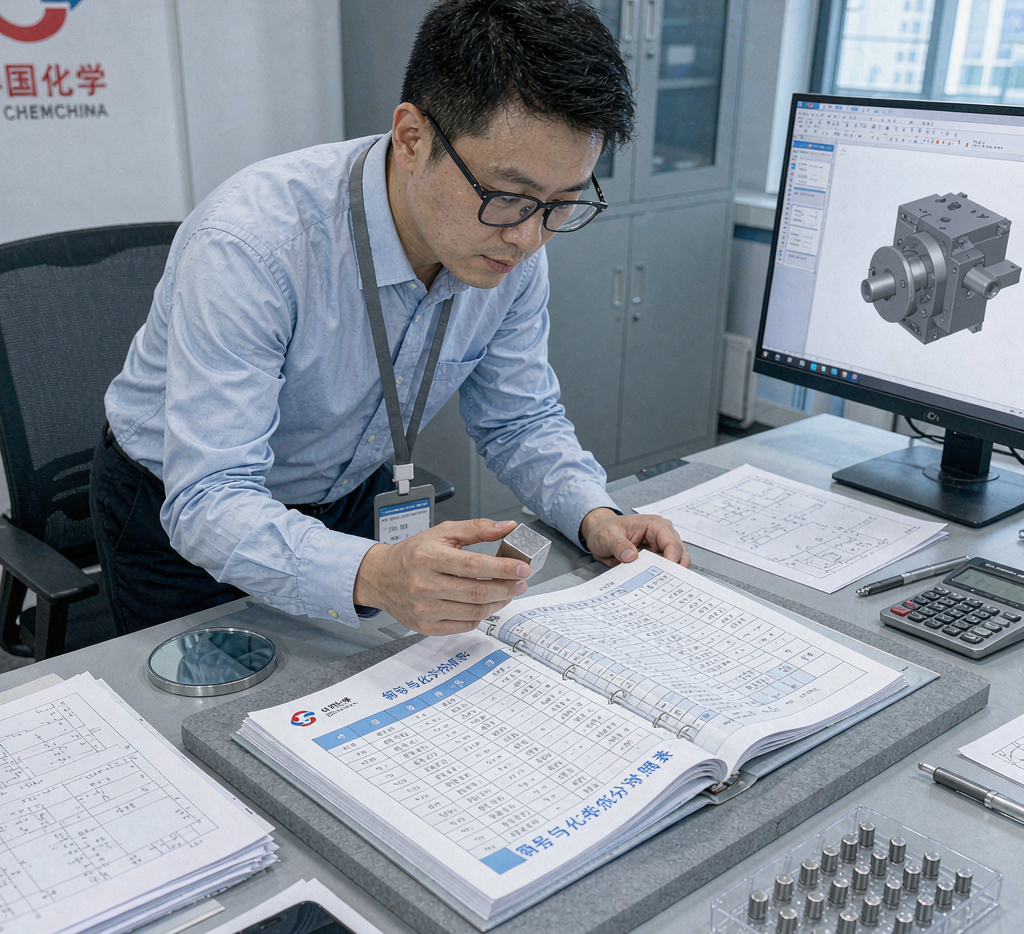
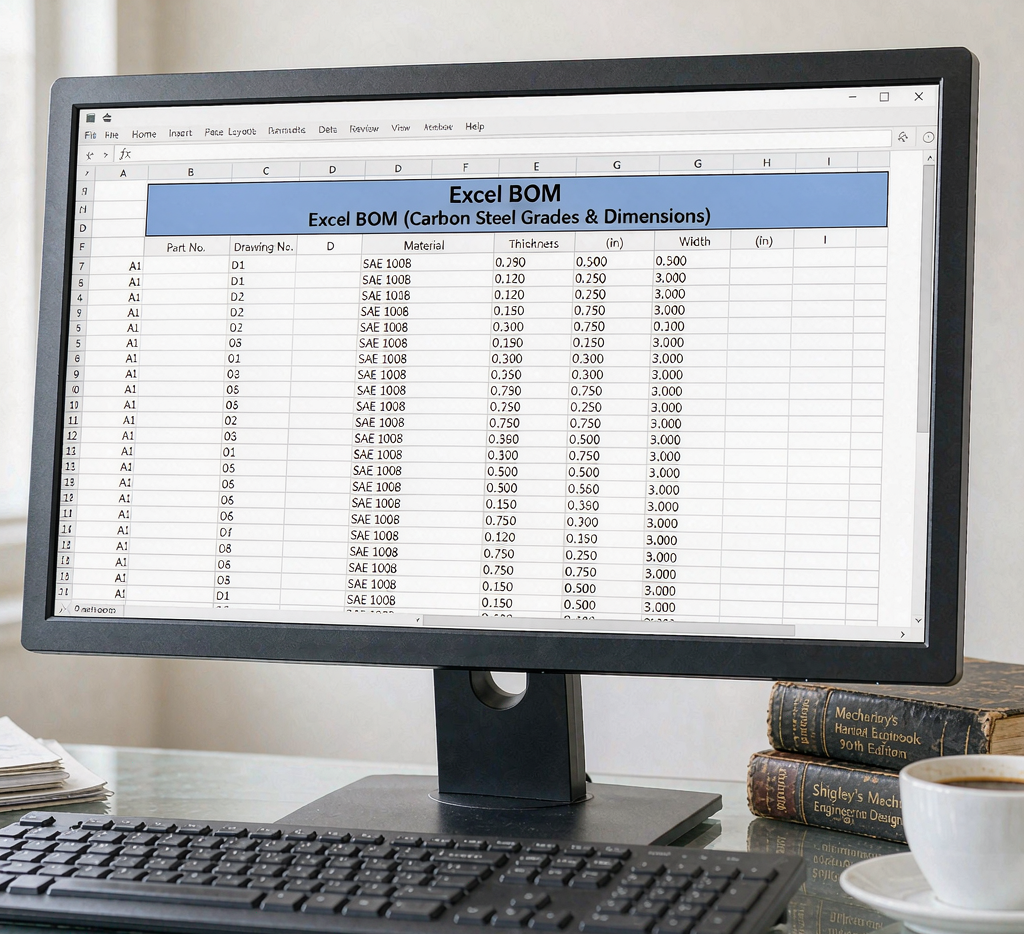
A BOM is a structured list of raw materials, components, quantities, specifications and standards required to manufacture a finished product. In carbon steel procurement, the BOM typically appears as:
- An engineering drawing attachment (PDF or CAD)
- A spreadsheet with line items (Excel or CSV)
- An ERP export (SAP, Oracle, Epicor)
Each line item contains enough data for a supplier to quote, schedule production and certify compliance. Learning to decode these lines is the first step toward supplier accountability.
2. Anatomy of a Carbon Steel BOM Line Item
A typical line includes these fields, though naming conventions vary by client and industry:
| Field | Example Value | Why It Matters |
|---|---|---|
| Part number | CS-PL-001 | Unique identifier for traceability |
| Description | Carbon steel plate, hot rolled | Tells shape and initial forming route |
| Grade / Material | ASTM A516 Gr. 70 | Defines chemistry and mechanical limits |
| Standard | ASTM A516 / A516M | Governs testing, marking and certification |
| Dimensions | 12 mm × 2000 mm × 6000 mm | Thickness × width × length |
| Quantity | 24 pcs / 3,456 kg | Order volume and shipping unit |
| Tolerance | ASTM A6 / EN 10029 Class A | Acceptable deviation in dimension and flatness |
| Surface finish | Shot blasted SA 2.5 + primer | Downstream painting or coating prep |
| Heat treatment | Normalized, ≥ 900 °C | Changes grain structure and toughness |
| Test requirements | UT per ASTM A578 Level B | Non-destructive inspection protocol |
| Certification | EN 10204 3.2 | Who verifies the material (mill vs third party) |
| Marking | Paint stencil + hard stamp | Heat number traceability on each piece |
3. Decoding the Grade and Standard Field
The grade is the most consequential field on a carbon steel BOM. It links directly to price, lead time and sourceability. When you see a grade, immediately ask three questions:
- Is it a structural, pressure-vessel or general-purpose grade? Structural grades (A36, S235JR, Q235B) are commodity items. Pressure-vessel grades (A516 Gr. 70, P355GH) require tighter chemistry and testing, often narrowing the supplier pool.
- What is the delivery condition? As-rolled (AR), normalized (N), normalized-rolled (NR), thermo-mechanically rolled (TMR) or quenched and tempered (Q+T). The suffix changes mechanical properties and mill capability requirements.
- Are there supplementary requirements? ASTM specifications often include S-numbers (e.g., S1 ultrasonic test, S5 Charpy impact, S12 tension test orientation). These are not optional footnotes; they are contractual requirements that add cost and time.
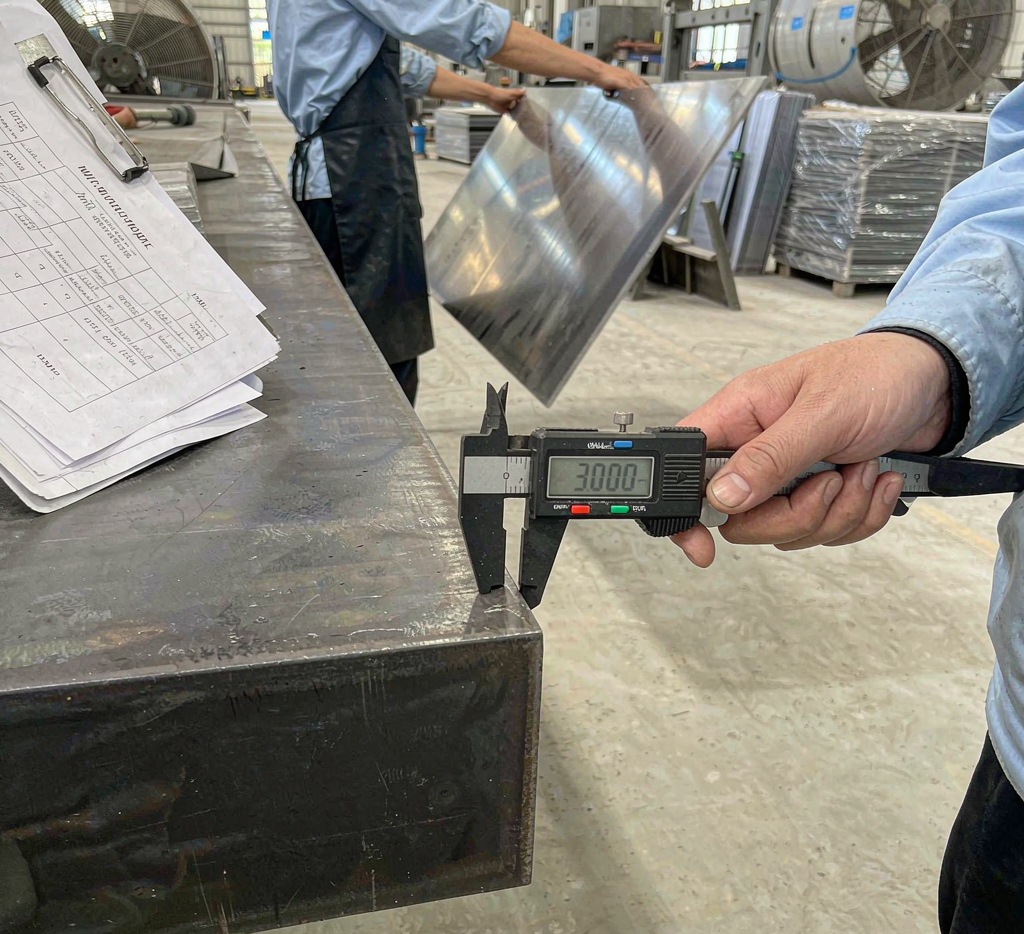
4. Dimensional Tolerances: Hidden Cost Drivers
BOMs frequently state “per standard” without specifying the tolerance class. That ambiguity is expensive. For carbon steel plate:
- ASTM A6 – normal tolerances, lowest cost
- ASTM A6 Restricted – tighter thickness and flatness, 5 – 10% premium
- EN 10029 Class A – normal tolerances
- EN 10029 Class B – restricted thickness tolerance, used when machining allowance is thin
For structural sections, reference EN 10034, EN 10056 or ASTM A6/A6M as appropriate. Always quote against the exact tolerance class stated—or propose an alternative with cost impact.
5. Surface Finish and Coating Specifications
Carbon steel BOMs often include surface clauses that extend beyond the base material standard:
- Hot-rolled, as-rolled: Mill scale present; cheapest option
- Pickled and oiled (P&O): Clean surface, light oil film; good for painting or laser cutting
- Shot blasted SA 2.5: Near-white metal for heavy-duty coating systems
- Pre-primed: Shop primer applied at mill or service centre; speeds fabrication
- Hot-dip galvanized: Z600 or G90 coating for corrosion protection
Confusing “as-rolled” with “pickled” on a BOM can lead to rejected goods because the downstream paint system will fail on mill scale.
6. Test and Inspection Requirements
This section of the BOM determines the certification level and inspection budget. Common carbon steel test clauses include:
| Test Type | Standard Reference | Typical Application |
|---|---|---|
| Tensile test | ASTM A370 / ISO 6892-1 | All structural and pressure grades |
| Charpy impact | ASTM A370 / EN ISO 148-1 | Low-temperature service, offshore, bridges |
| Hardness test | ASTM E10 / E18 / E92 | Heat-treated parts, wear plates |
| Ultrasonic test (UT) | ASTM A578 / EN 10160 | Plate > 20 mm, pressure vessels |
| Radiographic test (RT) | ASTM E94 / ISO 17636 | Welded joints, castings |
| PMI ( Positive Material ID) | ASTM E415 / XRF gun | Alloy verification on receipt |
| Dimensional survey | Project-specific | Large fabricated assemblies |
When a BOM specifies EN 10204 3.2 certification, the buyer is asking for a third-party witness (BV, SGS, TÜV or similar) to attend testing at the mill. Add 3 – 5 working days and inspection fees to the schedule.
7. Certification Levels: 2.1, 2.2, 3.1 and 3.2
The certification clause on a BOM is non-negotiable and must match the end client’s quality plan:
- EN 10204 2.1: Mill declaration of compliance, no test results. Suitable for non-critical commercial steel.
- EN 10204 2.2: Mill test report with results from non-specific batch testing. Common for general structural steel.
- EN 10204 3.1: Test results from the specific heat/batch, issued by the mill’s QC department. The default for most export carbon steel.
- EN 10204 3.2: 3.1 content plus independent third-party witness and signature. Required for nuclear, offshore and high-risk pressure equipment.
8. Converting BOM Data into a Purchase Order
Once the BOM is decoded, translate every field into PO language:
- Reference the exact standard and year – e.g., “ASTM A516/A516M-22” not just “A516”
- State the grade with all suffixes – e.g., “S355J2+N” not “S355”
- Attach dimensional sketches – prevent width/length transposition errors
- Define acceptance and rejection criteria – what deviation triggers a return or concession
- Require MTC submission before shipment – review chemistry and tests before the container is sealed
- Specify packing, marking and loading photos – evidence for insurance and customs
FAQ
What if the BOM grade is obsolete or replaced?
Notify the buyer immediately with the superseding standard and grade. For example, DIN 17100 St37-2 was replaced by EN 10025 S235JR. Propose the modern equivalent with a chemistry and mechanical cross-check.
Should I accept a BOM that says “or equivalent”?
Only with written approval. “Equivalent” is subjective. Submit the proposed substitute grade, standard and delivery condition for engineering sign-off before quoting.
How do I handle conflicting standards on the same BOM?
Escalate to the buyer’s engineer. A BOM that cites both ASTM A6 and EN 10029 for the same plate is ambiguous. Clarify which takes precedence for acceptance.
Can I combine multiple BOM line items into one mill order?
If they share the same grade, thickness and delivery condition, yes. Combining increases volume and may unlock mill quantity breaks. If grades differ, keep orders separate to avoid heat-number traceability confusion.
What is the most common BOM mistake that causes rejection?
Thickness tolerance mismatch. A buyer expects EN 10029 Class B thickness tolerance for CNC machining, but the supplier delivers Class A. The part is undersized after facing, and the batch is rejected. Always confirm tolerance class before production.
Conclusion
Reading a carbon steel BOM accurately is a procurement superpower. By systematically verifying grade, standard, dimension, tolerance, surface, test and certification fields, buyers transform a technical document into a bulletproof purchase order. The time invested upfront in BOM review always pays back in fewer claims, faster customs clearance and stronger supplier relationships.
Need help interpreting a carbon steel BOM or validating supplier compliance? Send your BOM to Huaxia-Steel and our technical team will review grade suitability, tolerance feasibility and certification requirements within 24 hours.