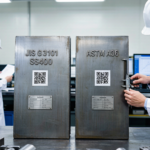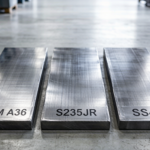
ASTM A36 vs JIS SS400: Equivalent Standards and Quality Differences
For buyers importing structural carbon steel, the question ASTM A36 vs JIS SS400 comes up constantly. Both grades are widely used in construction, machinery, and general fabrication. In many applications they are interchangeable, but subtle differences in chemical composition, mechanical testing, and certification can affect project acceptance.
This article compares the two standards side by side and explains what procurement teams should verify before substituting one for the other.
1. Overview of ASTM A36 and JIS SS400
ASTM A36 is an American Society for Testing and Materials specification for carbon structural steel. It is the most common structural steel grade in North America and is used in buildings, bridges, and general construction.
JIS SS400 is a Japanese Industrial Standards designation for general structure rolled steel. It is the most commonly specified structural steel in Japan and is widely exported from China, Korea, and Taiwan to Southeast Asia and the Middle East.
2. Chemical Composition Comparison
| Element | ASTM A36 | JIS SS400 |
|---|---|---|
| Carbon (C) | ≤ 0.29% | — (not specified directly) |
| Manganese (Mn) | 0.60–0.90% for plates > 3/8 in. | — |
| Phosphorus (P) | ≤ 0.04% | ≤ 0.050% |
| Sulfur (S) | ≤ 0.05% | ≤ 0.050% |
| Silicon (Si) | 0.15–0.40% for plates > 1.5 in. | — |
ASTM A36 places tighter caps on carbon and phosphorus for thicker sections, which generally improves weldability and toughness. JIS SS400 focuses more on tensile strength as the primary acceptance criterion.
3. Mechanical Properties Comparison
| Property | ASTM A36 | JIS SS400 |
|---|---|---|
| Minimum yield strength | 250 MPa (36 ksi) | 245 MPa |
| Tensile strength | 400–550 MPa | 400–510 MPa |
| Minimum elongation | 20% in 200 mm; 23% in 50 mm | 21% or higher (depends on thickness) |
The two grades overlap significantly. In most structural applications, SS400 can replace A36 when the governing design code accepts it. However, always confirm the substitution with the project engineer and the end-client specification.
4. Dimensional and Shape Standards
- ASTM A36: Often supplied to ASTM A6/A6M for dimensional tolerances of structural steel plates, shapes, and bar.
- JIS SS400: Supplied under JIS G 3101, with dimensional tolerances referenced in JIS G 3192 for shapes and JIS G 3193 for plates.
When converting between the two, verify that thickness tolerances, camber, and out-of-square limits meet the project requirements. JIS tolerances can differ from ASTM tolerances for the same nominal dimension.
5. Certification and Mill Test Requirements
A proper mill test certificate for ASTM A36 should report heat number, chemical composition, tensile test results, and ASTM specification reference. For JIS SS400, the MTC should report tensile strength, yield strength, elongation, and compliance with JIS G 3101.
Buyers should also consider:
- Third-party inspection by SGS, Bureau Veritas, or TÜV for high-value orders
- Spectral analysis to verify chemistry on arrival
- Dimensional sampling per AQL 1.0 or project-specific ITP
6. Global Usage and Regional Preferences
| Region | Preferred Grade | Common Applications |
|---|---|---|
| North America | ASTM A36 | Buildings, bridges, tanks, platforms |
| Japan | JIS SS400 | General construction, machinery frames |
| Southeast Asia | JIS SS400, ASTM A36 | Infrastructure, warehouses, factories |
| Middle East | ASTM A36, EN S235JR | Structural steel, piping supports |
| Latin America | ASTM A36 | Industrial buildings, bridges |
7. When Can You Substitute One for the Other?
Substitution is generally acceptable when the following conditions are met:
- The design code permits both grades
- The minimum yield and tensile strength are satisfied
- Weldability requirements are met (carbon equivalent check)
- Dimensional tolerances are compatible
- The end client or inspecting authority approves the change
8. Practical Procurement Tips
- Request both chemical and mechanical test data before order confirmation.
- Specify the governing standard clearly in the purchase order.
- Ask the supplier to confirm the origin of the material and mill name.
- For projects requiring mill recognition, check whether the producing mill is on the approved vendor list.
- Plan pre-shipment inspection for first-time suppliers or large orders.
FAQ
Q1: Is JIS SS400 equivalent to ASTM A36?
A: They are often considered equivalent for structural applications, but ASTM A36 has slightly stricter chemistry limits, especially for carbon and phosphorus.
Q2: Which grade is cheaper?
A: JIS SS400 is often slightly lower in price due to less restrictive chemical requirements and high production volume in Asia.
Q3: Can I use SS400 for welding?
A: Yes, but verify the carbon equivalent and follow appropriate preheat and post-weld heat treatment procedures.
Q4: What is the Chinese equivalent of SS400?
A: Q235B under GB/T 700 is commonly regarded as the closest Chinese equivalent to SS400.
Q5: Does Huaxia-Steel supply both ASTM A36 and JIS SS400?
A: Yes. We supply plates, angles, channels, beams, and bars in both grades with full certification.
Buy ASTM A36 and JIS SS400 from Huaxia-Steel
Huaxia-Steel exports ASTM A36, JIS SS400, Q235B, and other structural carbon steel grades to buyers worldwide. Contact us for competitive pricing, fast quotation, and reliable delivery schedules.