Cold Drawing vs Hot Rolling Carbon Steel Process Guide
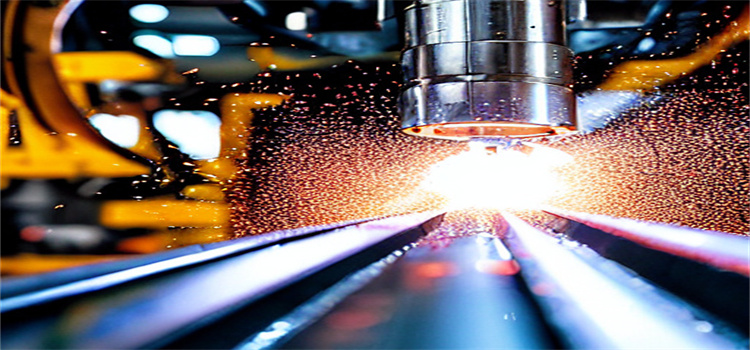
Carbon steel buyers often face a simple but important process decision: should the material be hot rolled or cold drawn? The same grade of steel can behave very differently depending on how it was finished. Hot rolling produces economical sections with scale-covered surfaces and looser tolerances. Cold drawing creates bright, precise bars with higher strength and tighter dimensional control, but at a higher price.
This guide explains both processes, compares their mechanical properties and tolerances, and shows when each route makes the most sense for structural, mechanical and precision applications.
1. What Is Hot Rolling?
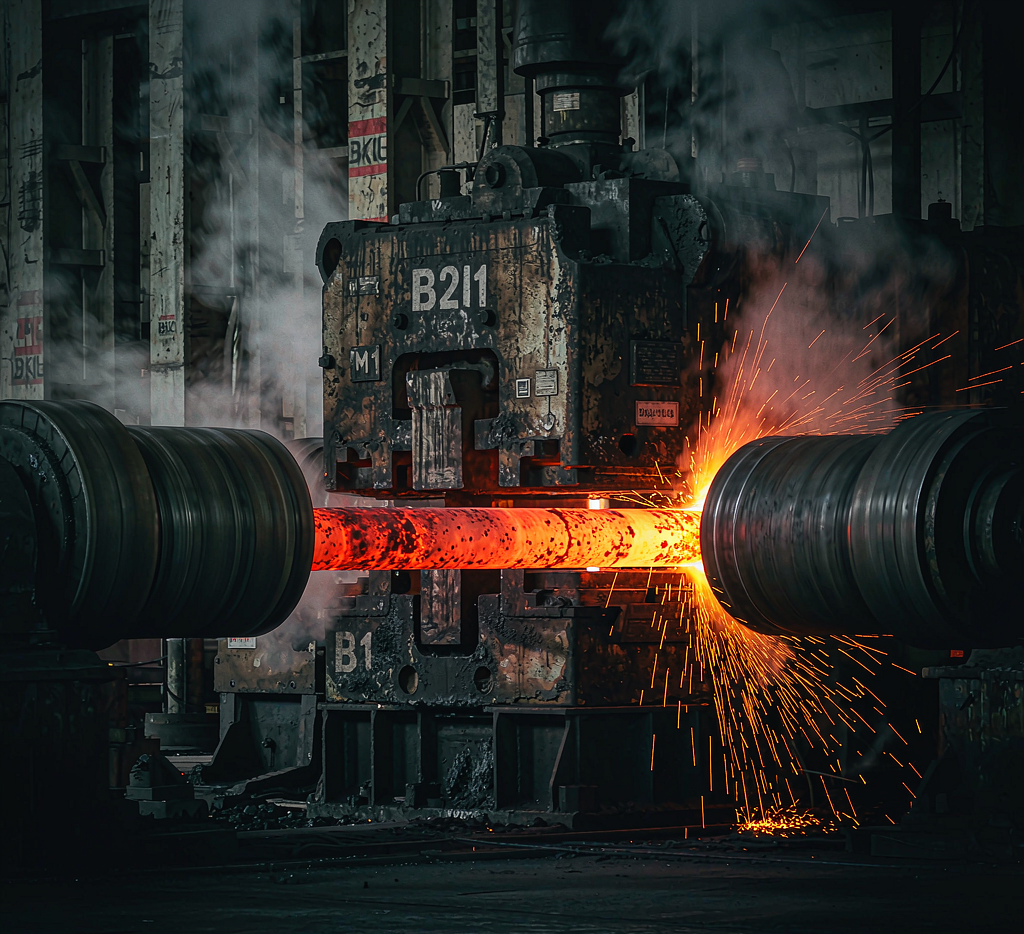
Hot rolling is the most common way to produce carbon steel plates, coils, bars and structural sections. The steel is heated above its recrystallization temperature — typically over 900 °C — and passed through rollers that reduce thickness or shape the cross-section. Because the material is soft at high temperature, large reductions are possible in a single pass, making the process fast and economical.
After rolling, the steel cools in air. This natural cooling leaves a layer of dark mill scale on the surface and produces a slightly rounded profile. Tolerances are governed by standards such as ASTM A6, EN 10029 and GB/T 709. Hot-rolled products are widely used when dimensional precision is not critical.
2. What Is Cold Drawing?
Cold drawing starts from a hot-rolled bar or coil. The material is pickled to remove scale, coated with a lubricant, and pulled through a hardened die or series of dies at room temperature. The die reduces the cross-section and smooths the surface in one operation. Because the deformation occurs below the recrystallization temperature, the grains elongate and the material work hardens.
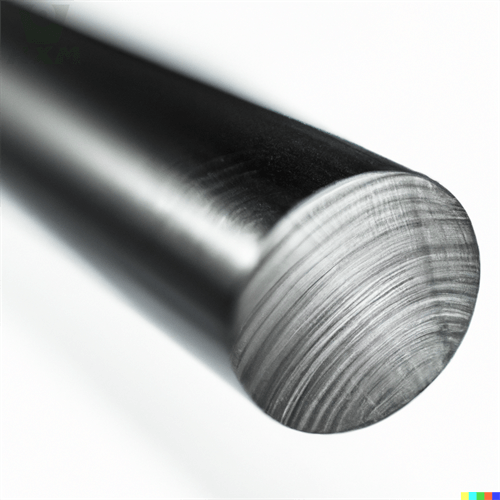
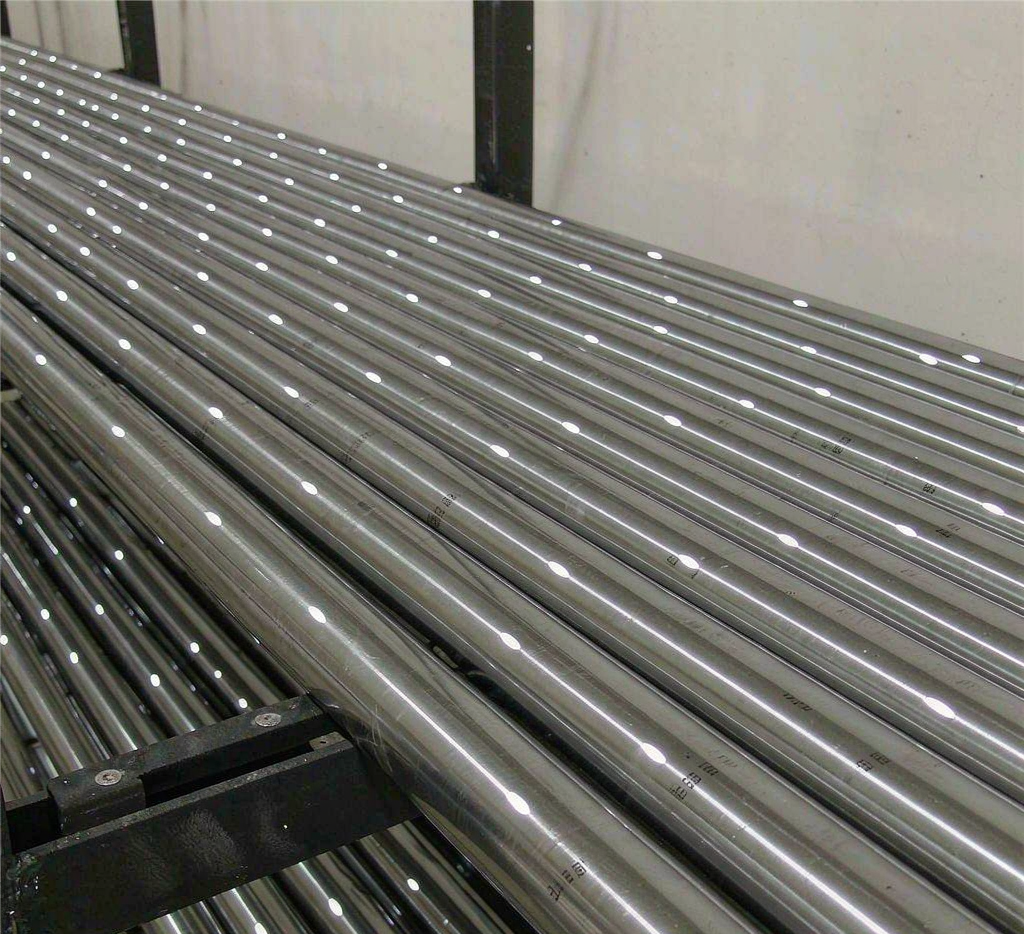
The result is a bright, smooth bar with improved straightness, tighter diameter tolerance and higher tensile strength than the original hot-rolled feedstock. Cold drawing is often followed by stress relieving or annealing to control hardness and improve machinability.
3. Key Differences at a Glance
| Property | Hot Rolled | Cold Drawn |
|---|---|---|
| Process temperature | Above 900 °C | Room temperature |
| Surface finish | Dark mill scale, rough | Bright, smooth, scale-free |
| Tolerance | Looser (e.g., ±0.5 mm bar) | Tighter (e.g., h9, h11) |
| Straightness | Moderate | Excellent |
| Tensile strength | Baseline | 10–25% higher due to work hardening |
| Ductility | Higher | Lower after drawing |
| Cost | Lower | Higher |
| Typical standards | ASTM A36, EN 10025, JIS G3101 | ASTM A108, EN 10277, JIS G4051 |
4. Mechanical Properties Comparison
Cold drawing raises yield strength and hardness because of work hardening. The effect is most noticeable in low- and medium-carbon grades. The table below compares typical values for a 1045 / S45C bar in the hot-rolled and cold-drawn conditions.
| Condition | Tensile Strength (MPa) | Yield Strength (MPa) | Hardness (HB) | Elongation (%) |
|---|---|---|---|---|
| Hot rolled | 570 – 700 | ≥ 345 | 170 – 210 | ≥ 17 |
| Cold drawn | 650 – 800 | ≥ 480 | 190 – 240 | ≥ 12 |
These numbers are representative. Actual values depend on the original grade, reduction ratio, bar diameter and any subsequent stress relief. Always check the mill test certificate for the specific batch.
5. Surface Finish and Dimensional Accuracy
Hot-rolled surfaces carry mill scale and minor oxidation pits. This finish is acceptable for structural steel, tanks, ships and most welded fabrications. If a smooth painted or plated finish is required, the scale must be removed by shot blasting, pickling or grinding.
Cold-drawn bars have a bright, smooth surface that is often suitable for direct plating, machining or assembly. Diameter tolerances are typically h9 or h11, and straightness can be 1 mm per meter or better. These qualities reduce machining allowance and scrap in precision parts.
6. Common Applications
- Hot rolled: Structural beams, columns, bridges, pressure vessels, shipbuilding, general fabrication, storage tanks, automotive chassis and hot-rolled coils for further processing.
- Cold drawn: Precision shafts, piston rods, hydraulic cylinders, bolts, pins, bearings, machine tool spindles, conveyor rollers and bright bar for CNC machining.
7. Cost Analysis: When to Pay for Cold Drawing
Cold-drawn bar costs 15–40% more than hot-rolled bar of the same grade. The premium comes from extra processing, tighter inspection and lower scrap rates. However, the total part cost can be lower because cold-drawn material needs less machining, produces less scrap and often eliminates a surface finishing step.
Use the following rule of thumb: choose hot rolled when the part will be welded, painted or hidden; choose cold drawn when the surface is visible, tolerances are tight, or machining costs dominate the part price.
8. Relevant Standards
Hot-rolled carbon steel is covered by ASTM A36/A6, EN 10025, JIS G3101, GB/T 700 and GB/T 1591. Cold-finished carbon steel bar is covered by ASTM A108, EN 10277, JIS G4051 and GB/T 3077. Matching the right standard to your customer’s country and industry reduces inspection disputes and speeds customs clearance.
9. Frequently Asked Questions
9.1 Is cold drawn steel stronger than hot rolled?
Yes, cold-drawn steel is typically 10–25% stronger in yield and tensile strength because of work hardening. The trade-off is slightly lower ductility unless the bar is stress relieved after drawing.
9.2 Can I weld cold drawn carbon steel?
Yes, but remove surface lubricant and scale first. Preheating may be needed for medium-carbon grades. Some engineers prefer hot-rolled or normalized material for welded assemblies to avoid residual stresses from cold work.
9.3 Which process gives better corrosion resistance?
Neither process changes the intrinsic corrosion resistance of carbon steel. Cold-drawn surfaces are cleaner and may accept coatings better, while hot-rolled surfaces need descaling before painting or galvanizing.
9.4 What tolerance can I expect from cold drawn bar?
Common commercial tolerances are h9 and h11. For precision applications, ground and polished bar can achieve h7 or better, but that is a separate finishing step beyond simple cold drawing.
10. Buy Hot Rolled and Cold Drawn Carbon Steel from Huaxia-Steel
Huaxia-Steel supplies both hot-rolled and cold-drawn carbon steel bars, coils and sections in grades from Q235 and A36 through S45C, S50C and S55C. We can deliver bright bar with h9 tolerance, hot-rolled plate with mill test certificates, and custom-cut lengths for export. Contact us today for a material comparison quote and delivery schedule.
Explore our carbon steel product range or request a tailored quote.