Carbon Steel Welding: Complete Electrode Selection & Parameter Guide

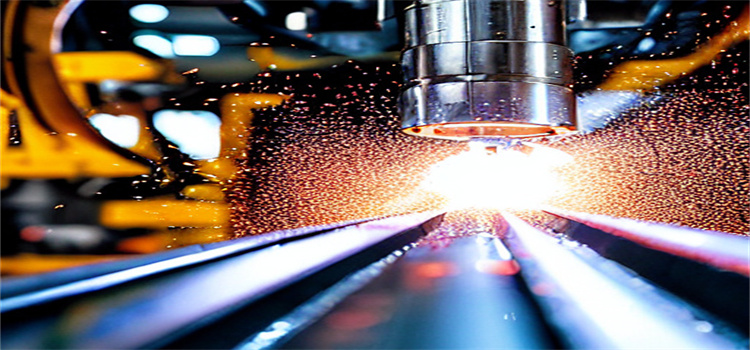
Choosing the right welding electrode for carbon steel is not just a technical decision — it is a procurement decision. The electrode you specify on your fabrication contract determines weld quality, inspection pass rates, rework costs, and ultimately the total cost of your steel project.
This guide covers electrode selection for the three most common carbon steel welding processes (SMAW, GMAW/MIG, GTAW/TIG), provides parameter tables for popular grades, and translates welding specs into actionable procurement language.

SMAW (Stick) Electrode Selection: The Most Common Method
Shielded Metal Arc Welding (SMAW) remains the dominant process for field welding and small-shop fabrication of carbon steel. Electrode selection is governed by AWS A5.1 (carbon steel) and AWS A5.5 (low-alloy steel).
Top 5 SMAW Electrodes for Carbon Steel
| Electrode | AWS Class | Tensile (ksi) | Weld Position | Best Use Case | Price ($/lb) |
|---|---|---|---|---|---|
| E6013 | AWS A5.1 | 60 | All | General light fabrication, sheet metal | 1.5–2.0 |
| E7018 | AWS A5.1 | 70 | All | Structural, pressure-bearing, critical joints | 2.5–3.5 |
| E7014 | AWS A5.1 | 70 | All | Fast-fill production welding, fillets | 2.0–2.8 |
| E6010 | AWS A5.1 | 60 | All (DC+) | Root passes, pipe welding, dirty surfaces | 2.0–2.5 |
| E8018-B2 | AWS A5.5 | 80 | All | Cr-Mo low-alloy (4140-type) | 4.0–5.5 |
E6013 vs E7018: The Decision Matrix
| Factor | E6013 | E7018 |
|---|---|---|
| Cost per pound | Lower ($1.5–2.0) | Higher ($2.5–3.5) |
| Deposit rate | Moderate | High |
| Moisture sensitivity | Low (can store open) | High (must keep in oven ≥250 °F) |
| Impact toughness (−20 °C) | Poor | Excellent |
| Root pass quality | Acceptable for thin material | Excellent for thick structural |
| Inspection pass rate (RT/UT) | 70–85% | 90–95% |
| Required by AWS D1.1 for structural? | Only for non-critical joints | Mandatory for most structural joints |
**Procurement recommendation:** For structural steel fabrication governed by AWS D1.1 or EN 15614, specify E7018 as the default electrode. E6013 is acceptable only for non-structural, non-load-bearing attachments.

GMAW (MIG) Wire Selection: High-Deposition Production Welding
Gas Metal Arc Welding (GMAW/MIG) is the preferred process for production welding of carbon steel in controlled shop environments. Wire selection follows AWS A5.18 (ER70S-series).
MIG Wire Selection Table
| Wire | AWS Class | Shield Gas | Tensile (ksi) | Typical Application | Price ($/lb) |
|---|---|---|---|---|---|
| ER70S-6 | AWS A5.18 | 100% CO₂ or 75Ar/25CO₂ | 70 | General carbon steel, most common | 1.0–1.5 |
| ER70S-3 | AWS A5.18 | 100% CO₂ | 70 | Light spatter, clean appearance | 1.2–1.8 |
| ER70S-2 | AWS A5.18 | Argon blends | 70 | Multi-pass, high-deposition | 1.5–2.0 |
| ER80S-D2 | AWS A5.18 | 75Ar/25CO₂ | 80 | Low-alloy (4140-type) | 2.5–3.5 |
Shielding Gas Selection: CO₂ vs. Mixed Gas
| Gas Mix | Cost (relative) | Penetration | Spatter | Bead Appearance | Best For |
|---|---|---|---|---|---|
| 100% CO₂ | Lowest | Deep | Moderate | Acceptable | Heavy production, structural |
| 75% Ar / 25% CO₂ | Moderate | Good | Low | Excellent | General fabrication, visible welds |
| 90% Ar / 10% CO₂ | Higher | Moderate | Very low | Superior | Thin sheet, cosmetic welds |
**Buyer note:** Chinese fabrication shops most commonly use 100% CO₂ with ER70S-6 for cost efficiency. If your spec requires mixed gas for spatter control, include it in the fabrication contract — shops will not default to argon blends unless specified.
GTAW (TIG) for Carbon Steel: Root Passes and Precision Welds
Gas Tungsten Arc Welding (GTAW/TIG) is rarely used for bulk carbon steel fabrication, but it is essential for root passes on pipe welds and precision joints.
TIG Rod Selection for Carbon Steel
| Rod | AWS Class | Shield Gas | Application | Price ($/lb) |
|---|---|---|---|---|
| ER70S-2 | AWS A5.18 | 100% Ar | Root passes, general TIG | 2.0–3.0 |
| ER70S-6 | AWS A5.18 | 100% Ar | Fill passes after TIG root | 1.0–1.5 |
TIG welding carbon steel is slower (1.5–3 lb/hr deposition) but produces the cleanest root penetration. For pipe welding per ASME B31.3 or API 5L, TIG root + SMAW/MIG fill is the standard combination.
Welding Parameters by Carbon Steel Grade
AISI 1020 / A36 / Q235B (Low Carbon, ≤0.25% C)
| Process | Electrode/Wire | Current (A) | Voltage (V) | Travel Speed (ipm) | Preheat |
|---|---|---|---|---|---|
| SMAW | E7018 (3.2 mm) | 90–140 | — | 6–10 | None ≤19 mm |
| MIG | ER70S-6 (0.8 mm) | 140–180 | 18–22 | 15–25 | None ≤19 mm |
| TIG | ER70S-2 (2.4 mm) | 80–120 | 10–14 | 4–8 | None |
AISI 1045 / S45C (Medium Carbon, 0.42–0.50% C)
| Process | Electrode/Wire | Current (A) | Voltage (V) | Travel Speed (ipm) | Preheat |
|---|---|---|---|---|---|
| SMAW | E7018 (3.2 mm) | 100–150 | — | 5–9 | 150–250 °C |
| MIG | ER70S-6 (1.0 mm) | 160–220 | 20–25 | 12–20 | 150–200 °C |
| TIG | ER70S-2 (2.4 mm) | 90–140 | 12–16 | 3–7 | 100–200 °C |
**Critical:** Medium-carbon steels require preheat to prevent hydrogen cracking. AWS D1.1 mandates preheat ≥150 °C for 1045-type material above 12 mm thickness.
AISI 4140 / 42CrMo (Low-Alloy, 0.38–0.43% C + Cr-Mo)
| Process | Electrode/Wire | Current (A) | Voltage (V) | Travel Speed (ipm) | Preheat |
|---|---|---|---|---|---|
| SMAW | E8018-B2 (3.2 mm) | 90–140 | — | 4–8 | 200–300 °C |
| MIG | ER80S-D2 (1.2 mm) | 180–250 | 22–28 | 10–18 | 200–250 °C |
| TIG | ER80S-D2 (2.4 mm) | 100–150 | 12–18 | 3–6 | 200–300 °C |
For 4140-type QT material, preheat must be below the original tempering temperature to avoid softening the base metal. Consult the MTC for the tempering temperature before setting welding preheat.
Preheat Requirements by Section Thickness and Carbon Equivalent
Carbon Equivalent (CE) formula (IIW): CE = C + Mn/6 + (Cr+Mo+V)/5 + (Ni+Cu)/15
| CE Value | Thickness ≤19 mm | Thickness 19–38 mm | Thickness 38–64 mm | Thickness >64 mm |
|---|---|---|---|---|
| ≤ 0.35 (A36-type) | None | None | 50 °C | 100 °C |
| 0.35–0.45 (1045-type) | None | 50 °C | 100 °C | 150 °C |
| 0.45–0.55 (4140-type) | 50 °C | 100 °C | 150 °C | 200 °C |
| > 0.55 | 100 °C | 150 °C | 200 °C | 250 °C |
**Procurement action:** Include preheat requirements in your fabrication sub-contract. Shops that skip preheat on medium-carbon or alloy steel will produce welds that fail ultrasonic inspection — costing you rework or rejection.
Welding Cost Comparison per Meter of Fillet Weld (6 mm leg)
| Process | Electrode/Wire | Material Cost ($/m) | Labor Cost ($/m) | Total ($/m) | Quality Rating |
|---|---|---|---|---|---|
| SMAW (E7018) | Stick | 0.80–1.20 | 3.00–5.00 | 3.80–6.20 | Good |
| MIG (ER70S-6) | Wire + gas | 0.40–0.70 | 1.50–2.50 | 1.90–3.20 | Good–Excellent |
| TIG (ER70S-2) | Rod + gas | 0.60–1.00 | 5.00–8.00 | 5.60–9.00 | Excellent |
**Cost insight:** MIG is 40–50% cheaper per meter than SMAW for production welding of carbon steel. If your fabricator proposes SMAW for a high-volume shop project, ask whether MIG is feasible — it can cut welding cost by nearly half.
How to Specify Welding Requirements on a Purchase Order
Include these clauses in your fabrication or steel procurement contract:
- **Process:** “Welding shall be performed by SMAW using E7018 electrodes per AWS A5.1, or GMAW using ER70S-6 wire per AWS A5.18 with [CO₂ / 75Ar/25CO₂] shielding gas.”
- **Preheat:** “Preheat per AWS D1.1 Table 3.2 based on carbon equivalent calculated from MTC chemistry.”
- **Welder qualification:** “All welders shall be qualified per AWS D1.1 for the applicable process, position, and material group.”
- **Inspection:** “100% visual inspection + [10% RT / 100% UT] per AWS D1.1 Chapter 6.”
- **Electrode storage:** “Low-hydrogen electrodes (E7018) shall be stored in holding ovens at ≥250 °F per AWS D1.1 Section 5.3.”
Common Procurement Mistakes in Carbon Steel Welding
| Mistake | Impact | Prevention |
|---|---|---|
| Not specifying electrode class | Shop uses cheapest (E6013) → poor toughness | Write AWS electrode class into contract |
| Ignoring preheat on 1045 | Hydrogen cracking → UT failure | Include preheat table in fab spec |
| Using MIG CO₂ for cosmetic welds | High spatter, poor appearance | Specify Ar/CO₂ mix for visible joints |
| No electrode storage requirement | E7018 absorbs moisture → porosity | Require holding oven per AWS D1.1 |
| Accepting welds without WPS | Uncontrolled procedure → variable quality | Require written WPS before production |
FAQ
**Q: Can I weld AISI 1045 carbon steel without preheat?**
A: Only for thin sections (< 12 mm) and non-critical joints. For structural or pressure-bearing applications on 1045, AWS D1.1 mandates preheat ≥ 150 °C. Skipping preheat risks hydrogen-induced cracking, which will show up as UT/RT failures during inspection.
**Q: What is the cheapest welding method for carbon steel?**
A: MIG (GMAW) with ER70S-6 wire and 100% CO₂ shielding gas is the lowest-cost production method. SMAW is cheaper for small batch or field work because it needs no gas supply, but per-meter cost is higher due to slower deposition.
**Q: Should I specify E7018 or E6013 on my fabrication contract?**
A: E7018 for any structural, load-bearing, or inspectable weld. E6013 is acceptable only for non-structural attachments. The price difference is ~$1/lb, but the inspection pass rate difference is 10–15% — E7018 pays for itself in reduced rework.
**Q: How do I verify weld quality on imported fabricated steel?**
A: Three levels: (1) Visual inspection per AWS D1.1 — check undercut, porosity, profile. (2) Ultrasonic testing (UT) for internal defects. (3) Radiographic testing (RT) for critical joints. Include the required inspection level in your purchase order.
**Q: Can I weld QT carbon steel (like quenched 4140) without losing its hardness?**
A: The weld Heat Affected Zone (HAZ) will always be softer than the QT base metal. To minimize HAZ softening: keep preheat below the original tempering temperature, use low heat input, and consider post-weld stress relief rather than full re-tempering.
Source Weldable Carbon Steel from Huaxia Steel
The weldability of your carbon steel depends on the chemistry you receive — not just the grade on the label. At **Huaxia Steel**, every shipment comes with a full MTC reporting carbon, manganese, and alloy content so you can calculate carbon equivalent and set preheat correctly.
We supply A36, A572 Gr. 50, 1045, 4140, and dozens of other carbon steel grades in round bar, plate, coil, and angle bar — all with ASTM-compliant documentation and third-party inspection support.
**[Request a welding-grade carbon steel quote →](https://www.huaxia-steel.com/contact/)** and specify your grade, thickness, and welding process. We will confirm chemistry, weldability, and pricing within 24 hours.