S355 vs Q345 Steel: European vs Chinese Structural Steel Comparison
S355 vs Q345 Steel: European vs Chinese Structural Steel Comparison
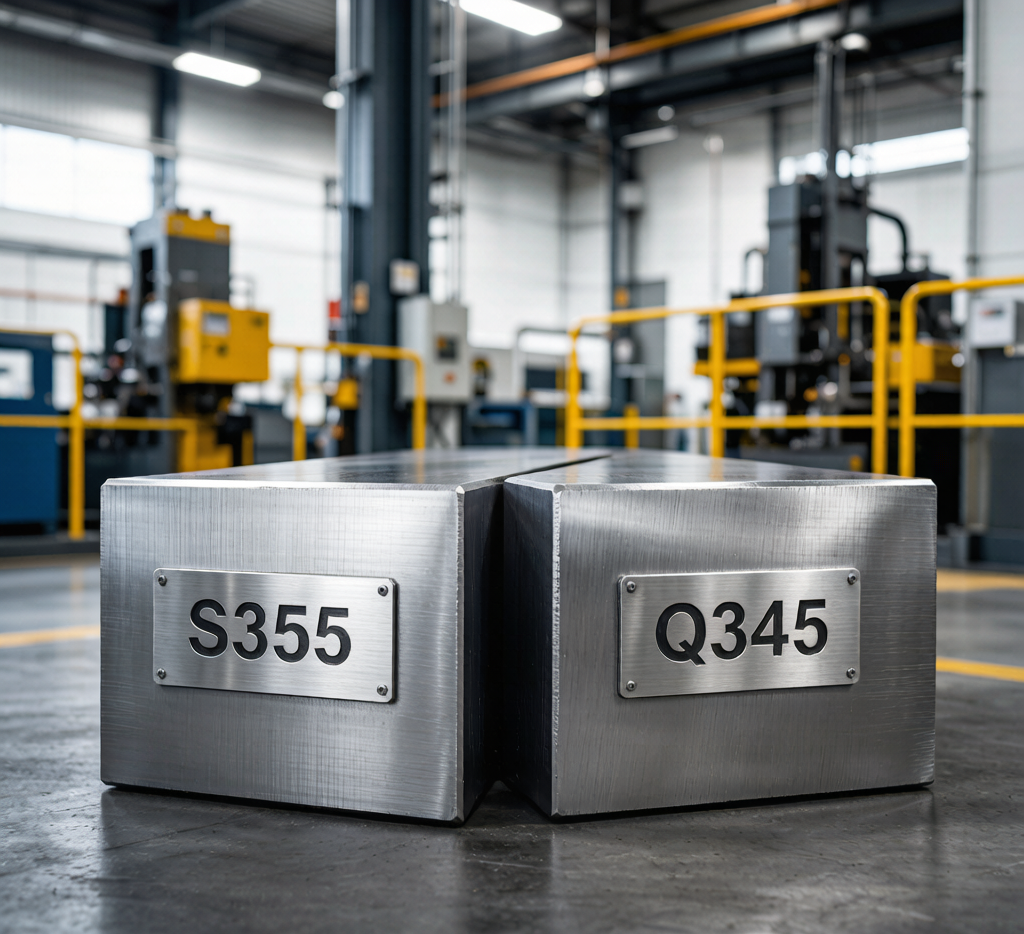
When sourcing structural steel for international construction and engineering projects, buyers frequently compare S355 steel (European EN standard) with Q345 steel (Chinese GB standard). Both grades dominate their respective markets as high-strength low-alloy structural steels, but subtle differences in chemical composition, mechanical properties, and availability can significantly impact project outcomes.
This comprehensive guide examines S355 vs Q345 steel across seven critical dimensions, helping procurement managers and engineers make data-driven material selections.
Fig 1
1. Standard Classification and Grade System
Understanding the standard frameworks reveals the fundamental philosophy behind each grade.
S355 Steel Under EN 10025
S355 belongs to the EN 10025 family, specifically EN 10025-2:2004 for non-alloy structural steels. The “S” stands for structural steel, and “355” indicates the minimum yield strength of 355 MPa. Sub-grades include:
S355JR +20°C impact test
S355J0 0°C impact test
S355J2 -20°C impact test
S355K2 -20°C impact test, longitudinal
Q345 Steel Under GB/T 1591
Q345 follows GB/T 1591-2018, replacing the older GB/T 1591-2008 standard. The “Q” represents yield point (屈服点), and “345” indicates 345 MPa minimum yield strength. Quality grades include:
Q345A No impact requirement
Q345B +20°C impact (20J)
Q345C 0°C impact
Q345D -20°C impact
Q345E -40°C impact
2. Chemical Composition Comparison
The chemical makeup directly influences weldability, corrosion resistance, and heat treatment response.
Element
S355 (EN 10025)
Q345 (GB/T 1591)
Significance
Carbon (C)
≤0.24%
≤0.20%
Lower C in Q345 improves weldability
Silicon (Si)
≤0.55%
≤0.50%
Similar deoxidation capacity
Manganese (Mn)
≤1.60%
1.00-1.60%
Primary strengthening element
Phosphorus (P)
≤0.035%
≤0.035%
Impurities controlled equally
Sulfur (S)
≤0.035%
≤0.035%
Affects machinability and cracking
Niobium (Nb)
≤0.05%
≤0.07%
Grain refinement in Q345
Vanadium (V)
≤0.12%
≤0.15%
Micro-alloying for strength
Titanium (Ti)
≤0.05%
≤0.20%
Higher Ti in Q345 for N control
Key Insight: Q345 typically contains slightly lower carbon but higher micro-alloying elements (Nb, V, Ti), enabling comparable strength with marginally better weldability.
Fig 2
3. Mechanical Properties Face-to-Face
Mechanical performance determines suitability for load-bearing applications.
Property
S355JR
Q345B
Impact on Design
Yield Strength (MPa)
≥355
≥345
S355 has 2.9% higher minimum yield
Tensile Strength (MPa)
470-630
470-630
Identical range
Elongation (%)
≥22
≥21
S355 slightly more ductile
Impact Test Temp
+20°C
+20°C
Comparable for JR/B grades
Impact Energy (J)
≥27
≥34
Q345B requires higher toughness
For thickness ≤16mm, both grades achieve their nominal yield strength. As thickness increases to 40mm, S355 maintains 345 MPa while Q345B drops to 325 MPa — a consideration for heavy structural sections.
4. Manufacturing Process and Quality Control
S355 Production
European mills typically produce S355 via:
Basic oxygen furnace (BOF) or electric arc furnace (EAF)
Continuous casting to slabs or blooms
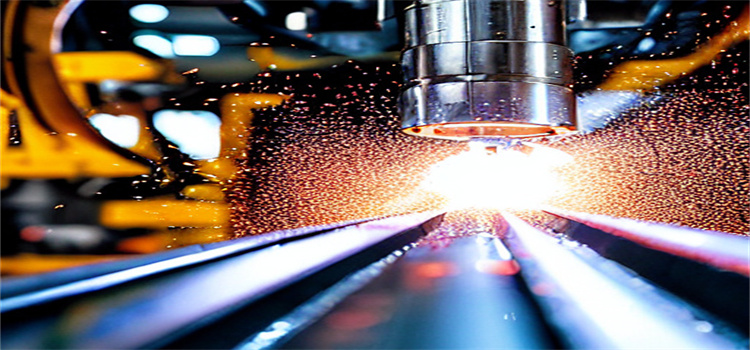
Thermo-mechanical rolling (TMCP) for fine grain
Normalized rolling for improved toughness
Q345 Production
Chinese manufacturers commonly use:
BOF with LD converter technology
Continuous casting
Controlled rolling with accelerated cooling
Optional normalizing for D and E grades
Quality Note: Leading Chinese mills (Baosteel, Shougang, Angang) now achieve EN 10025 certification for Q345 production, making their output technically interchangeable with European S355.
Fig 3
5. Applications and Use Cases
Application
Preferred Grade
Rationale
European infrastructure projects
S355
Regulatory compliance, CE marking
Chinese domestic construction
Q345
Local standard compliance
Offshore platforms (European specs)
S355J2/K2
-20°C toughness requirement
Cold climate structures
Q345D/E
-20°C to -40°C impact grades
Welded bridge components
Either
Both offer excellent weldability
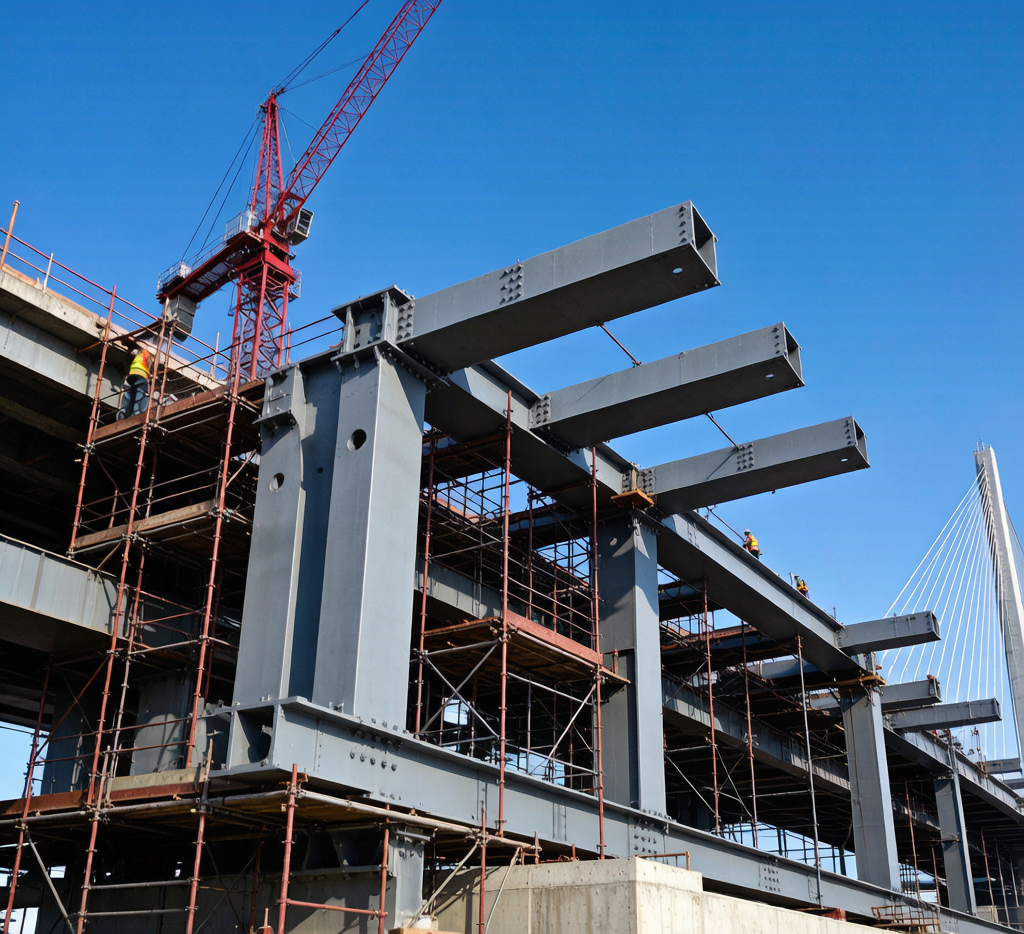
Crane manufacturing
Q345B/C
Cost advantage, adequate properties
6. Cost and Availability Factors
For international buyers, cost extends beyond mill ex-works pricing.
Raw Material Cost: Q345 typically trades 5-12% below S355 in Asian markets due to lower alloy content requirements and domestic production scale.
MOQ Differences: Chinese Q345 suppliers often accept 20-25 ton MOQs versus 50+ tons for European S355 mills.
Lead Time: Q345 from stock: 2-3 weeks; S355 from European mills: 6-10 weeks.
7. Substitution Guidelines for Engineers
When substituting one grade for another, consider these rules:
Direct Substitution: S355JR ↔ Q345B for ambient temperature applications with equivalent impact requirements.
Cold Climate Upgrade: S355J2 requires Q345D or Q345E substitution — not Q345B.
Welding Procedure: Both grades use similar preheat (50-100°C for t>25mm) and consumables (E7018, ER70S-6).
Thickness Correction: For sections >40mm, specify Q345C minimum to match S355JR properties.
Documentation: Ensure mill test certificates clearly state chemical and mechanical compliance to the target standard.
FAQ
Is Q345 exactly equivalent to S355?
Q345B is approximately equivalent to S355JR for ambient-temperature applications, but not identical. S355 has slightly higher minimum yield strength (355 vs 345 MPa), while Q345B demands higher impact energy (34J vs 27J). For critical structural applications, verify specific sub-grade requirements.
Can I use Q345 for a project specifying S355?
Yes, with conditions. The Chinese grade Q345B can substitute for S355JR if the supplier provides documented evidence of compliance with EN 10025 chemical and mechanical requirements. For projects requiring CE marking or specific European norms, direct S355 procurement is safer.
Which grade offers better weldability?
Both offer excellent weldability due to low carbon equivalents (CE ≤0.47%). Q345’s slightly lower carbon content (≤0.20% vs ≤0.24%) provides a marginal advantage for thick-section welding without preheat, though practical differences are minimal for typical structural thicknesses.
How do I verify Q345 quality from Chinese suppliers?
Request mill test certificates (MTC) per GB/T 1591-2018, verify traceability to reputable mills (Baosteel, Shougang, HBIS), and consider third-party inspection (SGS, TUV, BV) for initial orders. Check that impact test temperatures match your design requirements.
What is the price difference between S355 and Q345?
In global markets, Q345 typically costs 5-15% less than S355 on an FOB basis, depending on order volume, specification tightness, and market conditions. However, factor in certification, inspection, and potential customs documentation differences.
Conclusion
S355 and Q345 represent the mature state of high-strength structural steel on their respective continents. For projects bound by European standards or requiring CE marking, S355 remains the specification-grade choice. For cost-sensitive projects with adequate quality verification, Q345 offers compelling value with technically comparable performance.
The key to successful procurement lies not in choosing the “better” grade, but in matching the right sub-grade (JR/J2 for S355; B/D/E for Q345) to your project’s environmental and loading conditions.
Need S355 or Q345 steel for your next project? Huaxia-Steel supplies both European-standard and Chinese-standard structural steel with full mill certifications and third-party inspection support. Contact our technical sales team for grade recommendations, pricing, and delivery scheduling.
If you require further information about our metal sheet products or architectural projects, please don’t hesitate to leave your contact details and message here.
Our team of experts will respond within 24 hours to continue the discussion and provide you with any additional information you requires.