Carbon Steel Casting Process: Investment, Sand, and Die Casting Explained
Carbon Steel Casting Process: Investment, Sand, and Die Casting Explained
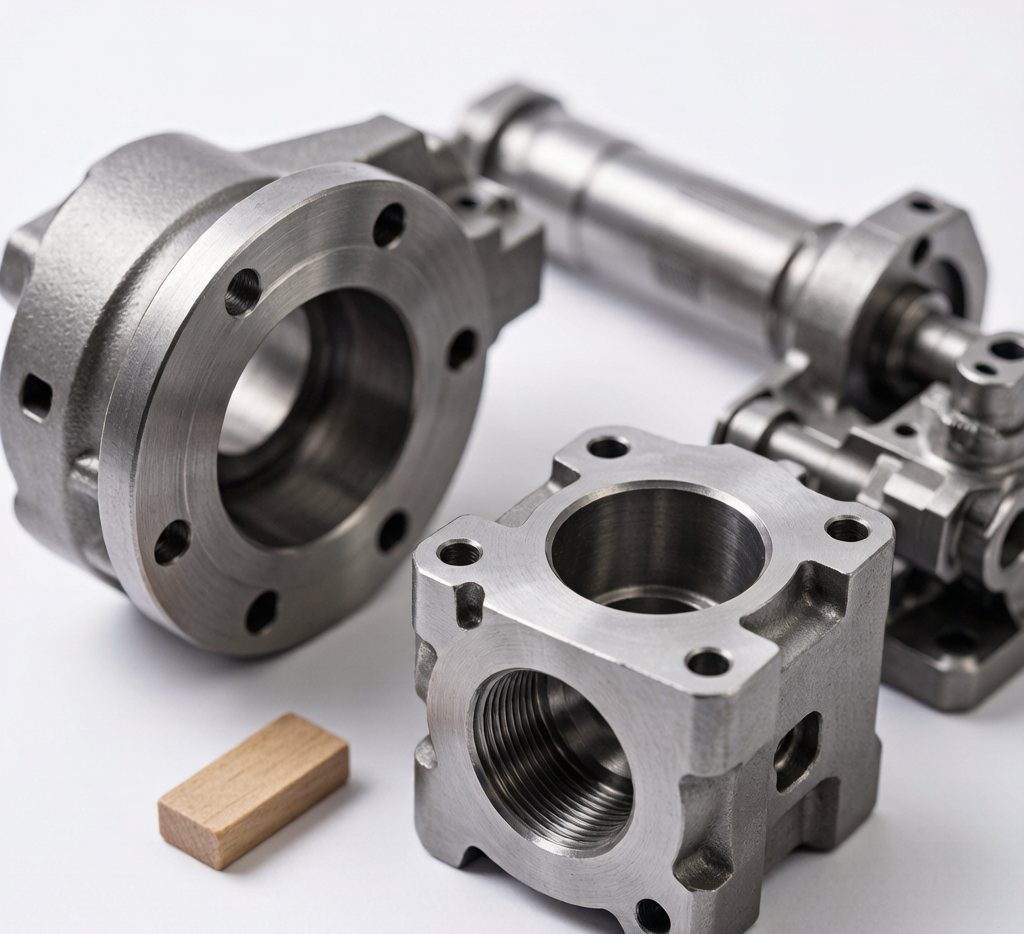
Carbon steel casting transforms molten steel into complex, near-net-shape components that would be impossible or prohibitively expensive to machine from solid bar stock. From valve bodies and pump housings to heavy machinery frames and automotive parts, cast carbon steel delivers design flexibility, material efficiency, and mechanical performance in a single manufacturing step.
This guide examines the three primary carbon steel casting methods — sand casting, investment casting, and die casting — comparing their processes, capabilities, and ideal applications.
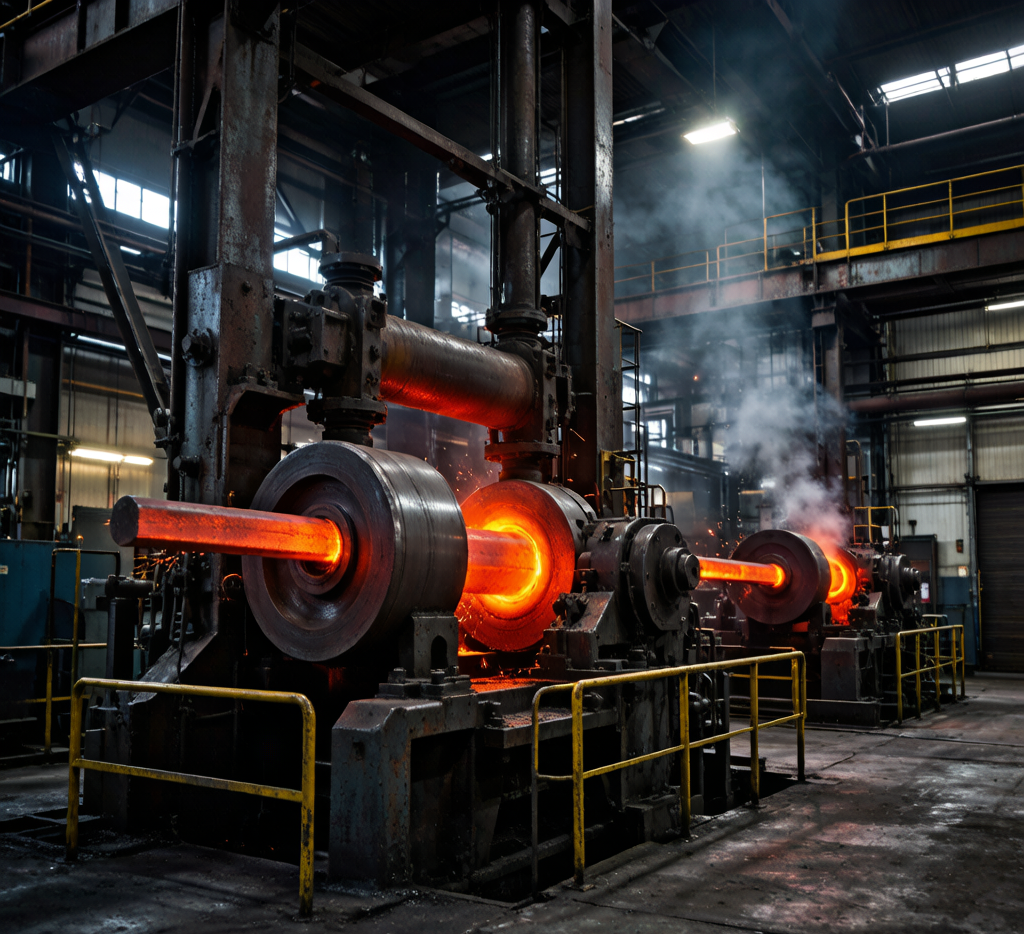
Casting involves pouring liquid metal into a mold cavity and allowing it to solidify. For carbon steel, the process requires temperatures exceeding 1,500°C (2,732°F), demanding specialized refractory materials and controlled cooling to achieve desired microstructures.
Why Cast Carbon Steel?
Geometric complexity: Internal passages, undercuts, and thin walls achievable without welding assemblies
Material efficiency: Near-net-shape production minimizes machining waste
Size range: Components from 50 grams to 50+ tons possible
Mechanical integrity: Directional solidification controls grain structure for load-bearing applications
Cost at scale: Tooling amortization makes casting economical for production volumes above 100 units
Commonly Cast Carbon Steel Grades
Grade
Standard
Carbon Content
Typical Application
A216 WCB
ASTM A216
≤0.30%
Valve bodies, fittings
A216 WCC
ASTM A216
≤0.25%
Low-temperature valves
A352 LCB
ASTM A352
≤0.30%
Cryogenic components
A148 105-85
ASTM A148
0.25-0.35%
Structural castings
GS-25
DIN 1681
0.20-0.30%
General engineering
2. Sand Casting for Carbon Steel
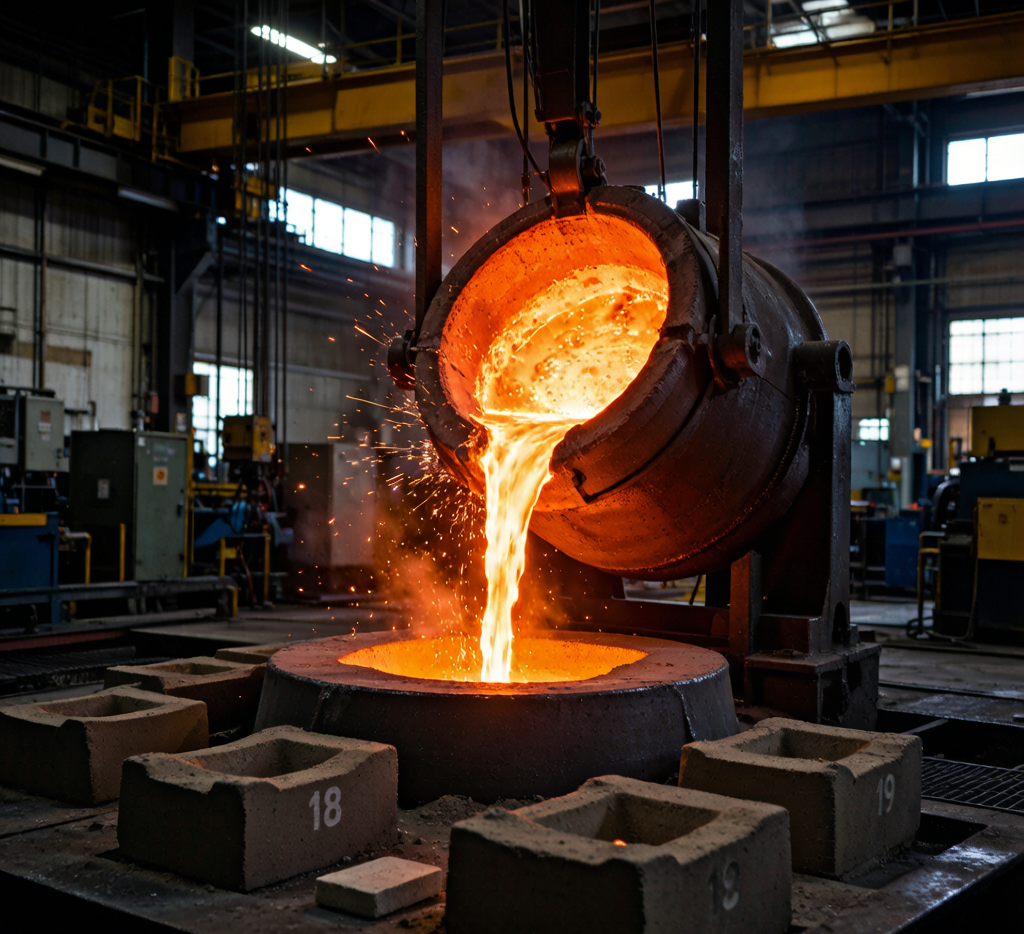
Sand casting is the most widely used method for carbon steel, accounting for approximately 70% of all steel castings by weight.
The Sand Casting Process
Pattern making: Create a wooden, metal, or resin pattern matching the final part geometry
Mold preparation: Pack silica sand bonded with clay or chemical binders around the pattern
Core making: Produce sand cores for internal cavities using core boxes
Mold assembly: Position cores, close cope and drag halves
Pouring: Transfer molten carbon steel from ladle into mold cavity (1,500-1,600°C)
Cooling and shakeout: Allow solidification, then break away sand mold
Cleaning and finishing: Remove gates, risers, and sand residue; shot blast surface
Sand Casting Capabilities
Parameter
Typical Range
Part weight
0.5 kg to 50,000+ kg
Minimum wall thickness
4-6 mm
Dimensional tolerance
CT9-CT11 (ISO 8062)
Surface roughness (Ra)
12.5-25 μm
Minimum production volume
1-10 pieces economical
Pattern cost
$500-$10,000 depending on complexity
Advantages and Limitations
Advantages: Lowest tooling cost, virtually unlimited part size, accommodates all carbon steel grades, suitable for prototypes and low volumes.
Limitations: Coarse surface finish, wider tolerances, potential sand inclusion defects, slower production rate than die casting.
Fig 2
3. Investment Casting (Lost Wax) for Carbon Steel
Investment casting produces carbon steel components with exceptional surface finish and dimensional precision, making it ideal for complex parts requiring minimal machining.
The Investment Casting Process
Wax pattern injection: Inject wax into aluminum die to create precise pattern
Assembly: Attach wax patterns to a central wax sprue (tree)
Shell building: Dip tree into ceramic slurry, coat with refractory sand; repeat 6-10 times
Dewaxing: Heat shell to 100-150°C to melt and drain wax, leaving cavity
Firing: Sinter ceramic shell at 900-1,000°C for strength
Pouring: Fill preheated shell with molten carbon steel
Shell removal: Break away ceramic, cut parts from tree
Finishing: Heat treat, shot peen, and machine as required
Investment Casting Capabilities
Parameter
Typical Range
Part weight
5 g to 100 kg
Minimum wall thickness
1.5-2.0 mm
Dimensional tolerance
CT4-CT6 (ISO 8062)
Surface roughness (Ra)
1.6-3.2 μm
Minimum production volume
50-100 pieces economical
Tooling cost
$2,000-$15,000 for wax dies
Best Applications
Impellers and pump components with complex vane geometries
Valve internals requiring precise flow paths
Aerospace and defense brackets and fittings
Medical and food-grade equipment parts
Gear blanks and sprockets near finished dimensions
4. Die Casting for Carbon Steel
While aluminum and zinc dominate die casting, carbon steel die casting (technically semi-solid or squeeze casting) offers unique advantages for high-volume production of dense, pore-free components.
Carbon Steel Die Casting Variants
Squeeze Casting
Molten carbon steel is poured into a preheated die, then solidified under high mechanical pressure (50-150 MPa). The pressure eliminates porosity and achieves fine grain structure.
Semi-Solid Casting
Carbon steel slurry (40-60% solid fraction) is injected into dies at lower temperatures than fully liquid casting, reducing die erosion and enabling thinner walls.
Die Casting Capabilities
Parameter
Typical Range
Part weight
0.1 kg to 20 kg
Minimum wall thickness
2-3 mm
Dimensional tolerance
CT5-CT7
Surface roughness (Ra)
3.2-6.3 μm
Production rate
30-120 cycles/hour
Tooling cost
$20,000-$100,000+
Fig 3
5. Process Comparison for Carbon Steel
Factor
Sand Casting
Investment Casting
Die Casting
Surface finish
Rough
Excellent
Good
Dimensional accuracy
Moderate
High
High
Part complexity
High
Very high
Moderate
Wall thickness min
4-6 mm
1.5-2 mm
2-3 mm
Production volume
1-1,000
50-10,000
5,000+
Tooling cost
Low
Medium
High
Per-part cost (high vol)
High
Medium
Low
Material utilization
50-70%
60-80%
85-95%
Internal defects
Moderate risk
Low risk
Very low risk
6. Heat Treatment of Cast Carbon Steel
Cast carbon steel components almost always require heat treatment to achieve specified mechanical properties and relieve casting stresses.
Normalizing
Heat to 850-920°C, air cool. Refines grain structure, improves toughness, and homogenizes chemical segregation from solidification.
Quenching and Tempering
Austenitize at 850-880°C, oil or water quench, then temper at 400-650°C. Achieves strength-toughness combinations for structural castings.
Stress Relief Annealing
Heat to 550-650°C, hold 2-4 hours, furnace cool. Essential for large, complex castings to prevent distortion during machining.
7. Quality Control and Inspection
Carbon steel castings require rigorous inspection to ensure internal soundness and dimensional compliance.
Adequate fillets: Internal corners minimum 3-5 mm radius to prevent hot tearing
Draft angles: 1-3° per side for pattern removal (sand casting)
Riser placement: Position risers at last-freezing sections to feed shrinkage
Material grade selection: Lower carbon grades (WCB) for weldability; higher carbon for wear resistance
Machining allowances: 2-5 mm on critical surfaces depending on casting process
FAQ
What is the most cost-effective casting method for carbon steel prototypes?
Sand casting offers the lowest tooling investment ($500-$3,000) and accommodates single-piece orders. For prototypes requiring tight tolerances or smooth surfaces, 3D-printed sand molds or investment casting with rapid-pattern technology bridge the gap.
Can cast carbon steel achieve the same strength as wrought steel?
With proper heat treatment, cast carbon steel achieves 85-95% of wrought steel strength in the same grade. The cast microstructure contains some porosity and larger grain size, but normalizing and quenching/tempering significantly close the gap. For critical structural applications, specify ASTM A148 or A216 with full mechanical testing.
What causes porosity in carbon steel castings?
Porosity results from gas entrapment (poor venting), shrinkage (inadequate risering), or reactions between molten steel and mold materials. Proper gating design, controlled pouring temperature, and adequate riser volume minimize porosity. Squeeze casting or HIP (Hot Isostatic Pressing) can eliminate residual porosity.
How do I specify surface finish requirements for castings?
Reference ISO 8062 (CT grades) for dimensional tolerances and ISO 1302 for surface roughness. For machined surfaces, specify “cast + machine” with allowance. For as-cast functional surfaces, investment casting delivers Ra 1.6-3.2 μm; sand casting requires 12.5-25 μm.
What is the typical lead time for carbon steel casting orders?
Lead times vary by process: sand casting with existing patterns: 3-4 weeks; new pattern sand casting: 6-8 weeks; investment casting: 4-6 weeks; die casting with existing dies: 2-3 weeks. Tooling fabrication adds 3-6 weeks for new dies or patterns.
Conclusion
Carbon steel casting offers unparalleled flexibility for producing complex metal components across virtually every industrial sector. Sand casting dominates for large, heavy parts at low volumes; investment casting excels at precision and surface quality; and die casting delivers economic efficiency at high production volumes.
Selecting the right process depends on part geometry, tolerance requirements, production volume, and budget. Partnering with an experienced foundry that understands carbon steel metallurgy ensures optimal material properties and consistent quality.
Looking for carbon steel castings for your project? Huaxia-Steel supplies precision carbon steel castings through sand casting and investment casting processes, with full NDT inspection and heat treatment capabilities. Request a quote with your drawings and specifications.
If you require further information about our metal sheet products or architectural projects, please don’t hesitate to leave your contact details and message here.
Our team of experts will respond within 24 hours to continue the discussion and provide you with any additional information you requires.