When European buyers request C45, C55, or C60 carbon steel, they’re quoting grades defined by EN 10083-1 and EN 10083-2, not AISI/SAE. Mis-mapping these grades to the wrong JIS or AISI equivalent is one of the most common causes of part failure, heat-treatment problems, and customs disputes. This guide compares the three grades side-by-side so procurement, quality, and machining teams can spec the right one.
1. What Are EN 10083 C45, C55, and C60?
EN 10083 is the European standard for quenched and tempered alloy and non-alloy steels. Part 1 covers general technical delivery conditions; Part 2 covers unalloyed quality steels (the C-series); Part 3 covers boron steels. C45 (1.0503), C55 (1.0535), and C60 (1.0601) sit in the medium-to-high carbon range and are widely used for shafts, axles, gears, couplings, and forged parts.
| EN Name | Material Number | AISI / SAE Equiv. | JIS Equiv. | Typical Carbon |
|---|---|---|---|---|
| C45 | 1.0503 | 1045 | S45C | 0.42–0.50% |
| C55 | 1.0535 | 1055 | S55C | 0.52–0.60% |
| C60 | 1.0601 | 1060 | S58C / S60C | 0.57–0.65% |
The cross-reference is approximate. EN 10083 has tighter control of phosphorus, sulfur, and Si than AISI 1045. Direct substitution between systems is usually safe for non-critical parts but should be qualified before volume use.
2. Chemical Composition Compared
All three grades are unalloyed medium-to-high carbon steels. The decisive variable is carbon content, which controls achievable hardness and as-quenched strength.
| Element | C45 (cast limits) | C55 (cast limits) | C60 (cast limits) |
|---|---|---|---|
| C | 0.42–0.50% | 0.52–0.60% | 0.57–0.65% |
| Si | ≤ 0.40% | ≤ 0.40% | ≤ 0.40% |
| Mn | 0.50–0.80% | 0.60–0.90% | 0.60–0.90% |
| P | ≤ 0.045% | ≤ 0.045% | ≤ 0.045% |
| S | ≤ 0.045% | ≤ 0.045% | ≤ 0.045% |
| Cr | ≤ 0.40% | ≤ 0.40% | ≤ 0.40% |
| Ni | ≤ 0.40% | ≤ 0.40% | ≤ 0.40% |
| Mo | ≤ 0.10% | ≤ 0.10% | ≤ 0.10% |
For better machinability, EN 10083 also lists variants with controlled sulfur (e.g., C45S / 1.0503 + S) or lead addition. Always check the +S or +Pb suffix on the test certificate when machinability is critical.
3. Mechanical Properties After Heat Treatment
The performance gap between C45, C55, and C60 only becomes obvious after quenching and tempering. In the as-rolled or as-forged condition, all three fall in a similar 570–700 MPa tensile range.
| Property (Q&T, +QT condition) | C45 | C55 | C60 |
|---|---|---|---|
| Tensile strength Rm | 700–850 MPa | 850–1000 MPa | 950–1100 MPa |
| Yield strength Rp0.2 | ≥ 490 MPa | ≥ 600 MPa | ≥ 680 MPa |
| Elongation A | ≥ 14% | ≥ 12% | ≥ 11% |
| Hardness (Brinell HBW) | 210–250 | 250–290 | 280–320 |
For diameters above 16 mm, properties may drop as the cross-section thickens — this is hardenability, not chemistry. If you need consistent hardness through a 60mm shaft, none of the three is ideal; you’d need 42CrMo4 (1.7225) or 34CrNiMo6 instead.
4. Hardness and Hardenability
All three grades have limited hardenability because they lack alloying elements like Cr, Ni, or Mo. Through-hardening depth depends primarily on carbon content and bar diameter.
- C45 — Jominy end-quench hardness at J=10 is about 45–50 HRC; surface hardening via induction or flame works well.
- C55 — J=10 around 52–55 HRC; better depth than C45 but still needs aggressive quench.
- C60 — J=10 around 55–58 HRC; the deepest of the three but with higher distortion and quench-cracking risk.
For water quenching, expect distortion and risk of quench cracks. For oil quenching, all three behave well up to about 25 mm diameter. For polymer (PAG) quench at 8–12% concentration, expect intermediate cooling between water and oil — ideal for C45 and C55 where the aim is reduced distortion.
5. Machinability vs Wear Resistance
Machinability rating (AISI 1212 = 100%):
| Grade | Machinability Index | Recommended Tooling |
|---|---|---|
| C45 (annealed) | 55% | Coated carbide, MQL |
| C55 (annealed) | 50% | Coated carbide, lower Vc |
| C60 (annealed) | 45% | Ceramic or CBN for hard turning |
| C45S (resulfurized) | 70% | Standard HSS acceptable |
Higher carbon = harder = better wear resistance but more tool wear. If the part will run against another metal surface (gear meshing, cam-follower contact), the extra carbon in C55 or C60 pays for itself in service life. If you’re machining a complex shape with thin walls, stay with C45 or C45S.
6. Welding and Forming
All three grades are considered non-weldable in the as-supplied condition. Welding carbon above 0.45% without preheat (250–300 °C) and post-weld stress relief almost always produces HAZ (heat-affected zone) cracking. If welding is unavoidable:
- Preheat to 250 °C minimum, hold throughout welding.
- Use low-hydrogen electrodes (e.g., AWS E7018 or EN ISO 2560-A E 42 4 B).
- Stress-relieve at 580–620 °C after welding.
- Avoid welding C60 if possible — pre-existing cracks are likely.
For cold forming, C45 is the most forgiving. C60 will crack on tight radii and needs hot forming above 850 °C. C55 sits in between.
7. Cost and Availability
Price spread between the three is narrow, usually under 8% per tonne in the EU market and slightly wider in Asia. C60 is the least stocked grade at distributors; expect longer mill lead times if your project needs large quantities.
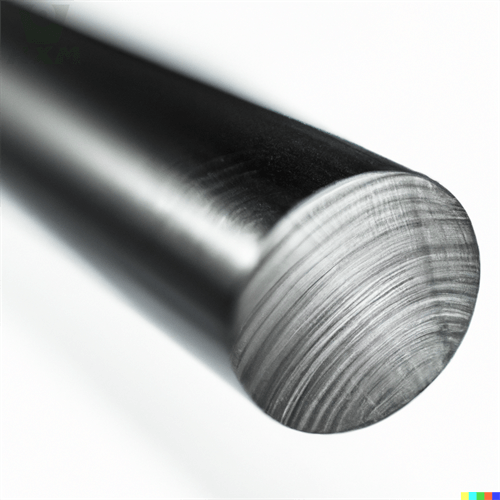
- C45 — Highest availability; stocked in round bar, flat bar, plate, and sheet form. Cheapest of the three.
- C55 — Readily available in round bar and forging billet. Plate stock is more limited.
- C60 — Often special-order at service centers. Mills will quote minimum 5-tonne lots.
8. Selection Checklist
- Need a general-purpose shaft, axle, or stud? Specify C45 +QT (or +N if no heat treatment needed).
- Need higher wear resistance or surface hardness? Specify C55 +QT.
- Need the deepest hardenability and can justify the cost? Specify C60 +QT, and pre-qualify welding procedure.
- Need better machinability at C45 strength? Specify C45S or C55S.
- Always request EN 10204-3.1 mill test certificate and verify the heat number matches between MTC and bar marking.
Frequently Asked Questions
Is EN 10083 C45 the same as AISI 1045?
Yes, for most uses. The chemical composition is close, but EN 10083 has tighter control of P and S. Some high-purity 1045 batches will meet C45 limits, but a generic 1045 from one heat may fall outside C45 chemistry.
Can C55 replace C45 in a quenched-and-tempered shaft?
Yes, with caveats. C55 will reach higher surface hardness (about 5–8 HRC higher than C45 at the same austenitizing and quench). You must check that downstream processes (welding, machining after Q&T) can handle the higher hardness.
Which grade gives the best wear resistance?
C60, because carbon content directly controls carbide volume and thus abrasive wear resistance. For sliding contact parts (e.g., gear teeth, cam lobes), C60 outperforms C45 by 20–30% in service life.
Do these grades require preheat before welding?
Yes, always. Minimum 250 °C for C45, 280 °C for C55, and 300 °C for C60. Skip preheat only for cosmetic welds that will be removed by machining.
Need Help Sourcing EN 10083 C45 / C55 / C60?
Huaxia-Steel supplies EN 10083 C45, C55, and C60 in round bar, flat bar, plate, and forged billet form — all with EN 10204-3.1 mill test certificates and direct mill pricing. We can also cut to size, rough-machine, and arrange preheat/post-weld heat treatment. Send your drawing or spec to [email protected] for a 24-hour quote.
Related grades: S45C vs S50C vs S55C Comparison · SAE 1045 vs C45 vs CK45 · S45C Round Bar