A36 vs A572 Grade 50 Carbon Steel: Which Structural Grade Should You Order?
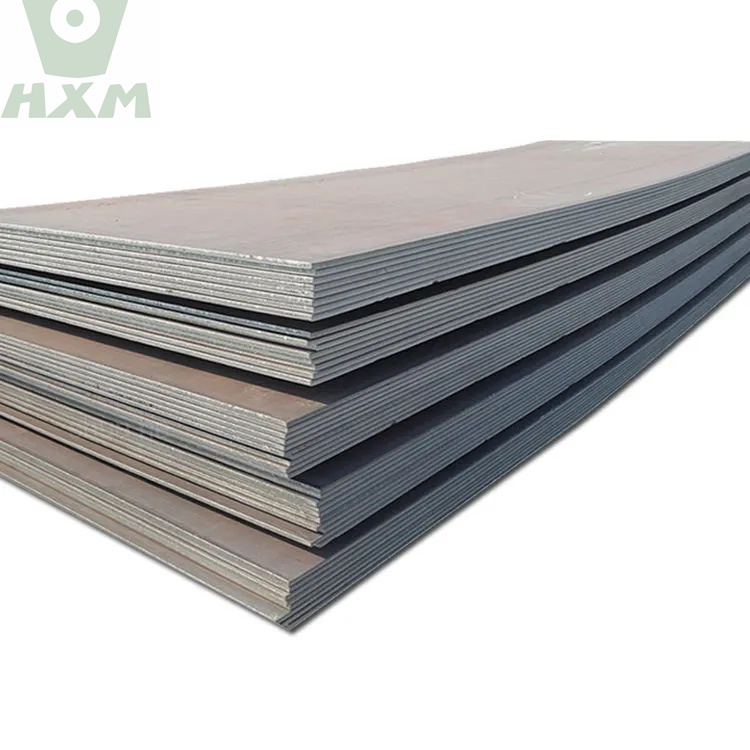
A36 and ASTM A572 Grade 50 are the two most frequently quoted structural carbon steels in global procurement. A36 is the baseline for general fabrication; A572 Grade 50 offers 50 ksi minimum yield strength and is becoming the default for welded structures that need weight savings. Buyers often face the same dilemma: pay a small premium for A572 Grade 50 or save money with A36 and accept the lower strength. The wrong choice can mean excess deflection, heavier assemblies, failed weld procedures, or a rejected shipment that does not meet the project’s minimum yield. This guide compares A36 vs A572 Grade 50 across chemistry, mechanical properties, weldability, availability, and cost so you can place the right specification on your next purchase order.
1. Quick Answer: When to Specify A36 or A572 Grade 50
- Order A36 for general structural plates, angles, channels, and bars where the design stress is modest and the project specification simply calls for “mild steel” or “carbon steel.” It is the cheapest and most available option.
- Order A572 Grade 50 when the design requires higher strength-to-weight ratio, longer spans, lighter members, or when the engineer specifies 50 ksi minimum yield. Common in buildings, bridges, truck frames, and heavy equipment.
- Weldability is similar but not identical: A572 Grade 50 has slightly more alloy content, so preheat and consumable selection should follow the actual grade, not A36 assumptions.
- Price gap: A572 Grade 50 usually costs 5–12% more than A36 in plate form, depending on thickness, width, and mill origin.
- Certification: Both are covered by ASTM A6 dimensional tolerances, but A572 is a distinct material specification (ASTM A572/A572M). A36 is ASTM A36/A36M.
2. Chemical Composition Comparison
The chemistry difference explains the strength gap. A572 Grade 50 adds columbium (niobium) and vanadium for grain refinement and precipitation strengthening, while keeping carbon moderate for weldability:
| Element | A36 (max %) | A572 Grade 50 (max %) |
|---|---|---|
| Carbon | 0.29 | 0.23 |
| Manganese | 0.80–1.20 | 1.35 max |
| Phosphorus | 0.04 | 0.04 |
| Sulfur | 0.05 | 0.05 |
| Silicon | 0.15–0.40 | 0.15–0.40 |
| Columbium | — | 0.005–0.05 |
| Vanadium | — | 0.01–0.15 |
Lower carbon in A572 Grade 50 is counter-intuitive: it improves weldability while the micro-alloying elements provide the higher strength. For buyers sourcing from Chinese mills, make sure the mill test certificate explicitly references ASTM A572/A572M and lists the actual C, Mn, Nb, and V values, not just a typical A36 report.
3. Mechanical Properties and Design Stress
The mechanical-property gap is the primary reason engineers upgrade from A36 to A572 Grade 50:
| Property | A36 | A572 Grade 50 |
|---|---|---|
| Minimum yield strength | 36 ksi (250 MPa) | 50 ksi (345 MPa) |
| Tensile strength | 58–80 ksi | 65 ksi min |
| Elongation in 8 in. | 20% min | 18% min |
| Typical hardness | 140–190 HB | 170–220 HB |
| Impact requirement | None standard | None standard |
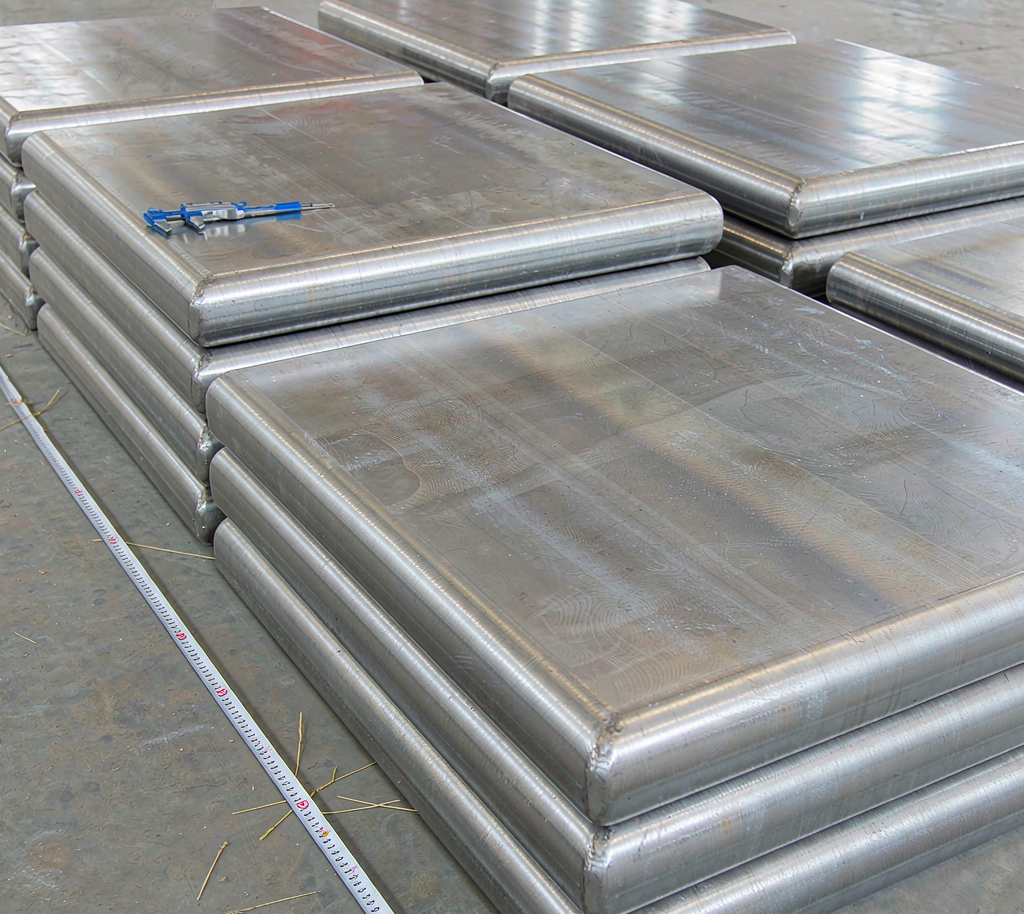
A higher yield strength means a smaller cross-section can carry the same load. In a real-world beam or column, that can reduce steel weight by 15–25%. Over long spans or repetitive members, the material premium is often recovered through lower freight and faster erection.
4. Weldability and Fabrication Considerations
Both grades are weldable with conventional processes, but A572 Grade 50 demands slightly more attention because of its micro-alloy content and higher strength:
- Preheat: A36 rarely needs preheat above 25 mm thickness in ambient conditions; A572 Grade 50 may need 50–100°C preheat at similar thickness to avoid hydrogen cracking.
- Consumables: Match the filler metal to the lower-strength base metal to avoid overmatching, or follow the WPS if the joint is designed for 50 ksi.
- Hardenability: The higher strength of A572 comes with a slightly harder heat-affected zone. Slow cooling increases HAZ hardness; control heat input and interpass temperature.
- Forming: Both bend and roll well. A572 Grade 50 has a slightly higher minimum bend radius; check the mill’s forming recommendations before cold-bending tight radii.
5. Availability, Sizes, and Price
A36 is stocked in every major steel market in plates from 3 mm to 150 mm and in structural shapes from small angles to wide-flange beams. A572 Grade 50 plate is also widely available, but structural shapes (W, S, C, L, HSS) are sometimes produced to A992, which is the structural-shapes version of A572 Grade 50 with tighter controls. When ordering from export mills, confirm whether the quote is A572 Grade 50 plate, A572 Grade 50 structural, or A992:
| Form | Typical standard | Common sizes |
|---|---|---|
| Plate | ASTM A36 / A572 Gr. 50 | 1500–2500 mm width, 5–100 mm thickness |
| Angle / channel | A36 common; A572 Gr. 50 available | 25×25 mm to 200×200 mm |
| Wide-flange beam | A992 (shapes version) | W100×100 to W920×420 |
| Round / flat bar | A36 / A572 Gr. 50 / A529 | φ6–φ300 mm / 3–50 mm thick |
Price volatility follows the carbon-steel index, but the A572 Grade 50 premium is usually stable at 5–12% over A36 for commodity thicknesses. For large tonnages, that premium is negotiable, especially if the mill can roll both grades on the same campaign.
6. Buyer’s Decision Checklist
- What yield strength does the drawing or contract specify?
- Is the part welded? If so, has the WPS been qualified for the actual grade?
- Are weight savings important for shipping or erection cost?
- Does the destination standard accept ASTM A572, or is an EN/JIS equivalent required?
- Will the mill provide a certified MTC with actual chemistry and mechanical test results?
7. FAQ
Can I substitute A572 Grade 50 for A36 without changing the design?
Only if the engineer approves. Higher strength is usually acceptable, but connection details, weld procedures, and deflection limits must be checked.
Is A572 Grade 50 the same as Q345B or S355JR?
Not exactly. A572 Grade 50, Q345B, and S355JR are all approximately 345 MPa yield grades, but their chemistry, toughness, and certification rules differ. Always verify equivalence with the end client or inspector.
Which grade is better for outdoor structures?
Neither has atmospheric-corrosion resistance. For bridges or exposed structures, specify A588 weathering steel or apply a protective coating.
Can Huaxia-Steel supply both A36 and A572 Grade 50?
Yes. We stock and export A36 and A572 Grade 50 plates, angles, channels, and bars with full ASTM certification, cutting, and export packing.
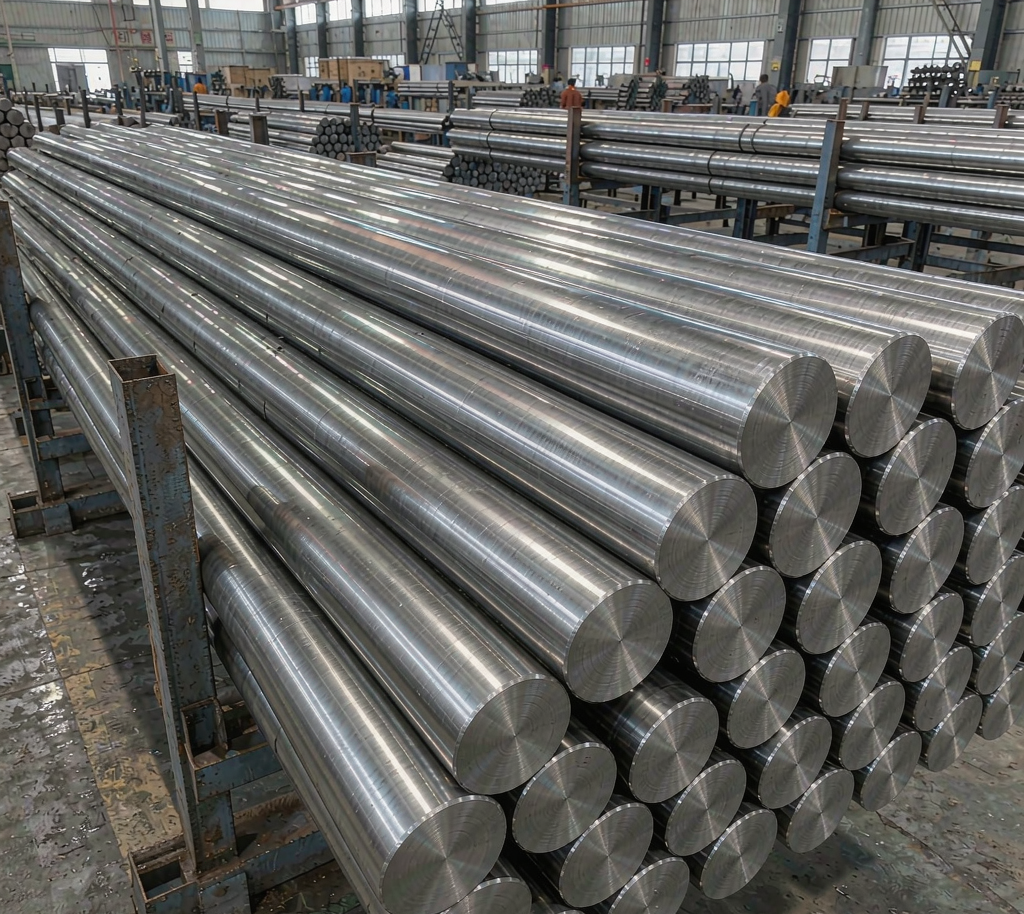
Need A36 or A572 Grade 50 carbon steel with certified MTC? Contact Huaxia-Steel for a mill-direct quote, cut-to-size service, and export packing to your port.