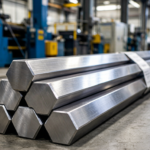
Carbon steel hex nuts are the highest-volume fastener in any steel supply chain and the one buyers most often treat as a commodity — until a batch strips under torque, fails a proof load test, or arrives with a coating weight that rusts in the warehouse. We manufacture and supply hex nuts in property classes 4, 5, 6, 8, 8.8 and 10.9, in sizes from M6 to M64, to DIN 934, ISO 4032, ASME B18.2.2 and GB/T 6170, with zinc plating, hot dip galvanizing, black oxide and plain finishes. Every lot is proof load tested and thread gauged, and every shipment carries a mill test certificate and a coating thickness report.
Product Overview
A hex nut is a six-sided internally threaded fastener that develops the clamp load of a bolted joint. Three things determine whether it works: the property class, which sets the proof load the nut must sustain without thread stripping; the thread tolerance, which determines how the load distributes across the engaged threads; and the bearing surface, which determines whether the nut damages the part it clamps. The standard ISO 898-2 nut proof load test is deliberately designed so that the nut is stronger than the bolt it pairs with — a class 8 nut on a class 8.8 bolt will not strip before the bolt breaks, which is the correct failure mode.
Our hex nuts are cold formed from cold heading quality wire, tapped, heat treated where the class requires it, and coated. Class 4, 5 and 6 nuts are supplied as-formed or stress relieved. Class 8 and above are quenched and tempered to a controlled hardness range, with the specified proof load verified on every test lot. For hot dip galvanized nuts, we tap oversize after galvanizing so that the threads still accept a standard bolt after the zinc layer is applied — a detail that separates a usable galvanized nut from a decorative one.
Specifications
| Parameter | Range |
|---|---|
| Size | M6 – M64 (1/4″ – 2 1/2″) |
| Property class | 4, 5, 6, 8, 8.8, 10.9 (ISO 898-2) / Grade 2, 5, 8 (SAE J995) |
| Thread | Metric coarse and fine (ISO 965-2, 6H), UNC/UNF (2B), BSP optional |
| Style | Hexagon, heavy hex, hex flange, nylon insert lock nut, weld nut |
| Width across flats | 10 – 95 mm, tolerance h13 / h14 by standard |
| Thickness | 5 – 76 mm (DIN 934 style) or heavier per ASME B18.2.2 |
| Bearing surface | Flat, chamfered both sides, or washer faced |
| Material | Low carbon (1008/1010), medium carbon (1035/1045), boron (10B21), CrMo (SCM435) |
| Coating | Zinc plated (3–12 µm), hot dip galvanized (40–80 µm), black oxide, phosphated, plain oiled |
| Dimensional tolerance | ISO 4759-1 product class A / B / C |
| Packing | 25 kg cartons, 500–1000 kg pallets, bulk bags on request |
Available Grades and Materials
Grade selection should follow the bolt, not the price list. A class 8.8 bolt needs a class 8 nut; pairing it with a class 5 nut moves the failure mode from the bolt to the thread and produces a joint that strips under overload instead of stretching — a much harder failure to detect in service. The table below maps the pairs we supply most often.
| Nut class | Material | Hardness | Proof load stress | Pairs with |
|---|---|---|---|---|
| Class 4 / 5 | 1008 / 1010 | ≤ 302 HV | 380 – 520 MPa | Class 4.6, 4.8 bolts |
| Class 6 | 1015 / 1020 | ≤ 302 HV | 600 MPa | Class 5.8 bolts |
| Class 8 | 1035 / 10B21 (Q&T) | 200 – 302 HV | 800 MPa | Class 8.8 bolts |
| Class 10.9 | SCM435 / 42CrMo (Q&T) | 240 – 353 HV | 1040 MPa | Class 10.9 bolts |
| Grade 8 (SAE) | Medium carbon Q&T | 24 – 34 HRC | 150 ksi thread strip | Grade 8 bolts |
Two material notes worth raising at enquiry stage. For hot dip galvanized nuts above M20, we recommend a boron or medium carbon base with an oversize tap rather than a low carbon base, because the thicker zinc layer on a coarse-thread nut can otherwise bind on assembly. For stainless pairing — a carbon steel nut on a stainless bolt in a wet environment — the galvanic couple will corrode the carbon nut preferentially, so specify a coated nut and an isolating washer or move both components to stainless.
Manufacturing Standards
- ISO 4032 — hexagon regular nuts, product grades A and B, the default metric dimensional standard.
- ISO 4033 — hexagon high nuts, for joints where thread engagement must exceed one diameter.
- DIN 934 — the classic German dimensional standard still cited on many European drawings; dimensionally close to ISO 4032 but with small differences in chamfer.
- ASME B18.2.2 — inch hex nuts, including heavy hex patterns used in structural bolting to ASTM A325/A490 assemblies.
- ISO 898-2 — mechanical properties of nuts, defining proof load stress by property class and the mandatory test method.
- ASTM A563 — carbon and alloy steel nuts for structural and general use, grades A, B, C, DH, DH3.
- GB/T 6170 / GB/T 6175 — Chinese national standards, 1型 and 2型 hex nuts.
- ISO 4042 — electroplated coating requirements, including thickness classes and hydrogen embrittlement relief.
- ASTM A153 / ISO 10684 — hot dip galvanizing of fasteners, including coating weight and thread allowance rules.
Applications
Hex nuts from this range go into structural steelwork and bolted frames, machine and equipment assembly, pipe supports and hangers, tower and pole hardware, transport equipment, agricultural machinery, and general industrial maintenance. The grade decision usually follows the joint’s consequence of failure rather than the industry: a class 8 nut on a bolted rack is normal, a class 10.9 nut on a crane rail clamp is mandatory, and a class 4 nut on a temporary shipping brace is entirely appropriate.
Thread Fit, Tolerances and Bearing Surface
Thread fit is where most field problems begin. ISO 965-2 class 6H is the standard internal thread tolerance for general use, and it gives a nut that assembles freely by hand and still distributes load across the engaged threads. A 6G nut is slightly larger and is the correct choice after electroplating or galvanizing, because the coating consumes part of the thread flank. A supplier who galvanizes a standard 6H nut without retapping produces a nut that will not run onto the bolt at all — or worse, one that runs on with a wrench and then galls the thread so badly that it cannot be removed.
Bearing surface matters in joints where the clamped part is soft or coated. A chamfered nut concentrates load on a narrow annulus, which is fine on steel but can deform an aluminium or painted component. A washer-faced nut spreads the same load over a larger area, and pairing any nut with a hardened washer is the cheapest way to protect a coated or thin-gauge part. Where the joint is subject to vibration, a nylon insert lock nut (DIN 985) or a flange nut with serrations is a more reliable answer than a higher property class.
| Thread tolerance | Typical use | Note |
|---|---|---|
| 6H | Plain or lightly oiled nuts | Standard; hand assembly |
| 6G | After plating or galvanizing | Larger allowance for coating |
| Oversize tap (+0.4 mm) | Hot dip galvanized nuts > M20 | Required to clear thick zinc |
| 2B (inch) | UNC/UNF general use | Equivalent role to 6H |
Inspection Points on Arrival
Four checks catch almost every defective nut shipment. First, gauge the threads with a GO/NO-GO gauge on a sample from the top, middle and bottom of each carton — nuts settle in transit and the bottom layer is where coating damage shows up. Second, run a sample onto a known-good bolt by hand; a nut that needs a wrench on more than one in twenty pieces has a thread or coating problem. Third, measure across-flats and thickness with a caliper at three points, because cold-formed nuts can be oval. Fourth, confirm the class marking is present on the face or the bearing surface — an unmarked high-strength nut is an unmarked nut, whatever the carton label says.
For galvanized lots, add a coating thickness reading on the thread flank rather than the flat face; the crest of the thread is where zinc is thinnest and where corrosion starts. Anything under 40 µm on a hot dip galvanized nut should be questioned before the parts go into stock.
Quality Assurance
- Incoming wire verified for grade, diameter and surface condition, with spheroidize anneal records for medium carbon heats.
- In-process checks every two hours on across-flats, thickness, chamfer and thread gauge (GO/NO-GO).
- Proof load test per ISO 898-2 on every lot, with the load and result recorded on the inspection sheet.
- Hardness traverse on sectioned samples for class 8 and above, measured at core, not surface.
- Coating thickness measured by magnetic gauge at five points per sample; salt spray testing to ASTM B117 on request.
- Hydrogen embrittlement relief bake documented for class 10.9 and above where electroplated.
- Third-party inspection (SGS, BV, TUV, Intertek) available with pre-shipment report and witness testing.
- EN 10204 3.1 certificate issued per shipment, with heat number traceability to the wire coil.
Packaging and Shipping
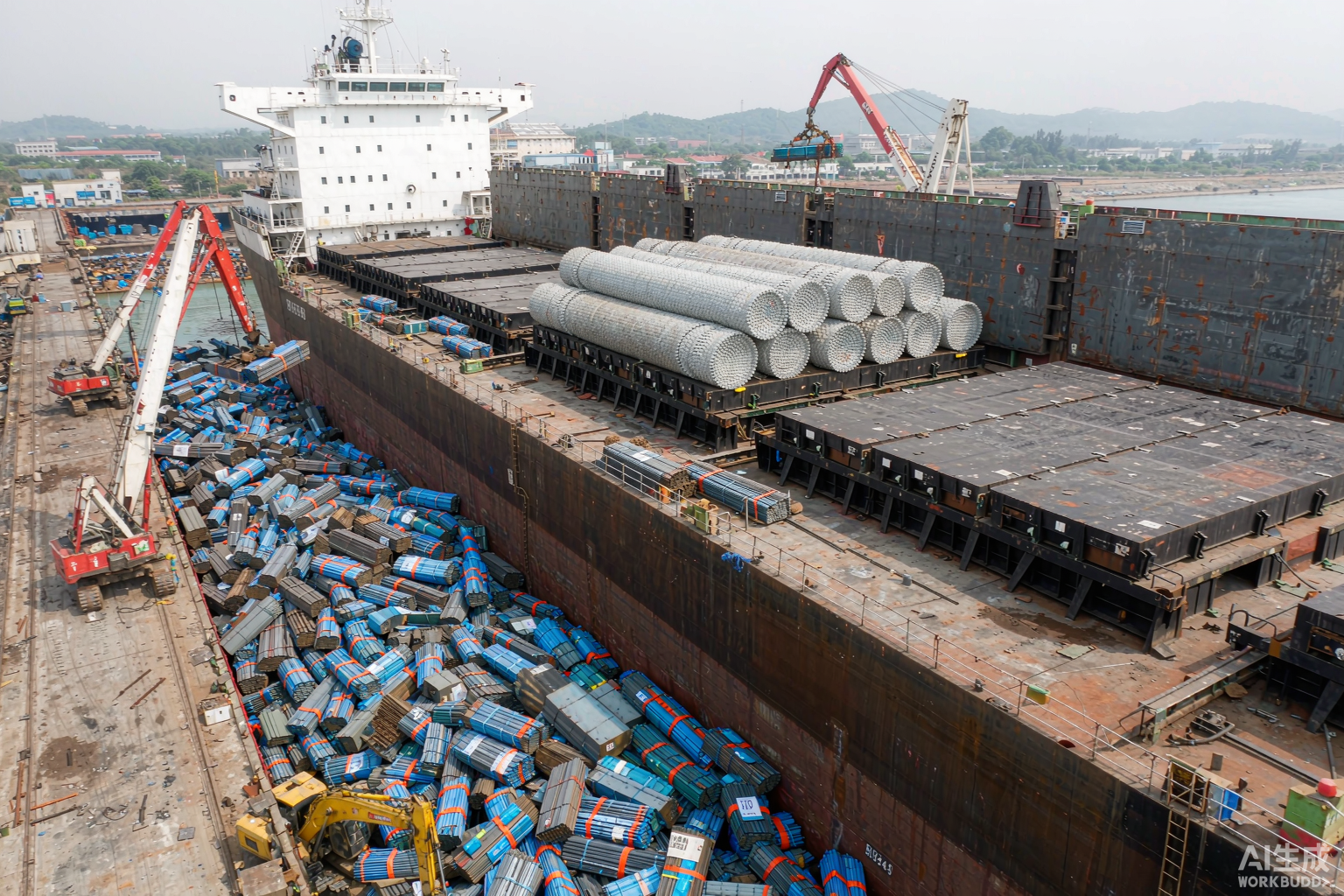
Standard export packing is 25 kg double-wall cartons on 500–1000 kg heat-treated pallets, stretch wrapped and steel strapped, with the ISPM 15 mark applied at the packing line. Bulk orders can ship in one-tonne FIBC bags or loose in a lined container with a bulkhead. Cartons are labelled with size, class, coating, lot number and quantity, and the pallet label repeats the heat number so that a receiving inspection can trace a carton back to its wire coil without opening the shipment.
Loading plans are issued with the shipping documents and photographs of the sealed container are included in the pre-shipment report. We ship FOB, CFR and CIF from Shanghai, Ningbo and Qingdao, with typical production lead time of 20–30 days for standard sizes and 30–40 days for hot dip galvanized or non-standard patterns.
Request a Quotation
Send us the size, property class, coating, standard and quantity, and we will return a quotation with the material grade we intend to use, the proof load we will certify, the coating thickness range and the packing plan. For buyers comparing several suppliers on the same M16 class 8 nut, we are happy to quote against a specified test regime so that the comparison is like for like. Email our export team with your requirement and receive a technical and commercial proposal within one working day.