Incoterms 2020 for Steel Export: Buyer’s Guide
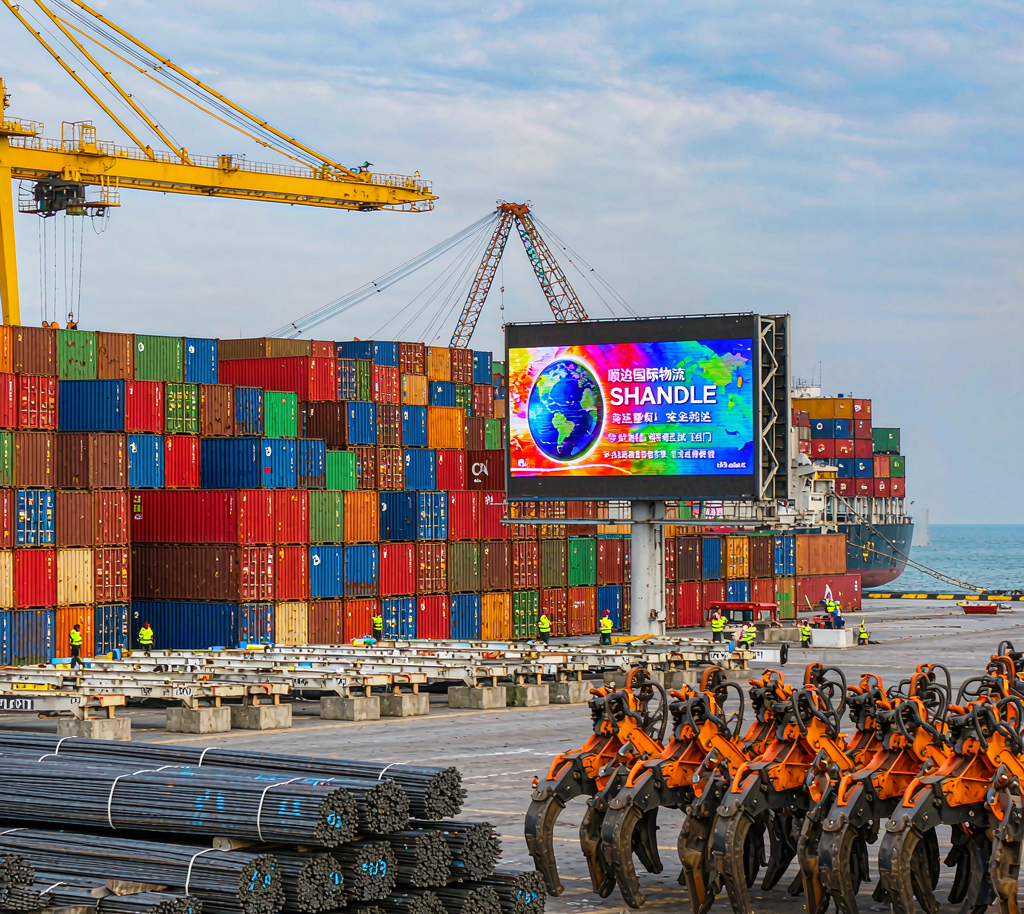
Incoterms decide who pays for what, and where risk passes, between a steel seller and a steel buyer. Get them wrong and a shipment that looked cheap on the quotation can become expensive at the destination port, or a damaged coil can become an argument about who owns the loss.
This guide covers the Incoterms 2020 rules most used in carbon steel trade, how EXW, FOB, CFR, CIF and DAP split cost and risk, six cost traps that hide inside these terms, and how to choose the right term for your shipment.
What Are Incoterms 2020?
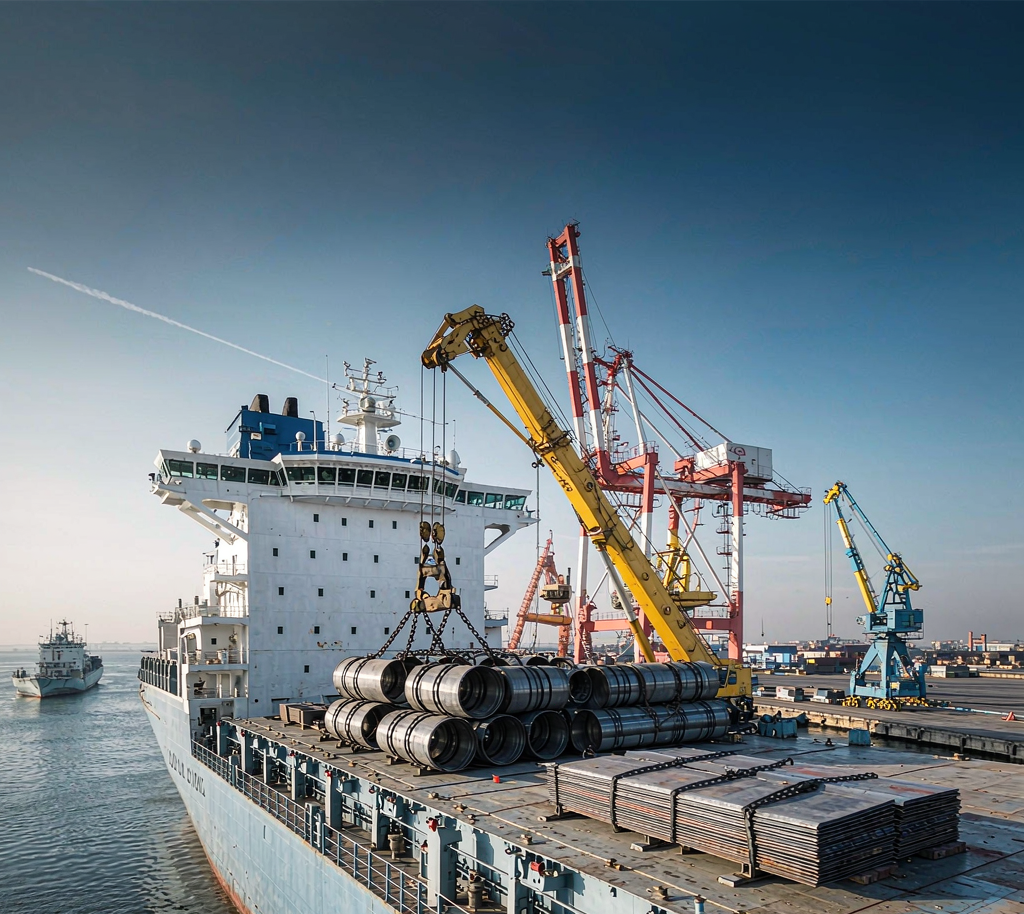
Incoterms are standard trade terms published by the International Chamber of Commerce. The 2020 edition defines eleven rules that allocate costs, risks and document obligations between buyer and seller. They do not cover payment terms, title transfer or product quality; those belong in the sales contract.
For steel, the relevant rules are almost always the sea and inland waterway terms plus the multimodal D-terms. Air terms such as FCA on an airport are rarely used for tonnage cargo, and the two DDP-style rules carry obligations that many exporters cannot legally meet in the destination country.
The 4 Most Used Terms in Steel Trade
| Term | Seller delivers | Risk passes | Freight paid by | Typical steel use |
|---|---|---|---|---|
| EXW | At seller’s works | When goods are ready at works | Buyer | Buyer has own forwarder in China |
| FOB | On board vessel at load port | When goods are on board | Buyer | Most common for bulk and container steel |
| CFR | On board vessel at load port | When goods are on board | Seller | Seller arranges ocean freight |
| CIF | On board vessel at load port | When goods are on board | Seller (plus insurance) | Seller arranges freight and minimum insurance |
| DAP | At named destination | At destination, ready for unloading | Seller | Door delivery, buyer clears import |
Notice that under FOB, CFR and CIF the risk passes when the goods are on board at the load port, even though under CFR and CIF the seller pays the ocean freight. That split between cost and risk is the single most misunderstood point in steel contracts.
EXW vs FOB vs CIF vs DAP: Cost and Risk Split
Under EXW the buyer does everything after the goods are ready at the factory, including inland transport in China, export clearance, ocean freight and import clearance. It looks cheapest on paper but leaves the buyer exposed to Chinese inland logistics and export documentation, which is why most overseas buyers prefer FOB.
Under FOB the seller handles export clearance and loading on board, and the buyer pays the ocean freight and insurance. This is the default for steel because it lets the buyer use their own freight forwarder and control the shipping line and schedule. Risk still passes at the load port, so the buyer should insure from that point.
Under CFR the seller pays the ocean freight but risk still passes on board, so the buyer must insure. Under CIF the seller also provides minimum Institute Cargo Clauses (C) cover, which is narrow and may not pay for rust, water damage or handling loss that matters for steel. Many buyers upgrade to Clauses (A) at their own cost.
Under DAP the seller delivers to the named destination and the buyer clears import and pays duty. DAP is convenient for buyers who want door delivery without the hassle of import clearance, but the seller must be confident about destination charges and unloading arrangements, and the term does not include import duty or VAT.
Which Term Should a Steel Buyer Choose?
- Choose FOB when you have a reliable forwarder and want control of freight cost and schedule. It is the safest default for container and bulk steel.
- Choose CFR or CIF when you want the seller to arrange freight, but remember risk still passes at the load port and CIF insurance is minimal.
- Choose DAP when you want door delivery and are set up to clear import yourself.
- Avoid EXW unless you already have a China-based agent handling inland transport and export clearance.
There is no universally correct term. The right choice depends on who can get the better freight rate, who is creditworthy enough to insure, and who is set up to clear customs at each end. A buyer who chooses CIF to save effort often pays more in freight margin than they would with their own forwarder.
6 Cost Traps Hidden in Incoterms
- Terminal handling at destination under CFR and CIF is usually the buyer’s cost, even though freight is prepaid.
- Demurrage and detention from slow clearance or late pick-up fall on whoever holds the container, usually the buyer.
- Minimum CIF insurance under Clauses (C) often excludes the rust and water damage most relevant to steel.
- Unloading at destination under DAP can be the buyer’s obligation, and heavy coils may need special equipment.
- Export packaging is the seller’s cost under FOB but is sometimes quoted as an extra, so confirm it is included.
- Currency and payment linkage is not covered by Incoterms, so agree the payment method and currency separately.
These traps are not loopholes; they are simply outside the scope of the chosen term. The fix is to write them explicitly into the contract: who pays THC, what insurance cover applies, who unloads, and what the demurrage exposure is.
Insurance, Documents and Payment Linkage
Under CIF the seller must provide at least Institute Cargo Clauses (C), which covers major casualties but not the gradual rust or handling damage that steel is prone to. Buyers who rely on CIF should confirm the cover level and consider upgrading to Clauses (A). Under FOB and CFR the buyer arranges insurance, which gives full control of cover and claim handling.
Documents follow the term. FOB and CFR shipments normally require a bill of lading, commercial invoice, packing list and certificate of origin, plus a mill test certificate for the steel itself. Under a letter of credit, the term must match the documents the bank will accept, and a mismatch between the Incoterms and the required documents is one of the most common causes of discrepant presentations.
Common Incoterms Mistakes in Steel Contracts
The most frequent mistake is quoting FOB when the goods are containerised and the seller actually delivers to a container yard rather than on board a vessel; FCA is technically more correct for containers. Another is assuming CIF includes full insurance, when it only requires minimum cover. A third is using DDP in a country where the seller cannot legally act as importer of record.
A fourth mistake is leaving the named place vague, such as FOB China or CIF Europe. Incoterms require a specific port or place, and a vague named place leaves room for dispute over who pays inland transport. Always write the exact port, for example FOB Shanghai or CIF Rotterdam.
How Huaxia-Steel Quotes Each Term
We quote EXW, FOB, CFR, CIF and DAP for carbon steel products and state the named port or place in every quotation. Our FOB prices include export clearance and loading on board, and our CIF prices state the insurance cover level so there is no surprise at claim time. For buyers who want door delivery, DAP is available with import clearance handled by the buyer.
We also separate the commercial terms from the technical specification, so the grade, standard, tolerance and certificate requirements are agreed independently of the shipping term. That separation is what keeps a shipment from becoming a dispute about whose responsibility a problem was.
Frequently Asked Questions
What is the difference between FOB and CIF?
Under FOB the buyer pays ocean freight and insurance; under CIF the seller pays freight and provides minimum insurance. In both cases risk passes when the goods are on board at the load port, so the buyer should insure from that point regardless of who pays the freight.
Is CIF insurance enough for steel?
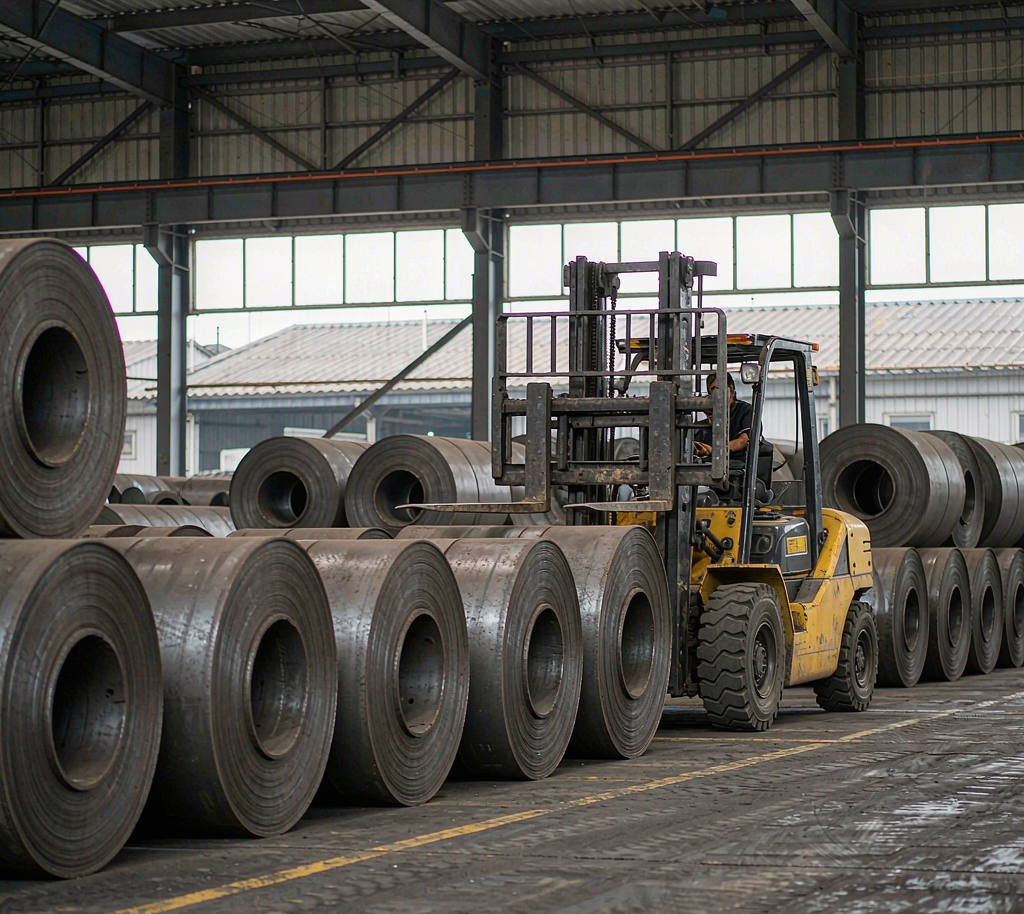
Usually not. CIF requires only Institute Cargo Clauses (C), which excludes gradual rust and much handling damage. Steel buyers should confirm the cover level and upgrade to Clauses (A) if the cargo is valuable or moisture-sensitive.
Should I use FOB or FCA for containers?
For containerised steel, FCA is often more technically correct because the seller delivers to the carrier at the container yard rather than on board a vessel. FOB remains common in practice, but the named place and delivery point should be stated precisely.
Who pays import duty under DAP?
The buyer. DAP means the seller delivers to the named destination ready for unloading, but import clearance, duty and VAT remain the buyer’s responsibility. If you want the seller to cover duty, that is DDP, which many exporters cannot legally provide.
Incoterms 2020 vs 2010: What Changed
The 2020 edition made several changes that matter to steel traders. It introduced DAT as DPU (Delivered at Place Unloaded) and clarified that DPU requires the seller to unload at destination, which is a significant obligation for heavy coils. It also changed the insurance requirement under CIF and CIP, requiring CIP to carry Clauses (A) cover while CIF keeps the lower Clauses (C) minimum.
The 2020 edition also addressed security requirements more explicitly and allowed the use of electronic documents such as electronic bills of lading where the parties agree. For steel contracts, the most relevant change is the CIF and CIP insurance split, because it affects how much protection a buyer actually gets when the seller arranges cover.
Named Place and Port: Why Specificity Matters
Every Incoterms rule requires a named place or port, and the choice of that place changes the cost and risk allocation. FOB Shanghai is not the same as FOB Tianjin, and CIF Rotterdam is not the same as CIF Antwerp. A vague term such as FOB China leaves the actual load port open, which can shift inland transport costs and transit time.
For container shipments, the named place under FCA is the container yard or terminal where the seller delivers to the carrier, not the port. Writing FCA Shanghai instead of FOB Shanghai can be more accurate for containers and avoids the ambiguity about when the seller’s obligation ends. Always match the term to the actual logistics flow.
Incoterms and Letters of Credit
A letter of credit requires documents that match its terms exactly, and the Incoterms must be consistent with the documents demanded. If the credit calls for a shipped on board bill of lading, the underlying term should be FOB, CFR or CIF, not FCA, because an FCA shipment may produce a received for shipment document that the bank will reject as discrepant.
Similarly, the credit should state the named port and the latest shipment date, and the invoice should show the term exactly as written in the credit. Small mismatches, such as FOB Shanghai versus FOB Shanghai Port, can cause a discrepancy. It is worth aligning the contract, the credit and the shipping documents before the vessel sails.
Buyers should also consider who controls the bill of lading under each term. Under FOB the buyer’s forwarder issues the bill, which gives the buyer more control but also more responsibility. Under CIF the seller arranges shipping and may present a bill that the buyer cannot easily amend, so the credit terms should be drafted with that in mind.
Worked Example: FOB vs CIF Cost Comparison
| Cost item | FOB | CIF |
|---|---|---|
| Ex-works steel price | Buyer pays | Buyer pays (in seller price) |
| Inland transport to port | Buyer | Seller |
| Export clearance | Seller | Seller |
| Ocean freight | Buyer | Seller |
| Marine insurance | Buyer | Seller (Clauses C minimum) |
| Destination THC | Buyer | Buyer |
| Import clearance and duty | Buyer | Buyer |
On paper CIF looks simpler because the seller handles more of the chain, but the buyer pays for that convenience inside the price and still bears the destination costs. A buyer with a competitive freight contract often finds FOB cheaper overall, while a buyer without logistics capability may prefer CIF despite the margin.
Pre-Signing Checklist
- Is the Incoterm and edition (2020) stated in the contract?
- Is the named port or place specific, not just a country?
- Does the term match the mode of transport, especially for containers?
- Is the insurance cover level stated, and is it adequate for steel?
- Are destination charges and demurrage responsibility written down?
- Do the shipping documents match the term and any letter of credit?
Running through this checklist before signing takes ten minutes and prevents most of the disputes that arise after the cargo has sailed. Incoterms are a small part of a steel contract by word count, but they decide a large part of the cost and risk.
Risk Transfer and Insurance Timing
Risk transfer and cost allocation are separate under Incoterms, and the gap between them is where losses occur. Under CFR and CIF the seller pays freight but risk passes at the load port, so the buyer is exposed from the moment the goods are on board. If the buyer insures only from arrival, there is a window with no cover, and a loss in that window becomes an uninsured dispute.
The practical rule is to insure from the point where risk passes under the chosen term, not from the point where the goods arrive. For FOB, CFR and CIF that is the load port; for DAP it is the destination. Aligning the insurance attachment with the risk transfer point is more important than the headline premium.
Payment Terms That Pair With Each Incoterm
Payment terms and Incoterms are independent, but they interact. Under FOB, a buyer who controls the bill of lading has more leverage to withhold payment until documents are presented, which pairs well with a letter of credit. Under CIF, the seller controls shipping and may present documents later, so the credit should specify the documents and the latest shipment date precisely.
A common structure for steel is 30 percent deposit with the order and 70 percent against a copy of the bill of lading, regardless of the Incoterm. That structure works with FOB and CIF alike, provided the documents are consistent. The key is to write both the payment terms and the Incoterms into the same contract so they do not contradict each other.
Documentation Checklist by Incoterm
The documents required change with the term. Under EXW the buyer needs export documents that the seller may not provide, so the contract must state who prepares them. Under FOB, CFR and CIF the seller provides export clearance documents and the bill of lading, while the buyer provides import documents. Under DAP the seller provides transport documents to the named place and the buyer handles import.
A simple way to avoid gaps is to list every document, mark who provides it, and attach that list to the contract. The list should cover the commercial invoice, packing list, bill of lading, certificate of origin, mill test certificate, insurance certificate and any inspection certificate. When the Incoterm and the document list agree, the shipment clears without last-minute scrambling.
Get a Quote from Huaxia-Steel
Factory-direct carbon steel with MTR, third-party inspection and fast export shipping. Send your grade, size, quantity and destination — we return a firm quote within 24 hours.