AISI 1045 Round Bar Carbon Steel — Factory Direct Supplier | Huaxia-Steel
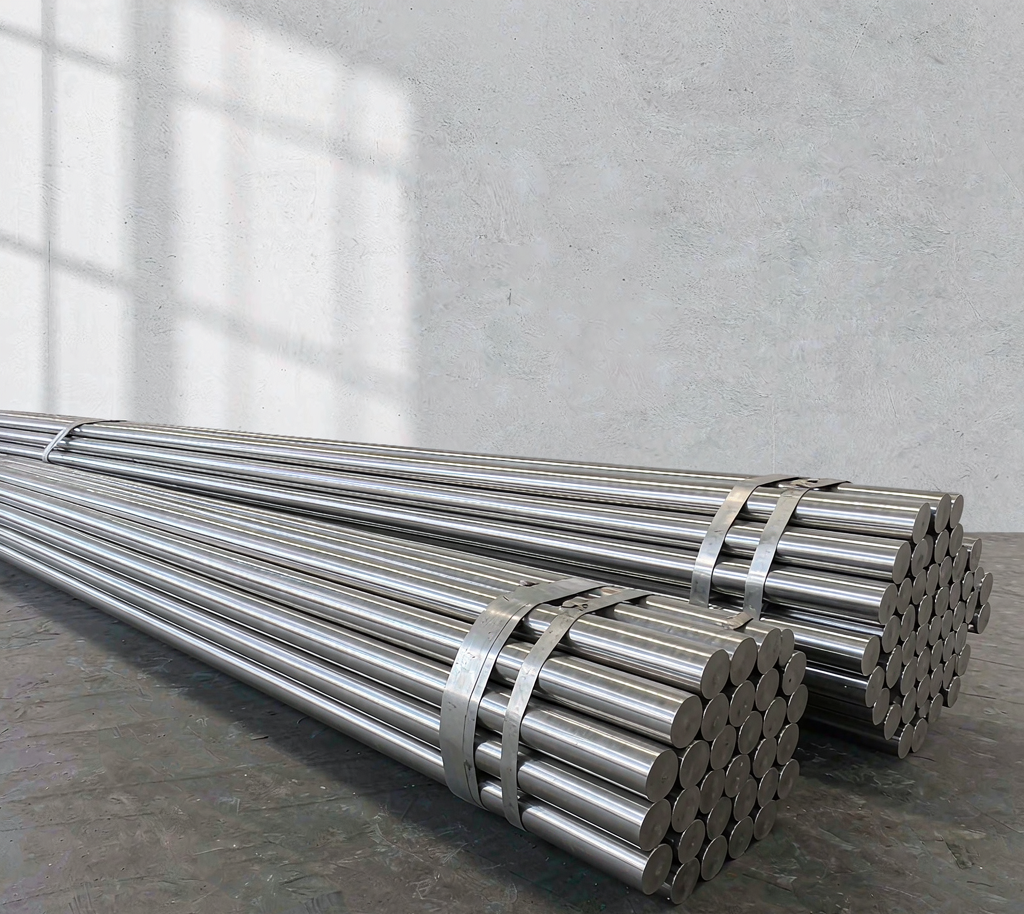
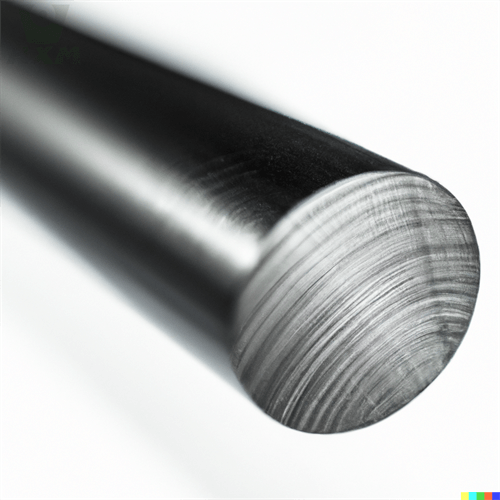
AISI 1045 carbon steel round bar is a medium-carbon, hot-rolled or cold-drawn bar used for shafts, gears, axles, pins, studs and other machined parts that need strength and through-hardening ability. With about 0.45 percent carbon, it is the workhorse grade for mechanical components that must be quenched and tempered or induction hardened.
Huaxia-Steel supplies 1045 round bar direct from Chinese mills in diameters from 6 mm to 500 mm, in hot-rolled, cold-drawn, peeled, turned or ground condition, with mill test certificates and third-party inspection on request.
Product Overview
1045 bar combines good machinability with the ability to reach high hardness after heat treatment, which is why it is specified for power-transmission and general engineering parts. It machines to a good finish in the annealed or normalized condition, welds with preheat, and responds predictably to quench and temper. Compared with low-carbon grades, it offers substantially higher strength and wear resistance at a modest cost premium.
We stock and supply 1045 in round bar as the primary form, with flat bar, square bar and hex bar available to order. Bar can be supplied in random lengths or cut to your drawing, with ends saw-cut, chamfered or threaded to specification.
Specifications
| Parameter | Range / Standard |
|---|---|
| Diameter | 6 mm – 500 mm |
| Length | 3 m – 6 m random, or cut to length |
| Diameter tolerance | h9 / h11 / h12 (cold drawn), mill tolerance (hot rolled) |
| Straightness | max 1.5 mm/m (cold drawn), 3 mm/m (hot rolled) |
| Surface | Black, pickled, peeled, turned, bright drawn, ground |
| Theoretical weight | 0.00617 x d2 kg/m (d in mm) |
| End finish | Saw cut, chamfered, rounded, threaded on request |
Tolerance and surface condition are agreed per order. For precision shafting, cold-drawn h9 or h11 bar reduces machining allowance and improves concentricity. For general machining, hot-rolled or peeled bar is usually sufficient and more economical.
Available Grades and Conditions
| Designation | Equivalent | Carbon (%) | Typical condition |
|---|---|---|---|
| AISI / SAE 1045 | – | 0.43 – 0.50 | Hot rolled, normalized, annealed, Q and T |
| EN C45 | DIN 1.1191 | 0.42 – 0.50 | Normalized, Q and T |
| JIS S45C | – | 0.42 – 0.48 | Normalized, Q and T |
| GB 45# | – | 0.42 – 0.50 | Hot rolled, normalized |
Hardness and mechanical properties are confirmed on the mill certificate. Typical hot-rolled 1045 shows about 585 MPa tensile strength and 170 to 190 HB, while quenched and tempered bar can be supplied to a specified hardness between 22 and 55 HRC depending on tempering temperature.
Manufacturing Standards
- ASTM A29 / A29M – general requirements for carbon steel bars
- ASTM A108 – cold-finished carbon steel bar
- EN 10277 – bright steel products
- JIS G4051 – carbon steel for machine structural use
- GB/T 699 – quality carbon structural steel
Each order is supplied with a mill test certificate showing heat number, chemistry, and mechanical properties where specified. For safety-related parts, we can arrange third-party inspection and additional testing such as hardness survey or ultrasonic examination.
Applications
AISI 1045 round bar is used across general engineering and automotive supply chains. Typical parts include shafts, axles, gears, crankshafts, connecting rods, studs, tool shanks, pins and induction-hardened wear components. It is also common in agricultural machinery, hydraulic cylinders and general machining where a strong, hardenable steel is needed without the cost of an alloy grade.
Because 1045 can be quenched and tempered to a wide hardness range, it suits parts that must balance wear resistance against toughness. It is less suitable for complex welded assemblies or parts that must be formed after hardening, where a low-carbon grade would be a better choice.
Quality Assurance
Every heat is tested for chemistry before rolling, and mechanical properties are verified on the finished bar where the order requires it. We check diameter, straightness, surface condition and marking against the purchase order before shipment, and we retain samples and records for traceability.
On request we provide third-party inspection by SGS, BV, Intertek or TUV, with witness testing of chemistry, hardness and dimensions. For export orders, we can also arrange pre-shipment inspection and issue a certificate of conformity to the agreed standard.
Packaging and Shipping
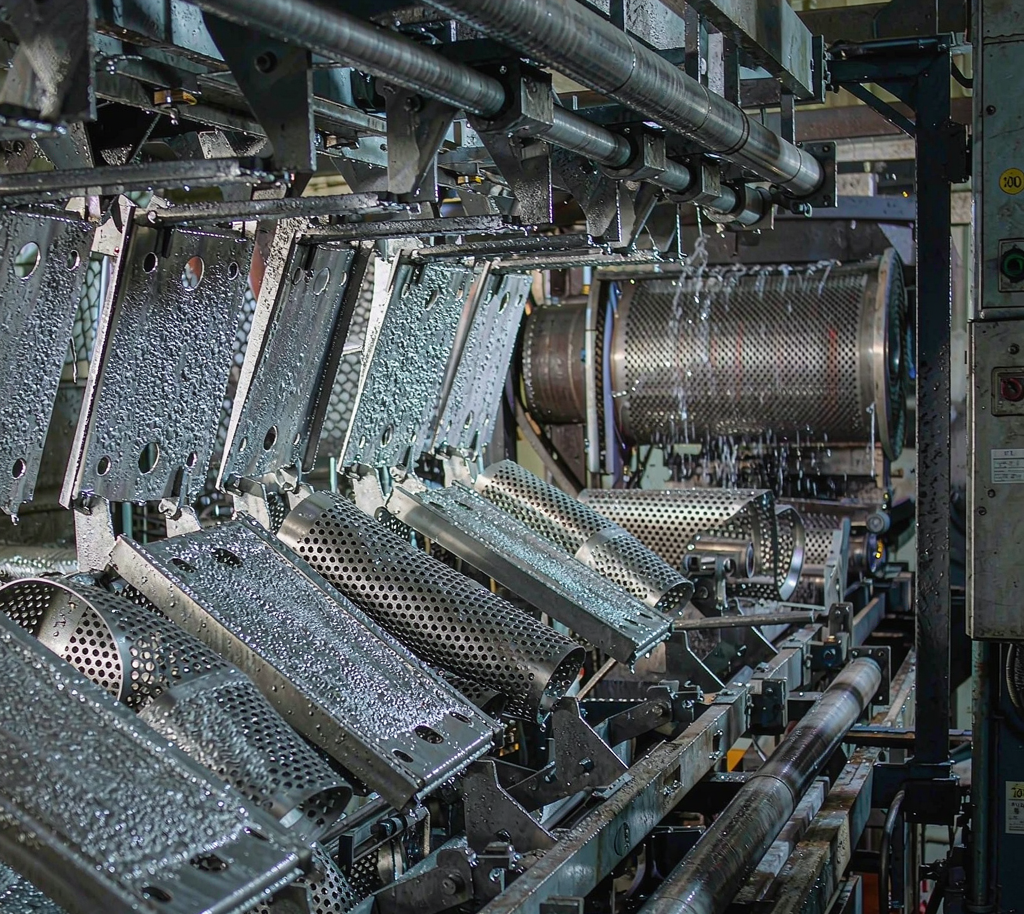
1045 round bar is supplied in bundles secured with steel strapping, with end caps or wooden dunnage to protect threads and machined ends. Bundles are marked with heat number, size, grade and quantity. For export, we use seaworthy packing with VCI film or oil coating to prevent rust during transit.
We ship from Tianjin, Qingdao and Shanghai on FOB, CFR, CIF or DAP terms, and we can consolidate mixed sizes into a single container to reduce freight cost. Typical lead time is 7 to 15 days for stock sizes and 20 to 30 days for mill rolling.
Mechanical Properties by Condition
| Condition | Hardness | Tensile strength | Typical use |
|---|---|---|---|
| Hot rolled | 170 – 190 HB | approx. 585 MPa | General machining |
| Normalized | 170 – 200 HB | approx. 600 MPa | Machined shafts, gears |
| Annealed | 160 – 180 HB | approx. 565 MPa | Heavy machining, forming |
| Q and T (550 C temper) | 28 – 32 HRC | 1000 – 1100 MPa | Loaded shafts, axles |
| Induction hardened | 50 – 58 HRC (surface) | – | Wear journals, pins |
The condition you order determines both machinability and final properties. Annealed bar machines most easily but must be heat treated after machining; quenched and tempered bar arrives ready to grind but machines harder. For most shaft work, normalized or annealed bar is machined first and then heat treated to the drawing hardness.
Heat Treatment and Hardening Response
1045 is a through-hardening grade. It is austenitized at about 820 to 850 degrees Celsius, quenched in water or oil depending on section size, and tempered to the required hardness. Small sections can be water quenched; larger sections may need oil or polymer quench to avoid cracking. The tempering temperature is chosen from the hardness curve, and a stress relief at about 550 to 650 degrees Celsius is common after rough machining.
Induction hardening is widely used on 1045 for local wear resistance, such as bearing journals and splines. It produces a hard surface layer over a tough core with minimal distortion, and it is faster and cleaner than carburizing. Case depth and surface hardness are specified on the drawing and verified by hardness survey.
Machining and Surface Finish Guidance
1045 machines well with carbide tooling at moderate speeds. In the annealed condition it produces a good finish and long tool life; in the quenched and tempered condition, tool wear increases and harder inserts or ceramic tooling may be needed. For precision shafts, cold-drawn h9 or h11 bar reduces the amount of turning required and improves concentricity before grinding.
Surface finish after turning is typically Ra 1.6 to 3.2 micrometres, and grinding can reach Ra 0.4 micrometres or better. If the part will be plated or coated, specify the surface finish and any masking requirements, because 1045 will rust quickly if left unprotected after machining.
Comparison: 1045 vs 1018 vs 4140
| Grade | Carbon | Hardenable | Strength | Best for |
|---|---|---|---|---|
| AISI 1018 | 0.18% | Case only | Moderate | Formed and welded parts |
| AISI 1045 | 0.45% | Through | High | Shafts, gears, pins |
| AISI 4140 | 0.40% + Cr/Mo | Through, deep | Very high | Heavy loaded shafts, tools |
1045 sits between the low-carbon 1018 and the alloy 4140. It is stronger and harder than 1018 but cheaper and easier to weld than 4140. When a part needs very high strength in large sections or must resist tempering at high temperature, 4140 is the better choice; for most general shafts and gears, 1045 is sufficient and more economical.
How to Specify 1045 Bar on a Purchase Order
- State the grade and standard, such as AISI 1045 to ASTM A29 or EN C45 to EN 10277.
- Specify diameter, length and tolerance, and whether bar is to be cut to size.
- State the condition: hot rolled, cold drawn, annealed, normalized or quenched and tempered.
- Give the final hardness or mechanical property requirement if the part is heat treated after machining.
- Require a mill test certificate with heat number and chemistry, plus hardness results if applicable.
Adding condition and tolerance to the order prevents substitution with a near size or a different heat treatment. For export, confirm packing, marking and shipping terms at the same time so the commercial and technical requirements stay aligned.
Stock Sizes and Cutting Service
We hold common 1045 diameters in stock and can cut to your required length with a tolerance of plus or minus 1 mm on saw-cut ends. For large quantities, we cut on a band saw or circular saw and deburr the ends to remove sharp edges. Cut-to-length bar reduces your scrap and freight cost because you are not shipping unnecessary material.
For non-standard diameters, we can source mill rolling within 20 to 30 days. If your part requires a specific tolerance or surface, tell us at the quotation stage so we can confirm availability before you commit to a delivery date.
Get a Quote from Huaxia-Steel
Factory-direct carbon steel with MTR, third-party inspection and fast export shipping. Send your grade, size, quantity and destination — we return a firm quote within 24 hours.