Carbon Steel Machining Guide: CNC, Turning, Milling & Drilling Parameters
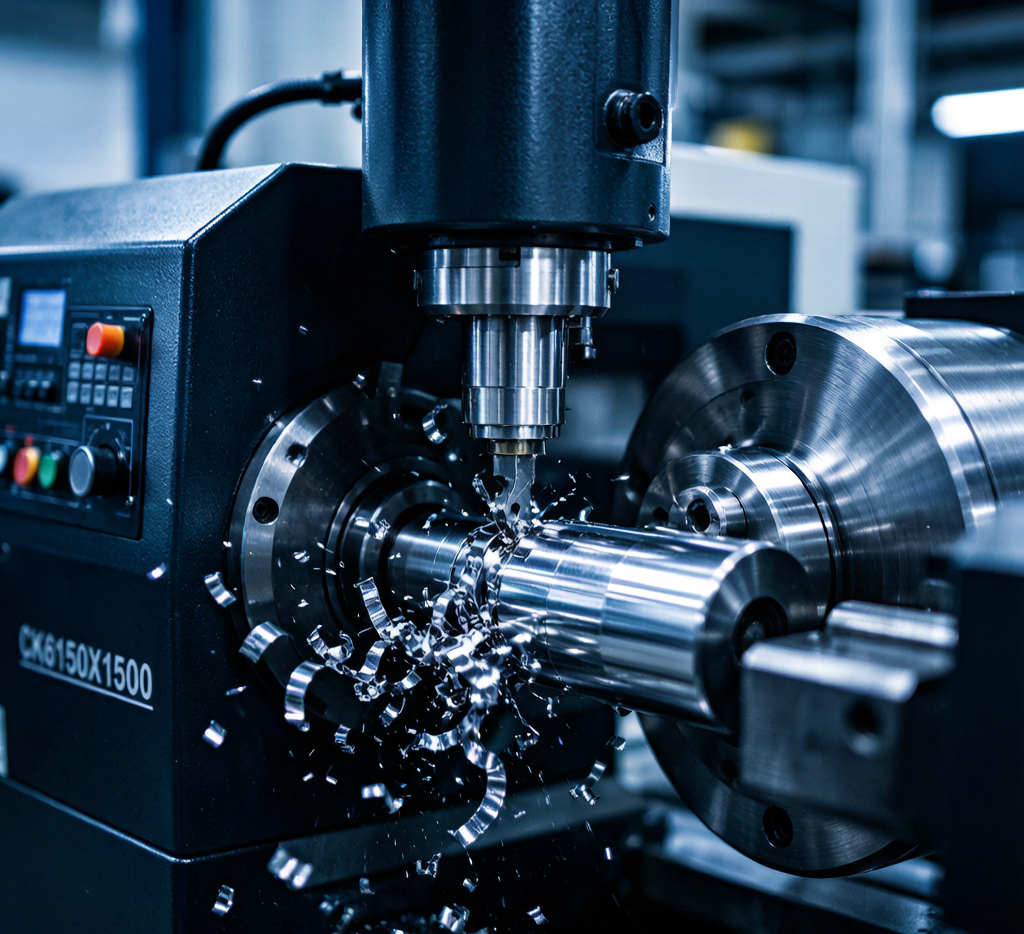
Carbon steel is the workhorse of the metal fabrication world. From low-carbon 1018 to medium-carbon 1045 and high-carbon 1095, buyers, engineers, and procurement teams need to know how each grade behaves under the cutting tool. If you source turned, milled, or drilled carbon steel parts from China, the difference between a profitable batch and a scrap pile often comes down to machining parameters. This guide gives you practical CNC turning, milling, and drilling data you can share with your supplier or use to audit a machine shop.
Why Carbon Steel Machining Differs from Stainless or Aluminum
Carbon steel machines faster than many stainless grades but produces long, stringy chips that can wrap around tooling. Unlike aluminum, it does not conduct heat away from the cutting edge as efficiently, so tool life depends heavily on speed, feed, and coolant strategy. Medium- and high-carbon grades generate more heat and require harder inserts or coated carbide tools. Low-carbon grades such as AISI 1018 and Q235 are forgiving and ideal for high-volume CNC production.
5 Material Properties That Control Machinability
- Carbon content: Higher carbon raises strength but lowers machinability. 1018 machines easily; 1095 requires slower speeds and more frequent insert changes.
- Hardness: As-delivered hardness determines the starting cutting speed. HRB 80–120 is the sweet spot for most carbon steel machining.
- Microstructure: Normalized ferrite-pearlite structures machine more predictably than hot-rolled scales or decarburized layers.
- Manganese and sulfur: Resulfurized grades (e.g., 1215, 12L14) improve chip breakage and surface finish but are not always suitable for welding or structural loads.
- Work hardening: Although mild compared to austenitic stainless, carbon steel can work-harden if feeds are too low or tooling is dull.
CNC Turning Parameters for Carbon Steel
Turning is the most common operation for shafts, pins, bushings, and rings. Use the table below as a starting point and adjust based on machine rigidity and tool holder overhang.
| Grade | Hardness (HB) | Cutting Speed (m/min) | Feed (mm/rev) | Depth of Cut (mm) | Recommended Insert |
|---|---|---|---|---|---|
| 1018 / Q235 | 120–160 | 180–250 | 0.15–0.30 | 1–4 | Uncoated or TiN carbide |
| 1045 / S45C | 170–230 | 140–200 | 0.12–0.25 | 1–3 | TiAlN-coated carbide |
| 4140 | 220–280 | 100–150 | 0.10–0.20 | 1–3 | TiAlN or PVD-coated carbide |
| 1095 | 240–300 | 60–100 | 0.08–0.15 | 0.5–2 | Cermet or ceramic |
CNC Milling Parameters for Carbon Steel
Milling demands higher rigidity because the tool is intermittent-cutting. Use climb milling where possible to reduce burr formation and improve surface finish. For face milling, reduce the radial engagement to below 50% of the cutter diameter when roughing.
| Grade | End Mill SFM | Feed per Tooth (mm) | Axial Depth | Radial Depth | Coolant |
|---|---|---|---|---|---|
| 1018 / Q235 | 120–180 | 0.05–0.12 | 1–2D | 0.2–0.5D | Flood or mist |
| 1045 / S45C | 90–140 | 0.04–0.10 | 1–1.5D | 0.2–0.4D | Flood |
| 4140 | 70–110 | 0.03–0.08 | 0.5–1D | 0.15–0.3D | High-pressure |
| 1095 | 40–70 | 0.02–0.05 | 0.3–0.6D | 0.1–0.2D | High-pressure |
Drilling Parameters for Carbon Steel
Drilling is sensitive to centering and coolant. Start with a spot drill or center drill to prevent drill wander. For deep holes, use a peck cycle with chip evacuation every 1–2 drill diameters.
| Drill Diameter | Grade | Speed (RPM) | Feed (mm/rev) | Peck Depth |
|---|---|---|---|---|
| 3–6 mm | 1018 / Q235 | 2,500–4,000 | 0.08–0.15 | 2D |
| 6–12 mm | 1045 / S45C | 1,200–2,000 | 0.10–0.20 | 1.5D |
| 12–20 mm | 4140 | 800–1,200 | 0.12–0.25 | 1D |
| >20 mm | 1095 | 400–700 | 0.08–0.15 | 0.5D |
Tool Selection and Coatings
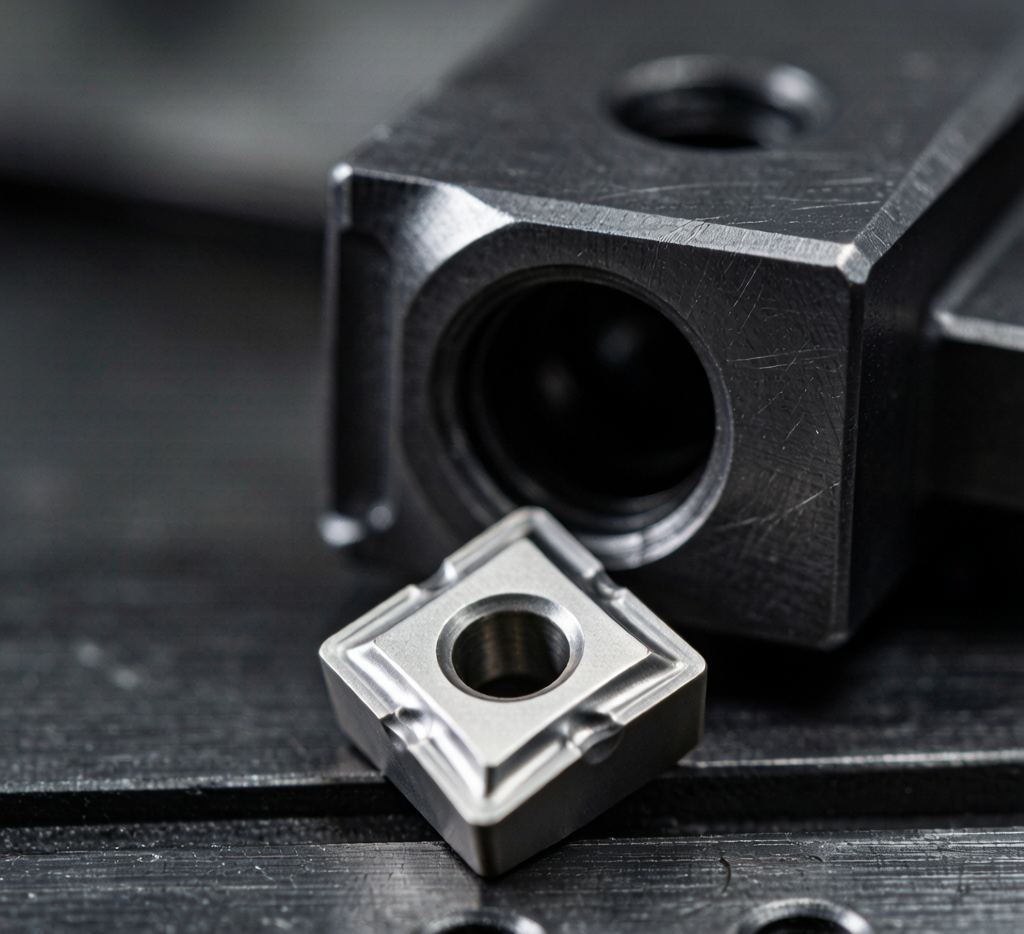
For high-volume carbon steel machining, uncoated carbide is cheapest for soft grades, but coated tools pay back quickly on 1045 and above. TiAlN and AlTiN coatings handle the heat generated at higher speeds. For interrupted cuts or scale-covered hot-rolled bar, choose a tougher substrate with a thin PVD coating. Always match the insert geometry to the operation: positive rake for finishing, negative rake and strong edge for roughing.
Coolant, Chip Control and Surface Finish
Flood coolant is recommended for most carbon steel turning and milling to keep inserts from cratering and to flush chips away. For high-speed machining of low-carbon grades, high-pressure through-spindle coolant improves chip breaking and extends tool life. If your supplier machines without coolant, ask for documented tool-life data and inspect parts for heat discoloration or dimensional drift.
Common Defects and Fixes
- Burr formation: Increase feed slightly, use sharper inserts, or add a deburring pass.
- Poor surface finish: Reduce feed, increase speed, or switch to a nose radius insert.
- Tool chipping: Reduce depth of cut, improve work holding, or use a tougher grade.
- Work hardening: Increase feed above the work-hardening threshold and keep inserts sharp.
- Ovality in turning: Check chuck pressure, reduce overhang, and use a steady rest for long parts.
Quality Control After Machining
After machining, verify dimensions with calipers, micrometers, and CMM where tolerances are tight. Check surface roughness (Ra) with a profilometer, especially for sealing surfaces or bearing fits. For batches, request a first-article inspection report and a process capability study (Cp/Cpk) from the supplier.
FAQ
What is the easiest carbon steel grade to machine?
AISI 1018 and Chinese Q235 are the most forgiving grades for high-speed CNC machining. They have low carbon content, consistent microstructure, and wide availability.
Can you machine carbon steel without coolant?
Yes, but tool life drops and heat can cause dimensional variation. For precision work or high-carbon grades, flood coolant or high-pressure mist is strongly recommended.
What insert grade is best for 1045 carbon steel?
Use TiAlN-coated carbide inserts with a medium-positive geometry. A common choice is a PVD-coated grade in the ISO P15–P30 range.
Why does my carbon steel part have burrs after milling?
Burrs are usually caused by low feed, dull inserts, or incorrect tool path. Try climb milling, increase feed per tooth, or add a dedicated deburring operation.
How do I control tolerances when machining long carbon steel shafts?
Use a steady rest or follower rest, minimize tool overhang, and machine in two passes: a roughing pass followed by a finish pass with light depth of cut.
Source Precision-Machined Carbon Steel Parts from Huaxia-Steel
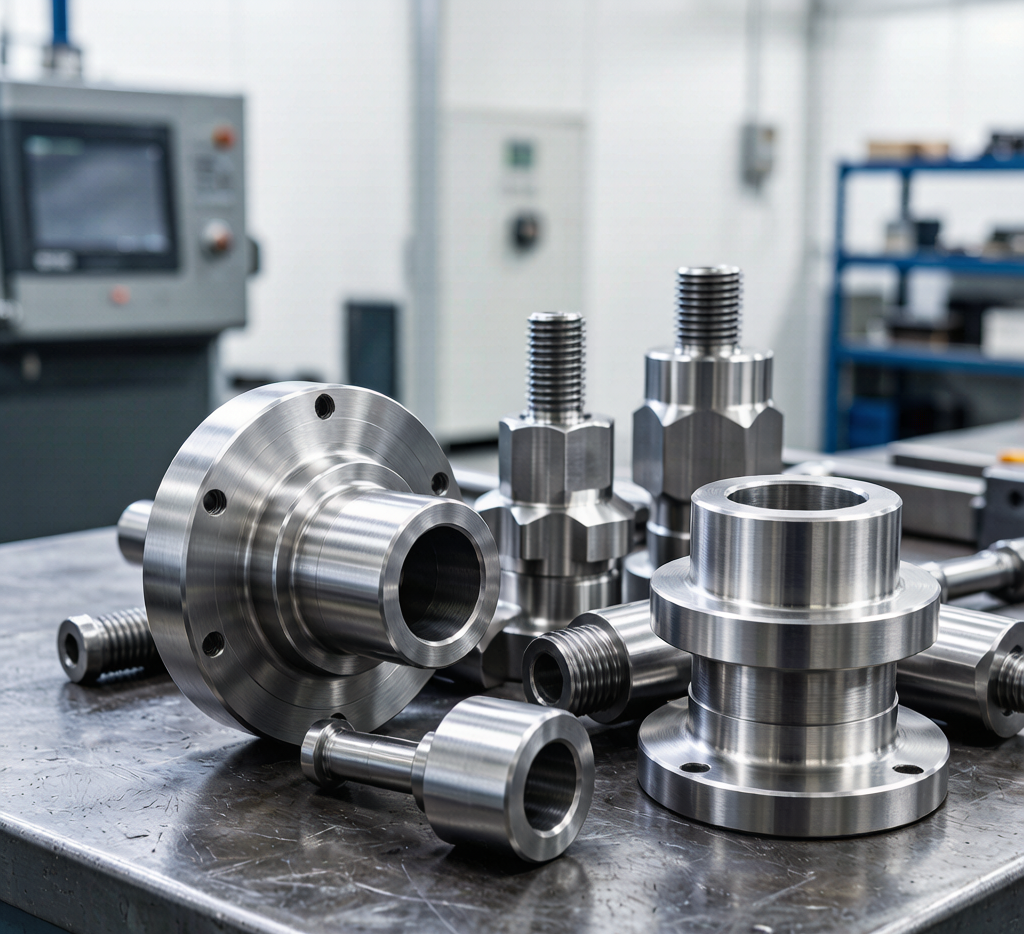
At Huaxia-Steel, we supply 1018, 1045, S45C, Q235, and custom carbon steel grades for CNC turning, milling, and drilling. Our network of ISO-certified machine shops can produce shafts, pins, bushings, flanges, and structural components to your drawing. Contact us for a quote, material certificate, and first-article inspection report.