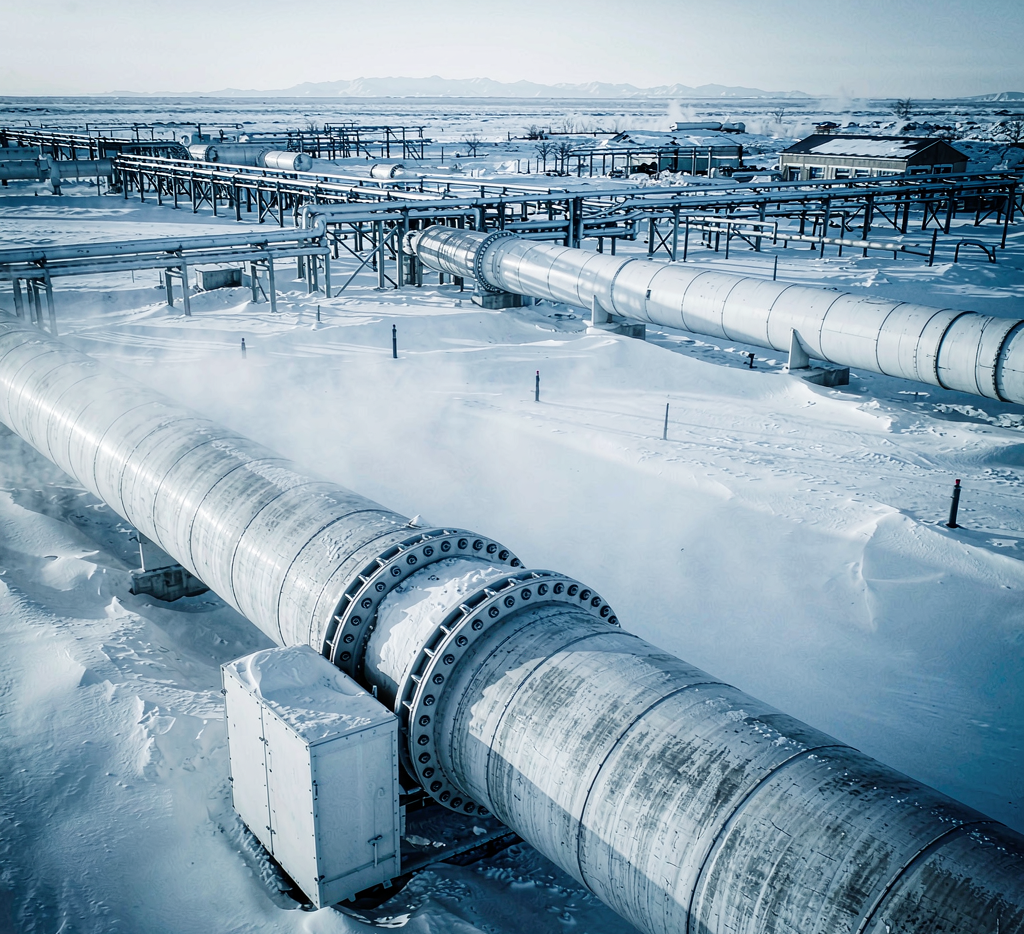
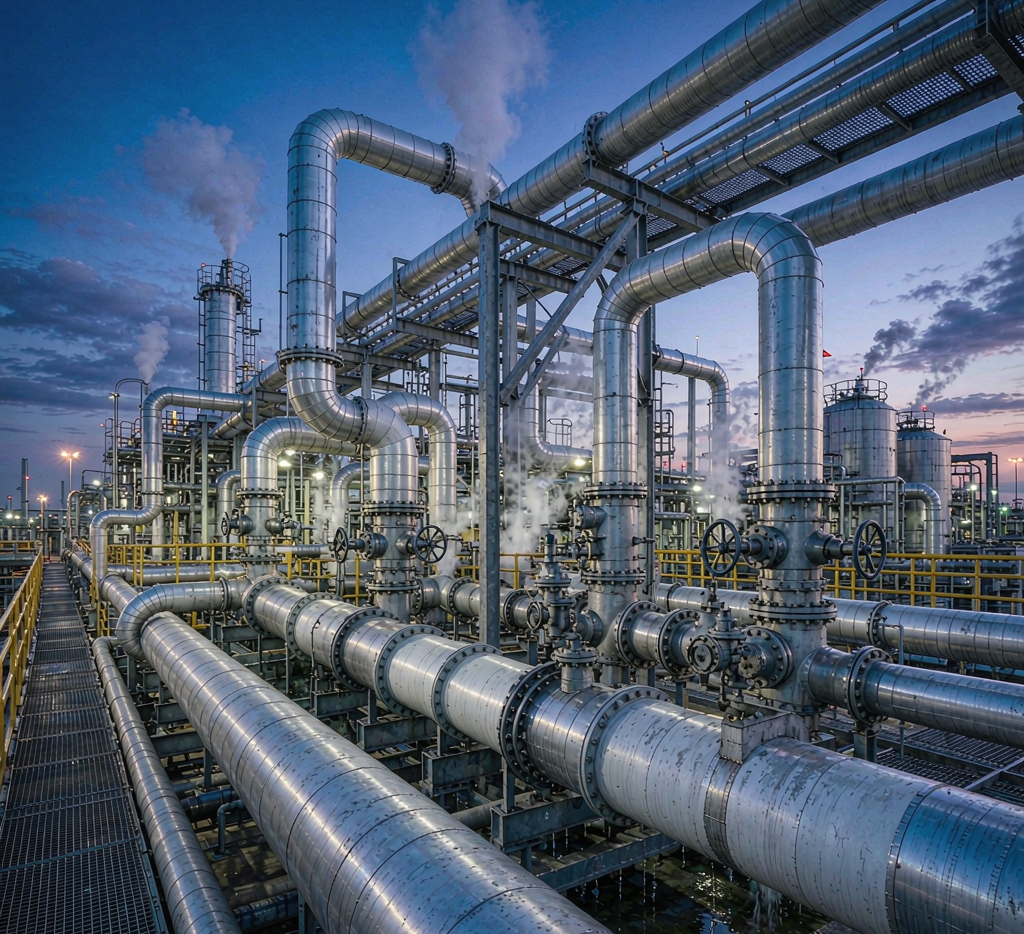
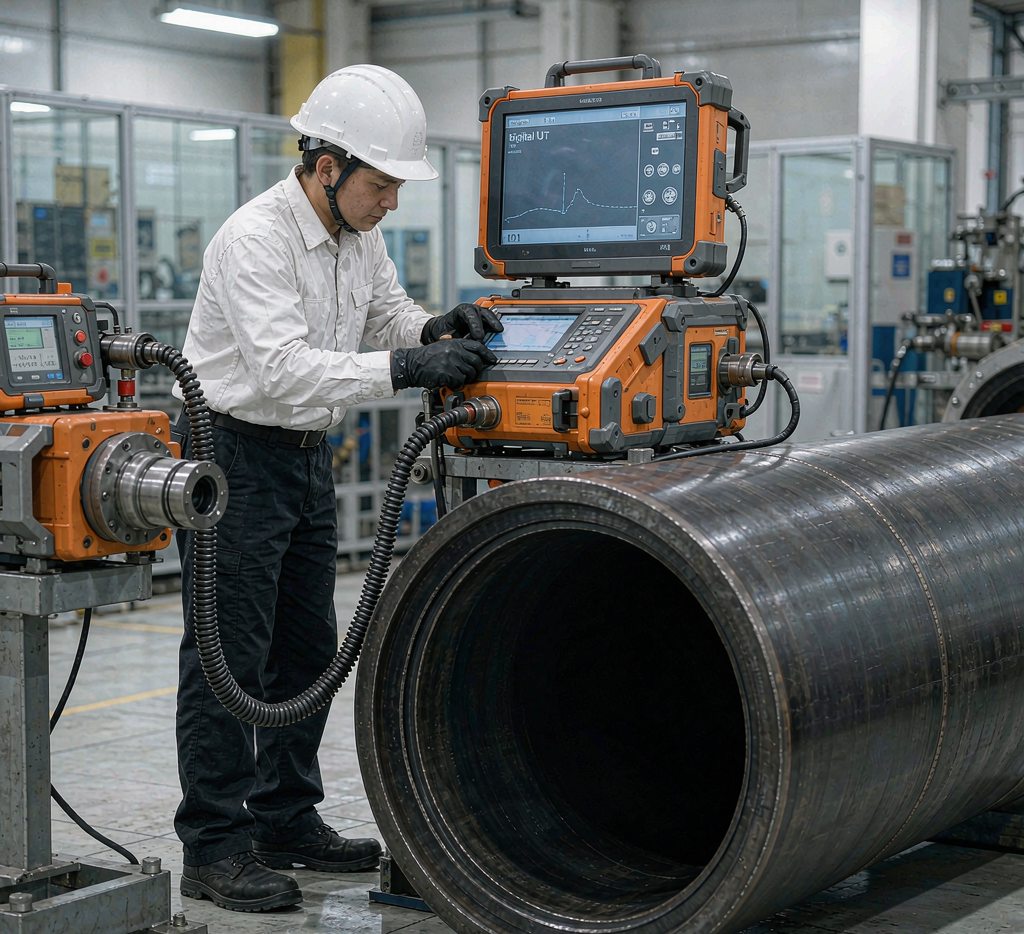
Pipeline systems operating in cold climates, cryogenic processing plants, and LNG facilities require carbon steel pipe that retains toughness at sub-zero temperatures. ASTM A333 is the dominant specification for seamless and welded low-temperature service pipe, with Grade 3 and Grade 6 being the most commonly specified grades. While both grades meet low-temperature impact requirements, their chemical compositions, minimum service temperatures, and cost structures differ significantly. This guide helps piping engineers and procurement professionals select the appropriate grade.
1. Chemical Composition: The Nickel Difference
The defining difference between A333 Grade 3 and Grade 6 is nickel content. Grade 3 contains 3.18-3.82% nickel, which dramatically improves low-temperature toughness by suppressing the ductile-to-brittle transition temperature. Grade 6 is a plain carbon-manganese steel with no intentional nickel addition, relying instead on fine grain practice and controlled chemistry for modest low-temperature performance.
| Element | A333 Grade 3 (%) | A333 Grade 6 (%) |
|---|---|---|
| C (max) | 0.19 | 0.30 |
| Mn | 0.90-1.35 | 0.29-1.06 |
| Ni | 3.18-3.82 | N/A |
| P (max) | 0.025 | 0.025 |
| S (max) | 0.025 | 0.025 |
| Si | 0.13-0.32 | 0.10 min |
2. Mechanical Properties and Low-Temperature Impact
Both grades share similar room-temperature tensile properties, but their impact performance at low temperatures diverges sharply. Grade 3 maintains excellent toughness down to -100C, while Grade 6 is generally limited to -45C unless specially processed.
| Property | A333 Grade 3 | A333 Grade 6 |
|---|---|---|
| Tensile Strength (min MPa) | 450 | 415 |
| Yield Strength (min MPa) | 240 | 240 |
| Min Service Temp | -100C (-148F) | -45C (-50F) |
| Impact Test Temp | -100C | -45C |
| Min Impact Energy (J) | 18 (avg), 14 (min) | 18 (avg), 14 (min) |
Grade 3 is the economical alternative to 9% nickel steel or austenitic stainless steels for temperatures between -45C and -100C. For temperatures below -100C, stainless steel 304L/316L or aluminum must be used.
3. Manufacturing and Weldability
A333 Grade 3 pipe is typically supplied in normalized condition to ensure uniform nickel distribution and optimize low-temperature toughness. Welding requires nickel-alloy filler metals (ERNi-1 or ERNiCrFe-1) to maintain corrosion resistance and impact properties in the heat-affected zone. Post-weld heat treatment is recommended for thickness over 19mm.
Grade 6 is more forgiving. It welds with standard carbon steel electrodes (E7018) and generally does not require PWHT unless specified by the design code. This makes Grade 6 the preferred choice for field construction where specialized welding consumables may not be readily available.
4. Cost and Availability Comparison
Grade 3 commands a significant premium over Grade 6 due to nickel content and lower production volumes. Typical pricing shows Grade 3 at 2.5-4x the cost of Grade 6 for equivalent dimensions. For this reason, Grade 3 should only be specified when service temperatures genuinely require it.
Grade 6 is widely stocked by distributors and mills globally, with short lead times. Grade 3 may require mill orders with 8-12 week lead times, particularly for large OD or heavy wall thicknesses. Huaxia-Steel maintains strategic inventory of both grades in common sizes to support urgent project requirements.
5. Typical Applications
ASTM A333 Grade 3:
- LNG liquefaction and regasification piping
- Cryogenic ethylene and propylene processing
- Arctic oil and gas production pipelines
- Refrigeration systems below -45C
- Air separation plants
ASTM A333 Grade 6:
- Refinery process piping in cold climates
- Water injection lines in offshore platforms
- General low-temperature piping (-45C to ambient)
- Chemical plant cooling water systems
- Fire protection systems in cold regions
FAQ
Can Grade 6 be used at -60C if impact tests pass?
ASTM A333 specifies -45C as the minimum design temperature for Grade 6. While individual heat tests may pass at lower temperatures, design codes (ASME B31.3, EN 13480) limit Grade 6 to -45C. For -60C service, Grade 3 or 304L stainless steel is required.
Is A333 Grade 3 the same as 3.5% nickel steel?
Essentially yes. A333 Grade 3 contains approximately 3.5% nickel and is often referred to as 3.5% nickel steel in industry parlance. It is the most common grade for moderately cryogenic service between stainless steel and plain carbon steel.
Does Huaxia-Steel supply A333 pipe with supplementary requirements?
Yes. We offer S1 (product analysis), S2 (transverse tension test), S4 (Charpy V-notch for sizes under NPS 4), and S5 (flattening test for welded pipe) per ASTM A333. Third-party inspection by TUV, SGS, or BV is available.
What is the difference between seamless and welded A333 pipe?
Seamless pipe (SMLS) is produced by piercing solid billets and is preferred for high-pressure and critical service. Welded pipe (EFW/ERW) is produced from plate or coil and is more economical for large diameters and lower pressures. Both constructions are covered under ASTM A333.
Procuring ASTM A333 low-temperature pipe? Contact Huaxia-Steel for Grade 3 and Grade 6 quotations, mill test certificates, and global delivery to project sites. We support full documentation packages for ASME, EN, and NORSOK projects.