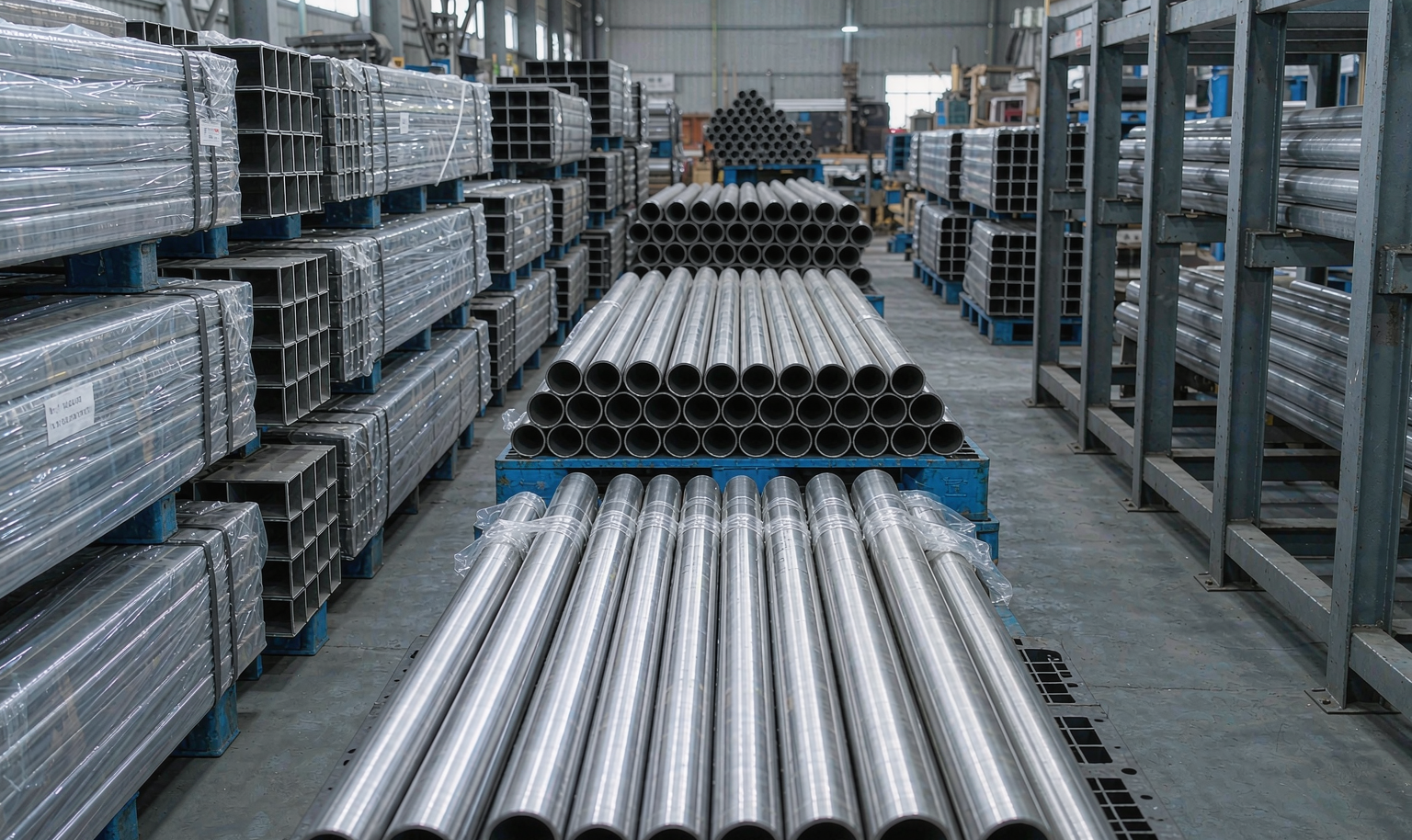
ASTM A513 is the dominant US specification for electric-resistance-welded (ERW) carbon and alloy steel mechanical tubing — the tubing used inside machinery, furniture, automotive components, and hydraulic systems rather than in pressure piping. Because it is a mechanical tube spec, it works differently from the pressure-pipe specs (A53, A106) that buyers know better. Misreading A513 leads to wrong tempers, wrong tolerances, and rejected shipments. This guide explains the five A513 tube types, the grade system, size and tolerance rules, and exactly what to state on your purchase order.
1. What ASTM A513 Actually Covers
ASTM A513/A513M covers electric-resistance-welded carbon and alloy steel tubing for use as mechanical and structural tubing — round, square, rectangular, and special shapes. The emphasis is on mechanical properties and dimensional precision, not pressure containment. Key scope points:
Manufacturing: ERW (high-frequency induction or contact welding); no filler metal.
Shapes: round, square, rectangular, and formed specials.
Size range: rounds from 0.250 in (6.4 mm) OD up to 16 in, with wall thicknesses from 22 BWG up; sizes beyond listed ranges are produced to supplementary negotiation.
Delivery: five “Types” (1, 2, 3, 4, 5) that define the finishing and heat-treatment condition — this is the part buyers get wrong.
Do not confuse A513 with A500 (structural HSS for buildings), A53 (pressure pipe and general galvanized service), or A135 (electric-resistance-welded steel pipe for pressure). The same mill may run all of them; the difference is testing, tolerances, and intended use.
2. The Five Types: Delivery Conditions Decoded
Type
Condition After Welding
Weld
Typical Use
Type 1
Hot rolled, as-welded, no heat treatment
As-welded
General structural, low-stress frames
Type 2
Cold rolled, as-welded, no heat treatment
As-welded
Better surface, tighter OD for visible parts
Type 3
Hot or cold rolled, annealed (weld seam normalized)
Seamless-equivalent: cold drawn, no weld seam used
Drawn over weld, homogenized
Highest duty mechanical/hydraulic applications
Type 3 exists specifically because as-welded ERW tube cracks when flared or bent sharply — the weld zone and the base metal respond differently to forming. Normalizing homogenizes the seam so the tube forms like seamless material. If your product involves bending, end forming, or flaring, Type 3 is the minimum condition to specify; Type 4 adds cold-drawn precision on top.
3. Grades Under A513
A513 references chemistry by steel grade, with mechanical properties varying by Type. The common carbon steel grades:
Grade
C max (%)
Mn (%)
Character
1008
0.10
0.30–0.50
Very formable, low strength — furniture, consumer goods
Typical mechanical properties for the workhorse combinations (minimums vary by type and size — always verify against the current edition):
Grade / Type
Yield (ksi)
Tensile (ksi)
Elongation %
1018 / Type 1 (as-welded)
~45
~62
~15
1018 / Type 3 (annealed)
~35
~55
~20
1018 / Type 5 (cold drawn)
~70
~80
~10
1026 / Type 5 (cold drawn)
~75
~87
~10
4. Dimensions, Tolerances, and Why They Matter
A513 tolerances are tighter than general pipe specs, and they are the reason machine builders buy it. Highlights (round tube, common conditions):
OD tolerance: for as-welded types, roughly ±0.5% of OD (min 0.004 in); cold drawn types hold ±0.002–0.004 in on common sizes.
Wall tolerance: ±10% of specified wall for hot-rolled base; tighter for cold-drawn.
Straightness: cold drawn mechanical tube is commonly supplied to 1:1000 or better when specified; as-welded tube may show visible bow.
Eccentricity (ID/OD concentricity): critical for honed cylinder stock — specify Type 4/5 drawn material, where the drawing operation centers the ID on the OD.
Length: standard 20 ft/6 m random lengths; specify exact lengths with tolerance (±1/16 in typical) when cutting charges are acceptable.
Practical tip: if your drawing shows ±0.1 mm on OD, say so on the PO and ask the mill to confirm by Type 4/5 drawing. As-welded A513 will not hold it without negotiation.
5. A513 vs A500 vs A53: Choosing the Right Specification
ASTM A513
ASTM A500
ASTM A53
Intent
Mechanical/precision tube
Structural HSS
Pressure pipe
Shapes
Round/square/rect/special
Round/square/rect
Round (NPS)
Strength basis
Grade + Type table
Grade (A–D) with min yield
Grade A/B
Size convention
Inch OD + wall/BWG
Nominal HSS sizes
NPS schedule
Typical buyer
OEMs, machine builders
Construction, trailers
Plumbing, process piping
A common mistake in cross-border procurement: a Chinese factory quotes “ERW tube” against a drawing that says A513 Type 3 — and supplies A500-grade tube. Chemistry may be similar, but the annealed-condition guarantee (formability at the seam) is missing, and the part cracks in the field. Insist that certificates name A513 with the Type and Grade.
6. Quality Checks and Certificates
Mill test report: must show grade, Type, heat number, chemistry, tensile/yield/elongation per the applicable Type table.
Weld integrity: A513 requires the weld to be as strong as the base metal for the applicable grade — suppliers demonstrate this by flattening tests on each lot. Ask for flattening test records on structural safety parts.
Nondestructive testing: standard A513 does not mandate full-length EDDY current testing, but good mills run it; specify “100% ERT per ASTM E309/E213” for hydraulic or safety-critical tube.
ID condition: for honed-tube stock (Type 5 / DOM), confirm ID surface finish and stock allowance for honing (typically 0.5–1.0 mm on diameter).
End finish: specify deburred or squared ends; shipping-cut ends slow your fabrication.
7. Buyer Checklist for Your Purchase Order
Standard + Type + Grade spelled out: e.g., “ASTM A513 Type 5, Grade 1026, cold drawn.”
Size as OD × wall (or shape × dimensions), with wall in inches/BWG or mm.
Lengths: random 6 m or exact with tolerance.
Surface: oiled, phosphated, galvanized, or as-pickled; exterior only unless ID is functional.
Forming duty: if the tube will be bent/flared, require Type 3 minimum and state bend radius.
Testing: flattening per lot, ERT if safety-critical, and third-party inspection (SGS/BV) for first orders.
Marking: heat number stenciled or tagged on every bundle for traceability.
FAQ
Is A513 Type 5 the same as DOM tubing?
Yes — DOM (Drawn Over Mandrel) is the industry name for A513 Type 5: ERW tube cold drawn over a mandrel so the weld seam is worked and homogenized, producing seamless-like dimensional precision.
Can A513 tube be used for pressure applications?
Not per the ASME code. A513 is a mechanical specification without pressure ratings; use A53, A106, or A589 for pressure service. Some hydraulic systems use A513 Type 5 for non-code circuits, but pressure-rated designs should cite pipe specs.
What’s the difference between Type 1 and Type 2?
The steel strip condition: Type 1 starts from hot-rolled strip, Type 2 from cold-rolled strip. Type 2 gives a brighter surface and slightly tighter dimensions; strength is similar for the same grade.
Which grade should I choose for bending and flaring?
Grade 1008 or 1010 in Type 3 (annealed) condition for aggressive forming; 1018 Type 3 for a strength/flexibility balance. Always bend-test samples before approving production lots.
How is A513 tube usually exported from China?
Bundled in hexagonal packs with steel strapping, ends capped or wrapped, oiled or VCI-protected, in 6 m lengths in 20/40 ft containers. Ask for bundles under 3 t for safe discharge at ports without cranes.
Sourcing ASTM A513 Mechanical Tubing?
Huaxia-Steel supplies A513 Types 1–5 in grades 1008–1026 (and 4130), with full MTRs, flattening tests, and export packing. Round, square, rectangular and drawn-over-mandrel sizes.
If you require further information about our metal sheet products or architectural projects, please don’t hesitate to leave your contact details and message here.
Our team of experts will respond within 24 hours to continue the discussion and provide you with any additional information you requires.