ASTM A516 vs A36 Carbon Steel: Pressure Vessel vs Structural
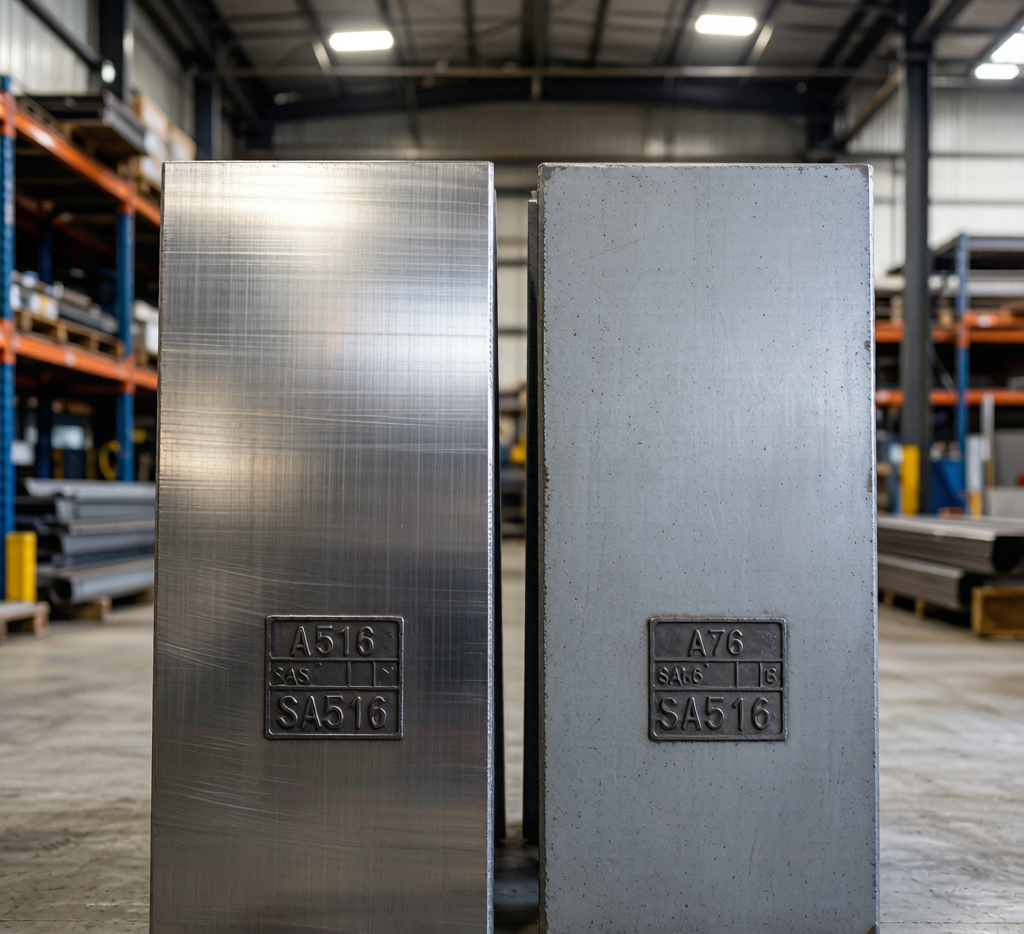
ASTM A36 and ASTM A516 are two of the most widely specified carbon steel grades in the world — but they serve fundamentally different purposes. A36 is the default structural steel for buildings, bridges, and general fabrication. A516 (particularly Grade 70) is the standard pressure vessel steel for boilers, reactors, and storage tanks operating at elevated or sub-zero temperatures. Confusing the two can lead to specification errors with serious safety and compliance consequences.
This comparison guide covers chemical composition, mechanical properties, impact toughness, applicable standards, and practical sourcing advice for buyers who need to select the right grade for their application.
Chemical Composition Comparison
A516 and A36 have different compositional limits designed to optimize their respective performance characteristics. A516 restricts carbon and phosphorus more tightly to ensure weldability and toughness at low temperatures.
| Element | A36 (max %) | A516 Gr 55 (max %) | A516 Gr 60 | A516 Gr 65 | A516 Gr 70 |
|---|---|---|---|---|---|
| C (plate < ½") | 0.25 | 0.18 | 0.21 | 0.24 | 0.27 |
| C (plate > ½") | 0.25-0.29 | 0.18 | 0.22 | 0.25 | 0.28 |
| Mn | — | 0.60-0.90 | 0.60-1.00 | 0.60-1.10 | 0.85-1.20 |
| P | 0.04 | 0.025 | 0.025 | 0.025 | 0.025 |
| S | 0.05 | 0.025 | 0.025 | 0.025 | 0.025 |
| Si | 0.40 | 0.15-0.35 | 0.15-0.35 | 0.15-0.35 | 0.15-0.35 |
Key compositional differences: A516 has significantly lower phosphorus (0.025% max vs 0.04% for A36), which is critical for low-temperature toughness. A516 Gr 70 has higher manganese (0.85-1.20%) to compensate for the higher carbon, maintaining a favorable Mn/C ratio for ductility. Silicon is controlled within a narrow range (0.15-0.35%) in A516 to ensure deoxidation consistency.
Mechanical Properties Comparison
| Property | A36 | A516 Gr 55 | A516 Gr 60 | A516 Gr 65 | A516 Gr 70 |
|---|---|---|---|---|---|
| Yield Strength (MPa) | 250 min | 205 min | 220 min | 240 min | 260 min |
| Tensile Strength (MPa) | 400-550 | 380-515 | 415-550 | 450-585 | 485-620 |
| Yield Strength (ksi) | 36 min | 30 min | 32 min | 35 min | 38 min |
| Tensile Strength (ksi) | 58-80 | 55-75 | 60-80 | 65-85 | 70-90 |
| Elongation 8" (%) | 20 min | 23 min | 21 min | 19 min | 17 min |
| Elongation 2" (%) | 23 min | 27 min | 25 min | 23 min | 21 min |
A36 has a single set of mechanical properties. A516 offers four strength grades (55, 60, 65, 70), allowing designers to select the minimum strength needed while maintaining toughness. A516 Gr 70 is by far the most commonly specified, with tensile strength comparable to A36 but superior toughness characteristics.
Impact Toughness: The Critical Difference
This is where A516 and A36 diverge most significantly:
- A36: Impact testing is not required by ASTM A36. The standard is intended for ambient-temperature structural applications where sudden impact loading is not a design concern.
- A516: Charpy V-Notch impact testing is mandatory per Section 9 of ASTM A516. The test temperature and minimum absorbed energy are determined by the design conditions and ASME Section VIII (UCS-66) requirements.
Typical A516 Gr 70 impact requirements per ASME:
| Design Min. Temp | Test Temperature | Min. Absorbed Energy (3 avg) | Min. Individual |
|---|---|---|---|
| 0°F (-18°C) | 0°F | 27 J | 20 J |
| -20°F (-29°C) | -20°F | 27 J | 20 J |
| -40°F (-40°C) | -40°F | 27 J | 20 J |
| -50°F (-46°C) | -50°F | 27 J | 20 J |
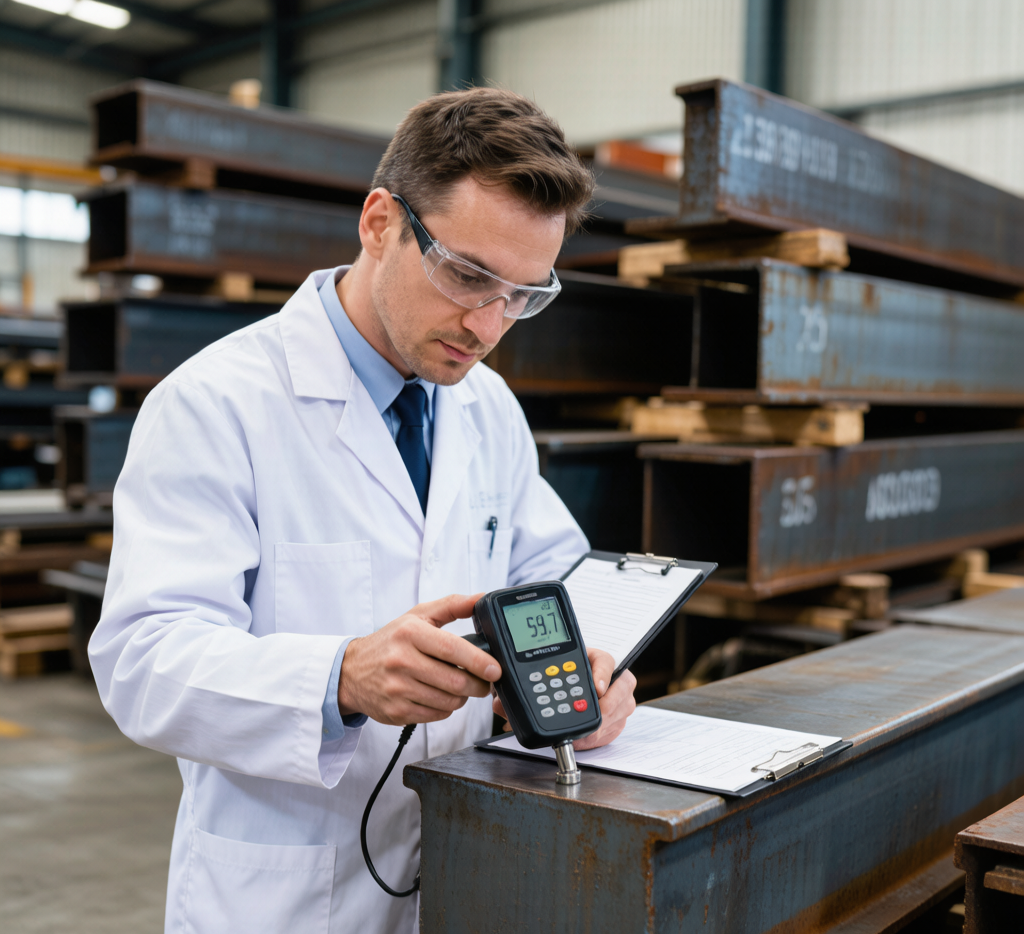
A36 plate tested at -20°C typically shows 10-15 J absorbed energy — far below the 27 J minimum required for pressure vessel service. This confirms that A36 is unsuitable for applications demanding verified low-temperature toughness.
When to Use A36 vs A516
Use A36 when:
- General structural fabrication (frames, supports, brackets)
- Construction beams, columns, and connection plates
- Non-pressure-bearing tanks and containers
- Ambient-temperature service with no impact requirement
- Cost-sensitive projects where toughness is not a design driver
Use A516 when:
- Pressure vessels per ASME Section VIII
- Boiler shells and steam drums
- Cryogenic or low-temperature storage tanks
- Process reactors requiring verified impact toughness
- Any application where brittle fracture is a design concern
Heat Treatment and Normalizing
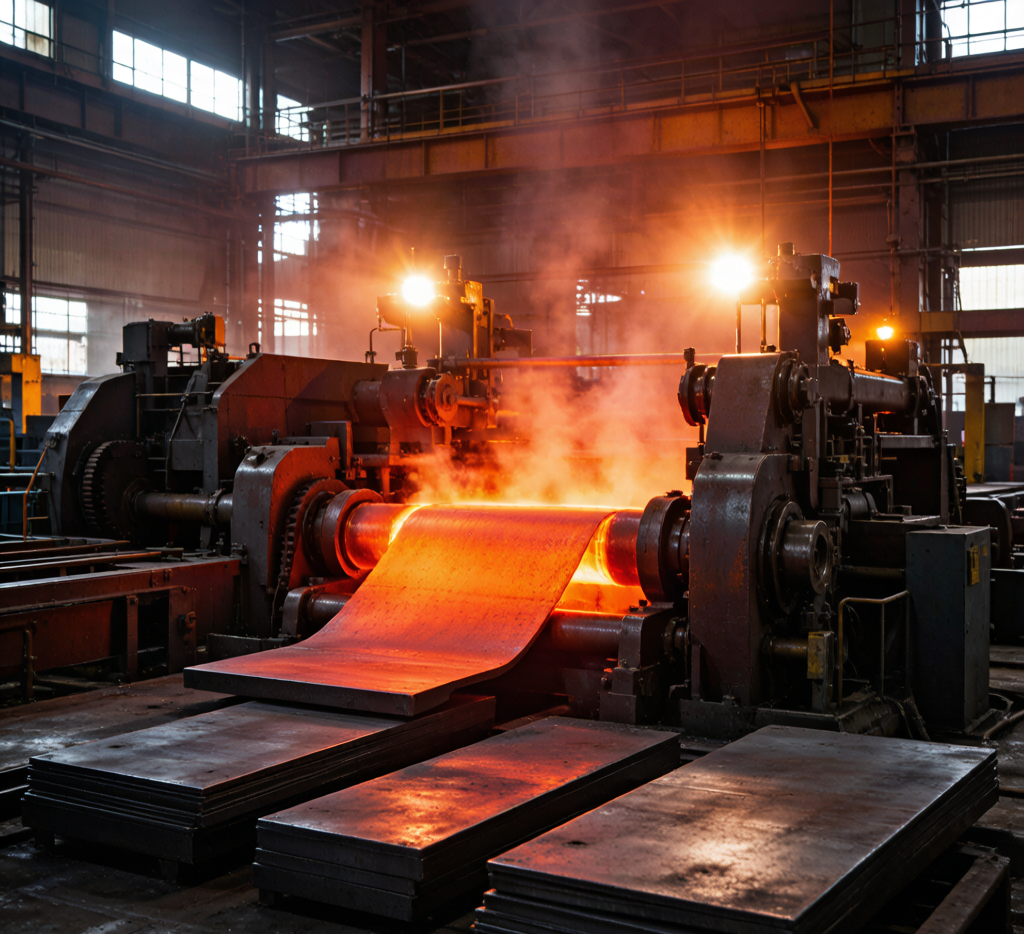
A516 plate thicker than 1.5" (38 mm) is typically supplied in the normalized condition to ensure uniform grain structure and consistent toughness. Normalizing (heating to 870-920°C, air cooling) refines the ferrite-pearlite grain, lowers the ductile-to-brittle transition temperature, and improves Charpy impact values by 20-40% compared to as-rolled condition.
A36 is generally supplied as-rolled without normalizing. While normalizing A36 is possible and improves its toughness, it is not standard practice and adds cost. For applications requiring both structural strength and verified toughness, A516 normalized plate is the correct specification.
Weldability Comparison
Both A36 and A516 are considered readily weldable carbon steels. Key welding considerations:
| Welding Parameter | A36 | A516 Gr 70 |
|---|---|---|
| Carbon equivalent (typical) | 0.38-0.45 | 0.42-0.50 |
| Preheat requirement | None for thin plate; 50°C for > 25mm | None for ≤ 12mm; 50-100°C for thicker |
| Filler metal | E7018, ER70S-6 | E7018, ER70S-6 (low hydrogen essential) |
| Post-weld heat treatment | Generally not required | May be required per ASME UCS-56 for thick welds |
| Interpass temperature | Not critical | Control per WPS (max 300°C typical) |
For pressure vessel fabrication, low-hydrogen welding practice (E7018 electrodes, proper preheat, controlled interpass) is mandatory for A516. Preheat prevents hydrogen-induced cracking in the higher-carbon Grade 70, especially for thicker sections.
FAQ
Can I substitute A516 Gr 70 for A36?
Yes — A516 Gr 70 meets or exceeds A36 mechanical requirements (260 MPa yield vs 250 MPa minimum, comparable tensile range). However, A516 costs 5-15% more due to tighter compositional control, mandatory impact testing, and normalizing for thick plates. Use A516 only when toughness verification is required; substituting A36 for A516 in pressure vessel applications is not acceptable.
Can A36 be used for pressure vessels?
ASME Section VIII lists A36 as SA-36, but with severe limitations: it is restricted to non-impact-tested applications and may not be used for vessels operating below certain minimum metal temperatures per UCS-66. For most practical pressure vessel designs, A516 is the appropriate choice.
What are the A516 sub-grades (55, 60, 65)?
A516 offers four strength grades to match different design pressures. Grade 55 (205 MPa yield) suits low-pressure, large-volume tanks. Grade 60 (220 MPa) is common for moderate-pressure vessels. Grade 65 (240 MPa) is a mid-range option. Grade 70 (260 MPa) is the most widely specified for ASME-coded vessels and represents over 80% of A516 production.
Does A516 require normalizing?
A516 plate up to 1.5" (38 mm) may be supplied as-rolled if impact tests meet specification. Plate thicker than 1.5" is typically normalized. ASME and many client specifications require normalizing regardless of thickness for pressure vessel applications, to ensure consistent grain refinement and toughness.
Conclusion
ASTM A36 and A516 serve distinct engineering purposes. A36 is the cost-effective choice for general structural applications at ambient temperature. A516 — especially Grade 70 — is the standard for pressure vessel and low-temperature service where verified impact toughness is mandatory. Specifying the wrong grade can compromise safety and result in regulatory non-compliance.
At Huaxia-Steel, we supply both A36 and A516 Gr 55/60/65/70 plates with full mill test certificates, including mandatory Charpy impact values at specified temperatures. Contact our procurement team for competitive pricing and certified quality documentation.