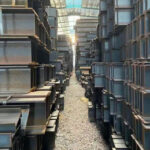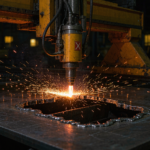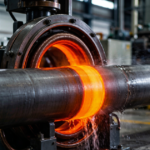
Oxy-fuel flame cutting remains the most economical way to cut carbon steel plates and profiles, especially in thicknesses where lasers and plasmas become slow or expensive. Despite newer technologies, the basic oxy-acetylene torch still cuts more tonnes of mild steel worldwide than any other method. This article explains how carbon steel flame cutting works, where its limits are, and how to get clean, dimensionally accurate edges.
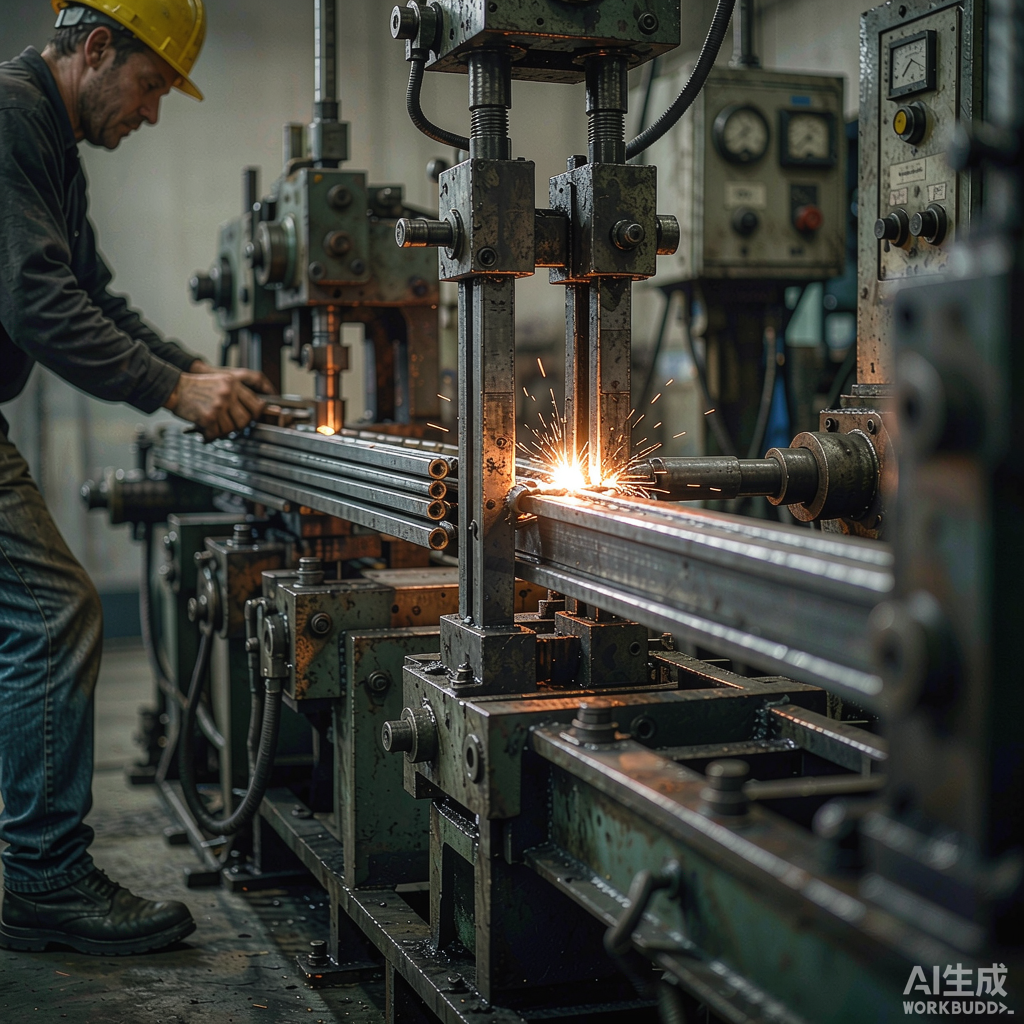
1. How the Oxy-Fuel Cutting Process Works
Flame cutting is a chemical process, not just melting. The torch first preheats the steel surface to roughly 850–900 °C using a fuel-oxygen flame. Once the steel is cherry-red, a high-pressure stream of pure oxygen is directed at the spot. The oxygen reacts with the hot iron to form iron oxide (slag), and the exothermic reaction generates enough heat to sustain cutting. The molten slag is blown away by the oxygen jet, leaving a kerf.
This is why flame cutting works only on ferrous metals with enough carbon and iron content to sustain the oxidation reaction. Stainless steel and aluminium cannot be cut this way because their oxides are too stable or they do not oxidize fast enough.
2. Why Carbon Steel Is Ideal
Low-carbon and mild steels (up to about 0.3% C) cut beautifully with oxy-fuel. As carbon content rises, the steel becomes harder, develops a wider heat-affected zone, and is more prone to cracking, so preheat and post-heat care are needed above roughly 0.3–0.4% C. Plain structural grades such as A36, S355JR, SS400 and Q235 are the daily bread of any flame-cutting shop.
3. Thickness Limits and Cutting Speed
Flame cutting shines on thick material. Hand torches routinely cut up to 100–150 mm; machine torch tables handle 300 mm and beyond. Speed drops as thickness grows, so very thick plates are often cut with multiple passes or by CNC tables. The table below shows typical machine cutting speeds.
| Plate thickness | Approx. cut speed |
|---|---|
| 6 mm | 700–900 mm/min |
| 12 mm | 450–600 mm/min |
| 25 mm | 250–350 mm/min |
| 50 mm | 120–180 mm/min |
| 100 mm | 50–80 mm/min |
4. Gas Choices: Acetylene, Propane, Natural Gas
Acetylene gives the hottest, most concentrated preheat flame and is the classic choice for hand cutting and thin-to-medium plate. Propane and natural gas are cheaper and safer to store, and are widely used on CNC tables for thicker plate where preheat intensity matters less. The cutting oxygen should be high purity (99.5%+) to keep edges clean.
5. Common Defects: Drag, Slag and Bevel
Three problems dominate flame-cut quality complaints. Drag is the backward lean of the cut line; excessive drag signals wrong speed or pressure. Slag (dross) on the bottom edge means the oxygen stream was too weak or the speed too slow. Bevel (an angled edge) comes from torch misalignment or tip wear. All three are corrected by tuning speed, oxygen pressure and tip-to-plate distance.
6. Accuracy and Edge Prep
CNC flame cutting holds tolerances around ±1–2 mm on thick plate and can cut bevels, holes and complex profiles in one setup, which is why it is preferred for weld preps and one-off heavy parts. Edge hardening in the heat-affected zone is usually shallow and removed by subsequent machining or grinding.
7. Safety and Fume Control
Flame cutting throws sparks, UV light and fumes. Operators need flash-rated PPE, local exhaust ventilation, and fire watch for sparks travelling along the plate. In enclosed shops, fume extraction at the torch is now standard for compliance with workplace air limits.
8. CNC Flame Cutting vs Manual Torch
Manual oxy-fuel torches are flexible for site work and small repairs, but for production accuracy and repeatability, CNC flame-cutting tables dominate. A CNC table follows a CAD profile, holds tolerance, nests parts to save material, and can be left running unattended. The trade-off is capital cost and floor space; many job shops offer CNC cutting as a service so smaller buyers avoid the investment.
9. Cost per Cut vs Laser and Plasma
For thin sheet (under 6 mm) plasma and fiber laser are faster and cleaner. From about 10 mm up to 100 mm+, flame cutting is usually the cheapest per metre of cut because the consumables are cheap and the process is robust. Laser cost rises steeply with thickness, while plasma edge quality degrades. A simple rule: thin and precise → laser/plasma; thick and economical → flame.
10. Plate Preparation and Edge Finishing
After cutting, the edge may carry a thin hardened layer from the heat-affected zone. For most structural welds this is acceptable after wire brushing, but for higher-strength steels or machined parts the edge is often ground or machined to remove the HAZ. Bevel cutting (preparing a V or X groove) is routinely done in the same CNC pass, saving a separate welding-prep operation.
11. Environmental and Emission Notes
Flame cutting releases fumes containing iron oxide and, from any coating on the plate, potentially hazardous compounds. Cutting painted or galvanized steel must be avoided or heavily ventilated because zinc and lead fumes are toxic. Modern shops capture fumes at the torch and filter them, which also keeps the workplace within occupational exposure limits.
12. Choosing Tip Size and Pressure
Cut quality begins with the right cutting tip. Tip orifice size sets the preheat flame and oxygen stream diameter, and must match the plate thickness: too small a tip starves the cut, too large wastes gas and widens the kerf. Cutting-oxygen pressure typically rises with thickness, often 3–6 bar for thin plate and up to 10 bar for heavy sections. Operators keep a tip-cleaning needle on hand because a clogged orifice is the most common cause of ragged edges and excessive drag. Regular tip inspection is the cheapest quality control in any cutting bay.
13. Multi-Torch and Bevel Cutting
Modern CNC tables often carry several torches so multiple parts or a part plus its bevel are cut in one pass. Bevel cutting prepares weld grooves directly, eliminating a separate grinding or machining step and improving fit-up in the weld shop. Some tables combine a flame torch with a plasma or laser to handle both thick and thin in one nesting plan. These productivity features are why flame cutting remains competitive despite newer technologies — the marginal cost of an extra torch is low and the labour saved is large.
14. Quality Inspection of Cut Parts
After cutting, parts are checked for dimensional accuracy, squareness, edge perpendicularity and absence of slag. A simple go/no-go template or caliper verifies hole positions and profile tolerances, while a visual drag-angle check confirms the cut was on parameters. For critical weld edges, a light grind removes the hardened heat-affected zone. Good shops record these checks per nest and feed deviations back to the programmer, gradually tightening the process. This closed loop is what separates a job-shop cut from a certified, fit-for-weld edge.
15. When Not to Flame Cut
Flame cutting is the wrong tool for stainless and aluminium, for very thin sheet where laser or plasma is faster and cleaner, and for parts demanding a mirror edge. It also introduces heat and a small HAZ, so for hardened or pre-machined parts alternative methods may be specified. Knowing these boundaries prevents rework and helps buyers choose the right process — and the right supplier — for each job.
16. A Closer Look at Fuel Gases
The choice of fuel gas changes both cut quality and operating cost. Acetylene produces the hottest flame (about 3500 °C) and the most concentrated preheat, which is why it remains the default for hand cutting and for piercing thicker plate. Propane and natural gas burn cooler but are far cheaper to store and handle, and on machine tables where preheat intensity matters less they are the economical choice for thick material. Hydrogen-based mixes cut stainless-clad or dirty plate well but need special torches. Matching the gas to the job and the volume is a real cost lever in any cutting operation.
17. Techniques for Very Thick Plate
Cutting plate beyond 100 mm needs patience: slower travel, higher oxygen pressure and sometimes a pre-drilled pierce hole to avoid blowback. Operators often use a slightly larger tip and accept a wider kerf in exchange for a clean break. Multi-pass or two-sided cutting is used when a single pass cannot sever the section. The heat-affected zone grows with thickness, so critical parts may be rough-cut and then machined to final size. Understanding these limits helps buyers set realistic lead times and tolerances when ordering heavy flame-cut profiles.
18. Nesting Software and Material Yield
On CNC tables, nesting software arranges parts to maximise the number cut from a plate, directly cutting material cost and scrap. Good nesting also sequences cuts to control distortion from residual heat. For buyers, this means a competent cutter can often beat a rival’s price simply by wasting less steel. When requesting quotes, supplying a clean CAD file and the required quantity lets the shop nest efficiently; vague sketches force conservative layouts and higher per-part cost. Material yield, not just the hourly rate, is the true price of flame cutting.
19. Personal Protective Equipment in Detail
Flame cutting exposes operators to UV radiation, sparks, hot slag, noise and fumes. Required PPE includes a flash-rated jacket and gloves, auto-darkening eye protection, leather spats, and flame-resistant footwear. Local exhaust at the torch captures fume at source, and in confined spaces supplied-air respirators are mandatory. Fire watch with extinguishers covers sparks travelling along the plate or floor. These measures are not optional — they are codified in workplace safety standards — and a shop’s safety record is a fair proxy for its overall discipline.
20. Where Cutting Technology Is Heading
Flame cutting is being supplemented by fiber lasers for thin and medium plate and by plasma for fast, good-quality cuts, but it remains unbeaten for very thick, low-cost carbon steel. Hybrids that combine a laser or plasma with flame beveling are appearing, and smarter controls now auto-adjust oxygen pressure and speed from sensor feedback. For the buyer, the trend means more choice and keener pricing, but also a need to specify the process so the shop quotes like for like rather than swapping methods silently.
21. Troubleshooting Common Defects
When a cut looks wrong, the cause is usually simple. Excessive drag means the torch moved too fast or oxygen pressure was low; slow down or raise pressure. Heavy bottom slag means too slow or weak oxygen — speed up or increase pressure. A beveled edge means the tip was worn or misaligned — replace the tip and square the torch. Wide kerf wastes steel and signals an oversized tip or excessive pressure. Keeping a one-page fault chart at the cutting station lets operators correct issues in seconds instead of scrapping parts, and it is the cheapest quality tool a cutting bay can have.
22. The Value of Operator Skill
No machine replaces a skilled burner. Experienced operators read the flame color, judge preheat, and adjust speed by eye, producing clean cuts on awkward shapes that a novice would ruin. They also know when to switch from flame to plasma and how to nest for yield. For buyers, a shop’s operator tenure and training are as important as its equipment — and a good operator is why a seemingly expensive shop can still deliver the lowest total cost through less scrap and rework.
23. Conclusion
Carbon steel flame cutting remains the workhorse of heavy steel fabrication because it is robust, cheap and capable on thick material. Understand the process, control the parameters, and supervise quality, and it will deliver accurate, weld-ready parts at the lowest cost per cut. For thinner or finer work, laser and plasma complement it; for the thick plate that builds the world’s structures, the oxy-fuel torch is still king.
24. Choosing a Cutting Service Provider
When outsourcing flame cutting, evaluate the provider on equipment, nesting capability, quality records and safety, not just price per metre. A shop with modern CNC tables, good nesting software and a documented quality loop will deliver cleaner parts and less scrap, lowering your true cost. Ask for sample cuts, check their material certifications, and confirm they can supply the edge prep your weld shop needs. The cheapest hourly rate often hides higher scrap and rework, so judge suppliers on total delivered cost and reliability.
25. Health, Safety and Environment Summary
Flame cutting is safe when respected: correct PPE, fume extraction, fire watch and gas handling procedures prevent the overwhelming majority of incidents. Environmentally, capturing and filtering fume and avoiding cutting coated steel keep the workplace and surroundings clean. Buyers specifying cutting work should include these requirements in the order so the shop plans for them rather than treating them as optional, protecting both people and the planet.
26. Huaxia-Steel Processing Support
Huaxia-Steel offers in-house and partnered cutting, including CNC flame and plasma, with nesting, beveling and edge preparation to your drawings. We supply cut plates and profiles with the certification and packing needed for export, and we can kit cut parts with the matching steel sections for turnkey delivery. Engaging us early in the design lets us optimise nesting and lead time, turning flame cutting from a line item into a managed, cost-efficient process.
27. Common Myths About Flame Cutting
Several myths persist. One is that flame cutting is obsolete — in fact it remains the cheapest way to cut thick carbon steel and is busy on every heavy-fabrication floor. Another is that any torch can cut any thickness — in reality tip size, oxygen pressure and travel speed must be matched or quality collapses. A third is that the edge is always ready to weld — heavy dross or a hardened layer still needs brushing or grinding. Dispelling these myths helps buyers set realistic expectations and choose the right process and supplier rather than defaulting to a more expensive method out of habit.
28. Accepting Edge Quality
When receiving flame-cut parts, agree an acceptance standard up front — typically a permitted drag angle, maximum slag, and edge perpendicularity tolerance — so inspection is objective rather than a matter of opinion. Minor surface oxidation is normal and removed by brushing; a hardened edge on high-strength steel may need grinding before welding. Clear acceptance criteria avoid disputes with the cutting shop and ensure the parts you pay for are genuinely fit for your downstream process.
Frequently Asked Questions
What thickness can a flame cutter handle?
Hand torches cut up to about 150 mm; CNC tables extend well beyond 300 mm, making flame cutting the cheapest option for very thick carbon steel.
Can flame cutting be used on stainless steel?
No. Stainless forms a stable chromium oxide layer that blocks the oxidation reaction, so plasma or laser is used instead.
Why is there slag on the cut edge?
Usually low cutting-oxygen pressure, too slow a travel speed, or a worn tip. Raising oxygen pressure and checking speed normally clears it.
Is a flame-cut edge ready to weld?
Often yes after wire brushing, but heavy dross or a hardened HAZ should be ground off first to avoid weld defects.
Get a Mill-Direct Quote on Carbon Steel
Huaxia-Steel supplies the full range of carbon steel products with mill test certificates, third-party inspection and worldwide export. Tell us your grade, size and quantity — we respond within one business day.