Carbon Steel MOQ Guide: Minimum Order Quantities for Importers
Minimum Order Quantity (MOQ) is one of the most critical factors in carbon steel sourcing, yet it is often misunderstood by first-time importers. MOQ affects not only your unit price but also your shipping costs, lead times, and cash flow. Understanding how steel factories set MOQ, what factors influence it, and how to negotiate effectively can save you 10–20% on total procurement costs. This guide breaks down everything you need to know about MOQ when importing carbon steel products from overseas manufacturers.
What Is MOQ and Why Does It Matter in Steel Sourcing?
MOQ is the minimum quantity a supplier is willing to produce or sell in a single order. In carbon steel manufacturing, MOQ is driven by production economics: setting up a rolling mill, cutting line, or machining center for a specific order involves fixed costs that must be spread across the order quantity. Below the MOQ, the supplier loses money on the order.
For steel importers, MOQ directly impacts three key areas:
- Unit pricing: Orders below MOQ either get rejected or carry a 15–40% premium
- Shipping efficiency: MOQ should align with container load optimization (FCL vs LCL)
- Inventory carrying cost: Ordering above your actual needs ties up working capital in excess stock
Typical MOQ Ranges by Carbon Steel Product Type
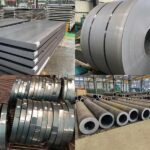
MOQ varies significantly by product type because different products have different production setup costs. The table below shows typical MOQ ranges for common carbon steel products from Chinese manufacturers:
| Product | Typical MOQ | Unit | Key Factor |
|---|---|---|---|
| Steel plate (A36/A572/A516) | 5–25 | tons | Mill rolling minimum |
| Steel coil (hot rolled) | 20–50 | tons | Coil weight per heat |
| Steel pipe (seamless) | 3–10 | tons | Per size per heat |
| Steel pipe (welded/ERW) | 5–15 | tons | Welding line setup |
| Pipe fittings (elbow/tee) | 500–2,000 | pieces | Per size per standard |
| Flanges | 200–1,000 | pieces | Forging die setup |
| Fasteners (bolts/nuts) | 1,000–10,000 | pieces | Cold heading setup |
| Round/square bar | 5–20 | tons | Per size per grade |
| Wire rod | 10–30 | tons | Wire drawing batch |
| Profile sections (angle/channel) | 10–25 | tons | Rolling pass schedule |
These ranges represent typical factory MOQs. Trading companies may offer lower MOQs by combining orders from multiple buyers, but at a higher unit price. Direct factory sourcing almost always provides better pricing at standard MOQ levels.

6 Factors That Influence MOQ in Carbon Steel Production
1. Steel Mill Heat Size
Every steel melt produces a “heat” of a specific weight — typically 50–150 tons for electric arc furnaces and 200–300 tons for basic oxygen furnaces. The factory cannot produce less than one heat of a specific grade. For custom chemistry requirements, the MOQ may be set at the full heat size.
2. Rolling Mill Setup
Changing the rolling schedule for a different size or profile requires 2–8 hours of mill setup time, during which the mill is not producing. Factories spread this cost across the order quantity, setting MOQ high enough to make the setup economically viable.
3. Standard vs Custom Sizes
Standard sizes (e.g., 1220×2440mm plate, DN50 Sch40 pipe) have lower MOQs because the factory may have stock or can combine your order with others. Custom sizes (non-standard thickness, width, or length) require dedicated production runs with higher MOQs.
4. Grade and Standard Requirements
Common grades (A36, Q235, SS400) have lower MOQs due to higher production frequency. Niche grades (A516 Gr 70, S45C, 65Mn) or grades requiring special heat treatment (normalized, quenched and tempered) have higher MOQs because they involve additional processing steps.
5. Surface Treatment and Coating
Products requiring galvanizing, painting, or special coatings carry higher MOQs because the coating line must be set up with specific chemistry. For example, galvanized pipe MOQ is typically 50% higher than black pipe MOQ from the same factory.
6. Export Packaging Requirements
Custom packaging (special crating, VCI paper, heat-treated pallets for ISPM-15 compliance) adds setup time and cost. Factories may increase MOQ to justify the packaging line setup for non-standard packaging requests.
How MOQ Affects Pricing: The Volume Discount Curve
Carbon steel pricing follows a volume discount curve where larger orders achieve lower unit prices. Understanding this curve helps importers optimize order quantities:
| Order Quantity (vs MOQ) | Typical Price Effect | Best For |
|---|---|---|
| Below MOQ | +20–40% premium or rejected | Small projects (use trader) |
| 1× MOQ | Base price (catalog/list) | Trial orders |
| 2–3× MOQ | −3 to −7% discount | Standard projects |
| 5–10× MOQ | −8 to −15% discount | Large projects |
| 10×+ MOQ | −15 to −22% discount | Distributors/wholesalers |
The steepest price drop occurs between 1× and 3× MOQ, making this range the sweet spot for most importers. Beyond 5× MOQ, additional discounts diminish as the factory’s marginal cost approaches the raw material cost.

Container Load Optimization: Matching MOQ to Shipping
MOQ should be considered alongside shipping container capacity. Ordering exactly the MOQ may result in LCL (less than container load) shipping, which costs 40–80% more per ton than FCL (full container load):
| Container Type | Max Weight | Max Volume | Best Product Match |
|---|---|---|---|
| 20′ Standard | ~28 tons | 33 CBM | Heavy plate, bar, fittings |
| 40′ Standard | ~26.5 tons | 67 CBM | Pipe, profile, coil |
| 40′ High Cube | ~26.5 tons | 76 CBM | Bulky profiles, mesh |
| 20′ Open Top | ~28 tons | 33 CBM | Oversized plate, long bar |
Ideally, your MOQ should align with a full container load. For example, if the factory MOQ for A36 plate is 10 tons, consider ordering 25–28 tons to fill a 20′ container — the shipping cost per ton drops dramatically, and the combined volume discount typically offsets the cost of the additional material.
5 Strategies for Negotiating Lower MOQ
- Combine multiple sizes in one order: Factories may accept lower per-size MOQ if the total order value is sufficient. For example, instead of ordering 5 tons each of 3 different pipe sizes (each below the 10-ton MOQ), order all three in a single 15-ton purchase order.
- Accept standard sizes and grades: Standard products can be combined with other buyers’ orders, effectively sharing the production setup cost. Ask the factory what sizes they have scheduled for upcoming production runs.
- Pay a setup fee: Some factories will accept orders below MOQ if you pay a setup fee (typically $200–$800) to cover the production line changeover cost. This is economical when you need a small quantity urgently.
- Use a trading company for trial orders: For first-time orders below factory MOQ, a trading company can source from their stock or combine your order with others. Expect to pay 10–15% more, but it allows you to test the product quality before committing to larger volumes.
- Build a relationship over time: Established customers with a track record of repeat orders often receive MOQ concessions. After 2–3 successful orders at standard MOQ, negotiate for lower MOQ on subsequent orders.
MOQ and Lead Time: Understanding the Relationship
MOQ and lead time are interconnected. Orders at or above the standard MOQ typically have lead times of 15–30 days for production plus 7–14 days for shipping preparation. Orders below standard MOQ (accepted with a premium) may have longer lead times (30–45 days) because the factory fits them into the production schedule between larger orders.
For urgent small-quantity orders, expect to pay both a low-quantity premium and an expedited production surcharge. The total cost premium for a rush order below MOQ can be 30–50% above the standard unit price.
Frequently Asked Questions
What is the minimum order quantity for carbon steel plate?
For standard grades like A36 or Q235, the typical factory MOQ is 5–25 tons depending on the thickness and size. For specialty grades like A516 Gr 70, the MOQ may be 15–30 tons. Trading companies may offer lower MOQs (1–5 tons) at a premium price.
Can I order less than the MOQ for a sample?
Many factories offer sample quantities (50–200kg) for testing purposes, but these are priced at a significant premium (50–100% above standard price) and may not include full MTC documentation. For proper material qualification testing, order at least one ton with full EN 10204 3.1 certification.

How does MOQ affect the mill test certificate?
Orders below a certain quantity may receive an EN 10204 3.1 MTC based on the heat analysis rather than specific product testing. For orders above 5 tons, most factories provide product-specific test results. Always specify the required MTC type on your purchase order.
Is it cheaper to buy above MOQ or split into multiple orders?
Generally, a single order above MOQ is cheaper due to volume discounts and consolidated shipping. Splitting orders increases setup costs, shipping costs, and administrative overhead. However, if your storage capacity or cash flow is limited, staged deliveries from a single order can balance cost and flexibility.
What happens if I order below MOQ?
Factories may reject the order, charge a 20–40% premium, or suggest alternative sizes from stock. Some factories accept below-MOQ orders during periods of low capacity utilization. Always discuss MOQ flexibility before finalizing your purchase decision.
Conclusion: Optimize Your MOQ Strategy
Understanding and strategically managing MOQ is essential for cost-effective carbon steel importing. By aligning your order quantities with factory MOQs, container load optimization, and volume discount curves, you can reduce total procurement costs by 15–25% compared to ad-hoc small-quantity purchasing. The key is to plan ahead, understand the production economics, and build relationships with suppliers that allow for MOQ flexibility over time.
At Huaxia-Steel, we offer competitive MOQs across our full product range, from carbon steel plates and pipes to fittings and bars. Our team helps you optimize order quantities for cost efficiency and container load maximization. Contact us today to discuss your quantity requirements and receive a tailored quotation.