Carbon Steel Pipe Bending and Forming Methods Guide for Buyers
Carbon steel pipe rarely leaves the mill in its final shape. Process piping, boiler tubes, structural applications, and shipbuilding all need bends, sweeps, and elbows. The wrong bending method causes wall thinning, wrinkles, ovality, and ultimately leaks under pressure. The right one delivers a clean radius without compromising the material certificate.
This guide walks through the practical carbon steel pipe bending methods available in 2026, their minimum bend radii, common defects, and what to specify when ordering pre-bent pipe from a Chinese fabricator.
1. Why Bending Matters in Carbon Steel Pipework
Bending introduces plastic strain on the outer side of the bend and compression on the inner side. Uncontrolled strain causes:
- Wall thinning – tensile reduction on the extrados; common in cold bending without a mandrel.
- Wrinkling – compression buckling on the intrados; common in thin-wall, large-diameter pipe.
- Ovality – cross-section becomes elliptical; affects flow, supports, and flange alignment.
- Springback – the bend angle relaxes slightly after tooling is removed; predictable for QA but ignored means off-angle.
2. Cold Bending Methods
Cold bending is done at or near ambient temperature. It suits thin to medium-wall pipe and is the most common method for general fabrication.
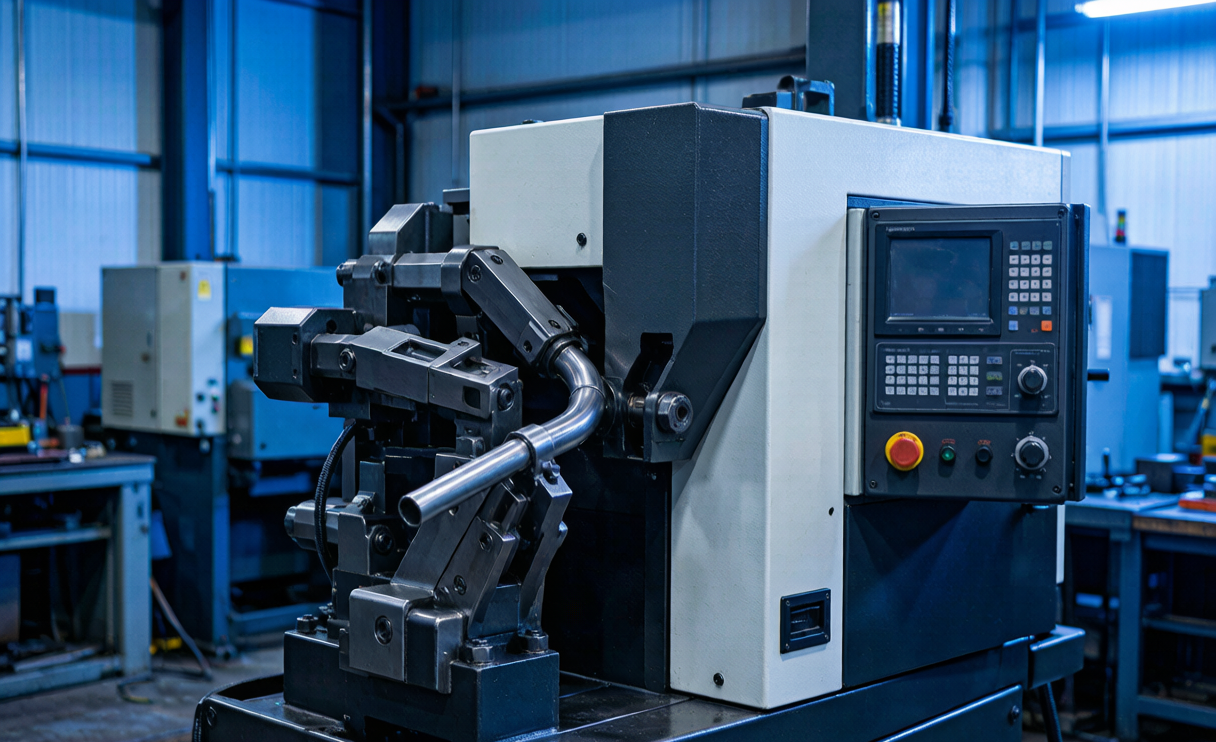
- Mandrel bending: An internal mandrel supports the bore during the bend. Used when ovality below 5% is required. Adds cost but is the cleanest method for high-pressure lines.
- Draw bending: The pipe is pulled around a fixed die. Standard for HVAC, automotive, and small-bore lines.
- Three-roll (pyramid) bending: Two fixed bottom rolls and one adjustable top roll. Best for heavy-wall, large-radius structural bends (for example, hand-rails and frames).
- Compression bending: The pipe is wrapped around a die under compressive force. Cheaper but produces ovality on small radii.
3. Hot Bending Methods
Hot bending uses heat to lower yield strength and allow tighter radii. It is required for thick-wall, high-strength, or heavy-section pipe.
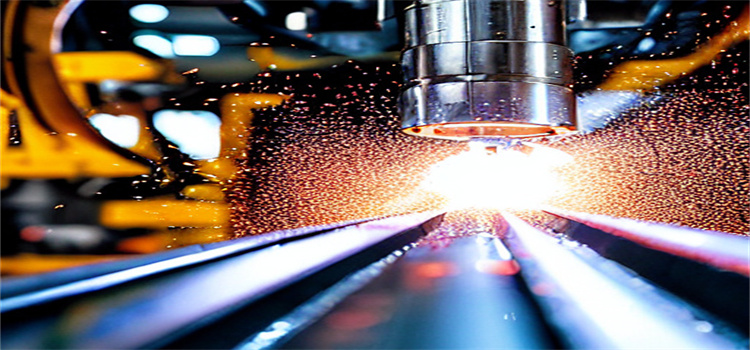
- Hot induction bending: A localized induction coil heats a narrow band ahead of the bend die. Most common method for process pipe from 50 mm to 1000 mm diameter. Excellent for long radius and thick walls.
- Sand packing and hot bending: Sand fills the pipe internally to prevent buckling. Used for very large diameters or unique shapes, but slower and labor-intensive.
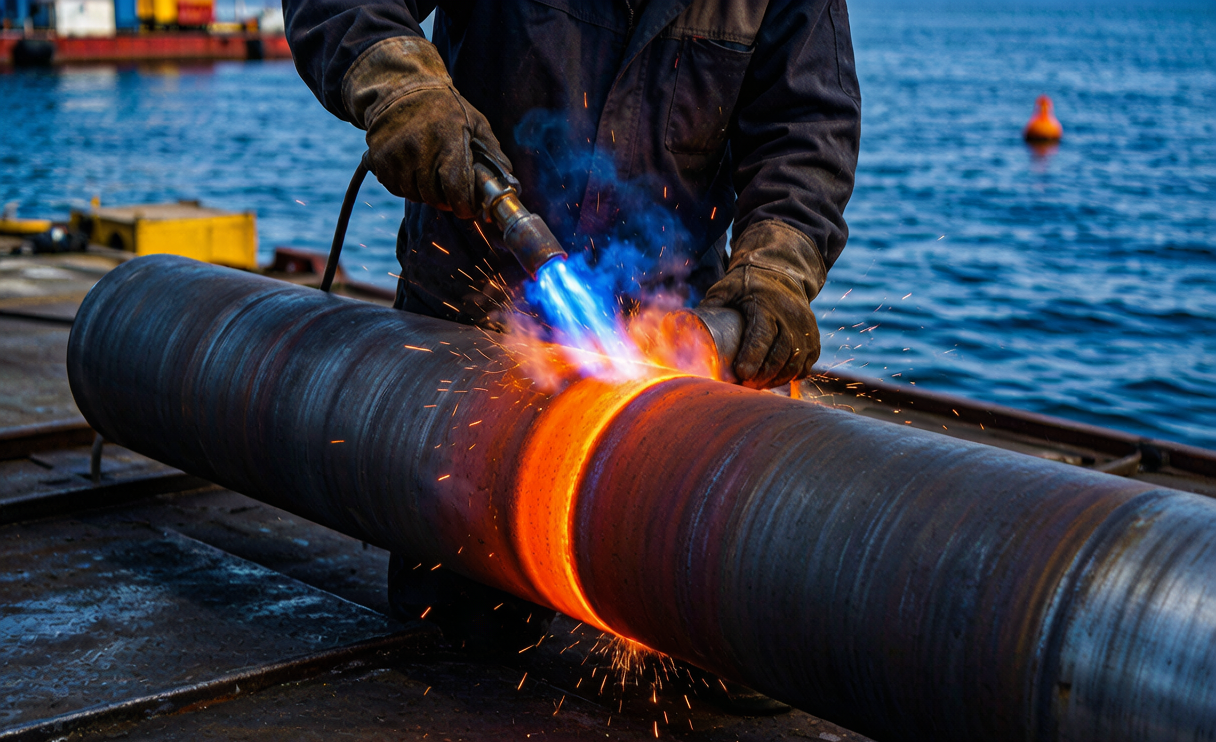
- Oxy-fuel bending: A flame heats the bend zone; faster than induction for short runs but harder to control. Common for shipbuilding and structural elbows.
4. Typical Minimum Bend Radii by Method
| Pipe | Cold mandrel | Cold draw | Hot induction |
|---|---|---|---|
| NPS 1 (33.4 mm OD) | 2D | 3D | 1.5D |
| NPS 4 (114.3 mm OD) | 3D | 4D | 1.5D |
| NPS 12 (323.9 mm OD) | 5D | 6D | 2D |
| NPS 24 (610 mm OD) | 7D | Not recommended | 3D |
D = nominal pipe diameter. Tighter radii require hot bending. Mandrel bending can go tighter than draw bending because it supports the bore.
5. Common Defects and How to Spot Them
| Defect | Cause | Inspection |
|---|---|---|
| Wall thinning on extrados | Over-stretching without mandrel support | UT thickness gauge on bend crown |
| Wrinkles on intrados | Thin wall, too-tight radius, no mandrel | Visual and 3D scan |
| Ovality > 5% | Excessive compression without internal support | Caliper of major/minor axis |
| Micro-cracks on extrados | High strain in cold bending high-strength steel | Dye-pen test or MPI |
| Hardness drop after hot induction | Overheating or slow cooling | Hardness traverse at HAZ |
6. Standards Reference
- ASME B16.49 – Factory-made wrought induction bends for ASME B16.9 systems. Covers bend radius 3D to 10D, plus ovality and wall thickness limits.
- EN 10253-3 – Wrought butt-welding fittings made from hot-rolled plate, including induction bends.
- ASME B31.3 – Process piping code, includes bending radius and wall thickness requirement tables.
- ASTM A370 – Standard test methods for mechanical testing, including flattened-section tests on bends.
7. Material Selection Tips for Bending
- ERW or seamless: Seamless pipe bends more evenly and is preferred for high-pressure. ERW bends acceptably for low- to medium-pressure.
- Grade: API 5L X42-X65 bends well; X70 and above requires tighter heat control.
- Cleanliness: Specify pickled and oiled pipe for hot induction to avoid scale marks being impressed on the surface.
- Heat treatment after bending: For sour service or low-temperature service, ask the fabricator to stress-relieve the bend zone (typical 595-705 degrees C).
8. How to Specify Bends in an RFQ to a Chinese Mill
- Standard and grade: “API 5L X65, ASME B16.49.”
- Outer diameter, wall thickness, and bend radius in D-multiples (for example, 3D, 5D).
- Number of bends per pipe or by project draw list.
- Bend angle tolerance (typically +/- 0.5 degrees) and ovality tolerance (typically < 5%).
- Required post-bend heat treatment, if any.
- Inspection scope: 100% visual, 100% dimensional, 10% thickness, MPI on critical bends.
- Surface preparation: sand-blasted, primed, or as-bent.
FAQ
Which method is cheapest?
Three-roll cold bending for large-radius structural bends. Hot induction is more expensive but necessary for tight bends.
Can ERW pipe be hot bent?
Yes, but the heat-affected zone of the weld can recrystallize. Specify stress relief for critical service.
What is the tightest practical radius?
About 1.5D with a mandrel and 1D with hot induction on small-bore pipe. Anything tighter requires welded elbow fittings.
How do I verify ovality at the destination port?
Use a caliper to measure major and minor diameters at the bend crown. Calculate ovality as (Dmax – Dmin) / Dnominal.
Conclusion
Choosing the right carbon steel pipe bending methods comes down to pipe size, wall thickness, radius, and service. Cold mandrel bending is the workhorse for general fabrication; hot induction takes over for thick walls and tight radii. Always align the bend spec with the applicable code (ASME B16.49, EN 10253-3, B31.3) and request a sample bend + inspection report before committing to volume orders.
Need prefabricated bends for process, structural, or boiler pipe? Huaxia-Steel sources API 5L, ASTM A106, and EN standard pipe with in-house cold and hot induction bending, plus mill-direct export packing.
Related Images