Carbon Steel Sand Blasting: Grit, Specs & Process
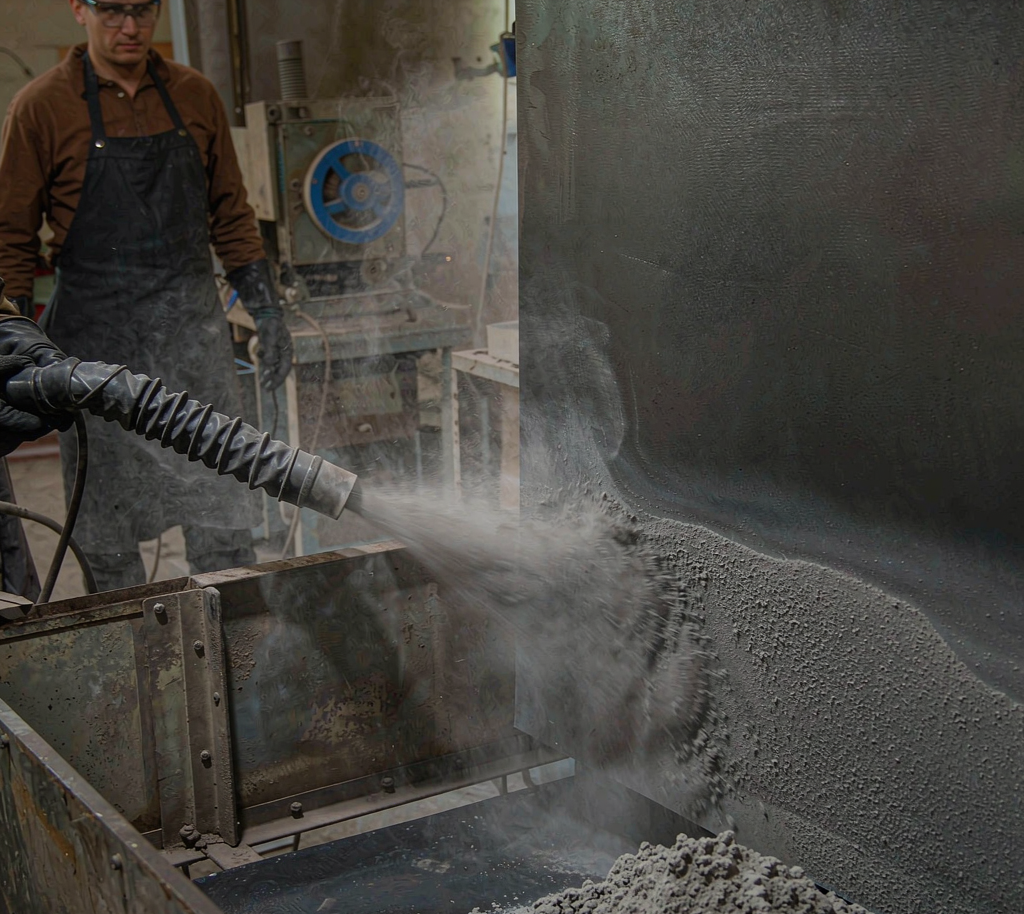
Sand blasting is the step that decides whether a coating lasts five years or fifteen. For carbon steel products leaving an export mill — pipe, plate, structural sections, fabrications — surface preparation is not a cosmetic operation. It is a controlled industrial process with written standards, measurable outputs and clear acceptance criteria. A coating applied over a poorly blasted surface fails early no matter how good the paint system is, which is why experienced buyers write blast specifications into the purchase order rather than leaving it to the workshop.
This guide walks through carbon steel sand blasting end to end: why it is done, which abrasives are used, what the SA surface preparation grades actually mean, how anchor profile is specified and measured, what equipment and parameters control the result, and which quality checks should appear on your inspection report. Whether you are buying blasted-and-primed pipe or preparing fabrications for hot dip galvanizing, the same fundamentals apply.
Why Carbon Steel Must Be Blasted Before Coating
As-rolled carbon steel carries mill scale, rust, oil and moisture on its surface. Mill scale looks like a protective skin but is cathodic to the steel beneath: if coating is applied over it, any crack lets moisture creep under the scale and corrosion proceeds rapidly under the film. Painting over rust or scale locks in the contamination and guarantees early failure, which is why every serious coating system — epoxy, polyurethane, zinc-rich primer, rubber lining — specifies a prepared surface first.
Blasting does three jobs at once. It removes scale, rust and old coatings mechanically. It leaves a rough anchor profile that gives the primer something to grip mechanically rather than just adhering chemically. And it exposes fresh, chemically active steel so conversion layers and zinc primers bond properly. Industry studies consistently show coating life doubling or tripling when surface preparation moves from hand cleaning to proper abrasive blasting to a defined standard.
Abrasives: Grit, Shot and What to Specify
Despite the name, real sand is rarely used today — free crystalline silica causes silicosis and is banned or restricted in most markets. Modern carbon steel blasting uses metallic abrasives (steel grit, steel shot) or mineral abrasives (garnet, aluminum oxide, coal slag). The choice changes the surface texture, the dust load and the cost per square metre, so it belongs in the specification, not the workshop’s discretion.
| Abrasive | Type | Typical profile | Best use |
|---|---|---|---|
| Steel grit G25-G40 | Metallic, angular | 50–100 μm | Recyclable blast rooms, mill work |
| Steel shot S280-S330 | Metallic, rounded | 40–70 μm | Shot blasting lines, peening effect |
| Garnet 30-60 mesh | Mineral, angular | 50–90 μm | Site and open blasting, low dust |
| Aluminum oxide | Mineral, sharp | 60–100 μm | Stainless or hard surfaces, small parts |
| Coal slag | Mineral, angular | 50–90 μm | One-pass economical blasting |
Steel grit cuts a sharp, angular profile that mechanical primers love and is endlessly recycled in enclosed blast rooms, which is why mills blasting pipe and plate use it. Garnet dominates outdoor and site work because it produces less dust and fewer embedment problems than slag. Rounded steel shot cleans and slightly peens the surface but leaves a softer profile, so many shot blasting lines mix shot and grit to combine cleaning speed with a toothy profile.
Surface Preparation Grades: What Sa 2.5 Really Means
The international yardstick is ISO 8501-1, which defines four blast cleaning grades. Sa 1 is a brush-off blast — loose rust and scale removed but staining remains. Sa 2 is a thorough blast where nearly all scale, rust and old coating is gone, leaving only light shadows. Sa 2.5, the commercial workhorse for carbon steel export products, requires the surface to be free of all visible oil, scale, rust and foreign matter except for very light traces visible at arm’s length. Sa 3 is a white metal blast: completely clean, uniform grey, used for critical linings and immersion service.
Practically, most purchase orders for carbon steel call for Sa 2.5 with a defined anchor profile, and Sa 3 appears only for tanks, submerged service and high-build linings. Two companion documents make the grade enforceable: ISO 8501-1 pictorial standards let the inspector compare the actual surface against reference photographs, and the specification should state whether the surface is judged before or after any prefabrication primer is applied.
Anchor Profile: The Number That Controls Adhesion
Anchor profile (surface roughness, or amplitude) is the peak-to-valley depth the abrasive leaves behind. It is specified in micrometres or mils and measured with replica tape, a stylus instrument or a digital profile gauge. The rule of thumb is that the profile should be roughly one third of the dry film thickness of the primer: a 75 μm zinc epoxy primer pairs with a 50–75 μm profile, while thin organic primers want a finer 40–50 μm surface.
Too smooth and the coating starves of anchor; too coarse and the peaks rust through thin films and the coating consumption rises because valleys steal material. Profile is also abrasive-dependent: coarser grit and higher pressure push the number up, fine mesh garnet or worn grit pull it down. A competent shop checks profile on a test plate at the start of each shift and adjusts abrasive mesh and air pressure to hold the specified window, and your inspector should see those records.
Equipment and Process Parameters That Matter
In the workshop the result is governed by a handful of parameters: air pressure (typically 6–7 bar at the nozzle for pressure blasting), nozzle size and standoff distance (300–500 mm), blast angle around 60–90 degrees, and abrasive cleanliness. Compressed air must be dry and oil-free — a blotter test (ASTM D4285) is the standard check, because oil mist from a failing compressor instantly contaminates a freshly blasted surface and quietly destroys adhesion.
Production shops use shot blasting machines for plate, pipe and sections, where turbine wheels throw abrasive at controlled velocity. Hand blasting handles fabrications, welds and tight corners that wheels cannot reach. Either way, the environmental window matters: blasting onto steel that is hotter than the dew point by less than 3°C risks flash rusting before primer reaches the surface, so specifications require relative humidity below about 85% and a steel temperature at least 3°C above dew point during blasting and priming.
Quality Checks and Inspection Records
A professional blast job is documented. The inspection package for blasted carbon steel should include a surface preparation grade check against ISO 8501-1 comparators, anchor profile readings (replica tape or gauge, typically three readings per 10 square metres), a dust removal check by tape test (ISO 8502-3), and soluble salt testing (ISO 8502-6 Bresle method) when the steel has been exposed to marine or industrial environments. Salt contamination under a coating is a classic hidden failure driver on pipes stored near the coast.
- Visual grade: Sa 2.5 against ISO 8501-1 pictorial standard, checked before any flash rust appears.
- Profile: 50–75 μm typical for export coatings, recorded with instrument and tape batch.
- Dust: quantity rating 1–2 max on ISO 8502-3 tape test.
- Salts: below 20 mg/m² NaCl equivalent for immersion-grade work.
- Time to primer: blast-to-prime within 4 hours or before visible flash rust, whichever comes first.
Common Defects and How to Reject Them
The recurring defects are: flash rust forming before primer (cause: humidity control or delayed priming); oil contamination (failing air dryer — insist on blotter test records); abrasive embedment, where grit particles press into soft steel and later bloom through the coating (cause: worn abrasive or excessive pressure at sharp angles); and over-blasting, where the profile exceeds spec and the peaks protrude. Each has a straightforward remedy, but only if your inspector catches it before the primer hides the surface.
Reject criteria belong in the purchase order, not in a phone call after shipment. State the grade, the profile window, the dust and salt limits, and the documentation you expect. Reputable blast-and-prime shops will accept these clauses without discussion; resistance to putting them in writing is itself a useful supplier screening signal.
Cost Drivers in Blasted and Primed Supply
Blasting cost scales with steel surface area, abrasive choice and the grade required. Moving from Sa 2 to Sa 2.5 adds roughly 20–40% to blast labour; Sa 3 can double it. Garnet runs more per tonne than coal slag but wastes less and keeps profile control easier, often winning on total cost. Shops that recycle steel grit in enclosed systems achieve the lowest per-square-metre cost on repetitive mill products, which is why mill-blasted pipe and plate are cheaper than field-blasted fabrications.
For buyers, the economic argument is straightforward: blasting and shop priming a carbon steel product before export typically adds 3–8% to the product cost, while repainting a failed coating in service costs multiples of that once access, containment and downtime are counted. Specifying preparation correctly at the factory is one of the cheapest reliability decisions available in the procurement chain.
Frequently Asked Questions
Is sand blasting the same as shot blasting?
Both are abrasive blasting, but sand blasting uses an air-fed mineral abrasive (garnet, slag — no longer actual sand) while shot blasting throws metallic shot or grit with turbine wheels in an enclosed machine. Shot blasting suits high-volume plate, pipe and sections; air blasting suits fabrications, welds and on-site work.
What blast grade do I need before hot dip galvanizing?
Galvanizing lines usually require at least Sa 2 with a moderate profile so the zinc can metallurgically bond. Many galvanizers prefer to control blasting themselves and will re-blast if your surface fails their check, so confirm the interface responsibility before ordering pre-blasted steel.
How long after blasting must primer be applied?
Same shift is the safe rule — typically within four hours and always before visible flash rust. In humid coastal climates the window shrinks; dehumidification or hold-and-prime in a controlled bay keeps the surface honest.
How is anchor profile measured on site?
The common methods are press-off replica tape read on a micrometer, digital stylus gauges, and comparator pads for quick visual checks. Replica tape remains the standard for acceptance because it leaves a physical record the inspector can archive with the report.
Blasting Requirements by Product Family
Different carbon steel products carry different blasting economics and acceptance culture. Line pipe and OCTG are blasted to Sa 2.5 or Sa 3 on automated lines and coated within minutes — the whole surface chain is engineered as one continuous process. Structural sections and plate for export usually receive Sa 2.5 plus a shop primer of 15–25 μm, which protects the steel through fabrication and is over-coated in the final system. Fabrications and weldments are blasted after assembly because the welding and grinding of assembly destroys any pre-blast on the parent steel.
The practical implication for buyers is sequencing. If your supplier blasts plate and then welds on attachments, the weld zones must be re-blasted or power-tool cleaned to St 3 before the final coating — an interface that should be named in the specification. The most common coating failure on fabricated carbon steel is not the blast itself but the untreated weld zone sitting inside an otherwise perfect blasted surface.
Environmental Controls: Dust, Recycling and Waste Handling
Blasting is a heavy industrial process with real environmental obligations. Enclosed blast rooms recover metallic abrasive through cyclone separators and air-wash cleaning, so the working mix stays sharp and the dust load stays low; spent abrasive and paint debris leave as controlled waste. Open-air blasting needs containment — tarpaulin enclosures, vacuum recovery or sponge-media systems — and the regulatory bar keeps rising in most jurisdictions, especially near urban areas and ports.
Buyers should care because environmental handling is a cost line that flows into the product price, and because a supplier who cuts corners on containment is probably cutting corners on the surface quality too. A mill tour that shows functioning dust collection, abrasive separation and waste manifests tells you more about the shop’s discipline than any certificate in the tender file.
Blasting Before Thermal Spray and Special Linings
Some systems push the requirements beyond ordinary paint. Thermal spray aluminum and zinc demand a sharp, clean angular profile — typically 75–100 μm with angular grit only, applied within a very short window because the sprayed metal bonds mechanically to freshly exposed steel. Rubber and glass-flake linings demand Sa 3 white metal with a specified profile and near-zero soluble salts, because any contamination under an impermeable lining becomes a blister site.
These jobs also tighten the personnel requirement: blast operators and inspectors typically need documented qualification (for example NACE/AMPP coating inspector certification) and the specification usually names the qualification level. When your enquiry includes such systems, say so explicitly — it changes the supplier’s process plan, the inspection scope and the price, and discovering it after the order only produces change orders.
Scheduling Blasting into the Production Plan
Blasting sits at a workflow pinch point: after fabrication and before coating, with a short time window before flash rust. Factories that treat it as a standalone job create queues — steel sits blasted for days, rusts, and must be re-blasted. Well-run plants integrate blasting and priming into the same shift, schedule fabrication output to match booth capacity, and hold blasted steel in dehumidified bays when the weather window closes.
For export orders the schedule matters doubly: primed steel still needs a final recoat window after arrival, and site conditions at the destination may not cooperate. Discuss the coating timeline — shop primer now, final system when, and who owns the surface between — at order stage. That conversation, more than the blast grade itself, is what keeps a coating system on schedule and on spec.
Blasting and Primer: One Specification, Not Two
The strongest specification pairs the blast with the primer that follows, because profile, cleanliness and time window are all primer-dependent. A zinc-rich epoxy wants a 50–75 μm angular profile applied to Sa 2.5 within hours; a thin wash primer tolerates a finer surface but forgives less contamination; a hot-dip galvanizing line wants its own preparation entirely. Writing “blast and prime” as two unlinked line items is how the gaps between them — the eight hours steel sat in humid air, the unverified blotter test — become the failure surface.
Ask suppliers to quote the preparation chain as a system: blast grade, profile window, salt and dust limits, primer type and thickness, and the maximum blast-to-prime interval. Suppliers who answer with numbers rather than reassurances have the process control the specification assumes; the rest are asking you to fund their learning curve with your coating warranty.
One last buying tip: blast acceptance is cheapest to negotiate when it is defined by number, not adjective. Specifications written as “Sa 2.5, 50–75 μm profile, dust rating 2 max, salts under 20 mg/m², primer within 4 hours” cost nothing extra to satisfy for a competent shop and are unambiguous in a dispute. The same sentence written as “properly blasted and primed” costs the buyer every disagreement it later produces. Precision in the preparation clause is the least expensive quality insurance available anywhere in the coating chain.
Get a Quote from Huaxia-Steel
Factory-direct carbon steel with MTC, third-party inspection, and fast export shipping. Tell us your grade, size, quantity and destination — we return a firm quote within 24 hours.