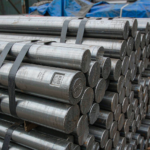
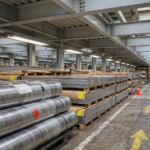
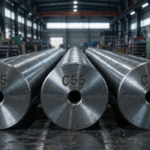
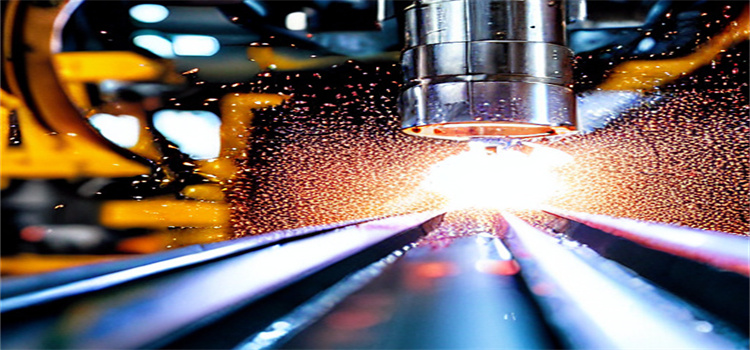
EN8 vs C45 steel is one of the most common comparison requests we receive from buyers sourcing medium carbon steel bars. Both grades sit in the same family: unalloyed medium carbon steels with roughly 0.40–0.50 % carbon, supplied as bright bar, hot rolled bar, forging stock and plate. They are close equivalents, but they are not identical — EN8 is a British Standard grade (BS 970) defined mainly by chemistry ranges, while C45 is a European grade (EN 10083-2) with tighter hardenability and heat treatment expectations. This guide compares EN8 and C45 across composition, mechanical properties, heat treatment, weldability, machinability and applications, so you can specify the right grade for your project and avoid costly mis-substitution.
What Is EN8 Steel?
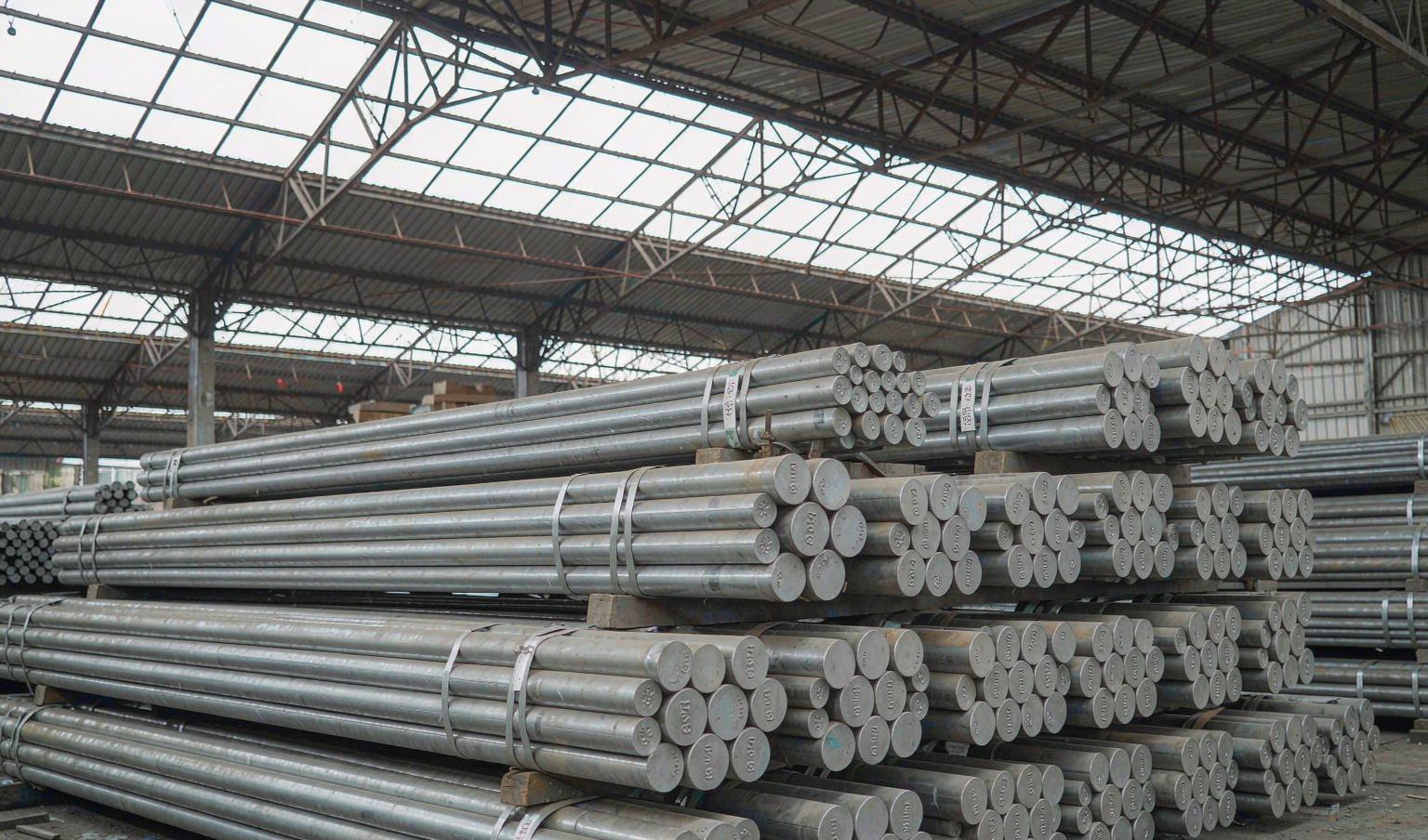
EN8 is a medium carbon steel defined in British Standard BS 970 (and its successor EN 10083 references) with a typical carbon content of 0.36–0.44 % and manganese of 0.60–1.00 %. It is also known by the older designation 070M40. EN8 is supplied in condition S (as supplied), R (cold drawn), or after normalizing, hardening and tempering. The grade is popular in the UK, Middle East, India and Southeast Asia because it offers a good balance of strength, wear resistance and machinability at moderate cost. Typical delivery forms include bright round bar from 6 mm to 300 mm, hot rolled bar, square and hex bar, and plate.
One practical point that causes confusion: EN8 is specified by analysis ranges, not by guaranteed hardenability. Two heats of EN8 can behave differently after quenching because hardenability is not part of the standard. For parts where consistent heat treatment response matters, buyers should ask for restricted analysis or move up to C45 with end-quench (Jominy) data.
What Is C45 Steel?
C45 is the European equivalent under EN 10083-2, with the material number 1.0503. Its carbon range is 0.42–0.50 % and manganese 0.50–0.80 %. C45 is the successor to the old DIN C45 designation and is widely used across Europe, China (as GB 45# steel) and Japan (as JIS S45C). C45 is normally supplied quenched and tempered, normalized, or as turned and polished bright bar. Compared with EN8, C45 carries a slightly higher carbon ceiling, which gives it a few points more achievable surface hardness after hardening — typically 55–60 HRC on the skin for small sections versus 52–58 HRC for EN8.
EN8 vs C45: Chemical Composition Compared
The table below shows typical specification ranges. The overlap is substantial; the real difference is that C45 carbon can reach 0.50 % while EN8 tops out at 0.44 %, and EN8 allows more manganese, which improves strength but slightly reduces machinability at the top of the range.
| Element | EN8 (070M40) % | C45 (1.0503) % |
|---|---|---|
| Carbon (C) | 0.36 – 0.44 | 0.42 – 0.50 |
| Silicon (Si) | 0.10 – 0.40 | ≤ 0.40 |
| Manganese (Mn) | 0.60 – 1.00 | 0.50 – 0.80 |
| Phosphorus (P) max | 0.050 | 0.030 |
| Sulfur (S) max | 0.050 | 0.030 |
| Chromium (Cr) max | — | 0.40 |
| Molybdenum (Mo) max | — | 0.10 |
| Nickel (Ni) max | — | 0.40 |
Note the tighter P and S limits in C45 (0.030 % max each versus 0.050 % for EN8). In practice most mills deliver EN8 well below 0.040 % S, but if you are buying to a standard and care about internal cleanliness — for shafts with high fatigue loading, for example — C45 has the edge on paper. Where enhanced machinability is the priority, EN8M (212M44, a free-cutting variant with 0.20–0.30 % sulfur) is a better choice than either grade.
Mechanical Properties: EN8 vs C45
Because both grades respond to the same heat treatments, achieved properties depend heavily on section size and condition. The table below compares typical properties in the most common delivery conditions. Always verify against the mill certificate for the actual heat, since values vary with diameter — a 150 mm bar will not reach the tensile strength of a 25 mm bar in the same condition.
| Property | EN8 (normalized / Q+T, small sections) | C45 (Q+T to EN 10083-2) |
|---|---|---|
| Tensile strength Rm | 500 – 700 MPa (up to 850 MPa Q+T) | 620 – 800 MPa (Q+T) |
| Yield strength ReH | ≥ 280 – 450 MPa | ≥ 490 MPa (≤ 16 mm, Q+T) |
| Elongation A5 | 16 – 22 % | 14 – 17 % |
| Hardness (as supplied) | 150 – 200 HB | 170 – 210 HB |
| Surface hardness after hardening | 52 – 58 HRC | 55 – 60 HRC |
Heat Treatment Response
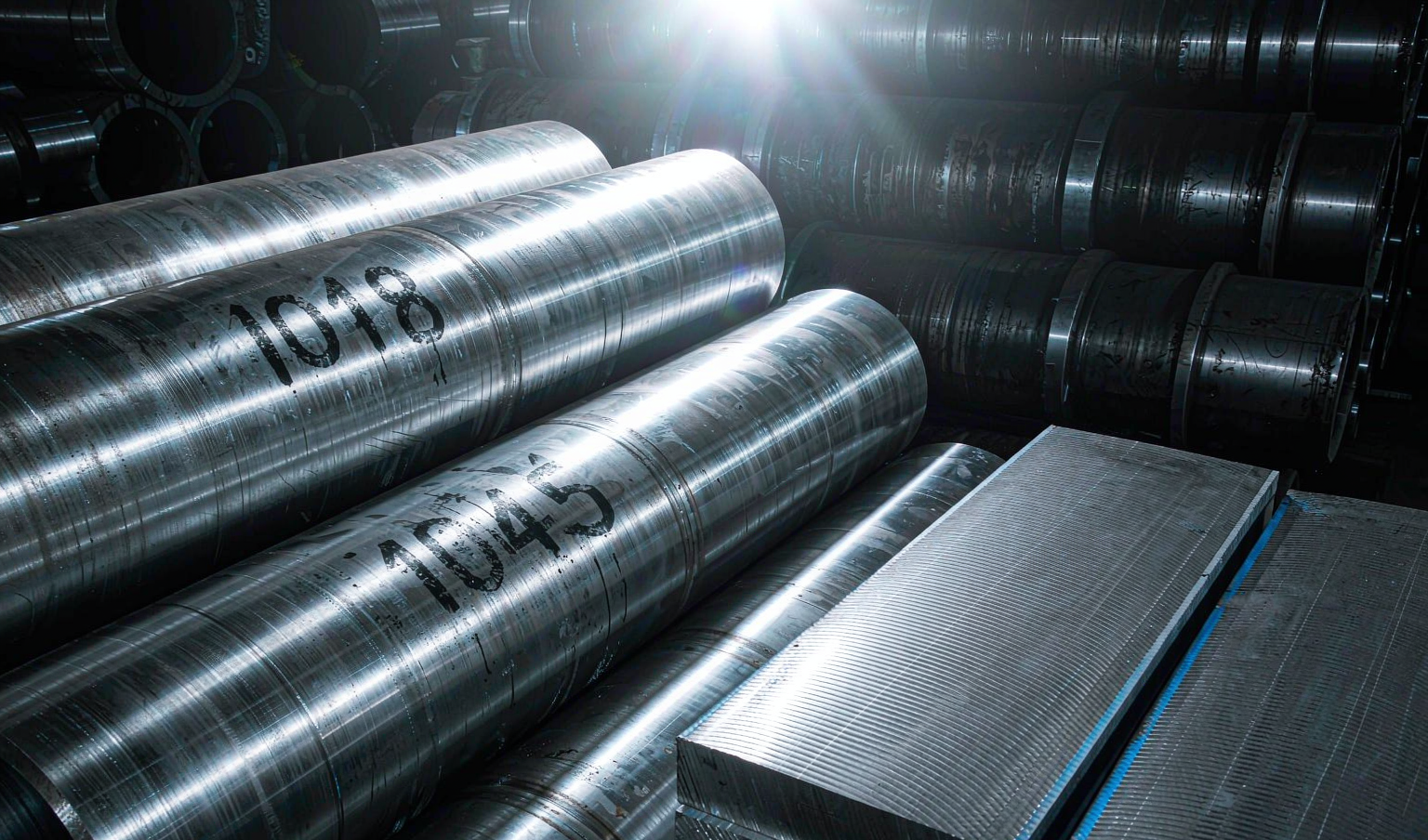
Both grades use the same family of treatments, with austenitizing in the 820–860 °C range and tempering between 400 and 680 °C depending on the required strength/toughness balance.
- Normalizing: 830–870 °C, air cool. Refines grain after hot working; typical hardness 170–200 HB.
- Hardening: EN8 quenches in water (20–40 mm sections), C45 in water or oil for thin sections. Oil quenching reduces cracking risk but needs higher hardenability, so water is standard for both grades in larger sections.
- Tempering: 550–680 °C for structural use (strength with toughness), 150–300 °C only where maximum surface hardness is needed with reduced toughness.
- Induction hardening: both grades respond well; case depth 1–3 mm with surface hardness up to 58 HRC (EN8) or 60 HRC (C45).
- Carburizing: not typical — both grades are too high in carbon. Use low carbon grades such as 1018, S20C or C15 if a hard case over a soft core is required.
The practical difference: because EN8 hardenability is not guaranteed, larger sections (above ~60 mm) may develop a weaker core after quenching. C45 bars from a mill with Jominy data give more predictable core properties. If your part is a heavily loaded shaft above 80 mm diameter, consider stepping up to 4140 or 42CrMo4 rather than pushing either grade beyond its natural limits.
Weldability: EN8 vs C45
Both grades have a carbon equivalent around 0.50–0.60 %, which places them in the “difficult to weld, but weldable with precautions” category. Neither is suitable for unrepaired structural welding without preheat. Recommended practice for both: preheat to 200–300 °C, low-hydrogen electrodes (E7018 or equivalent), slow cooling under insulation, and post-weld stress relief at 550–650 °C. With these precautions, repair welding and hardfacing are routine. Without them, heat affected zone cracking is a real risk, especially on sections above 20 mm.
If a fabricator plans substantial welding, an honest supplier will steer them to a lower carbon grade (1045 down to 1018 or S235JR) and reserve EN8/C45 for machined, not welded, components. This is one of the most common application errors we see in RFQs.
Machinability Comparison
On a scale where AISI 1112 free-cutting steel equals 100 %, EN8 rates roughly 55–60 % and C45 about 55 %. The difference is negligible in practice; both machine comfortably at surface speeds of 100–160 m/min with carbide tooling. The one caveat is EN8 at the top of its manganese range (up to 1.00 %), which can accelerate tool wear on continuous cutting operations. For high-volume turned parts, specify EN8M / 212M44 or S45C with restricted sulfur for 10–20 % longer tool life.
Applications: When to Choose Each Grade
Because the grades are near-equivalents, the choice often comes down to the design standard of the machine or the region where the end customer operates.
- Choose EN8: replacement parts for UK-designed machinery, general engineering shafts, studs, axles under moderate load, hydraulics components, crankshafts for small engines, and any part specified to BS 970 drawings.
- Choose C45: components specified to EN 10083-2 or DIN drawings, parts requiring guaranteed heat treatment response with mill-supplied hardenability data, gears and pinions for medium duty, spindles, keys, guide rods and machine tool components.
- Either grade: general purpose shafts, bolts and studs above grade 8.8 requirements, connecting rods, sprocket hubs, die holders and tooling plates.
- Neither grade: welded structural frames (use S355JR or A36), high-fatigue crank applications above 100 mm (use 4140), carburized gear teeth (use 8620 or 1018), and corrosion-exposed parts without coating (use stainless or galvanized alternatives).
Equivalent Grades Table
EN8 and C45 belong to the same international family of medium carbon steels. The table below shows accepted equivalents — remember these are “near equivalents” and exact requirements (impact testing, hardenability, grain size) can differ, so confirm against the governing standard before substituting.
| UK (BS 970) | EU (EN 10083-2) | China (GB/T 699) | Japan (JIS G4051) | USA (AISI/SAE) | Germany (W-Nr) |
|---|---|---|---|---|---|
| EN8 / 070M40 | C45 | 45# | S45C | 1045 | 1.0503 |
| EN9 / 070M55 | C55 | 55# | S55C | 1055 | 1.0535 |
| EN8M / 212M44 | 45S20 | Y45Mn | SUM43 | 1146 | 1.0727 |
Price and Sourcing Considerations
In the Chinese and Indian export markets, EN8 and C45 bars typically price within 2–3 % of each other, with the spread driven by surcharge-free chemistry and mill capacity rather than the grade designation. Bright drawn bar carries a 15–30 % premium over hot rolled black bar. Three sourcing points matter more than the grade choice itself:
- Certificates: insist on EN 10204 3.1 mill certificates showing actual heat analysis and mechanical tests. Counterfeit certificates remain common in low-end supply chains.
- Condition of supply: state clearly whether you want normalized, Q+T, cold drawn or as-rolled material — “EN8” alone does not define properties.
- Section size limits: confirm the achievable mechanical properties at your bar diameter, not the small-section catalogue values.
Dimensional Range and Delivery Forms
Both grades are available in the same physical forms, and stock levels in the export market are broadly similar. Typical ex-mill ranges:
- Bright round bar: 6–100 mm cold drawn to h9/h10; 20–300 mm peeled or turned to h11; ground bar to h7 on request.
- Hot rolled bar: 16–400 mm to EN 10060 tolerances; black surface, straightness ≤ 2 mm/m.
- Square and hex bar: 10–120 mm bright; 20–200 mm hot rolled.
- Flat bar: 20 × 5 mm up to 200 × 60 mm for key stock and tooling.
- Plate: 10–200 mm for die holders and base plates (C45 more common in plate).
- Forging stock: blooms and ingots for open-die forging up to 20 tonnes.
Standard mill lengths run 3–6 m, with 5.8 m cut lengths fitting standard containers. Bright bar carries a 15–30 % premium over hot rolled black bar, and ground bar roughly doubles the bright price — so specify the loosest surface condition your machining plan allows.
Inspection and Certification Checklist
Before releasing any EN8 or C45 order to production, run this checklist against the mill certificate package:
- Chemistry within the specified range, including P and S limits, on the actual heat — not a typical sheet.
- Tensile and hardness results reported for the delivery condition you ordered, not for a different condition.
- Heat number on the certificate matches the stencil or tag on the physical bars.
- Section size noted on the certificate; confirm the mechanical results apply at your diameter.
- Certificate type: EN 10204 3.1 (mill-issued, traceable) at minimum; 3.2 for critical parts.
- Surface: visually check a sample of bars for seams, laps and die marks on bright stock.
- Straightness and ovality measured against the agreed tolerance class before machining long shafts.
Worked Example: Choosing Between the Grades for a 60 mm Shaft
Consider a 60 mm transmission shaft specified at 700 MPa tensile with induction hardened bearing journals. In EN8, the supplier would quench in water from 840 °C and temper at 580 °C; without guaranteed hardenability, the core of a 60 mm section may reach only 550–600 MPa, leaving the design dependent on the induction-hardened surface for fatigue life — workable, but process-sensitive. In C45 with Jominy data from the mill, the heat treatment shop can select the quench knowing the actual hardenability band, and the same shaft certifies predictably at 700–750 MPa core tensile. For a single replacement part, either grade works; for a production run of 2,000 pieces, the C45 premium of 2–3 % buys manufacturing consistency that typically repays itself in reduced heat treatment rejects.
Frequently Asked Questions
Are EN8 and C45 interchangeable?
In most applications yes — they are near equivalents with overlapping chemistry and similar heat treated properties. Substitution is acceptable when the drawing does not invoke a specific standard. For parts designed to EN 10083-2 with guaranteed hardenability or Jominy requirements, use C45; for BS 970 drawings, use EN8.
Which grade is stronger, EN8 or C45?
Heat treated C45 in small sections typically reaches slightly higher tensile strength (620–800 MPa) than standard Q+T EN8 (500–700 MPa), mainly because its carbon can run up to 0.50 %. The difference disappears in larger sections or in normalized condition.
Can EN8 or C45 be case hardened?
Yes, by induction or flame hardening — both grades achieve surface hardness of 55–60 HRC with case depths of 1–3 mm. They are not suitable for carburizing because their base carbon is already high; carburizing needs a low carbon core steel such as 1018 or 8620.
What is the difference between EN8 and EN8M?
EN8M (212M44) is the free-cutting version with sulfur raised to 0.20–0.30 %, improving machinability by roughly 20–30 %. Its mechanical properties are slightly lower and it is not recommended for welded or fatigue-critical parts.
Which preheat is needed when welding EN8 or C45?
Preheat to 200–300 °C for sections above 20 mm (100–150 °C for thinner sections), use low-hydrogen E7018 electrodes, cool slowly, and stress relieve at 550–650 °C where the design allows. Skip the preheat and the heat affected zone can crack hours after welding — the classic hydrogen-induced delay cracking failure.
Key Takeaways
- EN8 and C45 are near equivalents: same treatment routes, overlapping chemistry, within 2–3 % on price.
- C45 guarantees hardenability framework and tighter P/S (0.030 %); EN8 tops out at 0.44 % C and allows 1.00 % Mn.
- Match the grade to the drawing standard: BS 970 → EN8; EN 10083-2 → C45.
- Both need 200–300 °C preheat and low-hydrogen consumables to weld safely.
- Above 60–80 mm section size with heavy loads, step up to 4140/42CrMo4 instead of over-stretching either grade.
- Always order the delivery condition explicitly — “EN8” alone does not define mechanical properties.
Source EN8 and C45 From Huaxia-Steel
Huaxia-Steel supplies EN8, C45, S45C and 1045 carbon steel round bars, bright bars and forgings from 6 mm to 400 mm diameter, with hot rolled, cold drawn, turned and polished, quenched and tempered conditions. Every order ships with EN 10204 3.1 mill certificates, and we can arrange third-party inspection by SGS or TÜV before shipment. Send us your drawing and quantity for a factory-direct quotation within 24 hours.