How to Verify Carbon Steel ISO Certification Authenticity in Procurement
How to Verify Carbon Steel ISO Certification Authenticity in Procurement
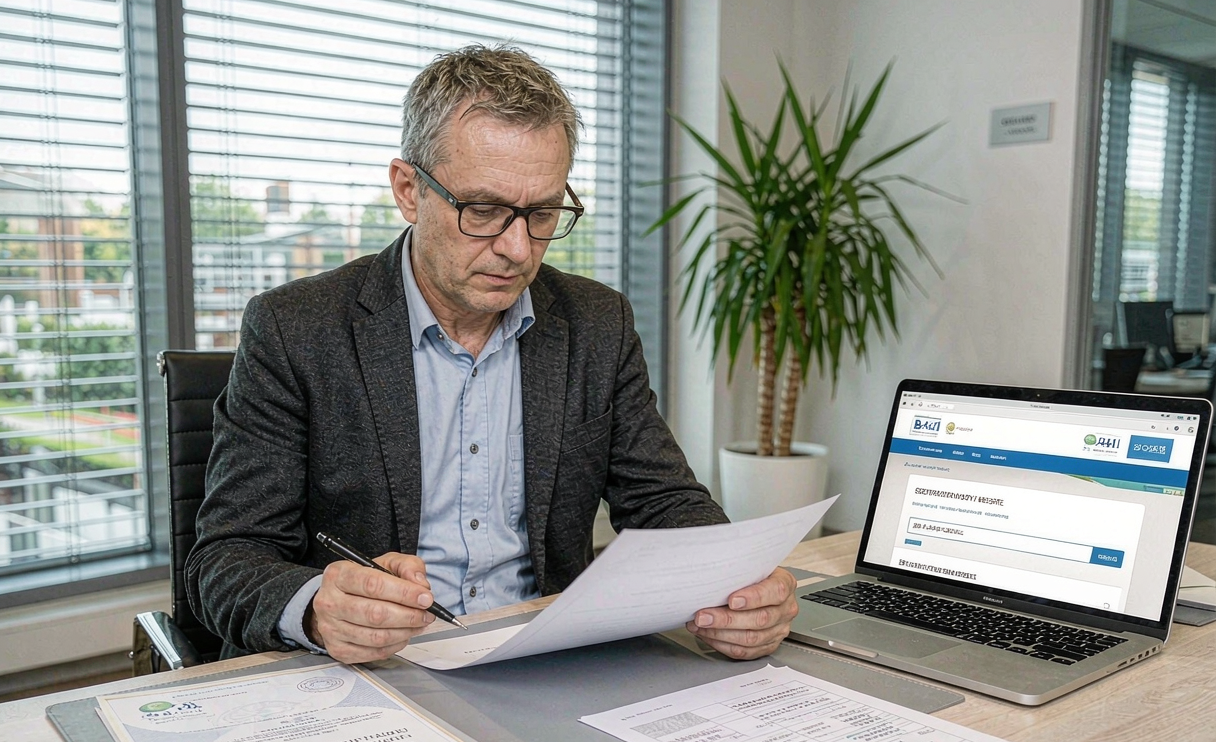
Every week, procurement teams receive mill test certificates, ISO 9001 registration letters and third-party inspection reports from carbon steel suppliers around the world. A disturbing percentage of these documents are forged, backdated, cloned from unrelated mills or issued by fake certification bodies. For buyers placing orders worth $50,000–$500,000 with unfamiliar Chinese mills, certificate fraud is not a theoretical risk — it is a daily reality that can lead to off-spec chemistry, missing heat treatment or substandard dimensional tolerances.
This article presents a systematic, seven-step verification process that our quality-assurance team uses to validate ISO certification authenticity before releasing purchase-order deposits. The methods cover online database checks, direct contact with certification bodies, forensic document review and on-site mill audits. By applying these steps to every new supplier, you can eliminate 90 % of certificate fraud before it reaches your incoming-inspection bay.
1. Understand the ISO Certification Landscape for Steel Mills
Carbon steel mills typically hold three categories of ISO certification that buyers encounter on RFQ responses:
ISO 9001:2015 — Quality management system (QMS) covering order review, production planning, process control, inspection and corrective action
ISO 14001:2015 — Environmental management system (EMS) covering emissions control, waste management and energy efficiency
ISO 45001:2018 — Occupational health and safety management system (OHSMS) covering worker protection in hot rolling, heat treatment and pickling operations
In addition, mills serving automotive, aerospace or nuclear markets may hold IATF 16949, AS9100 or ISO 19443. For boiler and pressure-vessel tube applications, ASME “S”, “U” or “PP” stamps are more important than ISO 9001. Buyers should not confuse ISO 9001 (a management-system certificate) with product-specific standards such as ASTM, JIS or EN — ISO 9001 does not guarantee that a mill can produce A516 Gr.70 plate to tolerance; it only guarantees that the mill has a documented process for trying to do so.
2. Step-by-Step Verification Process
Step 1: Identify the Certification Body (CB)
Every legitimate ISO certificate displays the logo and name of the certification body that conducted the audit. Common CBs in the Chinese steel industry include SGS, Bureau Veritas (BV), TÜV Rheinland, DNV, BSI, Intertek, LRQA and domestic bodies such as CQC and CCIC. The certificate should also display the CB’s accreditation mark — UKAS (UK), ANAB (USA), DAkkS (Germany), CNAS (China) or equivalent.
Red flag: Certificates issued by unknown bodies with names like “International Quality Certification Centre” or “Global Standards Bureau” are almost always fake. Also watch for certificates where the CB logo is a low-resolution image pasted onto a Word document.
Step 2: Verify the CB Accreditation Online
Accreditation bodies maintain public databases of certified CBs. Use the following portals:
UKAS: www.ukas.com (search for the CB name)
ANAB: www.anab.org (ANSI National Accreditation Board directory)
CNAS: www.cnas.org.cn (Chinese National Accreditation Service)
IAF: www.iaf.nu (International Accreditation Forum member search)
If the CB name on the certificate does not appear in the accreditation body’s database, the certificate is invalid regardless of how professional it looks. Note that some fraudulent suppliers create fake CB websites with names similar to real CBs (e.g., “SGS-China-Quality.com” instead of the real SGS domain). Always navigate to the CB’s official website independently — do not click links provided by the supplier.
Step 3: Cross-Check the Certificate in the CB Database
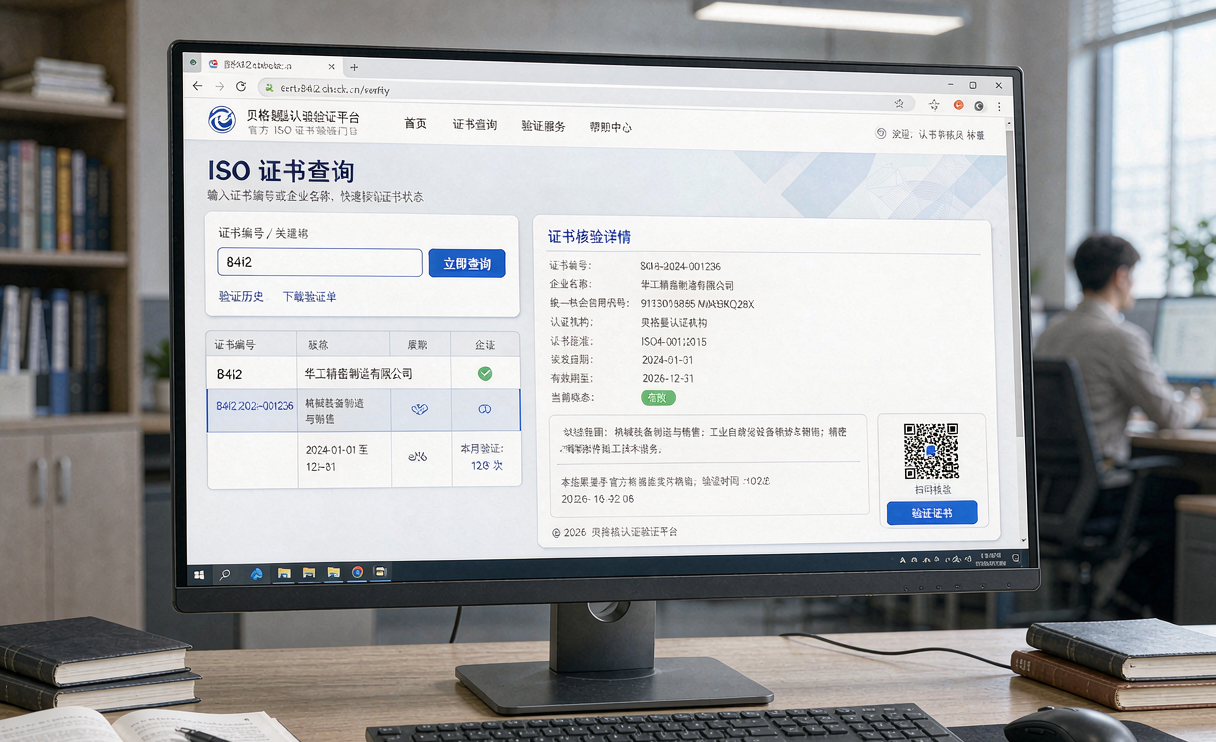
Major CBs provide online certificate verification portals where you can search by company name, certificate number or scope of certification:
SGS: sgs.com/en/certified-clients-and-products
Bureau Veritas: bvcert.bureauveritas.com
TÜV Rheinland: certipedia.com
DNV: dnv.com/services/certification-validation/
Enter the exact company name and certificate number from the supplier’s document. The CB database should return the scope of certification, issue date, expiry date and audit history. If the certificate number does not exist, or if the scope does not include “manufacture of carbon steel plate/pipe/bar,” the certificate is either forged or issued to a different company and photocopied.
Step 4: Validate Certificate Dates and Scope
Legitimate ISO 9001 certificates are valid for three years from the issue date, with annual surveillance audits in years two and three. Check the following date fields:
Issue date: Must be in the past and consistent with the accreditation body’s audit schedule
Expiry date: Must be exactly three years after issue (some CBs allow a 3-month grace period)
Surveillance audit dates: Year 2 and Year 3 surveillance dates should be present for certificates older than 12 months
Recertification date: If the certificate is near expiry, confirm that a recertification audit has been scheduled
Red flag: Certificates with issue dates on weekends or public holidays are suspicious because CB auditors do not work on those days. Certificates with exactly three-year spans but no surveillance audit records indicate a cloned template.
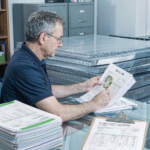
Step 5: Forensic Document Review
Even if the certificate number exists in the CB database, the PDF sent by the supplier may be a doctored version of a genuine certificate. Perform these forensic checks:
Font consistency: All text on a genuine certificate uses the CB’s standard font family. Mixed fonts (e.g., Arial for the company name but Times New Roman for the scope) indicate editing.
Logo resolution: Genuine CB logos are vector graphics that remain sharp at 400 % zoom. Pixelated or compressed logos are pasted images.
Metadata: Open the PDF properties (File > Properties) and check the “Created” and “Modified” dates. If the PDF was created three days ago but the certificate issue date is two years ago, the document was recently fabricated.
Digital signature: Some CBs apply Adobe digital signatures to PDF certificates. An invalid or missing signature is a warning sign.
Page background: Genuine certificates often have micro-printed security backgrounds or holographic patterns that photocopiers cannot reproduce.
Step 6: Contact the CB Directly
The most reliable verification method is to email or telephone the CB’s local office. Provide the certificate number and ask for confirmation of the certified company’s legal name, registered address and certification scope. Most CBs respond within 24–48 hours.
When contacting the CB, use the contact details from the CB’s official website — not from the supplier’s email signature. If the supplier provides a “verification contact” at the CB, treat it with extreme scepticism; fraudulent suppliers have been known to operate fake CB email accounts that confirm forged certificates.
Step 7: On-Site Mill Audit or Third-Party Inspection
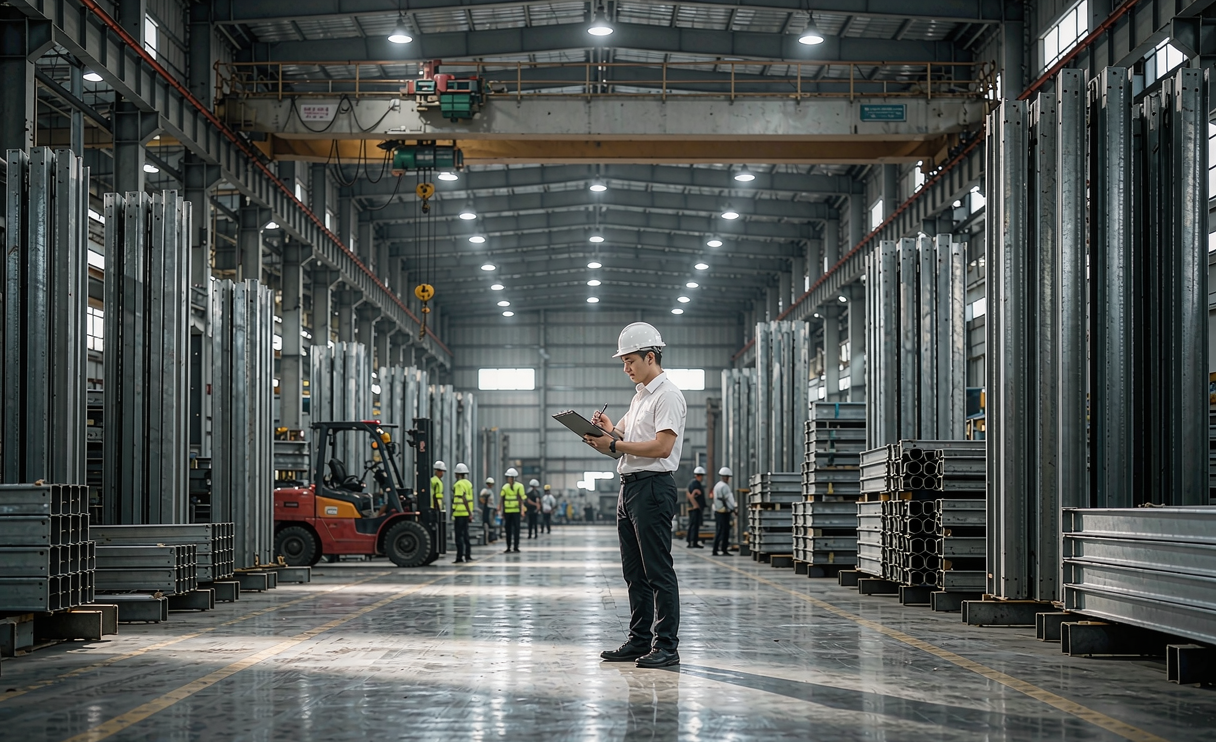
For first-time orders above $100,000 or for critical applications such as pressure equipment and offshore structures, nothing replaces an on-site audit. Our procurement team conducts initial supplier audits using a 42-point checklist that covers:
Physical presence of production equipment (melting, rolling, heat treatment, NDE)
Quality manual and procedure documents matching the ISO 9001 scope
Calibration records for testing machines, micrometers and temperature controllers
Competency records for welders, NDE technicians and laboratory chemists
Traceability system from raw material receipt to finished product shipment
Housekeeping, safety equipment and environmental controls
If travel to China is not feasible, appoint SGS, BV or TÜV to conduct a supplier qualification audit (SQA) on your behalf. The cost is $1,500–$3,500 depending on mill location and audit duration, but it is negligible compared with the cost of receiving 200 tonnes of off-spec steel.
3. Common Fraud Patterns and How to Spot Them
Fraud Pattern
Detection Method
Risk Level
Cloned certificate from a real mill
Check company name and address in CB database
High
Expired certificate with altered dates
Verify issue/expiry dates against CB records
High
Certificate from a fake CB
Check CB accreditation on IAF/UKAS/CNAS portals
Critical
Scope mismatch (trading company posing as mill)
Confirm scope includes “manufacture” not just “sales”
High
Certificate for a different legal entity
Match legal name on certificate with sales contract
Medium
Back-dated surveillance audit reports
Check audit dates against CB auditor schedules
Medium
4. FAQ
Q1: Is ISO 9001 enough to guarantee carbon steel quality?
No. ISO 9001 certifies that the mill has a documented quality management system, not that every heat of steel meets ASTM or JIS specifications. Always complement ISO 9001 verification with product-specific testing, third-party inspection and incoming-material qualification.
Q2: How long does certificate verification take?
Online database checks take 5–15 minutes per certificate. CB email confirmation takes 24–48 hours. A full on-site audit requires 2–3 days on the ground plus travel. For routine orders from established suppliers, online verification is sufficient. For new suppliers, combine online checks with third-party SQA.
Q3: Can a trading company hold ISO 9001 for steel products?
Yes, but the scope will read “sales and distribution of steel products” rather than “manufacture.” If your purchase order requires direct mill responsibility for chemistry and mechanical properties, verify that the contractual counterparty is the mill itself, not a trading company with ISO 9001 for logistics.
Q4: What if the CB database is offline or in Chinese only?
Contact the CB’s international customer service by email. SGS, BV and TÜV all have English-speaking verification teams. Provide the certificate number, company name and your company details. They will confirm validity within one business day.
Q5: Should I verify ISO 14001 and ISO 45001 as well?
For suppliers to European or North American markets, yes. Large OEMs and EPC contractors increasingly require all three ISO standards as a condition of vendor-list approval. The verification process is identical to ISO 9001 — use the same CB database portals and check accreditation marks.
Conclusion
Certificate fraud in the carbon steel supply chain is preventable through disciplined verification. The seven-step process outlined in this article — identify the CB, verify accreditation, check the CB database, validate dates, perform forensic review, contact the CB directly and conduct on-site audits — eliminates the vast majority of forged documents before they can influence a purchase decision.
At Huaxia-Steel, every mill in our approved vendor list has passed this verification protocol. We maintain direct relationships with SGS, Bureau Veritas and TÜV Rheinland to confirm certificate validity in real time. When you source carbon steel through Huaxia-Steel, you receive not only competitive pricing but also the assurance that every mill certificate has been authenticated by our quality-assurance team. Contact us today for a supplier-verification report or a quotation for your next carbon steel procurement project.
If you require further information about our metal sheet products or architectural projects, please don’t hesitate to leave your contact details and message here.
Our team of experts will respond within 24 hours to continue the discussion and provide you with any additional information you requires.