S355JR vs S355J2 Carbon Steel Comparison for Buyers
When European buyers source structural carbon steel from China, two grades appear on almost every quote: S355JR and S355J2. Both belong to the EN 10025-2 standard and share a similar tensile strength window, yet a single letter changes impact performance, weldability, and sometimes the final price. Choosing the wrong grade can lead to failed inspection, cold-cracking on site, or unnecessary cost.
This guide compares S355JR vs S355J2 carbon steel across chemistry, mechanical properties, impact testing, weldability, pricing, and procurement practice. By the end, you will know which grade to specify in your RFQ and what certificates to request from your Chinese supplier.
1. What Do S355JR and S355J2 Mean?
The “S” stands for structural steel. “355” is the minimum yield strength in MPa. The suffix tells the buyer about the material’s toughness at low temperature:
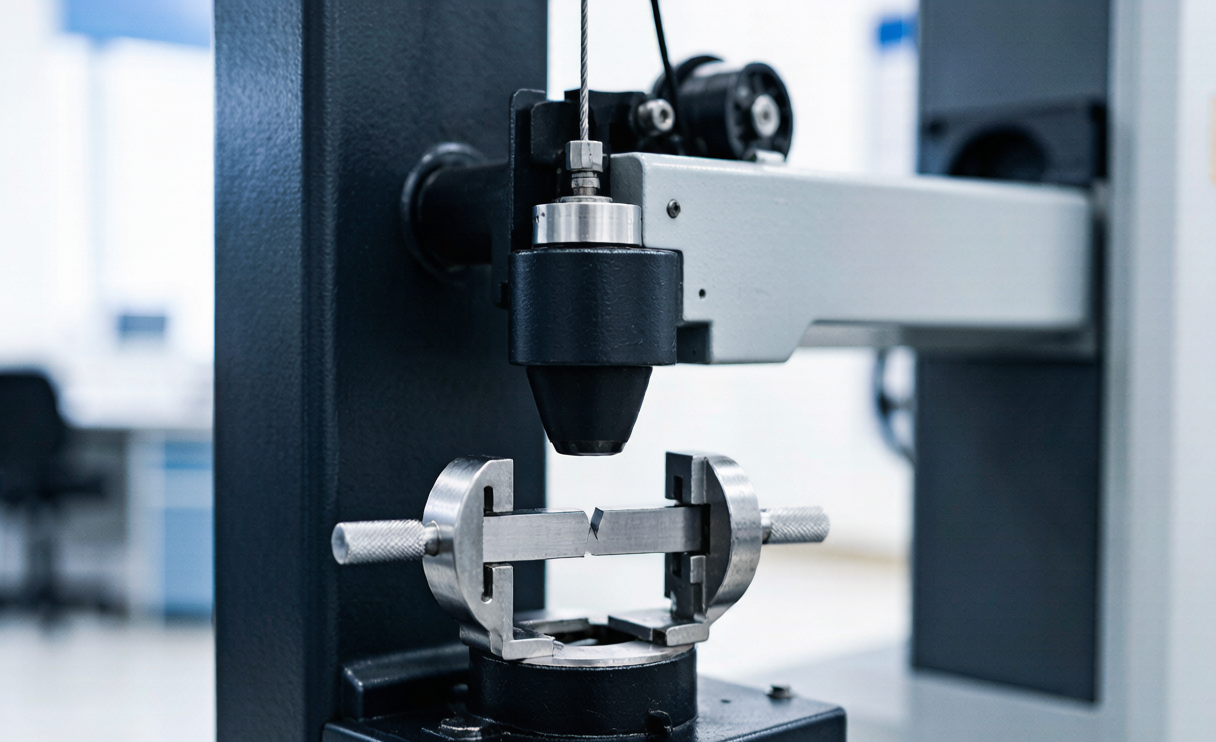
- S355JR – Longitudinal impact test at +20°C; minimum 27 J.
- S355J2 – Longitudinal impact test at -20°C; minimum 27 J.
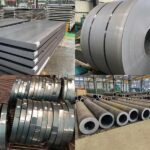
Both grades are covered by EN 10025-2:2004 (and its 2019 update). They are supplied as plates, flats, bars, sections, and structural hollow sections. Chinese mills typically produce them as hot-rolled plates and sections for export.
2. Chemical Composition Comparison
| Element | S355JR max % | S355J2 max % |
|---|---|---|
| C | 0.24 | 0.20 |
| Si | 0.55 | 0.55 |
| Mn | 1.60 | 1.60 |
| P | 0.035 | 0.025 |
| S | 0.035 | 0.025 |
| Cu | 0.55 | 0.55 |
S355J2 has tighter limits on carbon, phosphorus, and sulfur. The lower sulfur improves through-thickness ductility, while the lower carbon reduces the hardenability of the heat-affected zone during welding.
3. Mechanical and Impact Properties
| Property | S355JR | S355J2 |
|---|---|---|
| Yield strength (t ≤ 16 mm) | ≥ 355 MPa | ≥ 355 MPa |
| Tensile strength | 470–630 MPa | 470–630 MPa |
| Impact test temperature | +20°C | -20°C |
| Min. Charpy V impact energy | 27 J | 27 J |
At room temperature the two grades behave almost identically. The difference only becomes critical when the steel is used in sub-zero climates, cryogenic equipment, or dynamically loaded outdoor structures.
4. Weldability and Fabrication Notes
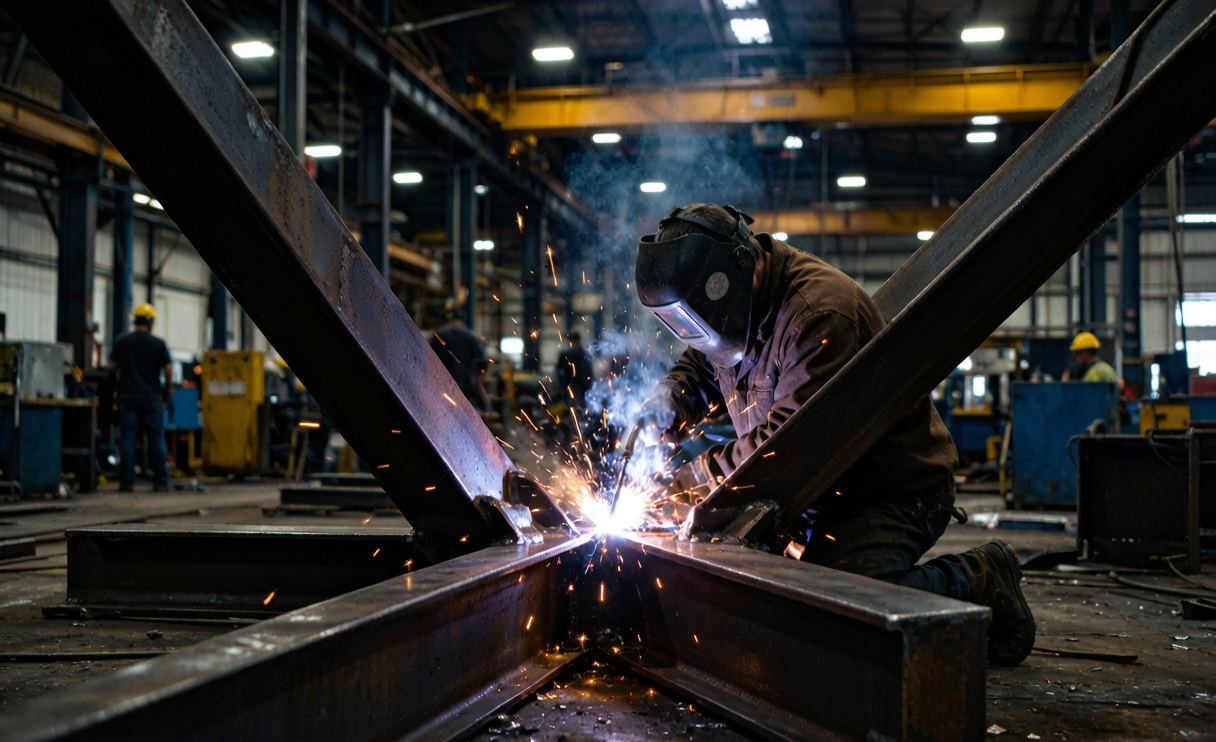
S355J2’s lower carbon equivalent generally makes it easier to weld without preheat. For thick S355JR sections, especially above 40 mm, many fabricators apply 75–150°C preheat to avoid hydrogen-induced cracking. Both grades can be flame-cut, machined, and cold-formed within standard limits.
5. Price Difference and Lead Time
On Chinese export markets, S355J2 is usually USD 30–60 per tonne more expensive than S355JR for the same dimensions. The premium comes from tighter chemical control, additional impact testing, and slightly lower mill yield. Lead time is similar unless the buyer requests third-party witness testing.
6. When to Choose Each Grade
- Pick S355JR for indoor structures, temperate climates, general fabrication, and cost-sensitive projects.
- Pick S355J2 for offshore, bridges, Arctic or Alpine construction, crane booms, and pressure equipment subject to impact loads.
7. What to Request in Your RFQ
To avoid receiving a mixed or substituted grade, specify:
- EN 10025-2 grade and impact class (JR or J2).
- Heat number and mill test certificate (MTC) to EN 10204 3.1 or 3.2.
- Charpy impact test report if J2 is required.
- Dimensional tolerance class and surface condition.
FAQ
Is S355J2 stronger than S355JR?
Yield and tensile strengths are essentially the same. S355J2 is tougher at low temperature, not stronger.
Can S355JR be used instead of S355J2?
Only if the design code allows room-temperature impact values. For sub-zero or high-risk applications, substitution is unsafe.
Do Chinese mills produce both grades?
Yes. Major mills such as Baosteel, Shougang, and Rizhao supply S355JR and S355J2 plates and sections for export.
Which grade is easier to weld?
S355J2 generally requires less preheat due to its lower carbon equivalent, especially in thicker sections.
Conclusion
The S355JR vs S355J2 carbon steel choice is mainly a temperature and toughness decision. S355JR covers most general structural work at a lower price, while S355J2 gives confidence in cold climates and impact-loaded structures. Always align the grade with your design code and request a complete MTC when importing from China.
Need a quote for S355JR or S355J2 plates, bars, or sections? Contact Huaxia-Steel today for mill-direct pricing, EN 10204 certification, and reliable export packing.
Related Images