S45C vs C45 Carbon Steel: Key Differences Explained
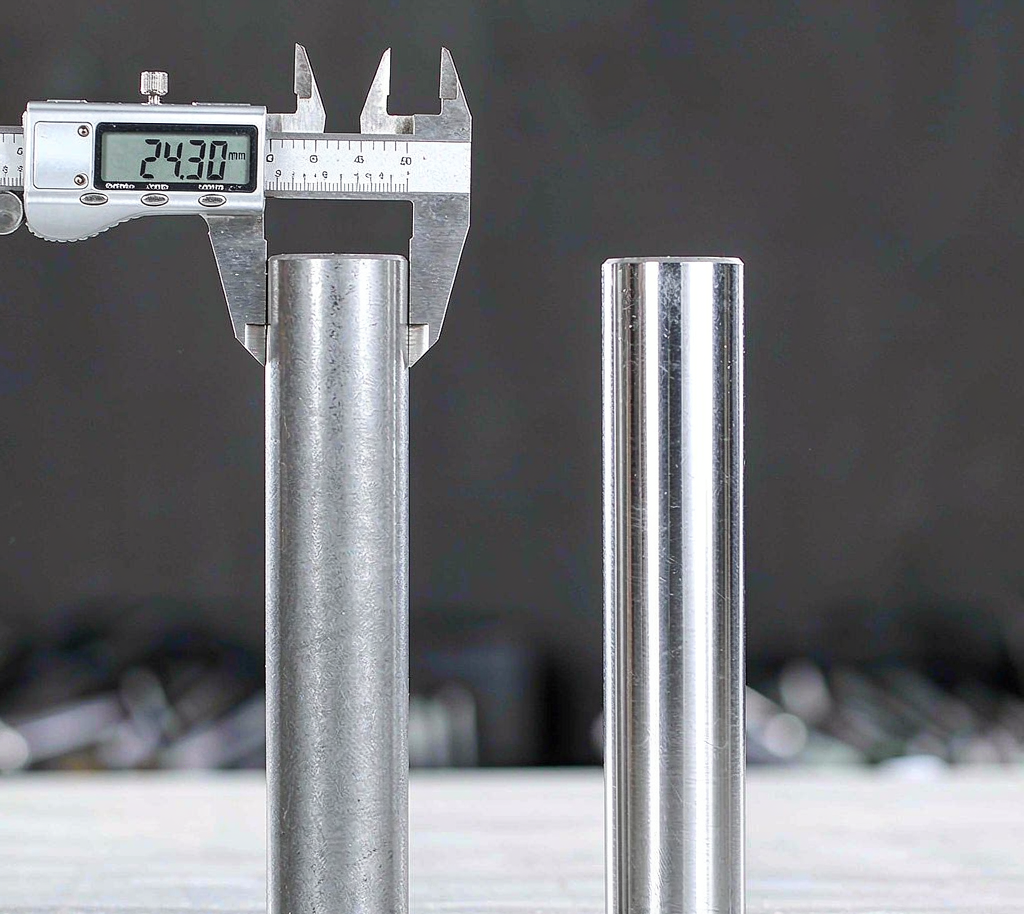
Buyers who compare S45C vs C45 carbon steel are almost always holding two drawings, two mill certificates and one question: are these the same material, or does the difference matter? On paper the two grades look like twins. Both are medium-carbon steels sitting near the 0.45% carbon mark, both are supplied as hot rolled or cold drawn bar, both harden by quenching and both machine reasonably well. Yet S45C is written to the Japanese JIS G4051 standard while C45 belongs to the European EN 10083 family, and that difference in origin carries real consequences for chemistry limits, testing, supply availability and price.
This guide compares S45C and C45 on chemistry, mechanical properties, hardenability, machinability, weldability, surface condition, price and cross-references. It is written for procurement engineers, machine-shop planners and importers who need to decide whether a substitution is safe and how to write the purchase order so that what arrives matches what the drawing intends. All figures are typical values from the respective standards and common mill practice; always confirm the actual heat analysis on the EN 10204 3.1 certificate before releasing a heat to production.
Are S45C and C45 the Same Steel?
Functionally, very nearly yes. Both are medium-carbon, non-alloyed steels designed for parts that need moderate strength, good machinability and a reasonable response to quench-and-temper or induction hardening — shafts, gears, axles, studs, pins, spindles, keys and general machinery components. In the 0.42–0.50% carbon window both deliver a similar balance of strength and toughness after tempering, and both are treated as interchangeable for a large share of general engineering work.
Formally, no. Each standard controls its own chemistry bands, its own sulfur and phosphorus ceilings, its own testing frequency and its own designation system. JIS G4051 uses the “S” prefix for machine structural carbon steels (S45C meaning structural, 0.45% carbon), while EN 10083-2 uses C45 for the base quality and C45E for a controlled-sulfur variant. A certificate that says S45C is not literally a certificate that says C45, and a specification that names one cannot simply be signed off against the other without a documented equivalence review.
Chemistry: JIS vs EN Composition Bands
The carbon windows overlap almost completely, which is why the grades behave so similarly. S45C runs 0.42–0.48% carbon; C45 runs 0.42–0.50%. The meaningful differences show up in manganese, silicon and the impurity ceilings. S45C allows manganese up to 0.90% and silicon 0.15–0.35%, with phosphorus and sulfur each capped at 0.030%. The base C45 grade allows a wider sulfur ceiling (0.045%) and a slightly lower manganese top end, while C45E tightens sulfur to 0.035% to guarantee better and more consistent machinability.
| Element | JIS S45C | EN C45 | EN C45E |
|---|---|---|---|
| Carbon (C) | 0.42–0.48% | 0.42–0.50% | 0.42–0.50% |
| Manganese (Mn) | 0.60–0.90% | 0.50–0.80% | 0.50–0.80% |
| Silicon (Si) | 0.15–0.35% | ≤0.40% | ≤0.40% |
| Phosphorus (P) | ≤0.030% | ≤0.045% | ≤0.035% |
| Sulfur (S) | ≤0.035% | ≤0.045% | ≤0.035% |
| Governing standard | JIS G4051 | EN 10083-2 | EN 10083-2 |
In practice the tighter S45C phosphorus and sulfur limits are a quiet quality advantage: cleaner steel means fewer inclusions, more predictable fatigue life and less scatter in impact values. Buyers who switch from C45 to S45C for a fatigue-loaded shaft often notice a small improvement in consistency without changing anything else in the process. Those who switch the other way, from S45C to base C45, should check whether the higher sulfur ceiling introduces a machinability change on their line.
Mechanical Properties and Hardness After Heat Treatment
In the as-supplied (annealed or normalized) condition the two grades are close enough to be measured in the same band. Normalized S45C typically shows a tensile strength around 570–700 MPa with hardness 167–229 HB; normalized C45 lands in a similar window, roughly 600–750 MPa depending on section and mill practice. Cold drawn bar raises yield and hardness slightly and improves dimensional tolerance on both grades.
After quenching and tempering the resemblance holds. Both grades, properly austenitized around 820–860°C and quenched in water or polymer, reach a fully martensitic structure in thin sections and can be tempered across a wide range from about 25 HRC (tough) to 55 HRC (hard, low toughness). As with any medium-carbon steel, the trade-off between hardness and toughness is set by the tempering temperature, not by a meaningful difference between S45C and C45.
| Condition | S45C (typical) | C45 (typical) |
|---|---|---|
| Normalized tensile | 570–700 MPa | 600–750 MPa |
| Normalized hardness | 167–229 HB | 170–230 HB |
| As-quenched hardness (thin section) | 55–60 HRC | 55–60 HRC |
| Tempered 550°C | ~28–32 HRC | ~28–32 HRC |
| Elongation (normalized) | ~16–20% | ~16–18% |
Hardenability and Response to Quenching
Hardenability — how deep a section hardens under a given quench — is governed by carbon and manganese, and here S45C has a small edge because its manganese top end (0.90%) is higher than base C45 (0.80%). In thin sections both harden fully. In heavier sections, S45C will hold a deeper hardened case for the same quench severity, which is one reason Japanese machine builders standardize on S45C for shafts up to moderate diameter.
Neither grade is a deep-hardening steel. For sections beyond roughly 25–30 mm, both need a severe quench (water or fast polymer) and both still risk soft cores and cracking. If a part needs through hardening in heavy section, the correct answer is not “more S45C” but an alloy grade such as SCM440 or 42CrMo4, where chromium and molybdenum do the hardenability work that plain 0.45% carbon cannot.
Machinability and the Case for C45E
Medium-carbon steel at 0.45% is a reasonable machining material but not a free-cutting one. Both grades produce longer chips and higher cutting forces than low-carbon or resulfurized steels, with machinability ratings commonly around 55–60% of the B1112 reference. Tool life and surface finish depend heavily on the heat treatment condition: spheroidize-annealed bar machines far better than normalized bar.
This is where C45E earns its place. The controlled sulfur in C45E (0.020–0.035%) forms manganese sulfide inclusions that act as chip breakers, improving machinability without dropping below the strength the grade promises. If a European drawing calls for C45 and the shop runs high-volume turning, quoting C45E rather than base C45 usually pays for itself in cycle time. S45C sits between the two: cleaner than base C45, but without a deliberate resulfurization step.
Weldability and Preheating Requirements
At 0.45% carbon, neither grade is a comfortable welding steel. The carbon equivalent lands around 0.60–0.70 depending on manganese and section, which puts both firmly in the “preheat and low-hydrogen” category. Welding S45C or C45 without control risks cold cracking in the heat-affected zone, especially in thick sections or in cold workshops.
The practical rules are the same for both grades: preheat to roughly 150–250°C for sections over about 20 mm, use low-hydrogen electrodes (E7018 or better) or a matching filler, keep interpass temperature controlled, and consider a post-weld temper for highly restrained joints. Where a design needs extensive welding, the correct engineering move is to change the base material to a low-carbon or micro-alloyed grade, not to fight the carbon content of a 0.45% steel.
Surface Finish, Tolerance and Supply Forms
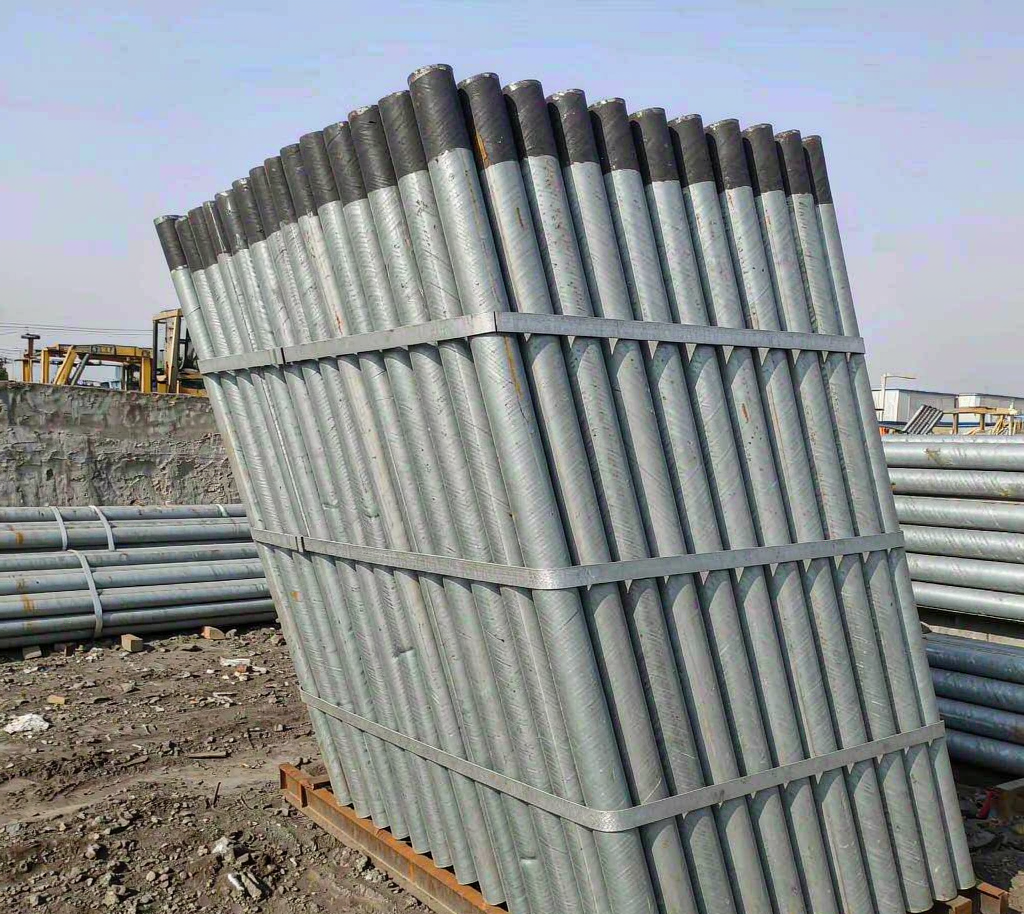
Both grades are available as hot rolled round bar, cold drawn (bright) bar, square bar, hexagon bar and, less commonly, plate. Cold drawing delivers the tightest tolerances and best surface finish on either grade, typically to h9–h11 for diameter depending on the mill and size. S45C bright bar is extremely common in Asian supply; C45 bright bar is standard in Europe but less universal in export markets.
Buyers should state the supply form explicitly, because “S45C” alone does not fix tolerance or surface condition. A purchase order that reads “S45C cold drawn bright bar, tolerance h9, straightness 1 mm/m” removes the ambiguity that otherwise leads to a delivery of black hot rolled stock when the drawing expected bright bar. The same discipline applies to C45: name the condition, the tolerance class and the certificate type.
Price and Availability: Asian vs European Supply
S45C dominates Asian supply. Chinese, Japanese, Korean and Taiwanese mills produce it in enormous volumes, so stock sizes from 6 mm to 200 mm ship quickly and non-standard sizes are drawn to order in two to three weeks. C45 is the European standard and is widely available inside the EU, but as an export item it is less commonly stocked in Asia than S45C, so a C45 enquiry placed with an Asian mill often comes back as an S45C offer with an equivalence note.
On price, hot rolled S45C and base C45 track each other closely, usually within a few percent for the same size and quantity. Cold drawn S45C is the lower-cost bright-bar option in Asia. C45E carries a modest premium over base C45 because of the controlled sulfur practice. Freight, MOQ and certificate requirements usually move the landed cost more than the grade itself, so the smart comparison is cost per finished part, not cost per kilogram.
Cross-Reference: S45C, C45, CK45 and 1045
| Grade | Standard | Carbon | Note |
|---|---|---|---|
| S45C | JIS G4051 | 0.42–0.48% | Asian workhorse, tight P/S |
| C45 | EN 10083-2 | 0.42–0.50% | European base quality |
| C45E | EN 10083-2 | 0.42–0.50% | Controlled sulfur, better machining |
| CK45 | DIN 17200 | 0.42–0.50% | Legacy German designation, controlled S |
| 1045 | AISI/SAE | 0.43–0.50% | US equivalent, Mn 0.60–0.90% |
None of these is a paper-for-paper equivalent. Each standard differs in test frequency, sulfur control and tolerance rules. Treat the table as an engineering cross-reference that supports a documented substitution, not as license to ship one grade against a drawing that names another. For code-governed or safety-critical parts, the standard named on the drawing must appear on the certificate.
When to Choose Which Grade
| Situation | Recommended | Reason |
|---|---|---|
| Sourcing from Asian mills at volume | S45C | Deep stock, fast lead time, tight P/S |
| European drawing, EU delivery | C45 / C45E | Matches EU specification and supply chain |
| High-volume turning, EU drawing | C45E | Controlled sulfur improves machinability |
| Fatigue-loaded shaft, thin section | S45C | Higher Mn gives slightly better hardenability |
| Generic replacement for 1045 | Either | Both bracket the AISI 1045 chemistry |
Procurement Checklist Before You Order
- State the grade and its standard explicitly (S45C per JIS G4051, or C45E per EN 10083-2).
- Name the supply form: hot rolled, cold drawn bright bar, or peeled and ground.
- Specify tolerance class and straightness, not just nominal diameter.
- Define the heat treatment condition on delivery (annealed, normalized, or quenched and tempered).
- Require an EN 10204 3.1 mill certificate with actual heat chemistry and mechanical results.
- For export, confirm packing, rust prevention and ISPM 15 dunnage.
Handling Substitution Requests
When a supplier offers S45C in place of C45 or the reverse, review three things: the chemistry against the drawing’s standard, the heat treatment route already validated, and the machining process. For a general shaft or pin that is turned and induction hardened, the substitution is almost always safe. For a part where fatigue life, case depth or machining cycle time have been validated against a specific grade, treat the change as an engineering review and record it on a deviation note with the actual heat analysis attached.
Documenting the decision protects you in a later quality dispute and prevents spec drift, where successive lots quietly move away from the original design intent. Factories that manage grade substitutions this way avoid the two classic traps: silent substitutions discovered at incoming inspection, and cumulative drift that only surfaces when a part finally fails.
Frequently Asked Questions
Is S45C equivalent to C45?
Yes for most general engineering purposes: both are 0.45% medium-carbon steels with closely matching mechanical properties. They differ in standard, chemistry limits and sulfur control, so a formal substitution should be documented rather than assumed.
Which is better for machining?
C45E machines best because of its controlled sulfur, which improves chip breaking. Base C45 and S45C are similar, with S45C slightly cleaner but not deliberately resulfurized. Spheroidize annealing improves both.
Can S45C be welded?
Only with care. At 0.45% carbon the grade needs preheating around 150–250°C for thicker sections, low-hydrogen electrodes and controlled cooling. It is not a steel for extensive welding; choose a lower-carbon grade where heavy welding is required.
What hardness can S45C reach?
Thin sections reach 55–60 HRC as quenched. Practical service hardness after tempering is usually 25–35 HRC, chosen to balance wear resistance against toughness. Through hardening in heavy sections requires an alloy grade.
Heat Treatment Practice: Quenching Media and Tempering Windows
Once the grade question is settled, the heat treatment route decides the part’s final properties, and here S45C and C45 behave almost identically. Both are austenitized around 820–860°C, held long enough to dissolve carbon, then quenched. Water quenching gives the highest as-quenched hardness but the greatest cracking risk in complex shapes; fast polymer quenchants offer a compromise between hardness and distortion; oil is too slow for full hardening at 0.45% carbon in anything but thin sections.
Tempering immediately after quenching is not optional. A 0.45% carbon steel left in the as-quenched state is hard but brittle, and delayed tempering risks quench cracks. Typical tempering windows run from about 200°C for maximum hardness (around 50–55 HRC but low toughness) up to 600°C for a tough, machinable structure around 25–30 HRC. The choice is a design decision, not a workshop preference, and it should be written on the drawing as a hardness range at a stated tempering temperature.
For induction hardening, both grades respond well because the surface is heated and quenched locally, leaving the core tough. A common specification is a surface hardness of 50–58 HRC to a defined case depth, with the core left in the normalized or quenched-and-tempered condition. S45C’s slightly higher manganese gives it a small edge in achieving uniform case depth on larger diameters, which is one reason it dominates induction-hardened shaft supply in Asia.
Incoming Inspection: Defects to Catch Before Machining
Because S45C and C45 are so often treated as interchangeable, incoming inspection should focus on what the certificate does not tell you: surface condition, straightness, decarburization and internal soundness. Decarburization — a carbon-depleted skin from rolling or heat treatment — is the quiet killer of hardened parts, because the surface will not reach the specified hardness no matter how good the core chemistry is.
Check the certificate against the physical bar, then verify dimensions at several points along the length. Look for seams, laps and roll marks that will propagate in machining, and confirm straightness against the order. For critical parts, a hardness check at the surface and a small machining cut to confirm case integrity are cheap insurance against a rejected heat discovered after the part is finished.
- Confirm grade, standard and heat number on the certificate match the PO and the bundle marking.
- Check diameter and ovality at three points; confirm tolerance class, not just nominal size.
- Inspect for decarburization on bars that will be hardened after machining.
- Look for seams, laps, cracks and heavy scale that would affect machining or fatigue life.
- Verify straightness and cut length; reject bars outside the agreed tolerance.
Should I specify S45C or C45 for an induction-hardened shaft?
Either will work. Choose S45C if you source from Asia and want deep stock and fast lead time; choose C45 or C45E if the drawing is European or the supply chain is in the EU. Write the surface hardness, case depth and core condition on the drawing so the heat treater has a target, and confirm the base grade on the mill certificate before hardening.
Get a Quote from Huaxia-Steel
Factory-direct carbon steel with MTC, third-party inspection, and fast export shipping. Tell us your grade, size, quantity and destination — we return a firm quote within 24 hours.