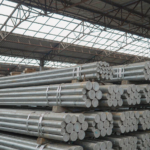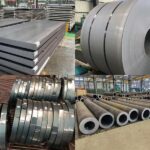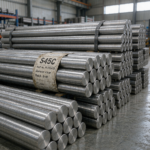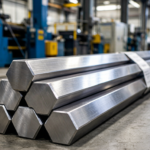
C45 carbon steel round bar is the European medium carbon workhorse for machined components — shafts, gears, axles, spindles and general engineering parts that need more strength than mild steel without the cost of alloy grades. Specified under EN 10083-2 (material number 1.0503, successor to DIN C45, equivalent to JIS S45C and AISI 1045), C45 delivers a balanced combination of machinability, heat treatment response and cost that keeps it in the top tier of bar exports worldwide. Huaxia-Steel supplies C45 round bar factory direct from 8 mm to 400 mm diameter in hot rolled, cold drawn, turned, normalized and quenched-and-tempered conditions, with EN 10204 3.1 certification.
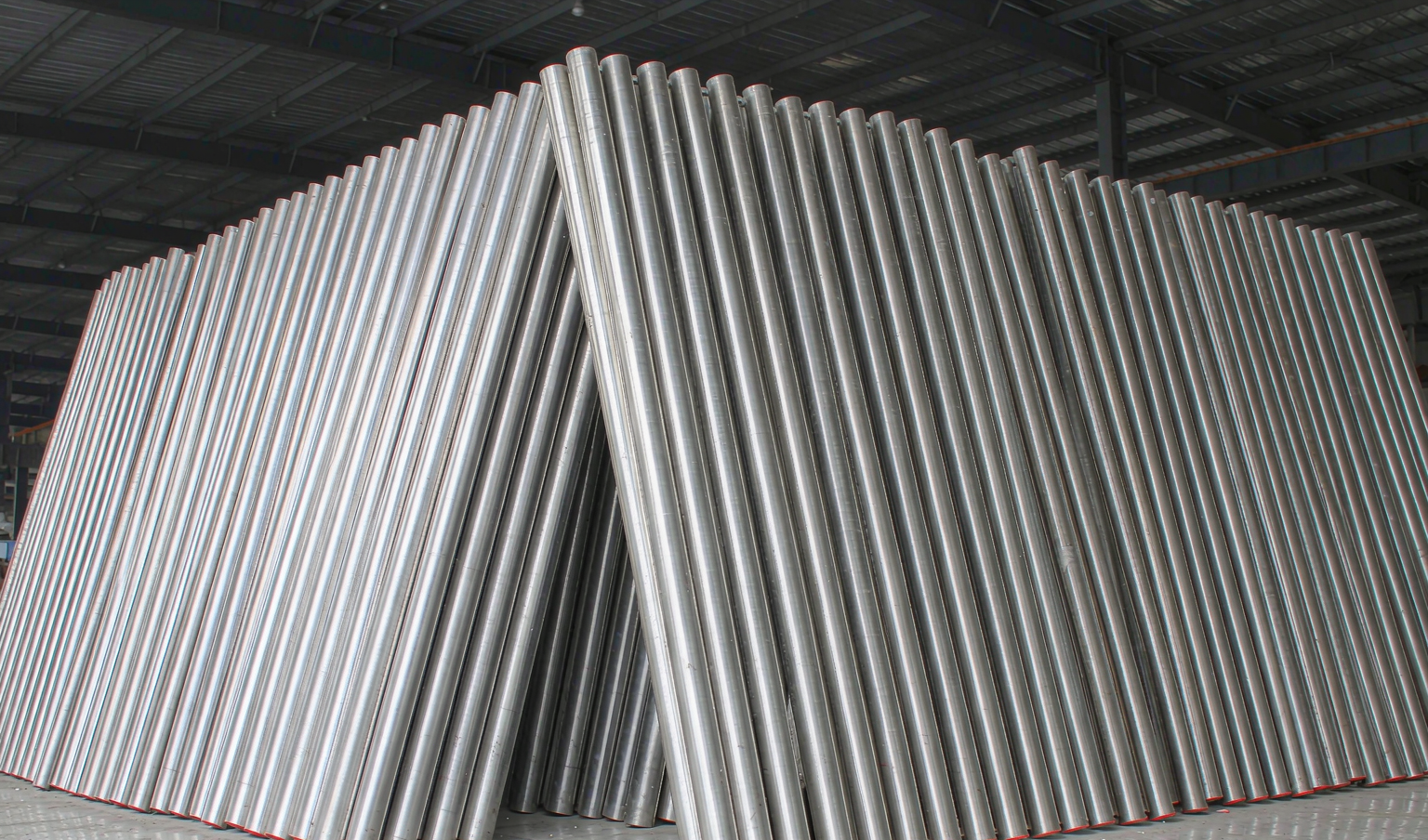
Product Overview
C45 is an unalloyed medium carbon steel with 0.42–0.50 % carbon and 0.50–0.80 % manganese. In the as-rolled condition it machines well and provides moderate strength; after quench and temper it reaches 620–800 MPa tensile with good toughness; after induction hardening its surface reaches 55–60 HRC for wear applications. The grade is the default choice wherever a drawing specifies “medium carbon steel” and the region follows European standards — machine building, automotive components, agricultural equipment, fasteners above 8.8 property class and hydraulic cylinders. For buyers working to British drawings, BS 970 070M40 (EN8) is the near-equivalent; to Japanese drawings, JIS S45C; to American drawings, AISI 1045 — the chemistries overlap closely enough that one heat can serve all four designations.
Specifications: Dimensions, Weight and Tolerances
| Parameter | Range |
|---|---|
| Diameter (hot rolled) | 16 – 400 mm |
| Diameter (cold drawn bright) | 8 – 100 mm |
| Diameter (peeled/turned and polished) | 40 – 300 mm |
| Length | 3,000 – 12,000 mm (5,800/6,000 mm standard) |
| Theoretical weight | kg/m = 0.00617 × d² (d in mm) |
| Hot rolled tolerance | ±0.5 % of diameter (min ±0.4 mm) |
| Cold drawn tolerance | h9 – h11 per EN 10278 |
| Turned & polished | h9 / h10, straightness ≤ 0.5 mm/m |
| Straightness (hot rolled) | ≤ 2 mm/m (straightened) |
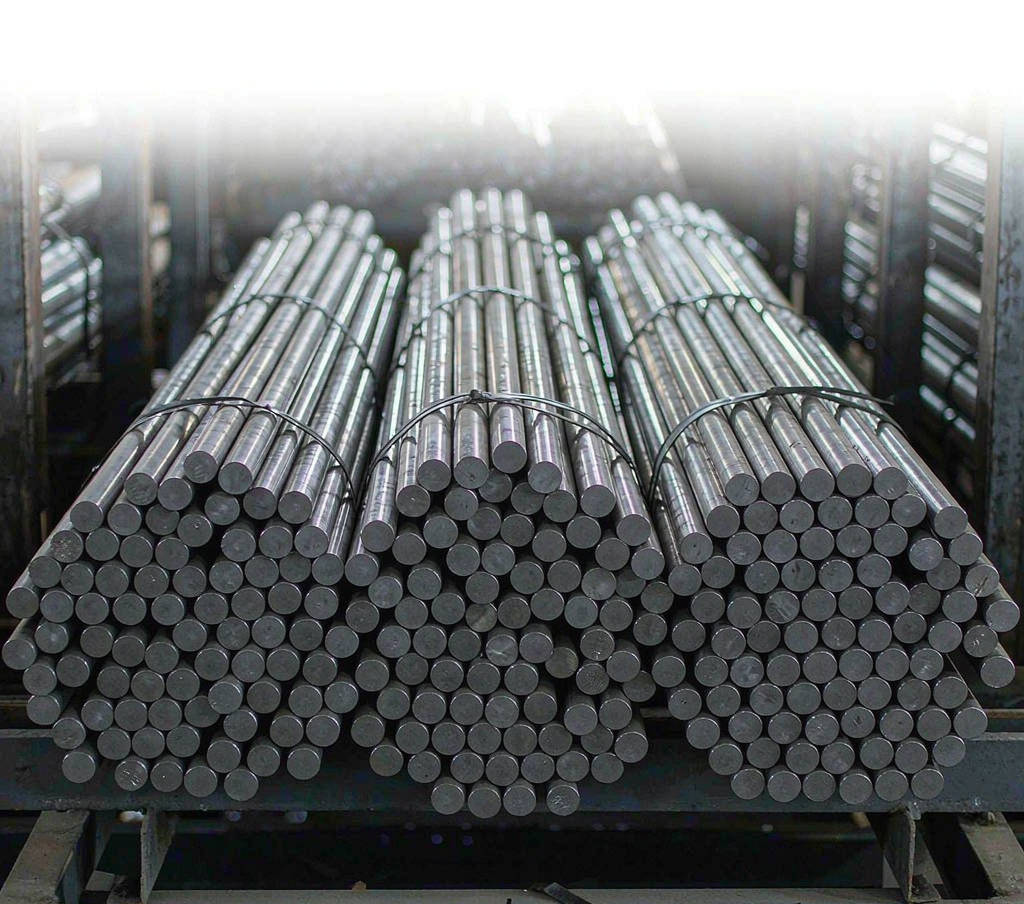
Custom cut-to-length service from 100 mm upward, chamfering, and bundle weighing to ±0.5 % accuracy are available on request. Bars are supplied in mill bundles of 1–3 tonnes with steel strapping; hex and square C45 bar are also produced from the same heats on request.
Chemical Composition and Equivalent Grades
| Standard | Grade | C % | Mn % | Si % | P/S max % |
|---|---|---|---|---|---|
| EN 10083-2 | C45 (1.0503) | 0.42–0.50 | 0.50–0.80 | ≤0.40 | 0.030 |
| DIN (legacy) | C45 / CK45 | 0.42–0.50 | 0.50–0.80 | 0.17–0.37 | 0.035 |
| JIS G4051 | S45C | 0.42–0.48 | 0.60–0.90 | 0.15–0.35 | 0.030 |
| SAE J403 | 1045 | 0.43–0.50 | 0.60–0.90 | — | 0.040 |
| GB/T 699 | 45# | 0.42–0.50 | 0.50–0.80 | 0.17–0.37 | 0.035 |
| BS 970 | 070M40 (EN8) | 0.36–0.44 | 0.60–1.00 | — | 0.050 |
CK45 (quality variant with restricted P/S, typically ≤ 0.025 % each) is available for parts requiring tighter internal cleanliness — fatigue-loaded shafts, hydraulic rod stock, and components subject to grinding without surface defects.
Delivery Conditions and Mechanical Properties
| Condition | Tensile (MPa) | Yield (MPa) | Hardness | Typical use |
|---|---|---|---|---|
| Hot rolled (+AR) | ≥ 560 | ≥ 305 | ~170–200 HB | General machining stock |
| Normalized (+N) | 580–780 | ≥ 340 | 170–210 HB | Refined grain, dimensionally stable |
| Cold drawn (+C) | ≥ 640 | ≥ 530 | ~200–230 HB | Bright bar, tight tolerance |
| Quenched & tempered (+QT) | 620–800 | ≥ 490 | 190–230 HB | Shafts, gears, high-load parts |
| Induction hardened surface | core per +QT | — | 55–60 HRC case | Wear surfaces, guide rods |
Manufacturing Standards
- EN 10083-2: principal delivery standard for quenched and tempered C45 bars.
- EN 10278: dimensions and tolerances of bright steel products (cold drawn, peeled, ground).
- ASTM A29/A29M: general requirements for hot-wrought and cold-finished carbon steel bars (1045).
- GB/T 699: Chinese quality carbon structural steel (45#).
- JIS G4051: carbon steel for machine structural use (S45C).
- EN 10204 3.1: mill test certificate with heat-specific results, third-party 3.2 on request.
Applications
- Shafts, spindles and axles for machinery and automotive use
- Gears, pinions, sprockets and flanges after Q+T
- Hydraulic cylinder rods (turned, ground and polished, often chrome plated)
- Key stock, studs, bolts and tie rods
- Agricultural equipment components and general engineering parts
Quality Assurance
Every heat is verified for chemistry by spectrometer and mechanical properties by tensile and hardness testing before release; certificates list heat-by-heat results. Additional options on request: ultrasonic testing (SEP 1921 / GB/T 6402) for forging stock, Jominy hardenability data, macro etch inspection, grain size to ASTM E112, and third-party inspection by SGS/BV/TUV prior to shipment. Surface defects are removed by peeling or grinding on bright-drawn and TGP material; a light oil film protects the surface in transit.
Packing and Shipping
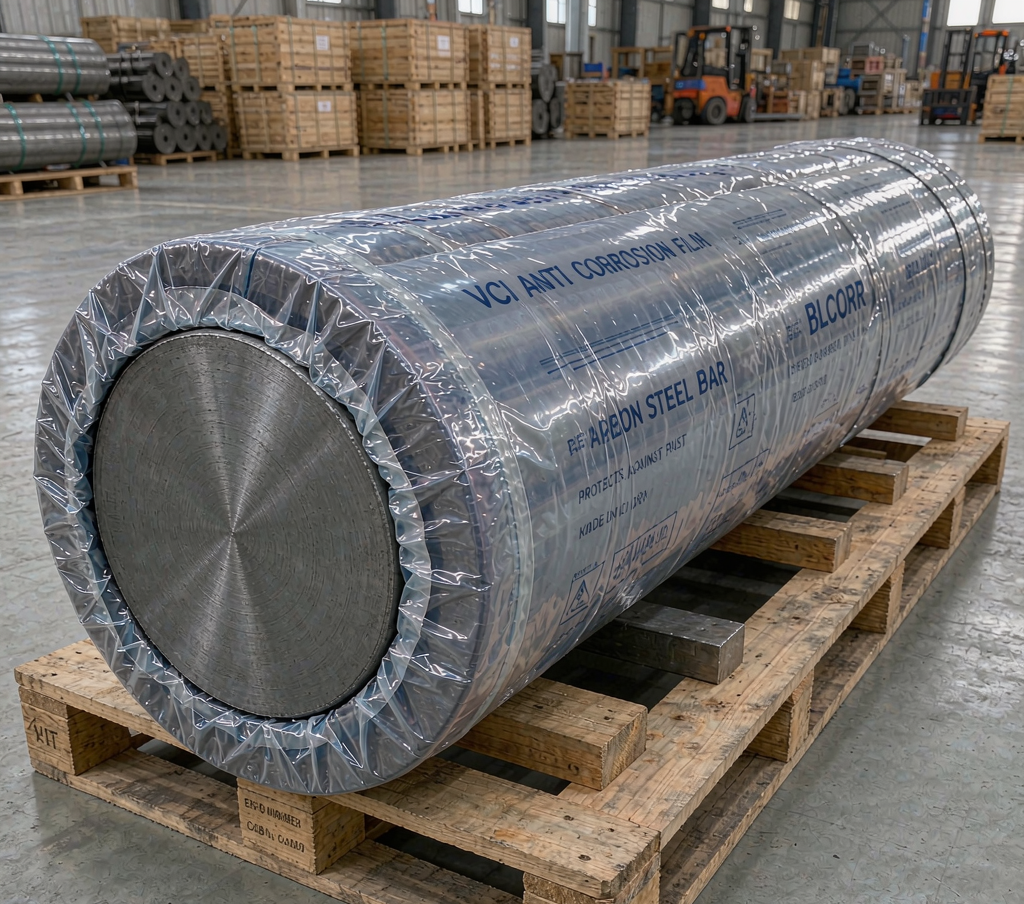
Standard export packing: bundles of 1–3 t, steel-strapped with two timber bearers, end protection on bright bar, and optional VCI paper or HDPE sleeve wrapping for sea freight. Container loads up to ~25 t (20 ft) or ~26 t (40 ft); breakbulk for 6 m+ lengths. C45 is a plain carbon steel — store under cover and dry; surface rust during long storage is cosmetic only and removed by machining.
How C45 Compares With Related Medium Carbon Grades
Buyers frequently ask whether to step up or down from C45. C40 (0.37–0.44 % C) suits parts needing slightly better weldability and toughness at a small strength cost; C50 and C55 (0.47–0.60 % C) add surface hardness and wear resistance for cams and light tooling at the expense of toughness and weldability; and 50CrMo4 or 42CrMo4 take over where section sizes above 60 mm must through-harden or where fatigue loading dominates. Against the carbon family on the American side, 1045 is the closest twin; 1045’s slightly looser P/S limits and absence of the EN quality-class structure make it marginally cheaper, while CK45 with restricted sulfur sits at the clean end for ground and polished surfaces. The rule of thumb: match carbon content to the hardness you need after heat treatment, match quality class (C vs CK) to surface and fatigue requirements, and only move to alloy grades when section size or fatigue duty demands it.
Machining Guidelines for C45 Bar
In normalized or hot rolled condition (170–210 HB), C45 machines at carbide cutting speeds of 120–180 m/min for turning, with coated carbide inserts (ISO P-type grades) and dry or emulsion cooling; drilling at 20–25 m/min with high-cobalt HSS or 80–100 m/min with carbide tip drills. In the cold drawn condition expect 10–15 % higher tool loads from work hardening but better surface finish; in Q+T 28–32 HRC condition, reduce speeds to 80–110 m/min and favor positive-rake geometries. For threads and precision features, stress relieving after heavy roughing (550–600 °C) prevents distortion in finishing. These parameters are starting points — the mill can supply machining recommendations matched to the exact delivered condition on request, which is worth doing when your shop’s cycle times are tight.
Ordering Checklist for C45 Round Bar
- Diameter and tolerance class: hot rolled (as-rolled tolerance), peeled h9–h10, or cold drawn h9–h11 — the difference is cost and machining allowance.
- Condition: +AR, +N, +C, or +QT with target hardness band (e.g. 28–32 HRC).
- Lengths: standard 5,800–6,000 mm, or fixed lengths to ±2 mm for automatic lathes.
- Certification: EN 10204 3.1 standard; 3.2 (third-party witnessed) where contracts require.
- Extras: UT testing, Jominy data, grain size report, chamfered ends, bundle weights per bar count.
- Marking: stenciled heat numbers on each bar or tags per bundle — confirm before production, not after packing.
Heat Treatment and Finishing Services
Beyond supply in standard conditions, Huaxia-Steel performs the full heat treatment and finishing chain on C45 bar in-house or through partner facilities, which shortens the path from bar stock to finished component blank: quench and tempering to your hardness band (with straightening and stress relief after treatment so the bar arrives usable, not banana-shaped), normalizing for grain refinement before machining, induction hardening of specific zones (bearing seats, guide surfaces) with case depth verification by hardness traverse, and peeling, centerless grinding and polishing for hydraulic rod stock down to h8 tolerance and Ra 0.4 surface finish. Cut-to-length blanks with chamfered ends ship ready for your CNC lathes — many customers buy 6 m bars, others buy per-blank cut pieces to eliminate their sawing bottleneck; both options price from the same bar stock, so compare landed cost rather than nominal per-tonne price.
For first orders from a new supplier relationship, the sensible approach is a two-stage qualification: a sample tonnage of one or two diameters in the exact condition you use most, tested through your own receiving and machining process, followed by bulk orders once the material has proven itself on your machines. Huaxia-Steel supports this with sample quantities at standard pricing, full 3.1 certification from the first kilogram, and the same heat traceability on samples as on production volumes — because a qualification that is not traceable qualifies nothing.
Why Buy C45 Bar From Huaxia-Steel
- Factory direct pricing from a stockist mill with 3,000+ tonnes of medium carbon bar in inventory
- Full size range 8–400 mm in one shipment, mixed conditions allowed
- EN 10204 3.1 certificates heat-matched to the packing list — L/C document ready
- Cut-to-length, peeling, grinding and induction hardening as one-stop service
Request a C45 round bar quotation with your diameter, condition, length and tonnage — offers typically return within one working day with current FOB/CIF pricing.