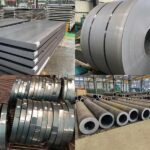
Carbon Steel Customs Clearance: Import Documentation & Process Guide
Carbon steel imports face some of the most complex customs clearance requirements of any commodity category. From anti-dumping duty assessments and origin verification to chemical composition documentation and tariff classification disputes, steel shipments are among the most scrutinized at border crossings worldwide. This guide provides importers with a comprehensive framework for navigating carbon steel customs clearance, covering required documentation, duty calculation methodologies, common compliance pitfalls, and strategies for minimizing clearance delays and unexpected costs.
1. Understanding Why Carbon Steel Faces Enhanced Scrutiny
Steel is classified as a “sensitive product” by customs authorities in major importing countries due to several factors:
- Anti-dumping measures: Over 200 anti-dumping and countervailing duty orders target steel products from China, Russia, India, and other major exporters
- Trade remedy surveillance: Steel import monitoring systems track volumes and values to detect circumvention of existing measures
- Origin fraud risk: Transshipment through third countries to evade duties is a documented problem in steel trade
- Dumping margin calculations: Complex methodologies require detailed cost and pricing documentation
- Safeguard measures: Temporary import restrictions during market disruption periods
Understanding this regulatory environment is the first step toward developing compliant import processes that avoid detention, penalties, and shipment delays.
2. Essential Import Documentation Checklist
Complete and accurate documentation is the foundation of smooth customs clearance. The following documents are universally required for carbon steel imports:

2.1 Commercial Documents
| Document | Purpose | Common Issues |
|---|---|---|
| Commercial Invoice | Declares value, seller/buyer, product description | Vague descriptions; inconsistent pricing |
| Packing List | Details packages, weights, dimensions, marks | Mismatched quantities with invoice |
| Bill of Lading / AWB | Evidence of shipment contract and receipt | Notify party errors; consignee mismatches |
| Certificate of Origin | Establishes country of manufacture | Generic forms; missing chamber stamp |
2.2 Technical Documents
| Document | Purpose | When Required |
|---|---|---|
| Mill Test Certificate (MTC) | Chemical composition, mechanical properties, heat number | Always; critical for classification and standards verification |
| Material Safety Data Sheet | Hazard classification for coated products | For painted or chemically treated steel |
| Product Specification Sheet | Dimensions, tolerances, surface finish, coating weight | For specialized or custom products |
| Heat Treatment Certificate | Proof of normalization, quenching, tempering | For heat-treated grades (Q&T, normalized) |
2.3 Regulatory Documents
| Document | Purpose | When Required |
|---|---|---|
| Import License | Authorization to import steel products | EU steel import surveillance; certain country-specific licenses |
| Pre-Shipment Inspection Report | Third-party verification of quantity and quality | When mandated by importing country or LC terms |
| Anti-Dumping Exemption Certificate | Proof of individual company exemption rate | For Chinese steel subject to AD measures with individual rates |
| Dumping Margin Calculation Worksheet | Detailed cost breakdown for customs review | When customs challenges declared value |
3. Step-by-Step Customs Clearance Process
Step 1: Pre-Arrival Preparation (Before Vessel Arrival)
- Obtain and review all supplier documentation for completeness and consistency
- Verify HS code classification against actual product specifications
- Calculate estimated duties including anti-dumping, countervailing, and safeguard duties
- Confirm import license requirements and apply if necessary
- Arrange customs broker representation if required by destination country
- Submit pre-arrival customs declarations where electronic systems permit
Step 2: Customs Declaration Filing
- File customs entry with complete product descriptions matching commercial documents
- Declare accurate customs value based on transaction value (CIF or FOB per Incoterms)
- Attach all required supporting documents electronically or physically
- Pay estimated duties and taxes to secure cargo release authorization
Step 3: Documentary Review and Examination
- Customs reviews documentation for completeness and logical consistency
- Risk assessment algorithms flag shipments for physical examination based on: origin country, HS code, declared value, importer history, and supplier profile
- Physical examination may include: package count verification, weight check, sample collection for laboratory analysis, and dimensional measurement
Step 4: Laboratory Analysis (If Required)
- Chemical composition analysis to verify declared grade and classification
- Coating weight measurement for galvanized or coated products
- Mechanical testing for structural steel requiring certification
- Analysis timeline: 3–10 business days depending on laboratory capacity
Step 5: Duty Assessment and Release
- Customs confirms final duty calculation including any anti-dumping adjustments
- Additional duty payments processed if examination reveals under-declaration
- Customs release authorization issued
- Arrange inland transport from port to final destination
4. Anti-Dumping Duty Considerations
Anti-dumping duties represent the single largest variable in carbon steel import costs. Understanding how these duties apply is essential for accurate landed cost calculation.
4.1 How Anti-Dumping Duties Work
When domestic producers demonstrate that imported goods are sold below fair market value (normal value) causing material injury to the domestic industry, authorities impose anti-dumping duties equal to the dumping margin — the difference between normal value and export price.
4.2 Country-Specific AD Measures on Chinese Steel
| Country/Region | Products Affected | Typical AD Rate Range | Special Provisions |
|---|---|---|---|
| United States | HRC, CRC, rebar, pipe, wire rod | Up to 265% | Individual company rates available |
| European Union | HRC, CRC, coated, rebar, pipe | Up to 85% | Steel import surveillance system |
| Canada | HRC, pipe, fasteners | Up to 165% | SIMA (Special Import Measures Act) |
| Australia | Rebar, rod, bar | Up to 55% | Dumping Commodity Register |
| India | HRC, CRC, coated products | Up to 70% | Provisional and definitive duties |
| Mexico | Rebar, wire rod, pipe | Up to 80% | UNIIC registry for steel importers |
4.3 Strategies for Managing AD Duty Exposure
- Source from non-subject countries: Consider mills in Vietnam, Turkey, or Indonesia for products with high China-specific AD rates
- Apply for individual company rate: If direct sourcing from China, work with mills that have obtained individual AD rates (typically lower than country-wide rates)
- Product scope review: Verify that your specific product dimensions or specifications fall within the AD order scope; minor dimensional differences may exclude products
- Monitor sunset reviews: AD orders expire after 5 years unless renewed; track review schedules for potential duty elimination
5. Customs Valuation and Transfer Pricing
Customs authorities scrutinize carbon steel valuations carefully due to historically documented undervaluation practices. Key valuation principles:
5.1 Transaction Value Method
The primary valuation basis is the transaction value — the price actually paid or payable for the goods when sold for export. For carbon steel imported under CIF terms, the transaction value includes the FOB price plus freight, insurance, and loading charges.
5.2 Common Valuation Adjustments
- Additions: Commissions, royalties, packing costs, assists (materials/tools provided free)
- Deductions: Post-importation charges (construction, assembly, inland transport), buying commissions
5.3 Related-Party Transactions
When importer and exporter are related parties (same corporate group), customs may test whether the relationship influenced the price. Maintain documentation demonstrating that the transaction value closely approximates test values from comparable unrelated-party sales.

6. Common Clearance Delays and How to Avoid Them
| Issue | Cause | Prevention |
|---|---|---|
| Document inconsistency | Invoice weight differs from packing list; description mismatches | Pre-shipment document review; use templates |
| HS code disputes | Vague product descriptions; borderline classifications | Obtain advance ruling; detailed technical specs |
| Value adjustments | Declared value below market range for product/grade | Document pricing methodology; maintain comparable sales data |
| Origin verification | Suspicion of transshipment or false origin | Direct shipment; chamber-certified origin; manufacturing evidence |
| Missing certifications | Incomplete MTC; missing heat treatment certificates | Supplier checklist; pre-shipment inspection |
| Import license delays | EU steel surveillance; quota exhaustion | Early application; monitor quota utilization |
7. Regional Clearance Specifics
7.1 United States (CBP)
- Steel import monitoring via SIMA (Steel Import Monitoring and Analysis) system
- Requires steel license for most HS codes under Chapter 72 and 73
- 19 CFR Part 159 governs customs valuation
- ADD/CVD deposits collected at entry; final liability determined during administrative review
7.2 European Union
- Steel import surveillance system requires prior notification for certain HS codes
- Anti-dumping duties administered at EU level; collected by member state customs
- Binding Tariff Information (BTI) provides advance classification certainty
- Union Customs Code (UCC) governs procedures
7.3 Middle East (GCC Countries)
- Gulf Cooperation Council applies 5% customs duty on most steel products
- No anti-dumping measures on Chinese steel in most GCC states
- Gulf Standardization Organization (GSO) technical regulations may require product conformity certificates
- Relatively straightforward clearance for properly documented shipments
8. FAQ
How long does carbon steel customs clearance typically take?
Standard clearance takes 2–5 business days for properly documented shipments. Physical examination adds 3–7 days. Laboratory analysis for chemical verification adds 5–10 days. Anti-dumping duty assessments on first-time imports may require 10–15 days for customs review.
What is the difference between customs duty and anti-dumping duty?
Customs duty (tariff) is the standard import tax based on HS code classification and country of origin. Anti-dumping duty is an additional trade remedy charge imposed when imports are sold below fair value. Both are calculated as a percentage of customs value and collected at importation.
Do I need an import license for carbon steel?
Requirements vary by country. The United States requires steel import licenses for most steel HS codes. The EU requires prior surveillance notification for certain products. Many countries (GCC, ASEAN) do not require licenses for standard steel imports. Verify requirements with your customs broker before shipping.
Can customs reject my Mill Test Certificate?
Yes. Customs may reject MTCs that lack required information (heat number, chemical composition, mechanical test results), appear inconsistent with the declared product, or come from unrecognized laboratories. Ensure MTCs comply with EN 10204 3.1 or 3.2 standards and include all required data fields.

How can I reduce the risk of customs examination?
Establish a compliant import history with accurate declarations. Use consistent HS codes for identical products. Maintain complete documentation. Consider authorized economic operator (AEO) programs where available, which provide reduced examination rates and priority clearance.
Conclusion and CTA
Carbon steel customs clearance demands meticulous preparation, accurate documentation, and thorough understanding of trade remedy regulations. By implementing the documentation checklist, duty calculation methodologies, and risk mitigation strategies outlined in this guide, importers can significantly reduce clearance delays, avoid penalty assessments, and achieve predictable landed costs.
Contact Huaxia-Steel for export documentation support on your carbon steel orders. We provide complete customs documentation packages including certified origin certificates, EN 10204 3.1 MTCs, detailed packing lists, and commercial invoices formatted for your destination country’s customs requirements. Request a documentation sample or discuss your specific import compliance needs with our export team.