ASTM A537 vs A516 Carbon Steel Plate Comparison for Pressure Vessels
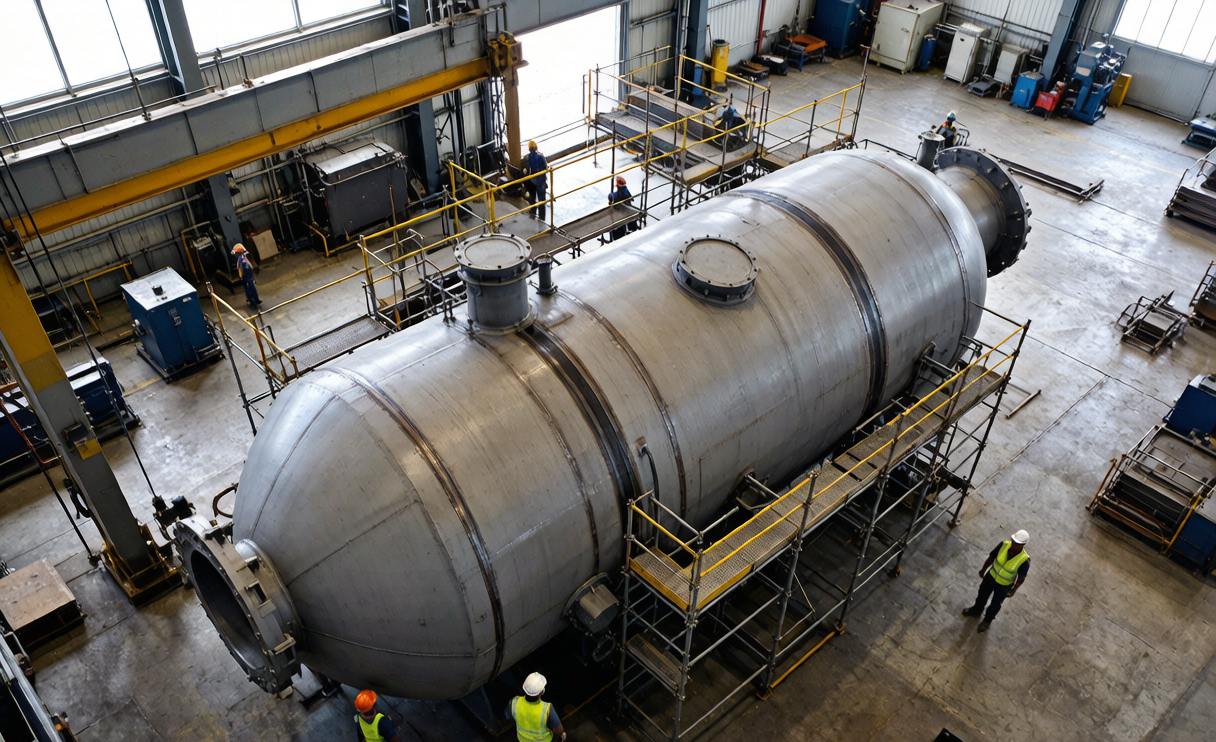
Specifying a pressure vessel plate in 2026 almost always comes down to one choice: ASTM A516 or ASTM A537. Both are killed carbon steels designed for boilers, columns, and pressure vessels. They look interchangeable on a data sheet, but the two standards diverge sharply on heat treatment, impact toughness, and intended service. Pick the wrong one and the fabricator will either over-spend on certification or under-perform in low-temperature duty.
This guide compares ASTM A537 vs A516 pressure vessel plates across classification, chemistry, mechanical values, heat treatment options, applications, pricing, and sourcing tips so you can write a clean RFQ for Chinese mills.
1. Where Each Standard Comes From
- ASTM A516/A516M – Carbon steel plates for moderate- and lower-temperature service in pressure vessels. Four grades (55, 60, 65, 70) defined by increasing tensile strength. Grade 70 is the most specified worldwide.
- ASTM A537/A537M – Heat-treated carbon-manganese-silicon steel plates for pressure vessels at moderate and lower temperatures. Two classes – Class 1 (normalized) and Class 2 (quenched and tempered) – defined by delivery condition and minimum strength.
Both standards fall under ASME Section VIII (Div. 1) when used in U.S. code work. Many international bidders ask mills for dual certification to A516 Gr.70 and A537 Cl.1.
2. Classification and Grade Designations
| ASTM designation | Strength level | Delivery condition | Typical MTC type |
|---|---|---|---|
| A516 Grade 55 | Lowest | As-rolled or normalized | EN 10204 3.1 |
| A516 Grade 70 | Highest in A516 series | As-rolled or normalized | EN 10204 3.1 |
| A537 Class 1 | Medium-high | Normalized | EN 10204 3.1 (impact data included) |
| A537 Class 2 | Highest | Quenched and tempered | EN 10204 3.1 (impact data mandatory) |
A516 has four strength bands; A537 has two heat-treatment bands. The choice between them is more about heat-treatment economics than ultimate strength.
3. Chemical Composition Side-by-Side
| Element | A516 Gr.70 max % | A537 Cl.1 max % | A537 Cl.2 max % |
|---|---|---|---|
| C | 0.30 | 0.24 | 0.20 |
| Mn (plate 1 in / 25 mm) | 0.85-1.20 | 0.70-1.35 | 0.70-1.60 |
| Si | 0.15-0.40 | 0.15-0.50 | 0.15-0.50 |
| P | 0.035 | 0.035 | 0.030 |
| S | 0.035 | 0.035 | 0.030 |
| Cu (when specified) | 0.20 | 0.35 | 0.35 |
| Ni (when specified) | 0.25 | 0.25 | 0.50 |
A537 allows tighter control of manganese and slightly tighter sulfur limits, which improves through-thickness ductility. The lower carbon ceiling of A537 also improves weldability – useful when the vessel has many shell-course seams.
4. Mechanical Properties Comparison
| Property | A516 Gr.70 | A537 Cl.1 | A537 Cl.2 |
|---|---|---|---|
| Tensile strength | 485-620 MPa (70-90 ksi) | 485-620 MPa | 550-690 MPa (80-100 ksi) |
| Minimum yield | 260 MPa (38 ksi) | 260 MPa (38 ksi) | 345 MPa (50 ksi) |
| Minimum elongation (200 mm) | 21% | 22% | 22% |
| Impact requirement (default) | Optional (by supplementary requirement) | Required at -46 degrees C if so ordered | Required at -46 degrees C (mandatory) |
Yield strength of A537 Cl.2 is materially higher (345 vs 260 MPa). That means thinner plates for the same design pressure, which can save 8-15% of plate tonnage in big vessels. The trade-off is the cost of quenching and tempering at the mill.
5. Heat Treatment and Delivery Condition
| Delivery condition | A516 Gr.70 | A537 Cl.1 | A537 Cl.2 |
|---|---|---|---|
| As-rolled | Yes | No | No |
| Normalized | Yes | Yes (only condition) | Yes (only condition) |
| Quenched and tempered | Rare (QT-on-request only) | No | Yes (only condition) |
| Stress-relieved after forming | Optional via S6 | Optional via S6 | Recommended |
A537 Cl.2 forces a Q&T cycle, which costs the mill roughly USD 60-120 per tonne extra over A516 plate. For non-code vessels or ambient service, that extra cost is rarely justified.
6. Applications by Grade
- A516 Gr.70: hydrocracker reactors, refinery columns, LPG bullets, LNG inner tanks (when normalized for cryogenic service), heat exchanger shells, atmospheric storage tanks. Most widely used pressure vessel plate globally.
- A537 Cl.1: low-to-moderate temperature vessels, hot-oil separators, ammonia converters, cryogenic storage (after normalizing and impact testing at -46 degrees C).
- A537 Cl.2: high-pressure vessels in petrochemical service, sour-service reactors with NACE MR0175 requirements, hydrocrackers, ammonia plant converters, bullet tanks for high-pressure gas.
7. Price and Availability in 2026
On Chinese export markets in mid-2026, A516 Gr.70 in 6-50 mm thickness typically lists around USD 580-680 per tonne FOB. A537 Cl.1 adds roughly USD 30-60 per tonne for the normalizing cycle. A537 Cl.2 adds USD 100-180 per tonne for the Q&T cycle. The extra cost is often dwarfed by the weight saving on heavy wall vessels.
A516 Gr.70 plate is readily available from Tangshan, Rizhao, Baosteel, and many regional mills. A537 in both classes is a narrower product – Baosteel, Shougang, and a handful of others keep it in stock. For non-standard dimensions, expect 30-60 days mill lead time.
8. How to Choose Between A516 and A537
- Choose A516 Gr.70 when service is at moderate temperatures, the design code references ASME Section VIII Div. 1, and budget is the priority.
- Choose A537 Cl.1 when normalized plate is required for low-temperature toughness (-46 degrees C impact) but the additional strength of Q&T is unnecessary.
- Choose A537 Cl.2 when design pressure is high enough that the lighter plate wall brings a real weight saving, or when the project specification is fixed to Q&T pressure vessel grade.
9. RFQ Tips for Chinese Mills
- State the exact designation and class (for example, “ASTM A537 Class 2”).
- Specify thickness range and any tolerance class (ASTM A20 or EN 10029).
- Confirm impact test requirements (temperature, energy, location, number of tests per heat).
- Request normalized or Q&T supply explicitly – the mill defaults will not match your code.
- Ask for an MTC per EN 10204 3.1, including the heat-treatment cycle on the certificate.
- For sour service, add the NACE MR0175 / ISO 15156 reference and request HIC testing per ASTM A20 S9.
FAQ
Can A516 Gr.70 be substituted for A537 Cl.2?
Mechanically no – the minimum yield strength of A516 Gr.70 (260 MPa) is below A537 Cl.2 (345 MPa). The fabricator would need to thicken the wall, which usually negates any cost saving.
Is A537 Cl.2 mandatory for LPG bullets?
Many international codes accept either grade, but Lloyds, Bureau Veritas, and most TPI inspectors prefer A537 Cl.2 for high-pressure LPG spheres for sour or wet service.
Which grade is easier to weld?
A516 Gr.70 has the highest carbon (up to 0.30%); preheat is needed above 25 mm thickness. A537 Cl.1 (0.24% max C) and A537 Cl.2 (0.20% max C) are more forgiving, particularly on heavy walls.
Does A537 Cl.2 need stress relief after forming?
Yes – usually. The Q&T temper is hardened; cold forming can crack the surface unless stress-relief at 595-650 degrees C is performed.
Which is cheaper: A516 or A537?
A516 Gr.70 is the lowest-cost option. A537 Cl.1 is mid-range. A537 Cl.2 is the most expensive because of Q&T, but the higher yield may allow a thinner wall.
Conclusion
The ASTM A537 vs A516 decision is fundamentally about heat treatment and design efficiency. A516 Gr.70 is the universal pressure-vessel workhorse. A537 Cl.1 brings normalized plate for low-temperature service, and A537 Cl.2 brings Q&T strength for thinner walls and higher design pressures. State the service conditions clearly in the RFQ – temperature, pressure, design code, and impact test requirement – and your mill can propose the lowest-cost grade that fits.
Sourcing pressure vessel plates from China? Huaxia-Steel supplies A516 Gr.70, A537 Cl.1, and A537 Cl.2 plates with mill test certificates to EN 10204 3.1, third-party inspection, and export packing for refineries, power plants, and chemical projects.
Related Images