ASTM A519 vs EN 10305-1 Cold Drawn Seamless Carbon Steel Tube
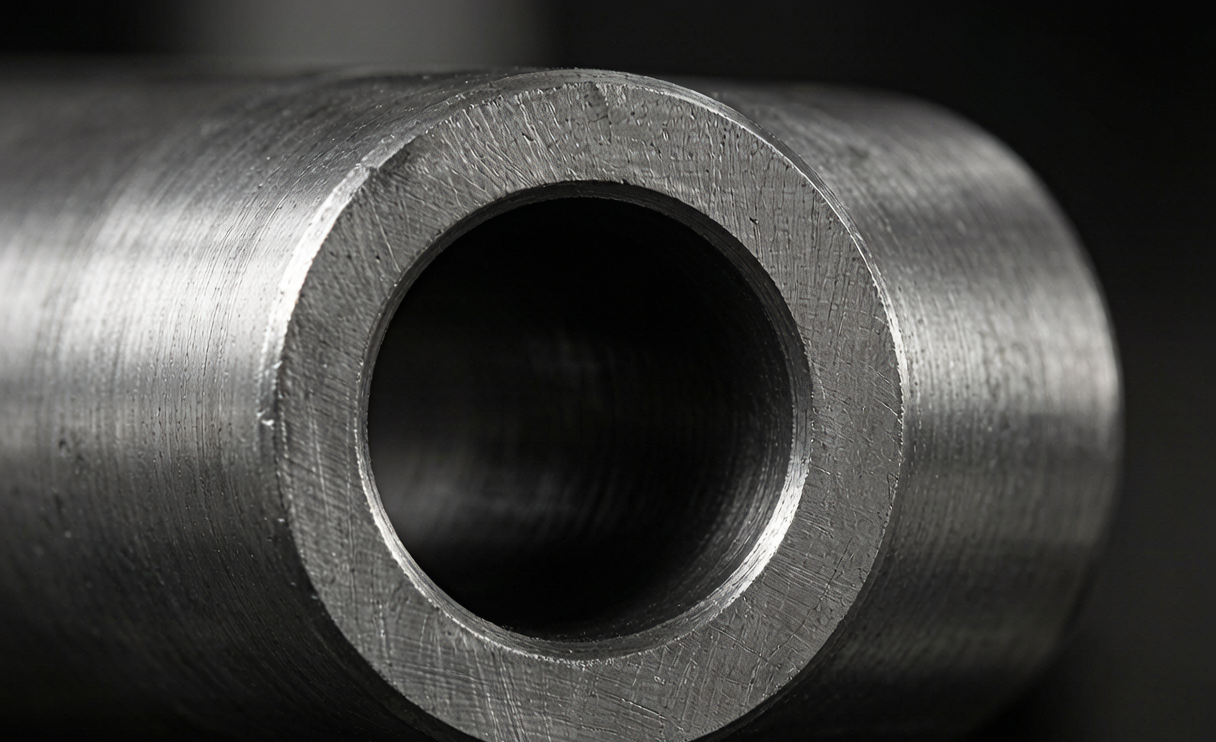
Mechanical and automotive buyers often need cold drawn seamless carbon steel tubing with tight dimensional tolerances and clean surfaces. The two most common specifications are ASTM A519 (North American) and EN 10305-1 (European). Both cover cold-finished seamless tubes for mechanical applications, but their grade naming, tolerance bands, and delivery conditions differ.
This guide compares ASTM A519 vs EN 10305-1 cold drawn seamless carbon steel tube so you can specify, source, and inspect the right product from Chinese mills.
1. Scope of Each Standard
ASTM A519 / A519M covers several grades of carbon and alloy steel seamless mechanical tubing. It focuses on tubes used for mechanical purposes rather than pressure service. Grades range from low-carbon 1008 and 1010 through medium-carbon 1020, 1026, 1035, 1045 to alloy grades such as 4130 and 4140.
EN 10305-1 covers steel tubes for precision applications. It is divided by delivery condition: +C (cold drawn/hard), +LC (cold drawn/soft), +SR (stress relieved), +A (annealed), and +N (normalized). The most common carbon grades are E215, E235, E355, and occasionally C35E and C45E.
2. Common Grade Cross-Reference
| Application strength | ASTM A519 grade | EN 10305-1 grade | Typical use |
|---|---|---|---|
| Low carbon, easy forming | MT 1010, MT 1015 | E215 (+A or +LC) | Bushings, light sleeves, low-stress parts |
| Medium carbon, general use | MT 1020, MT 1026 | E235 (+C, +LC, +SR, +A, +N) | Hydraulic cylinders, shafts, pins |
| Higher carbon, stronger | MT 1035, MT 1045 | E355 (+C, +LC, +SR, +A, +N) | Heavy shafts, rollers, structural tubing |
| High carbon / alloy | 4130, 4140 | 25CrMo4, 42CrMo4 | High-strength mechanical and automotive parts |
3. Chemical Composition Comparison
The two standards control similar elements but use different grade names. For carbon grades, EN 10305-1 E235 and E355 are roughly equivalent to A519 1020 and 1045 in carbon range, though exact limits differ.
| Element | A519 1020 max % | A519 1045 max % | E235 max % | E355 max % |
|---|---|---|---|---|
| C | 0.18-0.23 | 0.43-0.50 | 0.17 | 0.22 |
| Mn | 0.30-0.60 | 0.60-0.90 | 1.20 | 1.60 |
| Si | 0.10-0.40 | 0.10-0.40 | 0.35 | 0.55 |
| P | 0.040 | 0.040 | 0.025 | 0.025 |
| S | 0.050 | 0.050 | 0.025 | 0.025 |
EN 10305-1 generally has tighter phosphorus and sulfur limits, which gives cleaner steel and better machinability for precision parts.
4. Delivery Conditions
ASTM A519 tubes are usually supplied as cold-drawn and stress-relieved or annealed, but the standard does not define the +C/+LC/+SR/+A/+N symbols used in Europe. EN 10305-1 makes the delivery condition explicit:
| EN 10305-1 symbol | Condition | Hardness range typical | Use case |
|---|---|---|---|
| +C | Cold drawn / hard | High, no heat treatment | Parts that will be hardened after forming |
| +LC | Cold drawn / soft | Lower than +C | Bending, flaring, light forming |
| +SR | Stress relieved | Controlled | Improved dimensional stability |
| +A | Annealed | Lowest | Heavy forming and machining |
| +N | Normalized | Moderate | Better toughness and uniformity |
5. Dimensional Tolerances
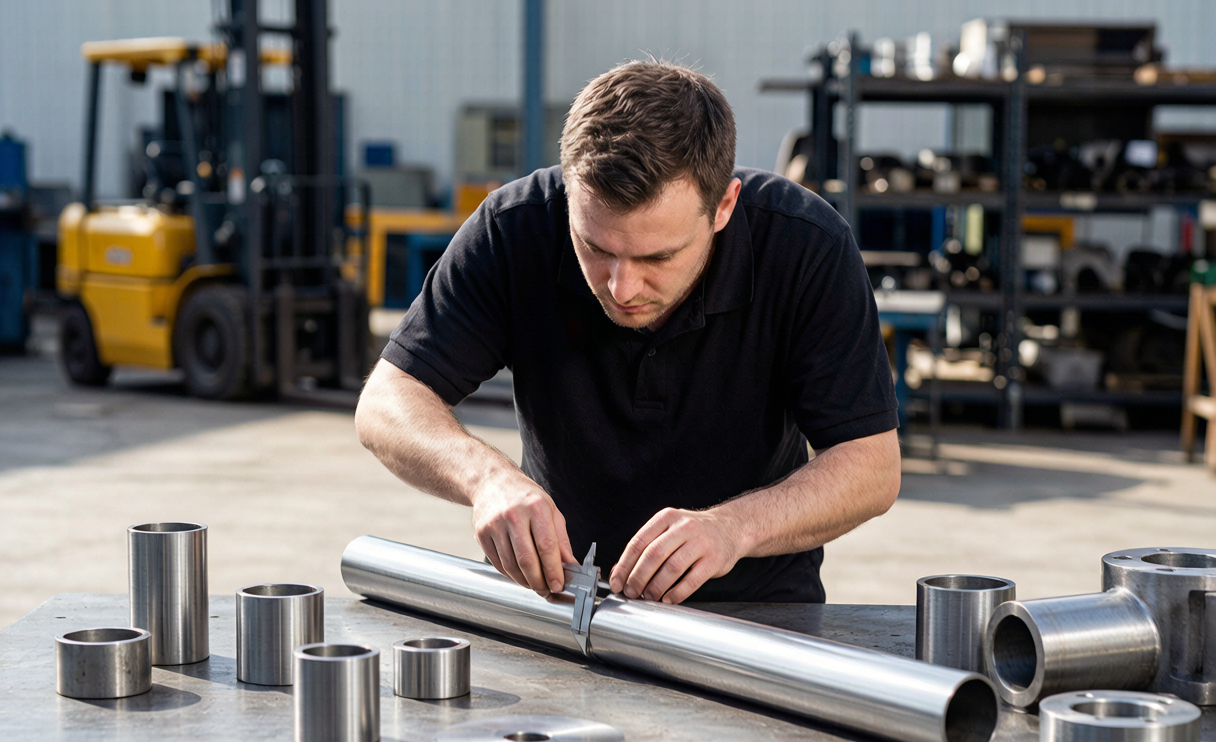
Both standards offer tight tolerances, but EN 10305-1 is generally associated with higher precision classes (D3/D4 for outside diameter, T3/T4 for wall thickness). ASTM A519 default tolerances are slightly looser unless supplementary requirements are invoked.
| Dimension | ASTM A519 typical | EN 10305-1 typical |
|---|---|---|
| Outside diameter | +/- 0.5% or +/- 0.15 mm | D3: +/- 0.10 mm; D4: +/- 0.08 mm |
| Wall thickness | +/- 10% or +/- 0.20 mm | T3: +/- 0.10 mm; T4: +/- 0.08 mm |
| Straightness | 1 in 1000 | 0.5-1 mm per meter depending on class |
| Length | +/- 6 mm per 6 m | +/- 3 mm per 6 m for precision cut |
6. Surface Quality and Roughness
Cold drawing produces a smooth surface with typical Ra 0.4-1.6 micrometers depending on die finish and lubrication. EN 10305-1 precision tubes often receive additional surface inspection and may specify a maximum roughness. ASTM A519 leaves surface finish to producer practice unless the purchaser adds a supplementary requirement.
For critical hydraulic cylinders, polished tubes with Ra below 0.4 micrometers may be required. These are usually produced by honing or roller burnishing after cold drawing, regardless of the base standard.
7. Mechanical Properties
| Grade / condition | Yield MPa min | Tensile MPa | Elongation % min |
|---|---|---|---|
| A519 MT 1020 annealed | 180 | 380 min | 35 |
| A519 MT 1045 normalized | 310 | 510 min | 22 |
| EN 10305-1 E235 +C | 235 | 360-500 | 25 |
| EN 10305-1 E355 +C | 355 | 490-630 | 22 |
| EN 10305-1 E355 +N | 245 | 450-600 | 22 |
8. Inspection and Testing
Both standards require tensile testing and dimensional inspection. Additional tests commonly requested include:
- Flattening test: Required by ASTM A519 to confirm ductility.
- Flaring test: Required by ASTM A519 for selected grades.
- Non-destructive testing: Eddy current or ultrasonic testing for surface and internal defects.
- Surface inspection: Visual and dimensional for precision applications.
- Chemical analysis: Mill ladle analysis and product check analysis.
9. Typical Applications
- ASTM A519 tubes: Automotive drive shafts, axles, bushings, conveyor rollers, crane hoist drums, machinery frames, hydraulic cylinder barrels in North American equipment.
- EN 10305-1 tubes: Precision hydraulic cylinders, shock absorber tubes, pneumatic cylinders, automotive injection system components, measuring instruments, robotics, and European machinery.
10. Price and Availability from China
In mid-2026 Chinese export pricing for cold drawn seamless mechanical tubing:
- A519 MT 1020 / E235 class: USD 680-820 per tonne FOB.
- A519 MT 1045 / E355 class: USD 750-920 per tonne FOB.
- Precision class with D4/T4 tolerance: Add USD 100-180 per tonne.
- Honed or polished finish: Add USD 200-400 per tonne.
Chinese mills in Jiangsu, Shandong, and Zhejiang produce both A519 and EN 10305-1 tubes and can dual-certify when chemistry and testing satisfy both standards.
11. Weldability and Formability
Low-carbon grades such as A519 MT 1010/1020 and EN 10305-1 E215/E235 are readily welded by TIG, MIG, and resistance welding. Higher-carbon grades such as MT 1045 and E355 require preheat and low-hydrogen practice to avoid HAZ cracking. For precision tubes that will be bent or flared, +LC or +A delivery conditions provide the ductility needed without splitting the wall.
Bending minimum radius depends on OD, wall thickness, and delivery condition. As a rough guide, +A tubes can be bent to 2.5 times the OD, +LC to 3 times the OD, and +C hard tubes to 5 times the OD or more. Always test a sample before production bending.
12. Corrosion Protection and Finishing
Cold drawn seamless tubes usually ship with a light rust-preventive oil. For outdoor storage or aggressive environments, additional protection can include:
- Phosphate coating for paint adhesion.
- Electroplated zinc or nickel.
- Hot-dip galvanizing for structural outdoor use.
- Honing or roller burnishing for hydraulic cylinder bores.
When ordering precision hydraulic tubing, specify the final bore finish (honed, skived, or burnished) and surface roughness requirement separately from the base standard.
13. Traceability and Lot Control
Precise mechanical tubing is often used in safety-critical assemblies. Buyers should require heat-number traceability from billet to finished tube. The MTC should link the tube lot to the original melt heat, chemical analysis, and mechanical test results. For EN 10204 3.2 certification, an independent inspector verifies the traceability chain and witnesses testing.
14. Common Procurement Mistakes
- Specifying A519 without a grade number; mills default to 1020 or 1018.
- Ordering +C hard condition for a part that needs bending.
- Assuming A519 tubes are pressure-rated; they are not unless specifically tested.
- Ignoring the tolerance class; default tolerances may be too loose for precision assemblies.
- Requesting dual certification without confirming chemistry overlap for both standards.
15. Honing and Skiving for Hydraulic Cylinders
Precision hydraulic cylinder barrels require a smooth internal bore with tight tolerances. After cold drawing, tubes can be honed or skived and roller-burnished. Honing uses abrasive stones to remove material and create a cross-hatch pattern that retains lubricating oil. Skiving uses cutting tools to size the bore, followed by roller burnishing to compress the surface and improve finish. Both processes can achieve surface roughness below Ra 0.4 micrometers and bore tolerances of H7 or H8.
16. Comparison with ERW and LSAW Pipe
Buyers sometimes ask whether seamless mechanical tubing can be replaced by ERW or LSAW alternatives. For mechanical applications requiring tight tolerances and no weld seam, seamless is usually necessary. ERW tube is acceptable for low-pressure structural use but has a weld line that can create a hardness spike and stress concentration. LSAW pipe is used for large-diameter line pipe and is not a substitute for precision mechanical tubing.
17. HS Code and Import Duty Considerations
Cold drawn seamless carbon steel tubes typically fall under HS code 7304.39 for seamless tubes, pipes, and hollow profiles of iron or steel. The exact subheading depends on the application, dimensions, and grade. Import duties vary by destination country and any applicable free trade agreement. We can provide a provisional HS code and certificate of origin to help you estimate landed cost.
18. Bundle and Coil Packaging
Small-diameter cold drawn tubes are often supplied in coils for applications such as instrumentation and automotive fluid lines. Coiled tubing allows long continuous lengths and reduces the number of joints. Larger diameters are supplied in straight lengths bundled with steel straps. For export, bundles are often wrapped in plastic or woven material to prevent moisture damage during sea transport.
19. Lead Time and Minimum Order
| Product | Typical MOQ | Lead time |
|---|---|---|
| Standard cold drawn tube | 1-5 tonnes | 2-4 weeks |
| Precision D4/T4 tube | 2-5 tonnes | 4-6 weeks |
| Honed hydraulic tube | 1-3 tonnes | 4-6 weeks |
| Custom alloy tube | 5 tonnes | 6-10 weeks |
20. Manufacturing Process Flow
Seamless mechanical tubing starts as a solid round billet. The billet is heated to approximately 1,200 degrees C and pierced on a rotary piercing mill to form a hollow shell. The shell is then elongated and reduced on a mandrel mill, plug mill, or pilger mill to the desired dimensions. After hot rolling, the tube is pickled to remove scale and then cold drawn through a die and over a mandrel to achieve precise dimensions and improved surface finish. For EN 10305-1 precision tubes, the cold drawing and heat treatment steps are tightly controlled to meet the specified tolerance class and delivery condition.
16. Common Defects and Inspection Points
During incoming inspection, look for these common issues:
- Surface scratches and scoring: Often caused by worn drawing dies. Minor scratches can be acceptable; deep scratches may stress concentrate.
- Ovality: Check OD at multiple points around the circumference, especially for thin-wall tubes.
- Wall thickness variation: Use ultrasonic thickness gauge at several positions along the length.
- Internal surface defects: Require bore inspection or eddy current testing for critical applications.
- Scale and rust: Light oil film is normal; heavy rust indicates poor storage.
- Dimensional out-of-tolerance: Verify against the purchase order before accepting.
17. Case Study: Sourcing Hydraulic Cylinder Tubing
A hydraulic equipment manufacturer needed honed tubing for a new cylinder model. The initial RFQ specified ASTM A519 1026 with no tolerance class. The first delivery varied enough in OD that the honing process could not consistently achieve the required bore finish. The buyer revised the specification to EN 10305-1 E355 +SR with D4/T4 tolerances and added a honing step. Although the base tube cost increased by 15 percent, scrap and rework dropped by 40 percent, and the overall cost per finished cylinder fell by 8 percent.
18. Quick Selection Guide
| Your need | Recommended specification |
|---|---|
| General mechanical tubing, North American project | ASTM A519 MT 1020 or MT 1045 |
| Precision hydraulic cylinder, European project | EN 10305-1 E355 +SR, honed |
| Automotive fluid line, small diameter | EN 10305-1 E235 +A or +LC |
| High-strength shaft or axle | ASTM A519 4140 or EN 10305-1 25CrMo4 |
| Instrument tubing, coiled | ASTM A269 TP304 or A519 316 stainless alternatives |
19. Inspection Standards and Acceptance
Acceptance criteria for seamless mechanical tubing are defined in the product standard and any supplementary requirements. Common acceptance standards include ASTM A450/A530 for general tolerances, ASTM A578 for ultrasonic testing, and EN 10246 for non-destructive testing of welded and seamless tubes. When ordering for critical applications, reference these standards explicitly in the purchase order and define the acceptance sampling plan with your supplier.
20. How to Specify on an RFQ
- State the standard and grade: “ASTM A519 MT 1020” or “EN 10305-1 E235 +SR”.
- Give OD, wall thickness, and tolerance class.
- Specify delivery condition if using EN 10305-1.
- State length tolerance and end finish (plain, deburred, chamfered).
- Ask for MTC to EN 10204 3.1 with tensile, dimensional, and flattening/flaring results.
- Request third-party inspection for precision or high-value orders.
- Require heat-number traceability for safety-critical parts.
- State any secondary finishing such as honing, galvanizing, or coating.
FAQ
Can ASTM A519 and EN 10305-1 be dual certified?
Yes, if the chemistry and mechanical properties satisfy both standards. Many Chinese mills offer dual certification for common grades such as 1020/E235 and 1045/E355.
Which has tighter tolerances?
EN 10305-1 generally offers tighter precision classes (D3/D4, T3/T4) than ASTM A519 default tolerances.
Is ASTM A519 for pressure piping?
No. ASTM A519 is for mechanical tubing. For pressure service, use ASTM A106, A53, or API 5L.
What does +SR mean in EN 10305-1?
+SR means stress relieved after cold drawing. It reduces residual stress and improves dimensional stability during machining.
Which is cheaper?
For equivalent grades and tolerances, prices are usually close. EN 10305-1 precision classes cost more because of tighter processing controls.
Conclusion
ASTM A519 vs EN 10305-1 is primarily a question of market and precision. ASTM A519 serves North American mechanical applications with familiar SAE grade names. EN 10305-1 serves European precision applications with explicit delivery conditions and tighter tolerance classes. Both are available from Chinese mills, often with dual certification.
Need cold drawn seamless carbon steel tube? Huaxia-Steel supplies ASTM A519 and EN 10305-1 tubes in 1010, 1020, 1026, 1035, 1045, E235, and E355 with tight tolerances, cut lengths, and full MTC. Send your specification for a same-day quote.
Related Images