Introduction: Why Cold Drawn Carbon Steel Commands a Premium
Hot-rolled bar leaves the mill with a dark oxide scale, dimensional tolerances of ±0.5 mm or worse, and a surface roughness that can hide defects. Cold drawn carbon steel is the same material pulled through a die at room temperature, producing a bright, smooth bar with tolerances as tight as h9 and a surface finish that needs no machining for many applications. For buyers, the question is not whether cold drawing improves the steel — it does — but whether the improvement is worth the 15–30% price premium.
This guide explains the cold drawing process, the tolerances and surface finishes you can specify, the grades most commonly supplied, and the details that belong in a purchase order.

What Cold Drawing Does to Carbon Steel
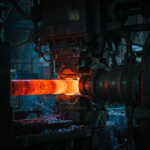
Cold drawing is a metalworking process in which a hot-rolled bar or coil is pulled through one or more carbide dies at room temperature. The die is slightly smaller than the incoming bar, so the material is reduced in diameter while simultaneously being straightened and cold-worked.
The result is threefold:
- Dimensional accuracy: cold drawn bars typically meet h9, h10, or h11 tolerances, compared with the loose k12/m class of hot-rolled bar.
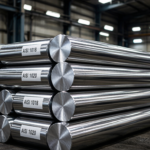
- Surface quality: the dark mill scale is removed and replaced by a smooth, bright surface with Ra typically 0.8–3.2 μm.
- Mechanical properties: cold work raises yield and tensile strength by 10–25% and reduces ductility. Hardness increases proportionally.
Because no heat is applied, the grain structure is elongated and work-hardened. If the final application needs high ductility or stress-relief, specify annealing or stress relieving after drawing.
Cold Drawn vs Hot Rolled: Side-by-Side Comparison
| Property | Cold Drawn Bar | Hot Rolled Bar |
|---|---|---|
| Surface finish | Bright, smooth, scale-free | Dark oxide scale, rough |
| Tolerance class | h9 to h11 common | k12 to m common |
| Out-of-roundness | ≤ half the diameter tolerance | Often larger |
| Straightness | 1–2 mm/m typical | 3–6 mm/m typical |
| Yield strength | Higher (work hardened) | Lower, more ductile |
| Machinability | Excellent; consistent structure | Variable scale and hardness |
| Price premium | 15–30% over hot rolled | Baseline |
The cost difference is not waste. It pays for the extra processing, inspection, and scrap generated by the die pass. For precision parts that are turned, ground, or used as-is, the savings in machining time and tooling often recover the premium within the first production run.
Most Common Grades Supplied as Cold Drawn Bar
| Grade | Carbon % | Typical Uses | Delivery Condition |
|---|---|---|---|
| 1018 | 0.14–0.20 | Shafts, pins, light-duty machine parts | Cold drawn, annealed |
| 1045 / C45 / S45C | 0.43–0.50 | Shafts, gears, axles, studs | Cold drawn, normalized, Q&T |
| 1215 | 0.09 max | High-speed screw machine parts | Cold drawn, resulfurized |
| 12L14 | 0.15 max | Parts requiring maximum machinability | Cold drawn, lead-added |
| Q235B / A36 | ≤ 0.20 / ≤ 0.29 | Structural pins, low-stress parts | Cold drawn bar |
For export buyers, 1045 / S45C / C45 cold drawn bar is the most frequently requested grade. It combines good strength with excellent machinability and responds well to induction hardening if wear resistance is needed.
Tolerances You Can Specify
Cold drawn bar tolerances are described by ISO h-tolerances or ASTM A108. The table below shows typical h9 tolerances for round bar:
| Nominal Diameter (mm) | h9 Tolerance (μm) |
|---|---|
| 3–6 | -0.030 |
| 6–10 | -0.036 |
| 10–18 | -0.043 |
| 18–30 | -0.052 |
| 30–50 | -0.062 |
| 50–80 | -0.074 |
For even tighter fits, h8 and h7 are possible on larger volumes but require slower drawing speeds and more in-process inspection. Always state the tolerance standard (ISO 286-2 h9, for example) rather than writing “tight tolerance,” which means nothing enforceable.

Surface Finish and Straightness
Surface roughness on cold drawn carbon steel bar is commonly specified as Ra 0.8–3.2 μm. Finer finishes require polishing or peeling after drawing and add cost. For most machined parts, Ra 1.6–3.2 μm is sufficient because the first machining pass removes the surface anyway.
Straightness is equally important for automatic bar feeders and long shafts. A reasonable commercial specification is 1 mm per metre, with 0.5 mm/m available on request. Hot-rolled bar, by comparison, often runs 3–6 mm/m and may need straightening before use.
How Cold Drawing Changes Mechanical Properties
Cold drawing increases strength through work hardening. A typical 1045 bar might change as follows:
| Condition | Yield Strength (MPa) | Tensile Strength (MPa) | Elongation (%) | Hardness (HB) |
|---|---|---|---|---|
| Hot rolled | 310 | 570 | 16 | 170–210 |
| Cold drawn | 450–550 | 650–750 | 12–14 | 190–240 |
| Cold drawn + stress relieved | 420–500 | 620–700 | 14–16 | 180–220 |
The exact numbers depend on the percentage reduction per die pass. Heavy reductions raise strength but lower ductility. If your part needs tight bends or severe forming, request annealed cold drawn bar or specify a stress-relief cycle.
What to Write Into the Purchase Order
- Grade and standard: “1045 cold drawn round bar per ASTM A108.”
- Size and tolerance: “Ø20 mm × 6000 mm, h9 tolerance per ISO 286-2.”
- Straightness: “1 mm/m maximum.”
- Surface: “Bright, scale-free, Ra ≤ 3.2 μm.”
- Delivery condition: as-drawn, annealed, normalized, or Q&T as required.
- Ends: saw-cut square, deburred, chamfered.
- Certificate: EN 10204 3.1 with chemistry, mechanical properties, and hardness.
- Packaging: bundled, oiled, plastic-wrapped, wooden crate for ocean freight.

Common Quality Issues and How to Avoid Them
- Scale residue: some suppliers pickle hot-rolled bar and sell it as cold drawn. True cold drawn bar has a bright, die-polished surface. Request a sample photo or first-article inspection.
- Ovality: poor die alignment produces out-of-round bar. Specify ovality as half the diameter tolerance and check with a micrometer at multiple angles.
- Surface cracks: excessive reduction can initiate longitudinal cracks. Magnetic particle or eddy-current testing catches this before shipment.
- Wrong hardness: as-drawn hardness varies with reduction. Require hardness test results on the certificate.
- Short straightness: specify straightness in mm/m and reject bundles that exceed it; bent bar jams automatic feeders.
Applications Where Cold Drawn Bar Pays Off
- Precision shafts and pins used as-is or with minimal grinding
- Automatic screw machine products
- Hydraulic cylinder piston rods
- Automotive fasteners and studs
- Bearing housings and sleeves
- Linear motion components
In each case, the value comes from reduced machining time, better surface quality, or consistent mechanical properties. If the part will be rough-machined from oversized hot-rolled bar anyway, cold drawing may not add value.
Frequently Asked Questions
1. Is cold drawn steel stronger than hot rolled?
Yes. Cold drawing work-hardens the material, raising yield and tensile strength by 10–25% while reducing ductility. The exact increase depends on the grade and reduction ratio.
2. Can cold drawn carbon steel be welded?
Yes, but the work-hardened surface should be removed near the weld joint, and low-hydrogen electrodes with controlled preheat are recommended for medium-carbon grades like 1045.
3. What is the typical price premium for cold drawn bar?
Expect 15–30% over hot-rolled bar for standard sizes and grades. Tighter tolerances, smaller quantities, and additional heat treatment increase the premium.
4. Which tolerance should I specify?
5. How do I verify cold drawing quality on receipt?
Check diameter with a micrometer at several positions and angles, measure straightness on a flat table, review the hardness certificate, and inspect the surface for scale, cracks, or scratches.
Conclusion
Cold drawn carbon steel is a process upgrade, not just a surface finish. It delivers tighter tolerances, brighter surfaces, higher strength, and better machinability than hot-rolled bar. The key for buyers is to specify exactly what they need: grade, tolerance, straightness, surface finish, and delivery condition. A vague order invites a vague product.
Huaxia-Steel supplies 1018, 1045, S45C, C45, Q235B, and A36 cold drawn round, hex, and square bars with h9 tolerances, bright finish, and EN 10204 3.1 certificates. Send us your diameter, tolerance, and quantity for a quotation within 24 hours.