ASTM A36 vs ASTM A572 Carbon Steel Plate: Chemistry, Mechanical, Selection
ASTM A36 and ASTM A572 are the two most widely specified carbon steel plate grades in North America for structural applications. A36 has been the default for buildings, bridges, and general fabrication since 1960. A572, introduced in the 1960s and revised multiple times, is the modern high-strength low-alloy (HSLA) plate grade that allows lighter sections, longer spans, and reduced tonnage. Both are readily available, both are weldable, both are covered by EN 10204 3.1 mill test certificates. Yet they are not interchangeable for every application.
This guide compares A36 and A572 (Grade 50 is the workhorse variant) on chemistry, mechanical properties, weldability, fabrication, cost, and selection criteria. It then explains when A36 is the right choice and when A572 Grade 50 (or higher) saves weight and money on a structure.
1. Standards and Grade Definitions
Both are ASTM plate specifications but serve different design philosophies:
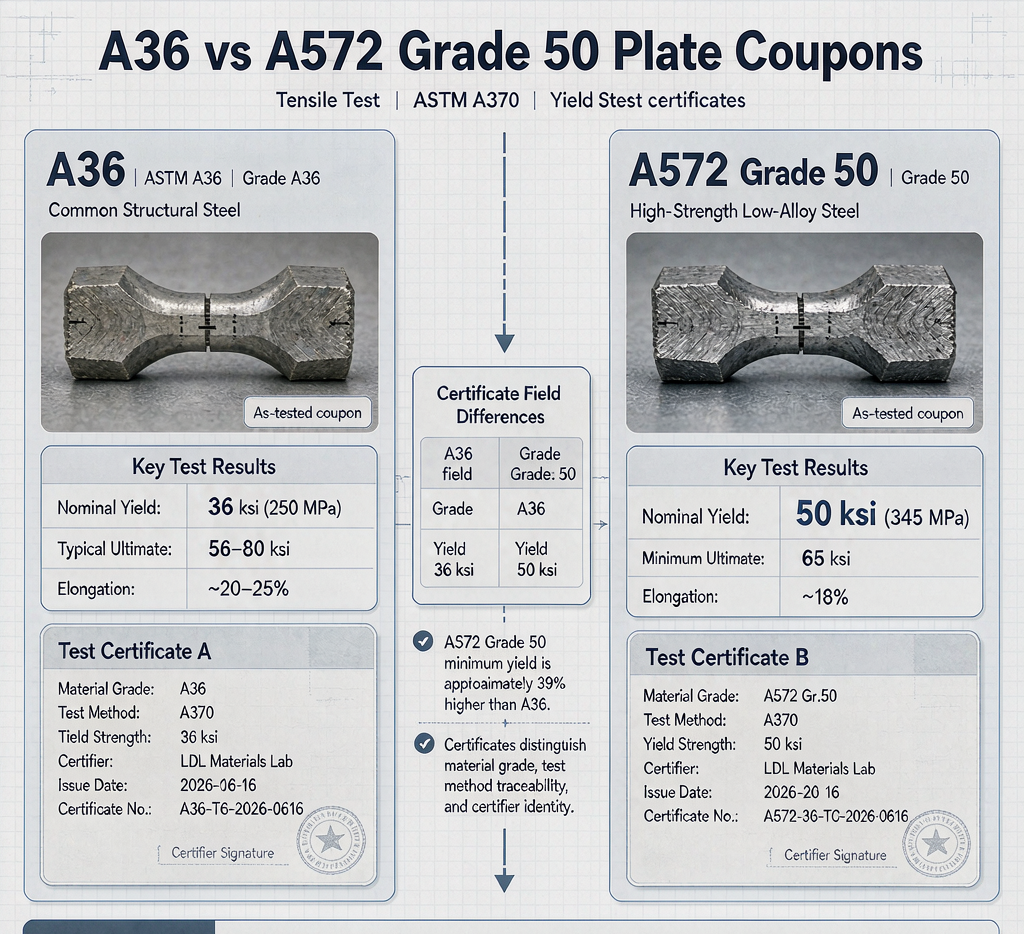
- ASTM A36 / A36M – Standard Specification for Carbon Structural Steel. Covers plates, shapes, and bars up to 8 inches (200 mm) thick. Yield strength minimum is 36 ksi (250 MPa). A36 is a general-purpose structural carbon steel.
- ASTM A572 / A572M – Standard Specification for High-Strength Low-Alloy Columbium-Vanadium Structural Steel. Covers plates, shapes, and sheet piling in five grades: 42, 50, 55, 60, and 65 ksi yield (290, 345, 380, 415, 450 MPa). Grade 50 is the most commonly ordered variant. Columbium (niobium) and vanadium are added for grain refinement and precipitation strengthening.
A36 is a non-alloy structural steel with carbon as the primary strengthening mechanism. A572 is a microalloyed HSLA steel where small additions of niobium, vanadium, and titanium provide strength without significantly raising carbon.
2. Chemical Composition Comparison
The key difference is the microalloying and tighter carbon control in A572:
| Element | A36 % | A572 Grade 50 % | Notes |
|---|---|---|---|
| C (max) | 0.25 (plates) / 0.26 (shapes) | 0.23 | A572 is slightly lower C. |
| Mn | 0.80-1.20 (varies by thickness) | 1.35 max (typical 0.80-1.35) | Comparable; A572 has more headroom for thick plate. |
| Si | 0.40 max | 0.40 max | Same. |
| P (max) | 0.04 | 0.04 | Same. |
| S (max) | 0.05 | 0.05 | Same. |
| Nb | Not specified | 0.005-0.05 | Key A572 strengthening addition. |
| V | Not specified | 0.01-0.15 | Key A572 strengthening addition. |
| Cu (min, when specified) | 0.20 (when Cu steel is ordered) | 0.20-0.40 (when specified for atmospheric resistance) | Optional for both. |
| Ni, Cr, Mo | Residual only | Residual only | Both are not alloy steels. |
| CEV (typical) | 0.35-0.45 | 0.35-0.45 (same range) | Comparable; both are weldable. |
Note: A572 specifies minimum Nb+V content for the strength to be reached. If the mill produces a heat without sufficient microalloying, the strength cannot be guaranteed.
3. Mechanical Properties
| Property | A36 (up to 8 inch thick) | A572 Grade 50 (up to 4 inch thick) |
|---|---|---|
| Yield Strength (min, MPa) | 250 | 345 |
| Tensile Strength (MPa) | 400-550 | 450 min (typically 450-550) |
| Elongation in 8 inch (min, %) | 20 | 18 (Grade 50) |
| Elongation in 2 inch (min, %) | 23 | 21 |
| Brinell Hardness (typical) | 119-162 | 135-185 |
| Charpy Impact (at +20°C, longitudinal) | Not required by spec; typical 27-50 J | Optional; specify A572 with impact requirement if needed |
The 95 MPa yield advantage of A572 Grade 50 (345 vs 250) is the fundamental reason for choosing it: a structure designed to A572 can use thinner plate, smaller sections, or longer spans for the same design load.
4. Plate Thickness Range and Availability
| Specification | Plate Thickness Range | Typical Mill Stock |
|---|---|---|
| A36 | Up to 8 inch (200 mm) in shapes, up to 4-8 inch in plate per source | Common in 1/4″ to 2″ (6-50 mm) plate |
| A572 Grade 42 | Up to 6 inch (150 mm) | Less common; usually substituted by Grade 50 |
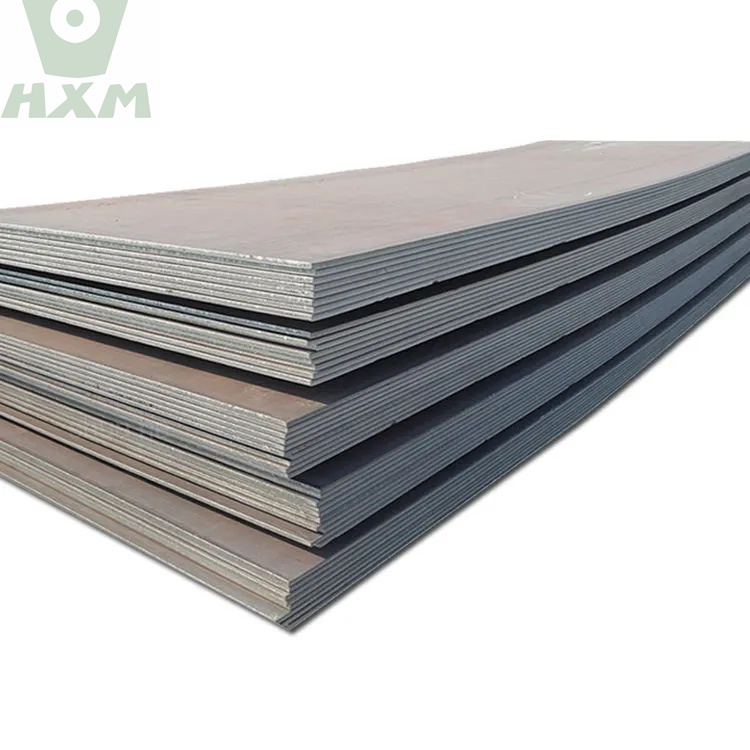
| A572 Grade 50 | Up to 4 inch (100 mm) plate; up to 6 inch in special order | Most common; stocked in 3/8″ to 1-1/2″ (10-40 mm) |
| A572 Grade 60 | Up to 1-1/4 inch (32 mm) | Limited stock; special order |
| A572 Grade 65 | Up to 1-1/4 inch (32 mm) | Limited stock; special order |
A572 thicker plate is not always available; if you need plate above 4 inches, A36 may be your only choice from stock. A913 is a higher-strength alternative for very thick sections.
5. Weldability and Fabrication
Both A36 and A572 Grade 50 are readily weldable by SMAW, GMAW, FCAW, and SAW processes. CEV is comparable (typically 0.35-0.45), so preheat requirements are similar.
| Welding Parameter | A36 | A572 Grade 50 |
|---|---|---|
| Preheat for thin section (under 25 mm) | Generally not required above 0°C ambient | Generally not required above 0°C ambient |
| Preheat for thick section (above 50 mm) | 50-100°C recommended | 50-100°C recommended |
| Hydrogen control | Low-hydrogen electrodes (e.g., E7018) for thick sections | Low-hydrogen electrodes strongly recommended for thick sections |
| Post-weld heat treatment (PWHT) | Not mandatory for A36 in most codes | Generally not required unless specified by code |
| Cutting | Oxy-fuel, plasma, laser all work | Oxy-fuel, plasma, laser all work; slightly higher hardness may slow plasma cutting |
| Cold forming | Readily cold-formed to 90° bends at standard radii | Readily cold-formed; Grade 50 has slightly higher springback |
| Machining | Standard tooling; chip breaker recommended | Similar to A36; harder, may require coated carbide tooling |
For welded structures, both grades are interchangeable from a fabrication standpoint. The choice is driven by mechanical performance and cost.
6. Design Code References
Both grades are accepted by major structural design codes:
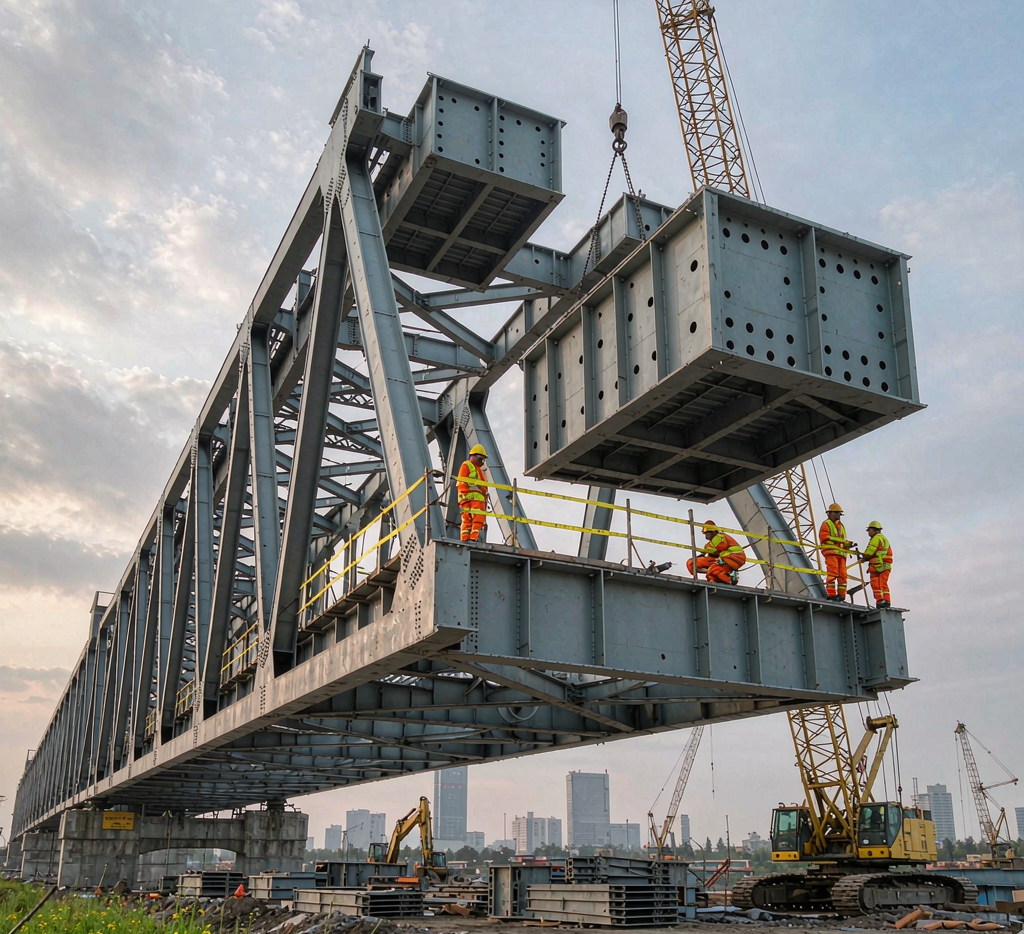
- AISC 360 (Steel Construction Manual): A36 and A572 Grade 50 are both listed in the manual’s Table 2-4. Design strengths are calculated per the code. A572 Grade 50 allows the use of lower-weight sections in many members.
- AASHTO LRFD Bridge Design: A36 and A572 Grade 50 are both accepted for bridge members. A572 Grade 50W (with improved atmospheric corrosion resistance) is used for unpainted bridges.
- AWS D1.1 Structural Welding Code: Both are listed as prequalified base metals for the listed welding processes. Matching electrodes are E60xx, E70xx, or E70xx-X for A36; E70xx or E70xx-X for A572.
- CISC (Canadian): Both are accepted under CAN/CSA-S16.
7. Cost and Availability Comparison
| Aspect | A36 | A572 Grade 50 |
|---|---|---|
| Plate cost (per ton, indicative) | Base price | 10-20% premium over A36 |
| Stock availability | Excellent (most mills stock A36 plate and shapes) | Good for Grade 50 up to 1-1/2″ thick; limited for thicker or higher grades |
| Lead time (stock sizes) | 7-15 days | 10-20 days |
| Lead time (custom cut) | 2-4 weeks | 3-5 weeks |
| Total project cost (typical) | Higher material tonnage; lower per-ton cost | Lower material tonnage; higher per-ton cost; net cost neutral or lower |
For the same structure, A572 Grade 50 may save 25-35% in plate weight (because the higher yield allows thinner sections). The per-ton price premium is offset by reduced tonnage, transport, and welding cost.
8. Application Selection Guide
Choose A36 when:
- The plate is used in non-critical or lightly loaded applications.
- You need plate thicker than 4 inches (A572 Grade 50 plate is typically limited to 4 inches).
- The structure uses standard hot-rolled sections (W-shapes, channels, angles) without specific high-strength requirements.
- Cost is the dominant factor and weight is not constrained.
- You need cold-forming or severe forming; A36 is more ductile.
Choose A572 Grade 50 when:
- The structure benefits from higher yield (long-span beams, high-rise columns, light-weight goals).
- You want to reduce total plate tonnage and the cost of welding, transport, and erection.
- You are designing per AISC LRFD and want to use the higher Fy in calculations.
- You need A572 Type 2 or Type 3 (atmospheric corrosion resistance) for unpainted bridges or buildings.
- You are building per a specification that requires 50 ksi minimum yield.
9. Common Specification Pitfalls
- Specifying “A36/A572 dual certified.” Most mills can dual-certify plate that meets both specifications. This is common practice and saves inventory cost. Verify the MTC lists both grades.
- Ordering A572 Grade 50 plate above 4 inches. Not all mills stock or certify A572 above this thickness. Specify A36 or A913 for thicker sections.
- Confusing A572 with A992. A992 is for hot-rolled W-shapes, not plate. A572 Grade 50 is for plate and shapes.
- Forgetting the impact test requirement. If the structure is in a low-temperature environment, specify CVN impact at the lowest expected service temperature.
- Not specifying Type 1, 2, or 3 atmospheric corrosion. A572 has three atmospheric corrosion resistance levels. Type 2 (Cr-Ni-Cu alloying, 2x A36 corrosion) and Type 3 (Cr-Ni-Cu-P, 4x A36 corrosion) are used for unpainted bridges.
10. Case Study: Light-Frame Building Column
An industrial shed needs a 30-foot clear-span column supporting a 50 kip axial load.
- A36 design: Required cross-sectional area = 50,000 lb / 36,000 psi = 1.39 sq inch. A W10x33 section provides 9.71 sq inch and weighs 33 lb/ft. Plate base detail: 1″ A36 plate (sufficient).
- A572 Grade 50 design: Required cross-sectional area = 50,000 lb / 50,000 psi = 1.00 sq inch. A W10x26 section provides 7.61 sq inch and weighs 26 lb/ft. Plate base detail: 3/4″ A572 plate (sufficient).
Result: A572 Grade 50 saves 7 lb/ft on the column (21% weight reduction) and 25% plate thickness on the base detail. The premium per ton is offset by the lower tonnage, fewer truck deliveries, and faster erection.
11. Frequently Asked Questions
Q1: Is A36 still the most common structural plate grade?
Yes. A36 remains the most specified plate in North America for general structural work, building frames, and miscellaneous metals. A572 Grade 50 is gaining share in projects that benefit from the higher yield.
Q2: Can A572 Grade 50 be hot-dip galvanized?
Yes. A572 Grade 50 is routinely galvanized per ASTM A123. The silicon content (typically 0.20-0.40%) can produce a thicker coating with the typical “Silicon Reaction.” Specify galvanizing to ASTM A123 and confirm with the galvanizer.
Q3: Is A572 Grade 50 suitable for bridges?
Yes. AASHTO LRFD accepts A572 Grade 50 for bridge members. A572 Grade 50W (Type 2 or 3) is used for unpainted bridges due to its atmospheric corrosion resistance (4x that of A36).
Q4: What is the difference between A572 and A588?
A588 is a weathering steel with higher atmospheric corrosion resistance (4-6x that of A36) and is also HSLA. A572 is generally a higher-strength structural steel without the same level of weathering resistance. A588 is used for unpainted architectural applications.
Q5: Can A36 and A572 Grade 50 be welded together?
Yes. The matching E70xx electrode is suitable for both. The joint design follows the lower of the two base metal strengths. AISC 360 provides prequalified welding procedure specifications for these combinations.
Q6: Is A572 Grade 50 available in coil?
A572 Grade 50 is available in cut-to-length plate and hot-rolled sheet (typically up to 0.5 inch). For thicker plate, A36 or A633 (normalized HSLA) is more common.
12. Conclusion
ASTM A36 and ASTM A572 Grade 50 are both staple structural plate grades, but they are not interchangeable. A36 is the workhorse of general structural fabrication, available in thick plate, low cost, and excellent formability. A572 Grade 50 is the modern HSLA alternative that allows 25-35% weight reduction in many structures at a modest per-ton premium. The choice is driven by design code requirements, span and load, weight targets, and cost optimization. Specifying the right grade from the start avoids costly over-design or material substitution at the mill.
Huaxia-Steel supplies ASTM A36 and A572 Grade 42/50/60/65 plate in thicknesses from 3 mm to 100 mm, with EN 10204 3.1 mill test certificates. Send your plate specification for a quote.
Related Images