S45C Carbon Steel Round Bar – JIS G4051 Factory Direct Supplier | Huaxia-Steel
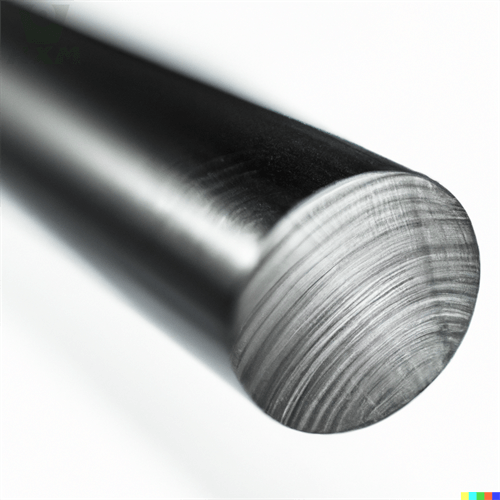
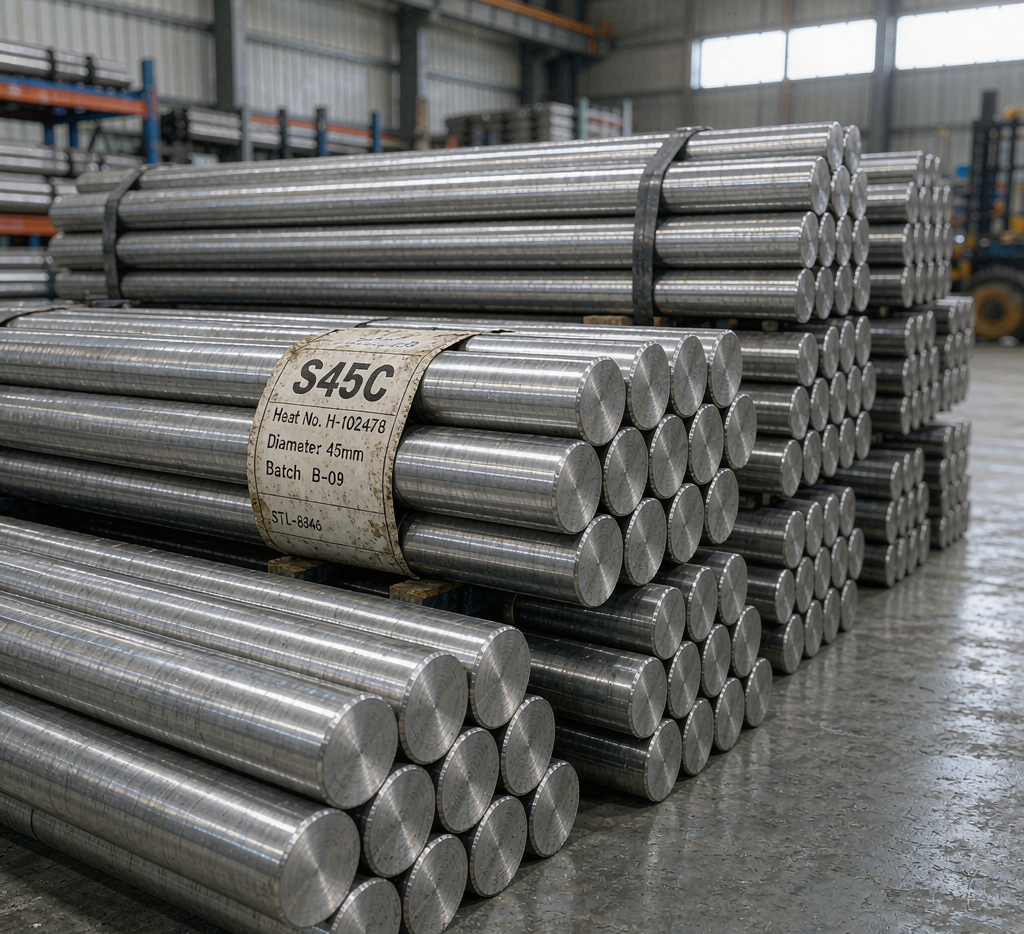
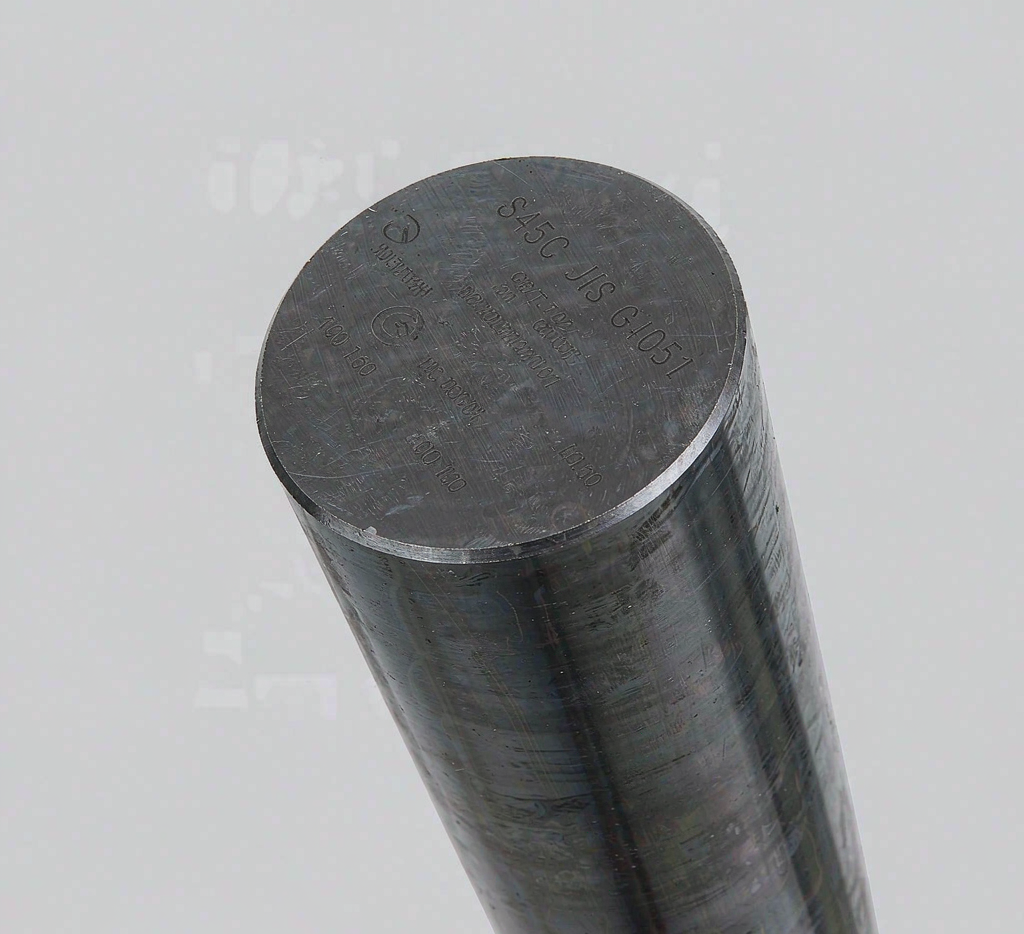
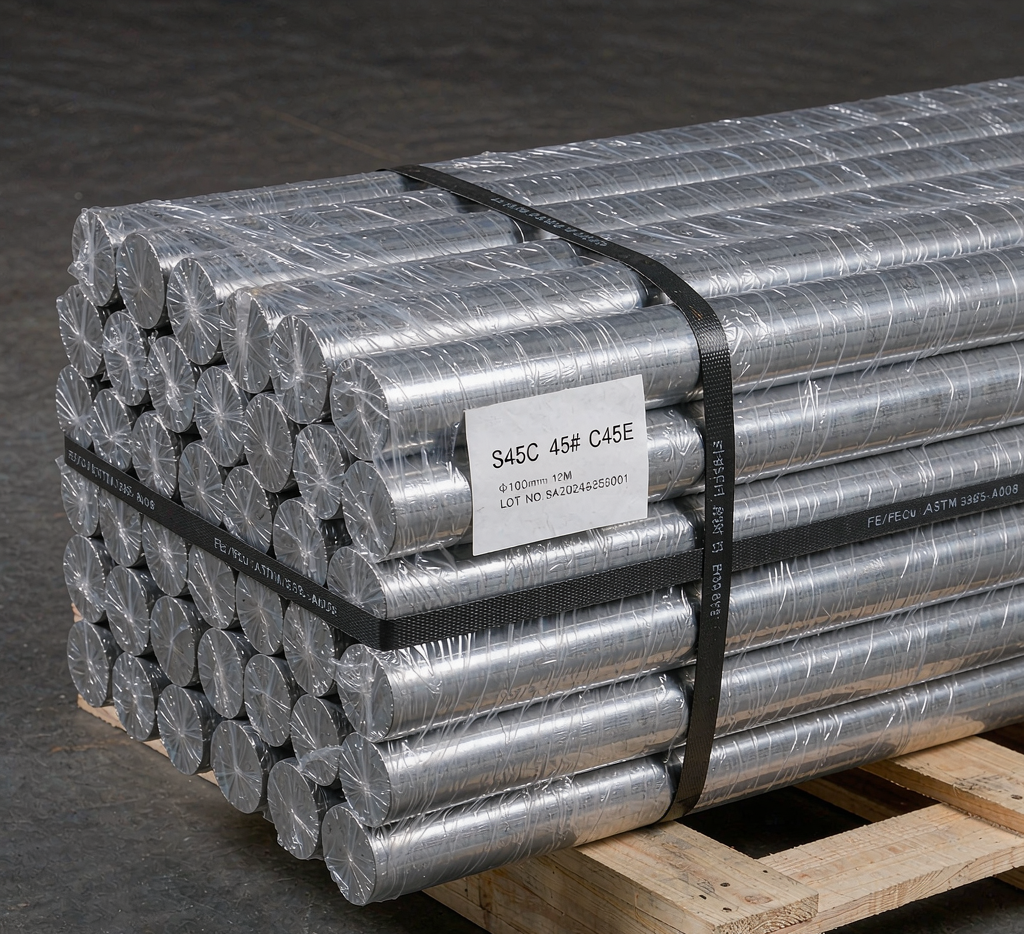
S45C is the most widely used medium-carbon engineering steel for shafts, axles, gears, pins, couplings, hand tools, and fasteners. The Japanese specification JIS G4051 “Carbon Steels for Machine Structural Use” defines S45C with 0.42 to 0.48 percent carbon, balanced manganese, and controlled silicon for heat-treat response. Huaxia-Steel supplies factory-direct S45C round bar in diameter 6 to 500 mm, with hot-rolled black surface, peeled, turned, and centerless ground finishes. Cross-references to AISI 1045, DIN C45, EN8, GB/T 699 45# are supplied per mill test certificate.
1. Standard Scope and Naming
JIS G4051 covers carbon steels designated for machine structural applications. The grade series includes S15C, S20C, S25C, S30C, S35C, S40C, S45C, S50C, S55C, each representing a hundredths carbon content. The naming convention is:
- S – Steel for machine structural use.
- 45 – mean carbon content in 0.01 percent units (0.45 percent nominal).
- C – carbon steel (no significant alloying element).
S45C sits in the mid-carbon range between the low-carbon case-hardening grades (S20C / S15C) and the higher-carbon through-hardening grades (S50C / S55C).
2. Chemical Composition
| Element (percent) | S45C per JIS G4051 | AISI 1045 | DIN C45 / 1.0503 | GB/T 699 45# |
|---|---|---|---|---|
| Carbon (C) | 0.42 to 0.48 | 0.43 to 0.50 | 0.42 to 0.50 | 0.42 to 0.50 |
| Manganese (Mn) | 0.60 to 0.90 | 0.60 to 0.90 | 0.50 to 0.80 | 0.50 to 0.80 |
| Silicon (Si) | 0.15 to 0.35 | 0.15 to 0.35 | 0.15 to 0.35 | 0.17 to 0.37 |
| Phosphorus (P, max) | 0.030 | 0.040 | 0.045 | 0.035 |
| Sulfur (S, max) | 0.035 | 0.050 | 0.045 | 0.035 |
| Nickel (Ni, max) | 0.20 | 0.25 | 0.40 | 0.30 |
| Chromium (Cr, max) | 0.20 | 0.25 | 0.40 | 0.25 |
| Copper (Cu, max) | 0.30 | 0.35 | 0.40 | 0.25 |
The four grades above are nearly identical in chemistry. S45C is slightly tighter in P/S and higher in Mn than C45, and matches AISI 1045 closely. Cross deliveries among S45C / 1045 / C45 / 45# are common and acceptance depends more on traceability and certificate than on chemistry.
3. Mechanical Properties
| Condition | Yield Strength (MPa) | Tensile Strength (MPa) | Elongation (percent) | Hardness (HBW) | Impact @ 20 deg;C (J) |
|---|---|---|---|---|---|
| Hot rolled (as-rolled) | 375 | 650 | 18 | 200 | 27 |
| Normalised | 390 | 620 | 22 | 190 | 35 |
| Annealed | 320 | 540 | 25 | 160 | 40 |
| Quenched and tempered (tempered 550 deg;C) | 600 | 780 | 16 | 220 | 45 |
| Quenched and tempered (tempered 200 deg;C) | 1,180 | 1,300 | 9 | 380 | 20 |
S45C’s value is its through-hardenability. After quenching in water (small sections) or oil (large sections), the bar achieves a martensitic structure through the section. Tempered hardness is tunable from 30 to 55 HRC depending on draw temperature.
4. Size Range and Tolerance
| Category | Diameter Range | Length | Tolerance (per request) |
|---|---|---|---|
| Hot rolled black | 16 to 250 mm | 3 to 12 m | +/- 0.5 to +/- 2.0 mm |
| Forged bar | 150 to 500 mm | 2 to 6 m | +/- 2.0 to +/- 5.0 mm |
| Peeled / turned | 20 to 200 mm | 3 to 7 m | -0/+0.2 mm (ISO h9 / h11) |
| Centerless ground | 6 to 80 mm | 2 to 6 m | -0/+0.02 mm (ISO h6 / h7) |
| Cold drawn | 8 to 80 mm | 3 to 7 m | -0/+0.1 mm |
5. Delivery Condition Selection
Hot rolled black (+AR): Direct from rolling. Heavy mill scale. Used for hot forging and rough machining. Lowest cost.
Peeled and turned (+SH): Surface removed by lathe to ISO h9 / h11, mill scale off, suitable for direct machining without rough facing.
Centerless ground (+PR): Surface precision ground to ISO h6 / h7. Used for precision shafts and bearing seats.
Cold drawn (+CD): Bar cold-drawn through die. Tight tolerance, increased strength through work hardening. Used for high-tolerance pins.
Annealed (+A): Furnace annealed to 580 to 650 deg;C. Soft (HBW <= 180), suitable for extensive machining.
Quenched and tempered (+QT): Hardened and tempered to a specified hardness range. Wear-resistant, used for gear blanks, axle shafts.
6. Heat Treatment Standard Practice
S45C is readily heat-treated using standard equipment:
- Annealing: heat to 800 to 840 deg;C, hold 1 to 2 hours, slow cool to 600 deg;C then air cool. Final hardness approximately HBW 160 to 180.
- Normalizing: heat to 840 to 880 deg;C, hold 20 to 30 minutes, cool in still air. Final hardness HBW 190 to 210.
- Austenitizing for quench: heat to 820 to 860 deg;C in protective atmosphere, hold 30 minutes per 25 mm section.
- Quenching: water for sections up to 25 mm; oil for 25 to 60 mm; polymer (PAG) for both ranges as compromise.
- Tempering: heat to 350 to 650 deg;C per desired final hardness. Avoid 230 to 350 deg;C tempering range (temper embrittlement).
- Surface hardening: induction or flame harden to 50 to 55 HRC with 2 to 4 mm case depth.
7. Applications
- Shafts and axles: drive shafts, transmission shafts, machine spindles, axles for vehicles and rail.
- Gears and pinions: spur gears, helical gears, bevel gears, splined shafts.
- Pins and couplings: pivot pins, hinge pins, coupling bodies.
- Hand tools: wrench bodies, hammer heads (forged and heat-treated), chisels, punches.
- Fasteners: high-strength bolts grade 8.8 / 10.9 (drawn and heat-treated from S45C).
- Agricultural parts: tiller blades, plow points, cultivator shafts.
- Machinery parts: gear blanks, hubs, rollers, levers, rollers, frames.
8. Welding and Machining
S45C’s 0.45 percent carbon makes it poorly suited to welding without preheating and post-weld heat treatment. For repair welding, preheat to 250 to 300 deg;C, use low-hydrogen consumables such as AWS E7018, and stress-relieve at 600 to 650 deg;C. Otherwise, machined or forged parts are joined by mechanical assembly or brazing. Without proper preheat, the HAZ will produce hard martensite and hydrogen cracking.
Machinability is excellent in the annealed condition (about 60 percent of free-machining mild steel, or 50 percent of free-cutting steel). For high-speed machining, annealed or normalized S45C gives the best tool life. Use coated carbide inserts with coolant for turning and milling.
9. Surface Treatment Compatibility
S45C accepts the common surface treatments with proper pre-treatment:
- Black oxide (gun bluing) – directly applicable to surface.
- Electroless nickel – 25 to 50 microns, good for wear surfaces.
- Hard chrome plating – requires chrome-grade surface prep and pre-machining allowance.
- Phosphating – good base for oil-impregnated bearing surfaces.
- Galvanizing – possible but requires pickling; risk of acid attack on carbon centers. Recommend silicon-rich galvanizing bath.
10. Cross Reference Summary
| Standard | S45C Cross | Notes |
|---|---|---|
| JIS (Japan) | S45C | Direct |
| AISI (USA) | 1045 | Almost identical |
| DIN (Germany) | C45 / 1.0503 | Close, slightly lower Mn |
| EN (Europe) | C45E / C45R | EN 10083-1 |
| GB (China) | 45# per GB/T 699 | Equivalent, higher P/S tolerated |
| GOST (Russia) | 45 | Direct |
| KS (Korea) | SM45C | Direct |
| BS (UK) | 080M46 / EN8D | Close |
11. Quality Assurance
Huaxia-Steel S45C round bar is supplied by ISO 9001 certified Chinese mills with EN 10204 3.1 or 3.2 mill test certificate. Each heat carries ladle chemical analysis, tensile, impact, hardness, and grain size (when specified) results. For forged bar, additional ultrasonic testing per EN 10308 can be arranged. Forged bar from hub-grade producers carries substantially tighter internal soundness than hot-rolled bar; this is reflected in price.
12. Frequently Asked Questions
Q1: Is S45C stainless?
No. S45C is a medium-carbon engineering steel, not corrosion-resistant. Use 304 / 420 / 431 stainless for corrosion service.
Q2: What is the largest diameter S45C bar available?
Hot rolled S45C round bar is readily available up to 250 mm; forged bar up to 500 mm from selected mills. Beyond this, the steel is produced as a forging, then rough-turned or ground to size.
Q3: Can S45C be supplied in condition for direct machining?
Yes. The most cost-effective condition is hot rolled + peeled (turned) with ISO h9 tolerance. For higher precision, request centerless ground (ISO h6) at extra cost.
Q4: What is the heat treatment hardness range achievable?
After water or oil quenching, S45C will reach 55 to 60 HRC. Tempering back to 30 to 55 HRC is typical for gears and shafts. Avoid tempering at 230 to 350 deg;C (temper brittleness).
Q5: What is the difference between S45C and S50C?
S50C has 0.47 to 0.53 percent carbon, giving slightly higher achievable hardness and wear resistance but reduced ductility. For wear surfaces where strength is critical, S50C is preferred; for toughness, S45C is preferred.
13. Conclusion
S45C round bar is the workhorse mid-carbon engineering grade, with global cross-reference to 1045 / C45 / 45#. Pick the condition by the application: hot rolled for forging, peeled for direct machining, annealed for extensive machining, QT for finished strength. Confirm with the mill if Charpy testing is required (S45C carries Charpy only in normalized or above conditions).
14. Get a Quote from Huaxia-Steel
Huaxia-Steel supplies factory-direct S45C carbon steel round bar from JIS G4051 certified Chinese mills. Diameter 6 to 500 mm, surface conditions hot rolled / peeled / ground / drawn / QT, EN 10204 3.1 / 3.2 MTC. ISO 9001 quality system, third-party inspection available. Send your drawing, diameter and condition for a quotation within 24 hours.