How to Verify Carbon Steel Mill Certificate Authenticity: Step-by-Step
How to Verify Carbon Steel Mill Certificate Authenticity: Step-by-Step
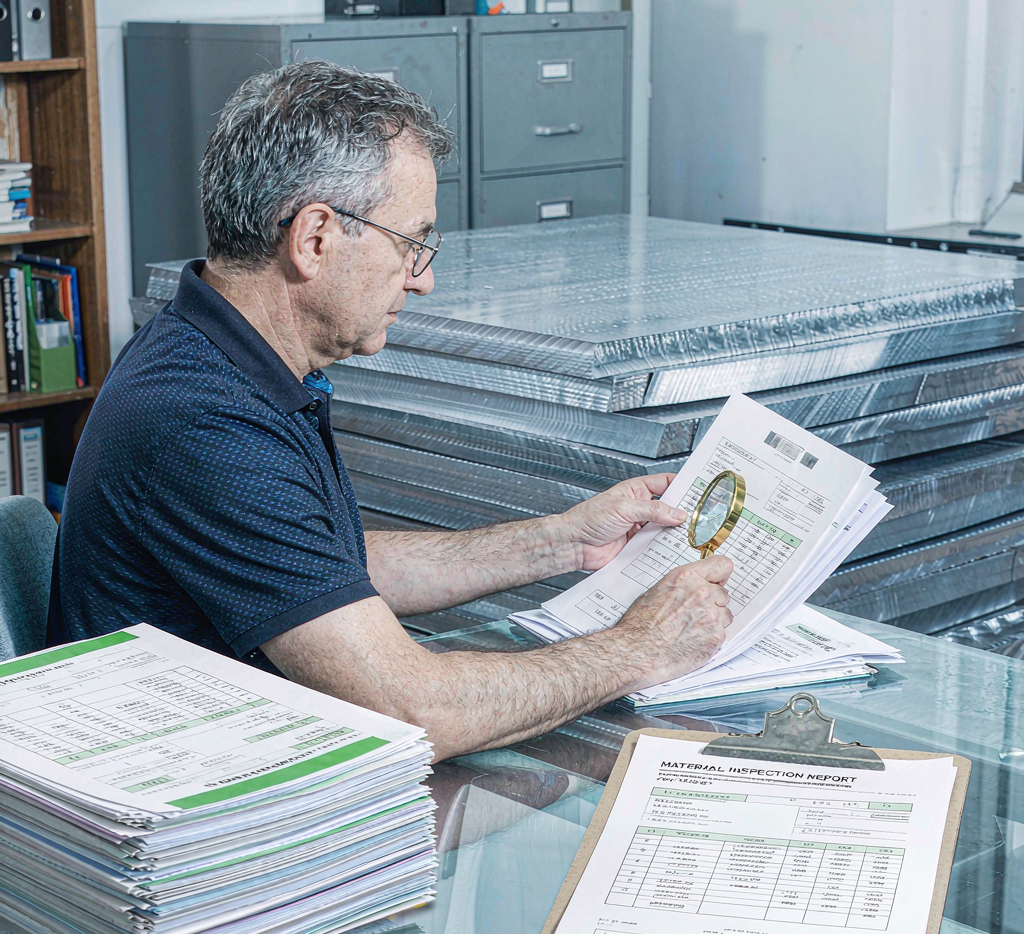
A forged or altered mill test certificate (MTC) can expose your project to liability, regulatory rejection, and catastrophic failure. With global carbon steel supply chains spanning multiple traders, resellers, and document handlers, the risk of encountering falsified MTCs is real. This guide gives procurement managers and quality engineers a practical, seven-step protocol to authenticate carbon steel mill certificates before the material reaches your fabrication floor.
1. Understanding the Structure of a Valid MTC
Before verifying authenticity, know what a genuine MTC contains. Under EN 10204, Type 3.1 and 3.2 certificates must include:
Mill name and address (the original manufacturer, not the trader)
NDE results (ultrasonic test, radiographic test, dye penetrant if ordered)
Stamp or signature of the mill quality department and, for 3.2, the independent inspection body
If any of these fields are missing, blurred, or obviously copy-pasted from a different certificate, treat the document as suspect.
2. Step 1: Verify Heat Number and Batch Traceability
The heat number is the single most important traceability key. Every ton of steel produced in a basic oxygen furnace or electric arc furnace is assigned a unique heat number. Follow this checklist:
Confirm the heat number format matches the mill’s known pattern (some mills use 6-digit numbers, others use alphanumeric codes with year prefixes).
Cross-check the heat number against the mill’s shipping document or packing list. They must match exactly.
li>
Request a heat summary or heat ledger from the mill or authorized distributor. The summary shows the total quantity produced under that heat and the customers to whom it was sold. If your order quantity exceeds the heat total, the certificate is fraudulent.
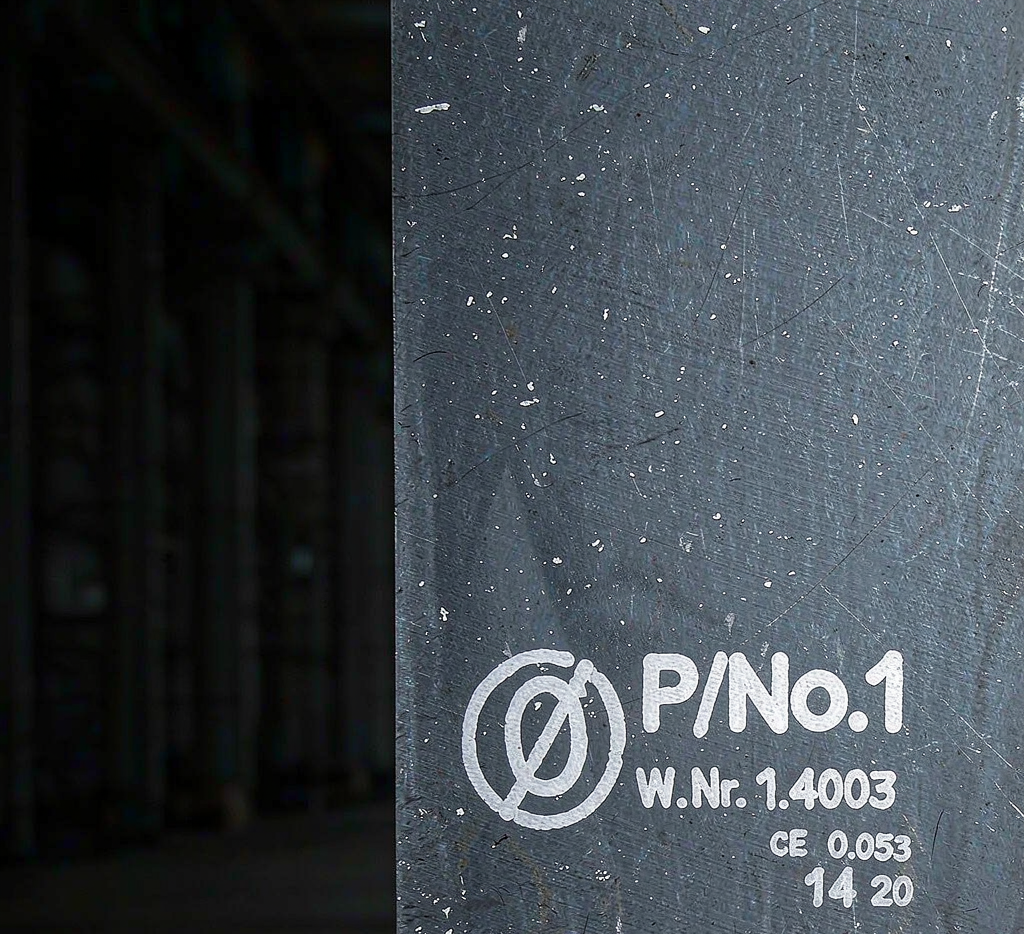
Verify that the batch number on the MTC matches the batch markings stenciled on the steel plates or bundles. Walk the warehouse and read the stencil with your own eyes.
3. Step 2: Cross-Check Chemical Composition
Chemistry is the hardest field to forge convincingly because it must satisfy multiple constraints simultaneously.
Compare each element against the standard specification (ASTM, EN, JIS, GB). A common forgery mistake is to copy chemistry from a different grade that does not match the ordered standard.
Check that carbon equivalent (CE = C + Mn/6 + (Cr+Mo+V)/5 + (Ni+Cu)/15) falls within the expected range for the grade. Anomalies like CE > 0.60 on a supposedly low-carbon grade are red flags.
Look for impossible precision. Genuine mill spectrometers report to 2 or 3 decimal places for major elements and 3 or 4 for trace elements. Overly round numbers (e.g., C = 0.20, Mn = 1.00, S = 0.020 exactly) suggest manual editing.
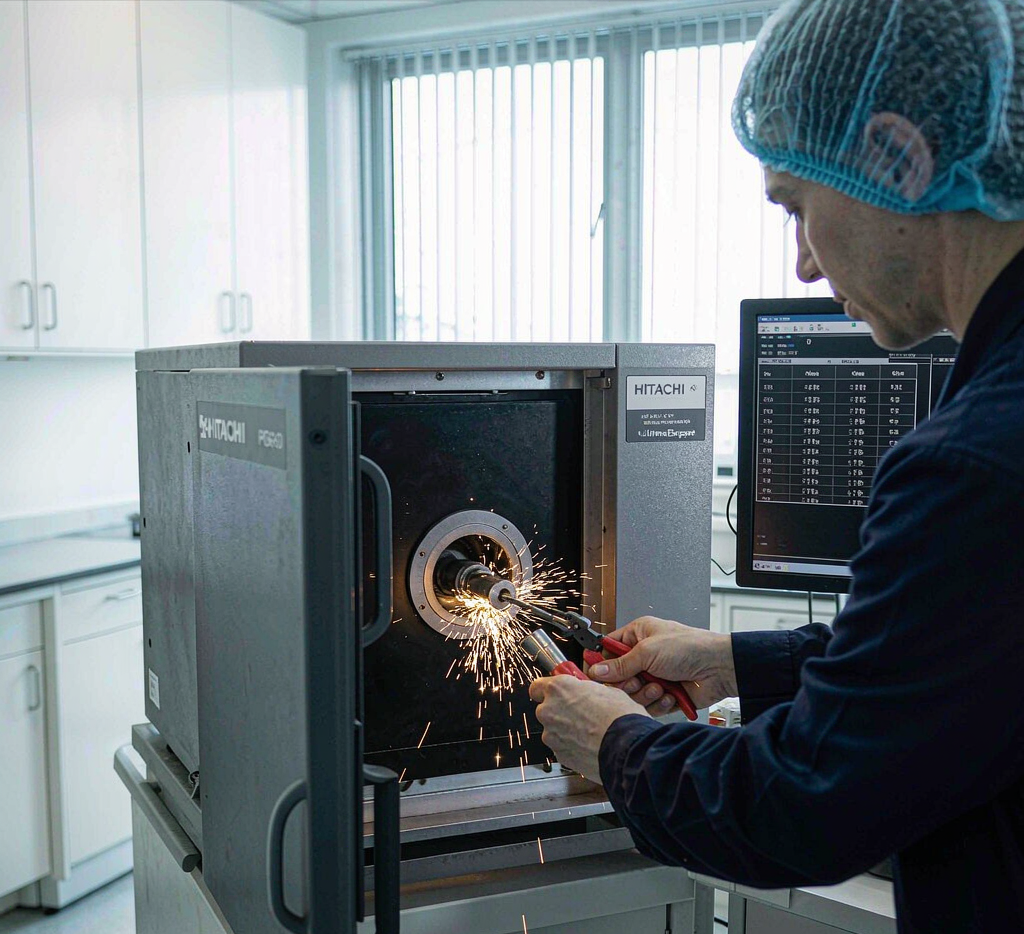
Request a retest from an independent laboratory. Cut a small sample from the edge of a plate (avoiding the heat-affected zone if the plate was cut by flame) and send it for optical emission spectrometry (OES). Costs $80–150 per sample and provides definitive confirmation.
4. Step 3: Validate Mechanical Test Results
Mechanical properties must be internally consistent and consistent with the grade and heat treatment condition.
Check that yield strength, tensile strength, and elongation satisfy the minimum requirements of the specified standard. A Grade S355JR plate with reported yield of 320 MPa is out of specification and should be rejected.
Verify the strength-elongation trade-off. Higher tensile strength should correlate with lower elongation. A certificate showing 550 MPa tensile with 30 % elongation is physically implausible for carbon steel.
Confirm that the test specimen orientation (longitudinal or transverse) matches the standard requirement. Some grades require longitudinal tests only; others require both.
Impact test results must show the test temperature in °C and the absorbed energy in joules. A missing test temperature is a common sign of a copied certificate from a different heat.
5. Step 4: Check Official Stamps and Signatures
For EN 10204 3.1, the certificate must bear the mill’s quality control stamp (not a printed graphic). Zoom in on the PDF—genuine stamps show pixelation consistent with physical stamping, while forgeries often use clean vector graphics.
For EN 10204 3.2, the certificate must carry two stamps: the mill’s QC stamp and the independent inspection body’s stamp (e.g., TÜV, Lloyd’s Register, Bureau Veritas, SGS, DNV). Contact the inspection body directly using contact details from their official website (not from the certificate) and ask them to confirm the certificate number and heat number.
Check the issue date. A certificate dated after the material arrival date at your warehouse is impossible unless it is a replacement certificate, which should be explicitly labeled as such.
6. Step 5: Confirm Third-Party Inspection Witness
For high-value or safety-critical orders, buyers often require third-party inspection witness (TPI) at the mill during testing. If your purchase order specified TPI witness:
Request the inspection release note (IRN) or inspection certificate from the TPI body (BV, SGS, Intertek, TÜV, etc.).
Cross-reference the IRN number with the TPI body’s online certificate database if available.
Confirm that the inspector’s name on the IRN matches a licensed inspector in the TPI body’s directory.
Check that the inspection date precedes or matches the MTC issue date.
7. Red Flags: Signs of a Forged MTC
Red Flag
What It Means
Action
Low-resolution scan with visible pixelation around text boxes
PDF may have been edited in Photoshop or similar
Request original vector PDF from mill
Different fonts within the same certificate
Copy-paste from multiple sources
Reject and demand re-issue from mill
Heat number not found in mill’s online traceability portal
Heat does not exist or was not sold to your supplier
Contact mill directly
Chemistry identical to a publicly posted certificate from another buyer
Copy-paste forgery
Search the heat number online
Certificate shows impossible test dates (weekends, holidays, or after shipping)
Backdated or fabricated testing
Request test lab raw data
Mill name on certificate differs from mill name on packing list
Trader trying to hide origin
Investigate supply chain
No QR code or barcode when the mill is known to use them
Old template reused fraudulently
Verify with mill’s current format
FAQ
How much does independent laboratory verification cost?
Chemical analysis by OES costs $80–150 per sample. Mechanical testing (tensile + Charpy) costs $200–400 per set. For a $50,000 steel order, spending $500–1,000 on verification is reasonable insurance.
Can I verify an MTC online?
Some mills (Baosteel, Shougang, HBIS) offer online heat-number lookup portals. For mills without online systems, email the mill’s export department with the heat number, certificate number, and your supplier’s name. Response times range from 24 hours to 5 business days.
What is the difference between a mill certificate and a test report?
A mill certificate (EN 10204 3.1 or 3.2) is a formal document issued by the mill’s quality department certifying that the material meets the standard. A test report (EN 10204 2.2) merely states the results of tests performed by the mill without formal certification. A 2.2 report is not sufficient for pressure equipment or structural steel in most jurisdictions.
Should I reject material if the MTC has minor formatting differences?
Formatting differences alone are not grounds for rejection if the content is verifiable. Mills update certificate templates periodically. Focus on data integrity, traceability, and third-party confirmation rather than font choice.
What legal recourse do I have if the MTC is forged?
Reject the material under the contractual warranty clause. If the supplier refuses a refund, escalate through trade arbitration (e.g., SIAC, ICC) or local courts depending on the contract jurisdiction. Preserve all documents, emails, and laboratory retest results as evidence.
Need carbon steel plate and pipe with fully traceable EN 10204 3.1 or 3.2 MTC? Huaxia-Steel supplies every heat with original mill certificates, online heat-number verification, and optional third-party inspection by BV, SGS, or TÜV. Contact us for a quotation with full traceability package.
If you require further information about our metal sheet products or architectural projects, please don’t hesitate to leave your contact details and message here.
Our team of experts will respond within 24 hours to continue the discussion and provide you with any additional information you requires.