ISO 9001 vs ISO 14001 vs ISO 45001: Carbon Steel Factory Certification Guide
ISO 9001 vs ISO 14001 vs ISO 45001: Carbon Steel Factory Certification Guide
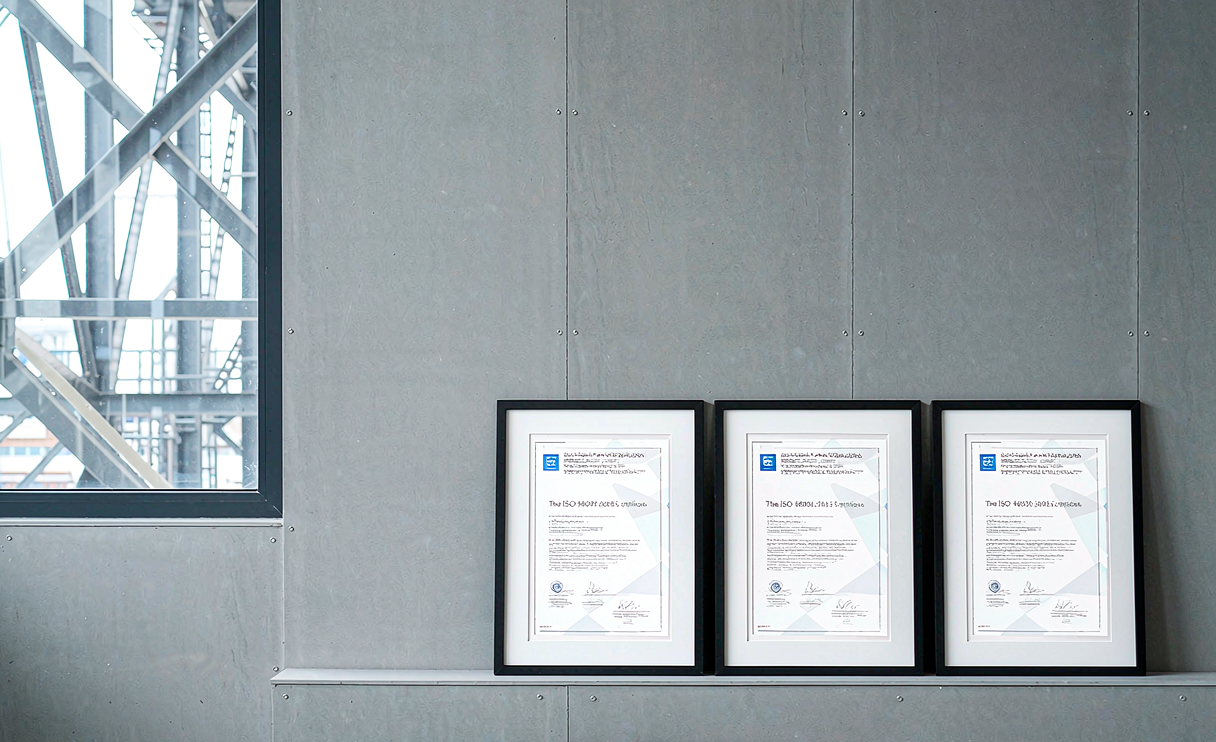
When you evaluate a carbon steel mill or trading supplier in China, the first documents you should ask for are their management-system certificates. The three most common are ISO 9001 for quality, ISO 14001 for environment and ISO 45001 for occupational health and safety. Each certificate tells you something different about how the factory is run, and together they give a useful first-screen of supplier reliability. This guide explains what each standard covers, how to verify authenticity and what gaps to look for during a factory audit.
Certificates are not a guarantee of perfect steel, but they show that the supplier has documented processes, internal audits and management review. For buyers importing from China, they are a low-cost way to filter out disorganized traders and small workshops before committing to a trial order.
1. ISO 9001 — Quality Management System
ISO 9001 is the world’s best-known quality management standard. For a carbon steel factory, it means the company has defined processes for order review, raw-material purchasing, production control, inspection, non-conformance handling, corrective action and customer complaints. The latest version is ISO 9001:2015, which emphasizes risk-based thinking and process interaction.
What to look for on the certificate:
Scope of certification — must include steel production, processing or trading activities that match your purchase.
Accreditation body — certificates issued by UKAS, ANAB, CNAS-accredited bodies are more credible than unknown third parties.
Expiry date — ISO 9001 certificates are valid for three years with annual surveillance audits.
Certificate number — should be verifiable on the issuer’s website or accreditation database.
2. ISO 14001 — Environmental Management System
ISO 14001:2015 helps a factory identify, manage and reduce its environmental impacts. For steel producers this covers emissions from heating furnaces, wastewater from pickling lines, dust from shot blasting, waste oil and scrap disposal, and energy consumption. The standard does not set absolute pollution limits — those are set by local law — but it requires the factory to set environmental objectives, train employees and continuously improve.
Why it matters for buyers:
Factories with ISO 14001 are less likely to be shut down by environmental inspections, which protects your delivery schedule.
They usually have better housekeeping, which correlates with better surface quality and fewer defects.
Many European and North American buyers now require ISO 14001 in their supplier qualification.
3. ISO 45001 — Occupational Health and Safety
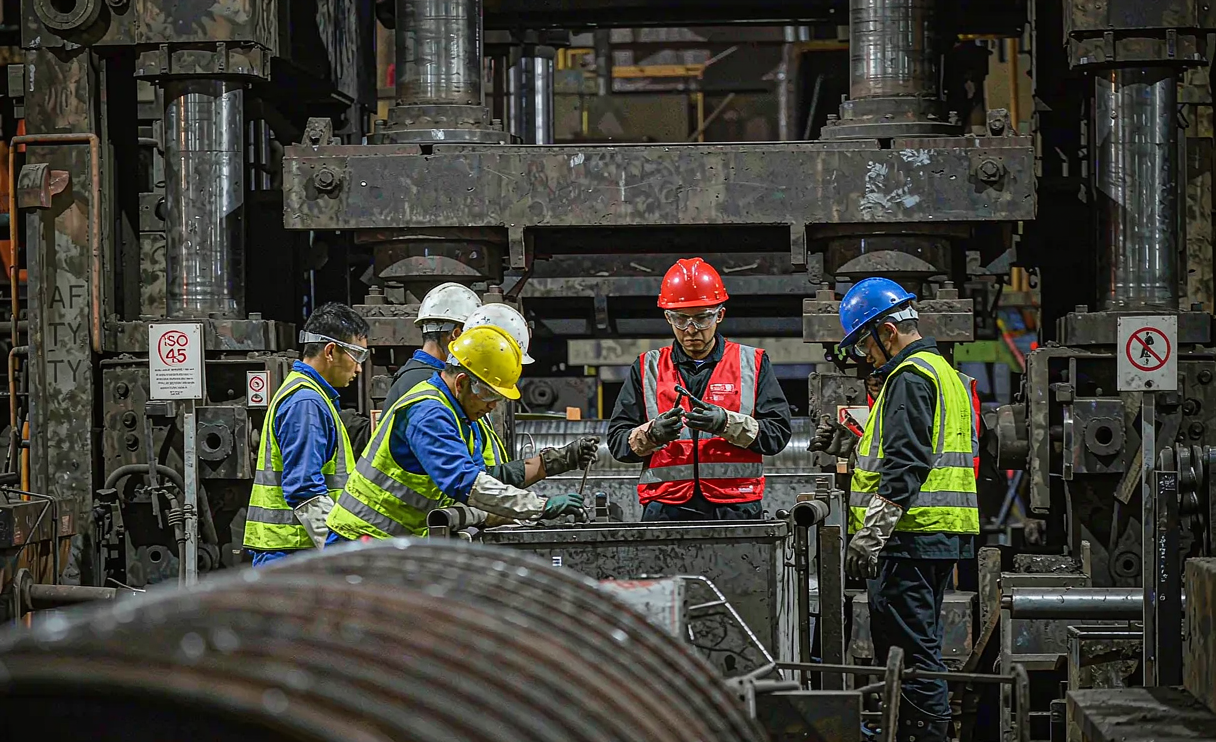
ISO 45001:2018 replaced OHSAS 18001 and focuses on worker health and safety. A steel mill with ISO 45001 should have hazard identification for cranes, molten metal, rolling mills, cutting machines, forklifts and chemical exposure. The standard also requires emergency response plans, incident investigation and worker participation.
Why it matters for buyers:
Safe factories tend to have lower staff turnover and more experienced operators, which improves quality consistency.
Accidents and regulatory shutdowns can delay shipments.
Large brand owners and ESG-focused customers increasingly ask for ISO 45001.
4. Side-by-Side Comparison
Standard
Focus area
Key questions it answers
Typical evidence
ISO 9001:2015
Quality management
Can the factory consistently meet specifications?
QC records, calibration logs, MTCs, complaint records
ISO 14001:2015
Environmental management
Does the factory control emissions, waste and energy?
Environmental permits, wastewater reports, energy audits
ISO 45001:2018
Health and safety
Does the factory protect workers from hazards?
Safety training records, incident logs, PPE enforcement
5. How to Verify Certificate Authenticity
Fake certificates are common in low-cost sourcing markets. Before placing a large order, verify the certificate using these steps:
Check the certificate body’s accreditation on the official CNAS, UKAS or ANAB website.
Visit the certifier’s online certificate database and search the certificate number.
Confirm the scope covers the exact product or process you are buying.
Ask for the last surveillance audit report or non-conformance list.
Cross-check the factory address on the certificate with the address on your PO and business license.
6. What Certificates Cannot Tell You
ISO certificates confirm that a management system exists, not that every heat of steel is perfect. They do not replace product testing, mill test certificates or third-party inspection. A factory can hold ISO 9001 and still ship off-spec material if its process control is weak. Always combine certificate review with pre-shipment inspection and sample testing for critical projects.
7. Factory Audit Checklist Beyond Certificates
Are production and inspection records kept for at least three years?
Are measuring instruments calibrated and labelled with expiry dates?
Is there a documented non-conformance and corrective-action procedure?
Do workers wear PPE and follow lock-out/tag-out procedures?
Are environmental permits displayed and within validity?
Is there a separate area for quarantined or rejected material?
FAQ
Is ISO 9001 enough to qualify a carbon steel supplier?
It is a good starting point but not enough on its own. Add product testing, reference checks, a factory audit and a trial order before committing to high volumes.
Can a trading company hold ISO 9001?
Yes. Many trading companies are certified for “sales and supply of steel products.” That is legitimate, but it does not certify the actual mill. Ask who manufactures the steel and whether the mill holds its own certifications.
What is the difference between ISO 45001 and OHSAS 18001?
ISO 45001 is the current international standard and uses the same high-level structure as ISO 9001 and ISO 14001. OHSAS 18001 was the previous British standard and is now being phased out.
Do I need all three certificates?
For most buyers, ISO 9001 is essential. ISO 14001 and ISO 45001 are increasingly required by ESG policies and large OEM customers. If your customers demand sustainability credentials, ask for all three.
How does Huaxia Steel handle supplier certification?
Huaxia Steel works with mills that maintain ISO 9001, ISO 14001 and ISO 45001 where applicable. We verify certificates before adding a mill to our approved supplier list and can share documentation on request.
Source Certified Carbon Steel with Confidence
Need help verifying a supplier’s certificates or planning a factory audit? Our quality team can review documentation, arrange third-party inspection and recommend mills that match your certification requirements. Contact us for a certified carbon steel quotation.
8. Certification Bodies and Accreditation
Not all ISO certificates are equal. The credibility depends on the certification body and its accreditation. Globally recognized accreditation marks include UKAS (United Kingdom), ANAB (North America), DAkkS (Germany), COFRAC (France) and CNAS (China). A certificate issued by an unaccredited or self-accredited body has little value in supplier qualification.
Accreditation
Region
Scope example
UKAS
United Kingdom
ISO 9001, ISO 14001, ISO 45001
ANAB
United States
ISO 9001, ISO 14001
CNAS
China
ISO 9001, ISO 14001, ISO 45001
DAkkS
Germany
ISO 9001, ISO 14001, ISO 45001
9. Audit Timeline and Cost
For a first-time certification, a steel factory typically needs 3 – 6 months to prepare documentation, train staff and run internal audits. The stage 1 audit reviews documentation; the stage 2 audit evaluates implementation on the shop floor. Surveillance audits occur annually, and recertification happens every three years. Certification costs vary from a few thousand to tens of thousands of dollars depending on factory size and complexity.
10. Supplier Scorecard Beyond ISO
Use ISO certificates as a gate, then score suppliers on performance. A simple scorecard might include on-time delivery percentage, rejection rate, response time to complaints, certificate validity and audit findings closure rate. Track these metrics over 12 months before upgrading a supplier to strategic status.
Metric
Target
Weight
On-time delivery
≥ 95%
30%
Quality acceptance rate
≥ 98%
30%
Certificate validity
No major NC
20%
Complaint closure time
≤ 14 days
20%
11. Common Red Flags During Certificate Review
Certificate number not found on the certifier’s online database.
Scope is vague or does not match the products you are buying.
Certificate is issued by an unknown body with no accreditation.
Factory address on the certificate differs from the actual site.
No surveillance audit records for the current certification cycle.
If you require further information about our metal sheet products or architectural projects, please don’t hesitate to leave your contact details and message here.
Our team of experts will respond within 24 hours to continue the discussion and provide you with any additional information you requires.