Carbon Steel Factory Audit Checklist: 12 Steps for Buyers
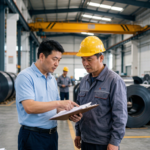
A carbon steel factory audit is one of the most effective ways to reduce supply risk before placing a large order. A single day on the production floor reveals more than weeks of email correspondence. This 12-step checklist helps buyers evaluate Chinese carbon steel mills systematically.
Whether you source structural steel, round bar, plate, pipe, or wire rod, use this checklist to qualify suppliers and build a reliable sourcing base.
1. Verify Business Licenses and Export Qualifications
Start with the basics. Request copies of the business license, import-export registration certificate, and tax registration. Confirm that the legal entity matches the company name on the contract and invoice. Check how long the company has been operating and whether it has direct export rights or works through a trading agent.
2. Review Quality Management Certifications
Ask for valid certificates and verify them with the issuing body where possible:
- ISO 9001 quality management system
- ISO 14001 environmental management
- ISO 45001 occupational health and safety
- Mill-specific approvals (API, ABS, LR, DNV, BV, TÜV) if relevant
A factory that maintains these systems usually has documented procedures for incoming inspection, process control, and non-conformance handling.
3. Inspect Raw Material Receiving and Storage
Check how the mill receives and stores raw materials. Look for:
- Heat number traceability from billet to finished product
- Separation of different grades and heat numbers
- Protection from moisture, contamination, and mixing
- Incoming inspection records and supplier evaluation
4. Evaluate Production Equipment and Capacity
Walk the production line and note the age, brand, and condition of key equipment:
- Reheating furnaces and rolling mills
- Drawing, peeling, and straightening machines
- Cutting and finishing equipment
- Monthly and annual production capacity
Confirm that the factory has enough capacity to deliver your order on schedule without subcontracting to an unknown third party.
5. Check In-Process Quality Control
Good mills control quality during production, not only at final inspection. Look for:
- Dimensional checks at each rolling stand
- Surface inspection for scales, cracks, and scratches
- Temperature monitoring during rolling and heat treatment
- Documented process parameters for each heat
6. Review Laboratory and Testing Capability
A competent mill laboratory should have:
- Spectrometer for chemical analysis
- Universal testing machine for tensile tests
- Hardness testers (Brinell, Rockwell, Vickers)
- Impact testing equipment if low-temperature grades are produced
- Ultrasonic testing capability for thick plates and bars
Ask to see recent calibration records and proficiency testing participation.
7. Examine Finished Product Inspection
Review final inspection procedures for the products you plan to buy. Confirm:
- Sampling plan (AQL level, sample size)
- Dimensional tolerance verification method
- Surface quality acceptance criteria
- Certificate of conformity and mill test certificate content
8. Assess Packing, Marking, and Loading
Poor packing causes rust and damage during ocean freight. Check:
- Bundling strength and steel strap quality
- Waterproof paper or plastic wrapping
- Edge protection for plates and sheets
- Clear stenciling with grade, heat number, size, and standard
- Loading supervision and lashing method
9. Review Documentation Control
A reliable supplier keeps controlled records. Request examples of:
- Mill test certificates (MTC)
- Inspection reports
- Non-conformance reports and corrective actions
- Material traceability matrix
10. Evaluate Social and Environmental Compliance
Responsible buyers assess labor conditions, environmental permits, and waste handling. Check for:
- Valid environmental permits
- Dust and effluent control systems
- Worker safety equipment and training records
- Working hour and wage compliance
11. Check Export Experience and Reference Customers
Ask for a list of export destinations, reference customers, and past shipment records. Experienced exporters understand documentation requirements such as:
- Commercial invoice and packing list
- Bill of lading or airway bill
- Certificate of origin
- SGS/BV inspection reports
- MSDS and REACH compliance if required
12. Test Communication and Responsiveness
Technical clarity matters. Evaluate whether the sales and quality teams understand your specifications, respond promptly, and provide transparent answers. A factory that cannot explain its own quality plan is a red flag.
Factory Audit Scorecard
| Area | Weight | Score (1–5) | Notes |
|---|---|---|---|
| Legal and certifications | 15% | ||
| Production capacity | 15% | ||
| Quality management | 20% | ||
| Testing capability | 15% | ||
| Packing and logistics | 15% | ||
| Communication | 10% | ||
| ESG compliance | 10% |
FAQ
Q1: How long does a carbon steel factory audit take?
A: A typical on-site audit takes one to two days, depending on the size of the mill and the scope of products.
Q2: Should I hire a third-party auditor?
A: Yes, for first-time suppliers or large orders, third-party auditors such as SGS, Bureau Veritas, or TÜV add credibility and reduce travel cost.
Q3: What is the most common risk found during audits?
A: Inconsistent documentation and lack of traceability between raw material heat numbers and finished product certificates are frequent findings.
Q4: Can I audit a factory remotely?
A: Remote audits are possible but less reliable. Use them only for follow-up audits or low-risk repeat orders.
Q5: Does Huaxia-Steel welcome factory audits?
A: Yes. We arrange mill visits and third-party inspections for qualified buyers and support full traceability documentation.
Source Carbon Steel from Audited Mills
Huaxia-Steel partners with ISO-certified carbon steel mills across China. We provide transparent factory audit support, pre-shipment inspection, and complete export documentation. Contact us to schedule a supplier review or request a quotation.