Introduction: Why Packaging Matters for Steel Exports
Carbon steel is strong, but it is not indestructible in transit. Moisture, salt air, abrasion, and improper lifting can turn a perfectly produced shipment into a rejected load at the destination port. The right packaging and shipping method protects surfaces, preserves tolerances, and keeps your project on schedule.
This guide covers the main risks, packaging options, container loading practices, and documentation needed for exporting carbon steel bars, pipes, plates, sheets, and fittings — with a checklist you can use before every shipment.
1. Moisture and Rust: The Biggest Risk
Mill scale offers only limited protection. Once moisture reaches the steel surface, rust begins within hours in warm, humid conditions. Sea freight adds salt air exposure, condensation inside containers, and handling in open docks. Even “short” transits of two to three weeks can produce enough surface rust to cause disputes if packaging is inadequate.
The most common causes of rust in transit are:
- Pallets placed directly on damp container floors
- Inadequate or torn VCI film
- Missing desiccant bags inside the container
- Condensation from temperature swings at sea
- Loading in rain without re-drying
2. Packaging Options by Product
| Product | Common Package | Rust Protection |
|---|---|---|
| Round / flat / square bars | Bundles, steel-strapped, wooden runners | Oiled + VCI film + desiccant |
| Pipes and tubes | Bundles, capped ends, steel-strapped | End caps + oiled / black varnish |
| Sheets and plates | Stacked, wooden separators, steel-banded | Oiled + paper interleave + VCI |
| Fittings (flanges, elbows, tees) | Plywood cases or steel pallets | Plastic caps + VCI bag |
| Coils | Eye-to-sky or eye-to-wall, steel bands | Oiled + VCI + edge protectors |
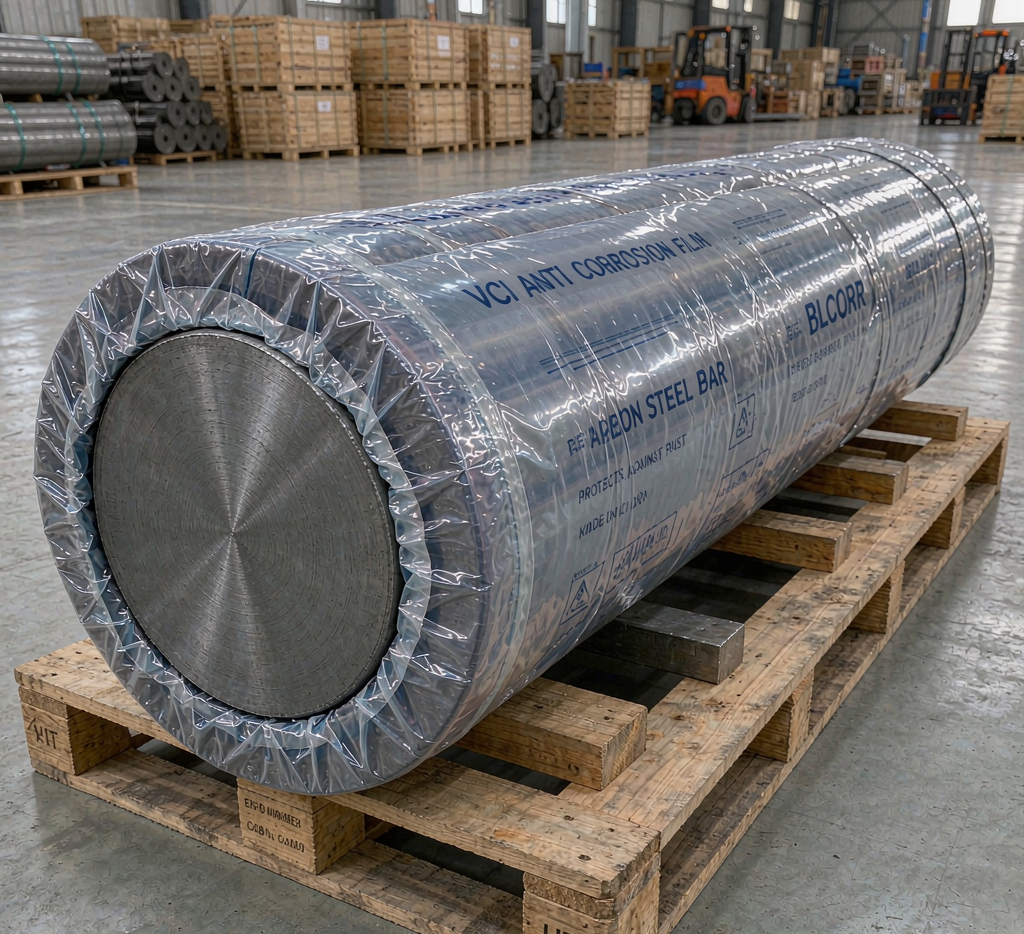
3. VCI Film and Protective Wrapping
VCI (volatile corrosion inhibitor) film emits vapor-phase inhibitors that form a molecular barrier on the steel surface. It is the most effective single rust-prevention measure for bundled bars, fittings, and small parts. Key points:
- Use VCI film with sufficient overlap and seal the seams with tape.
- VCI has a shelf life; confirm the film is fresh and rated for the transit duration.
- For painted or coated parts, verify the VCI is compatible with the finish.
- Combine VCI with desiccant bags for long sea voyages or high-humidity routes.
4. Container Loading Best Practices
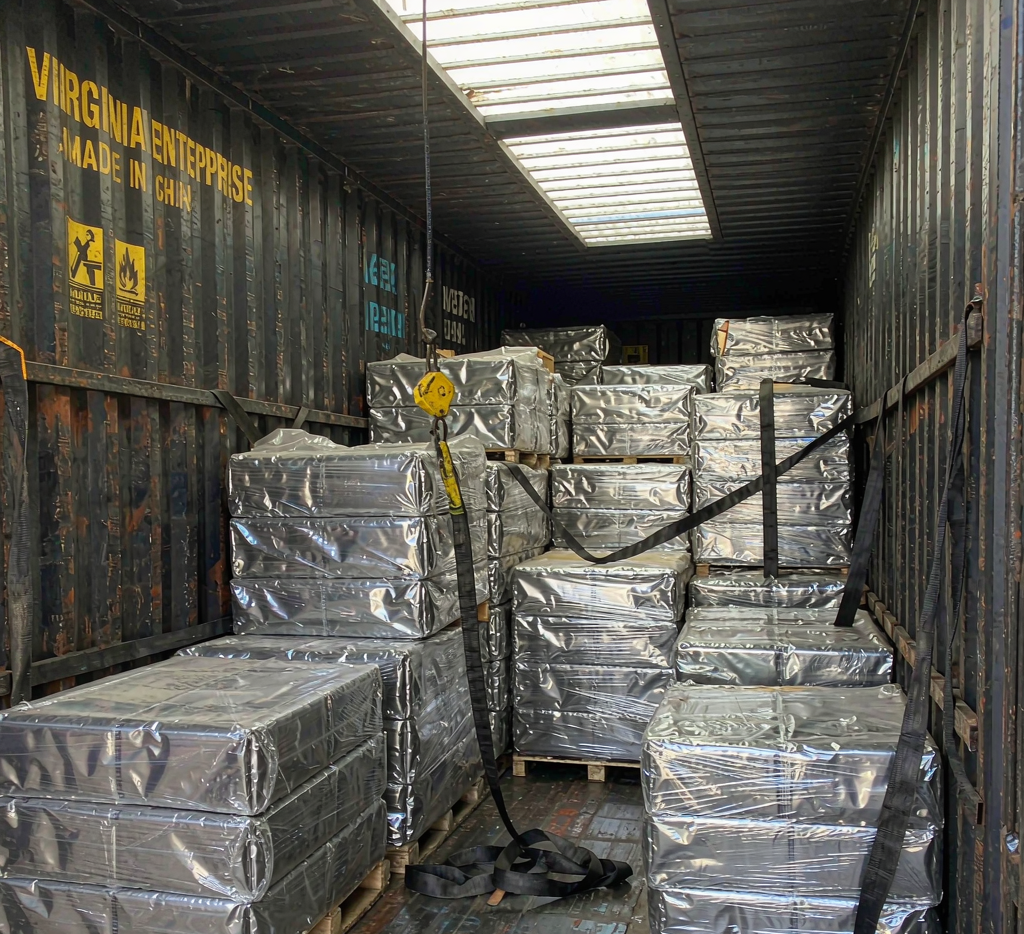
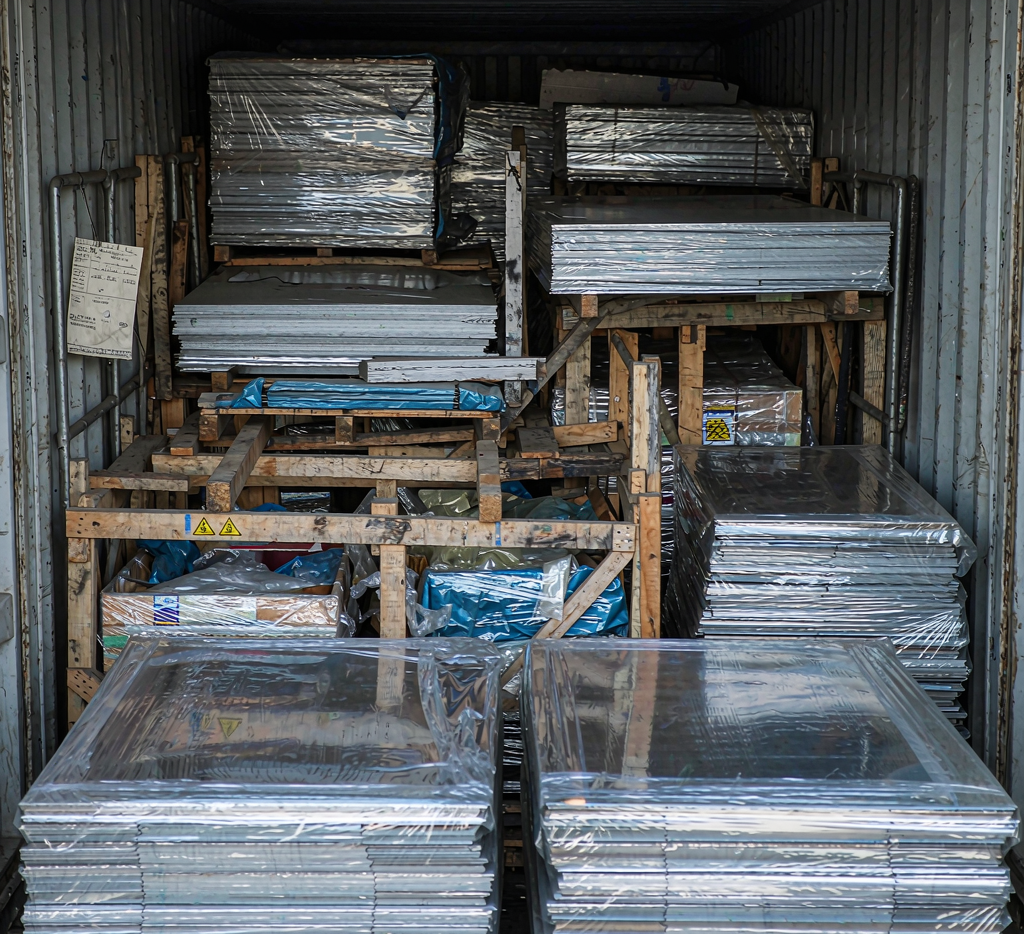
- Use wooden dunnage to lift bundles off the container floor and allow drainage.
- Place heavy bundles at the bottom and lighter items on top to avoid crushing.
- Chock and lash bundles to prevent shifting during rolling seas.
- Leave air space for desiccant bags; do not block ventilation entirely.
- Take loading photos from each end and the door side before sealing.
5. Documentation Checklist
| Document | Purpose |
|---|---|
| Commercial invoice | Value, Incoterms, payment terms |
| Packing list | Bundle count, dimensions, net/gross weight, marks |
| Mill test certificate (MTC) | Chemistry, mechanical properties, heat number |
| Bill of lading | Ownership and shipment terms |
| Certificate of origin | Origin and preferential duty claims |
| HS code declaration | Customs classification |
6. Damage Prevention Checklist
- Inspect all steel for surface rust, dents, and oil coverage before packing.
- Seal cut ends of pipe and tube with plastic or metal caps.
- Use edge protectors and corner guards to prevent strap cutting into the steel.
- Mark each bundle with grade, size, heat number, and destination.
- Confirm container condition: no holes, no previous cargo contamination, dry floor.
- Seal container with a numbered bolt seal and record the seal number.
Frequently Asked Questions
1. Is mill scale enough to prevent rust during sea freight?
No. Mill scale can flake and is porous. For ocean shipment, always add oil, VCI film, or another protective coating depending on the transit time and destination climate.
2. How do I stop condensation inside the container?
Use desiccant bags or container desiccant poles, ensure the container is dry before loading, and avoid loading steel that is cold and wet. Proper dunnage also improves air circulation.
3. Can I ship carbon steel without oil?
Yes, but only if the transit is short and the destination climate is dry, or if a substitute protection such as VCI or painted coating is applied. For sea freight, oil or VCI is strongly recommended.
4. What is the best packaging for pipe fittings?
Small fittings should be packed in plywood cases or strong cartons with VCI bags. Large fittings can be palletized with end caps and protective separators to prevent facing damage.
5. Who pays for damaged steel at the destination?
This depends on the Incoterm and the insurance cover. Under CIF, the seller arranges insurance but risk transfers at loading; under DDP, the seller carries more responsibility. Always document container condition and loading photos to support any claim.
Conclusion
Good packaging is cheap insurance. A small investment in VCI film, desiccants, end caps, and proper dunnage prevents rust, denting, and disputes that can cost far more than the packaging itself. Build the packaging requirement into your purchase order and verify it before the container seals.
Huaxia-Steel ships carbon steel bars, pipes, plates, sheets, coils, and fittings worldwide with export-standard packing, VCI protection, and full documentation. Tell us your destination port and product mix for a packing plan and shipping quotation.