Introduction
Negotiating a great steel price means nothing if the payment structure exposes you. For importers of carbon steel, the two dominant payment terms are T/T (telegraphic transfer) and L/C (letter of credit). Choosing between them — and structuring the details inside them — determines who carries the risk between “steel leaves the mill” and “steel clears your port”.
This guide compares T/T vs L/C for steel import orders: typical deposit ratios, document flows, fraud and quality risks, cost differences, and how experienced buyers combine both instruments by order size and supplier maturity.

T/T: How It Works for Steel Orders
T/T is a direct bank transfer. The standard export structure is 30% deposit with order, 70% balance against copy of B/L (bill of lading). Variants you will meet:
- 30/70 vs B/L copy: the default. Mill books production with the deposit; you pay the balance when you receive the shipping documents (B/L copy, invoice, packing list, MTC), then originals are released.
- 30/70 vs BL original (COD documents): stricter — balance paid against original documents via your bank or courier. Slightly safer for the buyer.
- 20/80, 50/50: common on small trial orders (50/50) or where the mill finances material purchases (50% deposit covers plate/slab buying).
- 100% T/T advance: occasionally demanded for tiny orders or when the seller’s credit line is exhausted. Avoid on first orders with new suppliers.
Buyer protections to build into T/T orders:
- Verify the beneficiary bank account matches the legal company name of the contract — not a personal account or unrelated trading company. Wire fraud (“account changed, please remit to new bank”) is the #1 loss channel.
- Tie the deposit to a signed contract + PI with exact specs, standards, and delivery window.
- Retain the balance until documents match: heat numbers on the MTC vs stencils, weight certificate vs draft survey.
- For repeat suppliers, negotiate against B/L copy with an agreed inspection report (SGS/BV) paid by you, or against “documents + inspection certificate”.
L/C: How It Works for Steel Orders
A letter of credit is the buyer’s bank promising payment against documents, not against the goods themselves. Typical flow for a steel import:
- Sales contract specifies L/C terms: irrevocable, at sight or usance (e.g., 30–90 days), issuing bank, latest shipment date, expiry, and documents required.
- Buyer applies for the L/C; issuing bank opens it (often confirmed by a bank in the seller’s country).
- Mill produces and ships within the L/C window, then presents documents: commercial invoice, full-set clean on-board B/L, packing list, certificate of origin, MTC (EN 10204 3.1 / 3.2), insurance policy (for CIF), inspection certificate if required.
- Banks examine documents strictly. Clean presentation → payment (at sight) or acceptance (usance). Discrepancies → rejection until cured or buyer waives.
Typical L/C costs: opening fee 0.1–0.2% of value (minimum charges apply), confirmation fee 0.2–1.5% depending on country risk, plus amendment and discrepancy fees. On a $200,000 order, expect $1,000–3,500 in banking costs, mostly on the buyer’s side but negotiated into prices.
Risk Comparison Table
| Risk | T/T 30/70 | Sight L/C |
|---|---|---|
| Deposit loss (no shipment) | Buyer carries — mitigated by contract + supplier vetting | No deposit; bank pays only on compliant documents |
| Quality not as ordered | Buyer leverage: hold 70% + third-party inspection | Bank pays on documents — quality disputes settle after payment |
| Document fraud (fake B/L) | Possible — verify carrier and container tracking | Rare; banks verify document set rigorously |
| Goods rejected at port | Balance unpaid — strong negotiating position | Payment already made — claim via insurance/contract |
| Cash flow cost | Full cash out by B/L date | Usance L/C (30–90d) defers payment; sight is similar to T/T timing |
| Bank fees | Wire fees only (~$30–50) | 0.5–2%+ all-in on value |
When Experienced Buyers Use Which
- Order value < $50,000: T/T 30/70. L/C fixed costs (minimum bank charges, amendments) are disproportionate at this size.
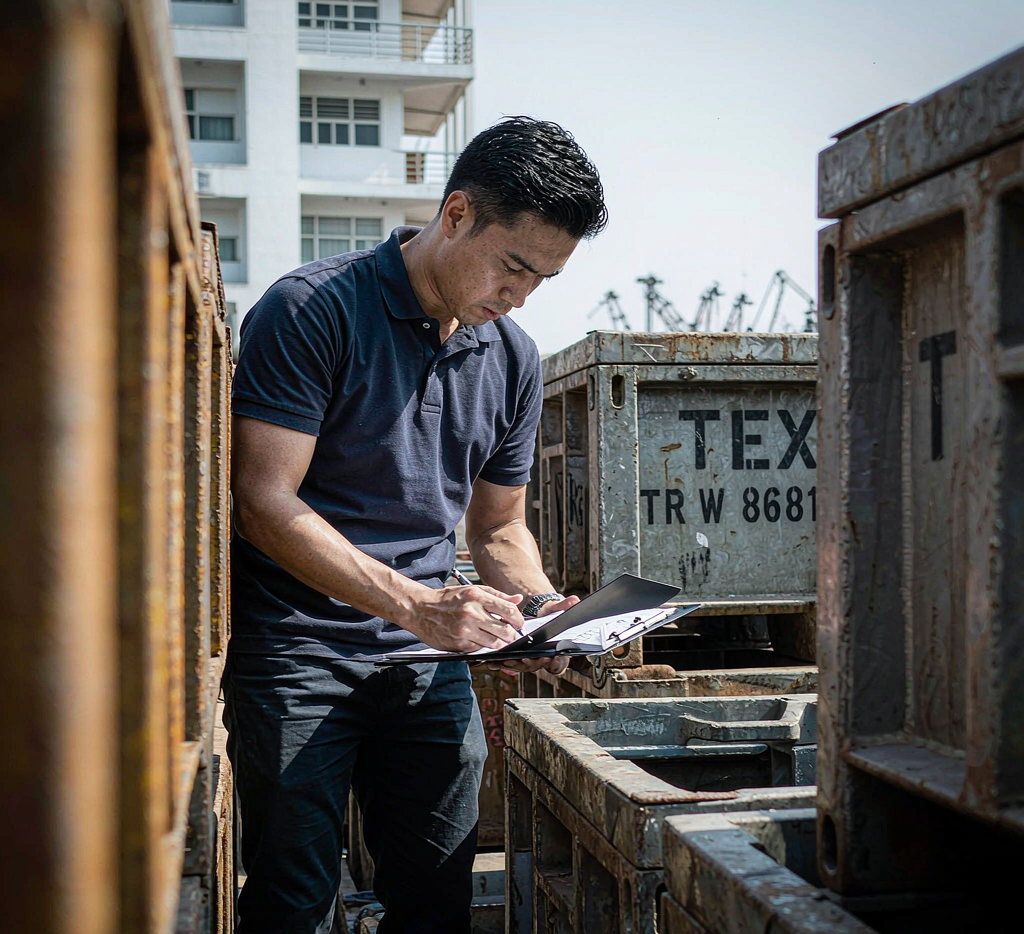
- $50,000–150,000, first order with a new supplier: sight L/C, or T/T 30/70 + third-party pre-shipment inspection (SGS/BV/TÜV) and payment of balance against inspection certificate + B/L copy.
- $150,000+ or repeat orders: mature relationships run efficiently on T/T; banks come back for very large project volumes, usance L/Cs to defer cash, or a mix: T/T deposit + L/C balance.
- High-risk countries or new-to-market mills: confirmed irrevocable L/C, or escrow-style arrangements through platforms.
Document Checklist for L/C Steel Orders
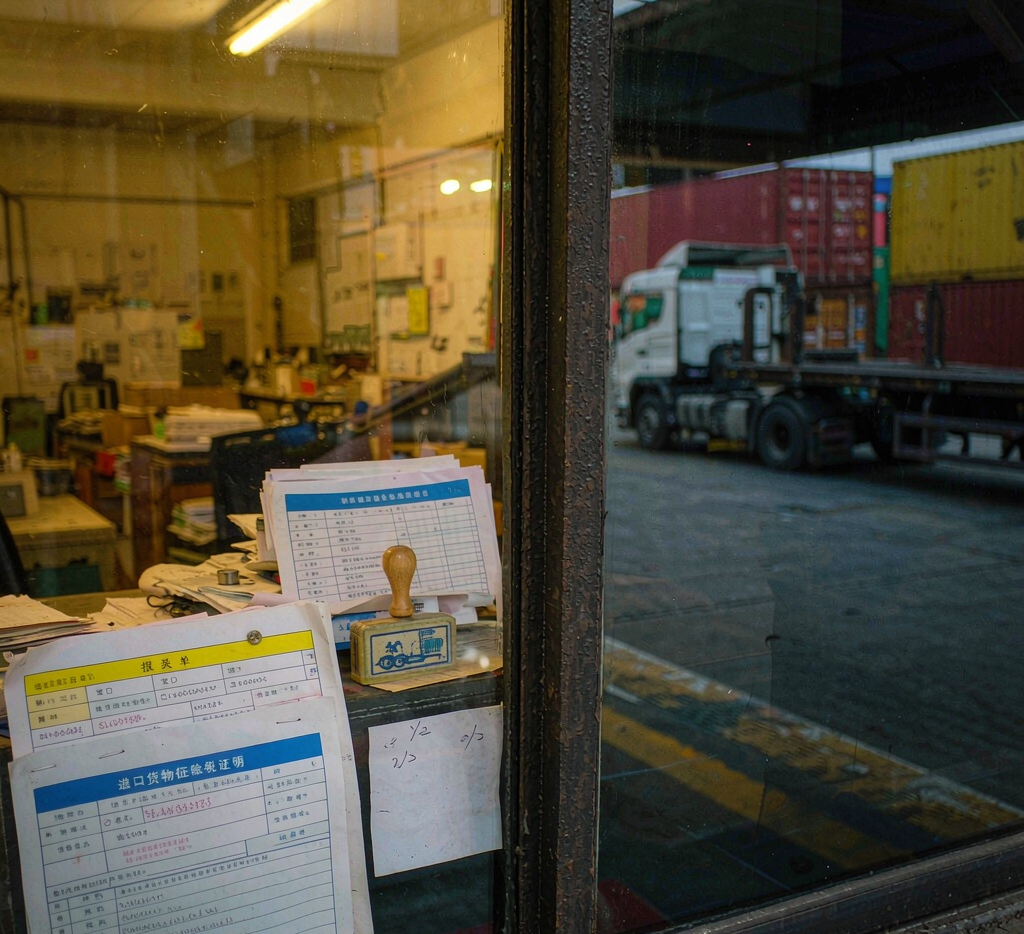
- Full set (3/3) clean on-board ocean B/L, made to order and blank endorsed, marked freight prepaid/collect per Incoterm.
- Commercial invoice matching L/C value and description word-for-word (“carbon steel seamless pipe ASTM A106 Gr.B, 6 m, 20 ft container” — not paraphrased).
- Packing list with bundles, pieces, net/gross weights.
- EN 10204 3.1 or 3.2 MTC per heat, referencing contract number.
- Certificate of origin (CCPIT or chamber-issued; FORM E/RCEP where applicable for tariff relief).
- Insurance policy 110% CIF value for CIF/CIFF terms.
- Inspection certificate from named third party if contract requires.
Common Discrepancies That Delay Steel L/C Payments
- Late shipment or expired L/C (steel production delays are common — build buffer into latest shipment date).
- Description mismatch: MTC says “GB Q355B equivalent” while L/C demands “S355JR” verbatim.
- Weight differences beyond tolerance between invoice, B/L, and draft survey.
- Missing chamber-of-commerce endorsement on origin certificate.
- B/L showing a transshipment when the L/C prohibits it.
Negotiate tolerance clauses (±3% quantity/amount, latest shipment date with 7-day buffer) at the contract stage — amendments cost $100–300 each and days of delay.
Negotiation Tips for Steel Buyers
- Match payment to verification: every dollar paid before arrival should be backed by documents or inspection, not trust alone.
- Ask for the deposit to fund only raw material: on made-to-order plate, 30% roughly covers slab/strip procurement — a fair split that keeps both sides honest.
- Bundle the inspection: paying $500–800 for SGS on a $100k order is cheap insurance; make the inspection certificate a document in both T/T and L/C structures.
- Verify bank accounts by phone using a number from the contract, not from the email carrying the “new account” message.
- Usance L/C as a discount lever: offering sight payment often earns 1–3% price discount — compare that against your cost of capital.
FAQ
1. Is 30% deposit safe with a new Chinese steel supplier?
It is standard and generally safe with a vetted manufacturer: verify business license, factory audit or video call, matching bank account, and use a proper contract. The deposit risk is real mainly with unverifiable traders demanding 100% advance.
2. Who pays L/C fees?
By convention each side pays its own banking fees (“banking charges outside China for seller’s account” is negotiable — spell it out). Confirmation fees usually fall to the buyer if confirmation was requested for their benefit.
3. Can I combine T/T and L/C?
Yes — a common structure is 20–30% T/T deposit + 70–80% sight or usance L/C. It reduces the L/C face value (lower fees) while keeping bank discipline on the balance.
4. What protects quality under an L/C?
Documents only. Add a third-party inspection requirement and a quality clause with arbitration venue in the contract; the L/C handles payment risk, not product risk.
5. Which Incoterms pair with each method?
FOB suits buyers with their own forwarders (works with both T/T and L/C); CIF is convenient under L/C because the insurance document is part of the required set. EXW is better kept on T/T with a local agent.
Conclusion
T/T wins on cost and speed but concentrates risk in the seller relationship; L/C wins on payment security but charges for it and demands document discipline. Most importers settle on T/T 30/70 with trusted mills, L/C or T/T + third-party inspection for new or large orders. Huaxia-Steel accepts both — T/T 30/70 as standard, sight or usance L/C for qualified orders — with full EN 10204 certification and third-party inspection arranged on request.
Discuss payment and inspection terms for your next steel order — contact our export team for a structured quotation.