Quenching and Tempering Carbon Steel: Process, Temperatures & Properties
Quenching and tempering (Q&T) is the heat treatment that turns ordinary carbon and low-alloy steel into high-strength, wear-resistant components. Almost every demanding carbon steel product you buy — 1045 shafts, Q&T plate like ASTM A514, 42CrMo4 bars, spring steel — passes through this two-step process. For buyers, understanding Q&T is not academic: it determines the hardness you can demand, the distortion you must allow for, the tolerances you should specify after treatment, and the test certificates you should insist on. This guide walks through the process step by step with real numbers.
1. What Quenching and Tempering Actually Does
Quenching heats the steel into the austenite range (typically 820–880°C for carbon steels) and then cools it fast enough — in water, oil, or polymer — to transform austenite into martensite, a very hard but brittle microstructure. Fresh martensite in medium-carbon steel can exceed 55–60 HRC, but it is too brittle for service. Tempering then reheats the part to 150–650°C, holding it there to relieve stress and trade a controlled amount of hardness for toughness. The final properties are a direct function of the tempering temperature: lower temper = harder and more brittle; higher temper = softer and tougher.
2. Step 1 — Austenitizing: Temperature and Soaking Time
| Grade | Austenitizing Temp | Soak Time (rule of thumb) |
|---|---|---|
| C45 / 1045 | 820–850°C | 1 h per 25 mm section |
| 4140 / 42CrMo4 / SCM440 | 840–860°C | 1 h per 25 mm section |
| 65Mn / 1066 spring steel | 810–830°C | 1 h per 25 mm section |
| A350 LF2 flange steel | 900–930°C (normalize + Q&T per spec) | Per ASTM A350 schedule |
Underheating leaves undissolved ferrite and produces soft spots; overheating coarsens the grain and increases cracking risk during the quench. Reputable Q&T shops record furnace charts for every batch — ask for them with your certificates.
3. Step 2 — The Quench: Media and Cooling Speed
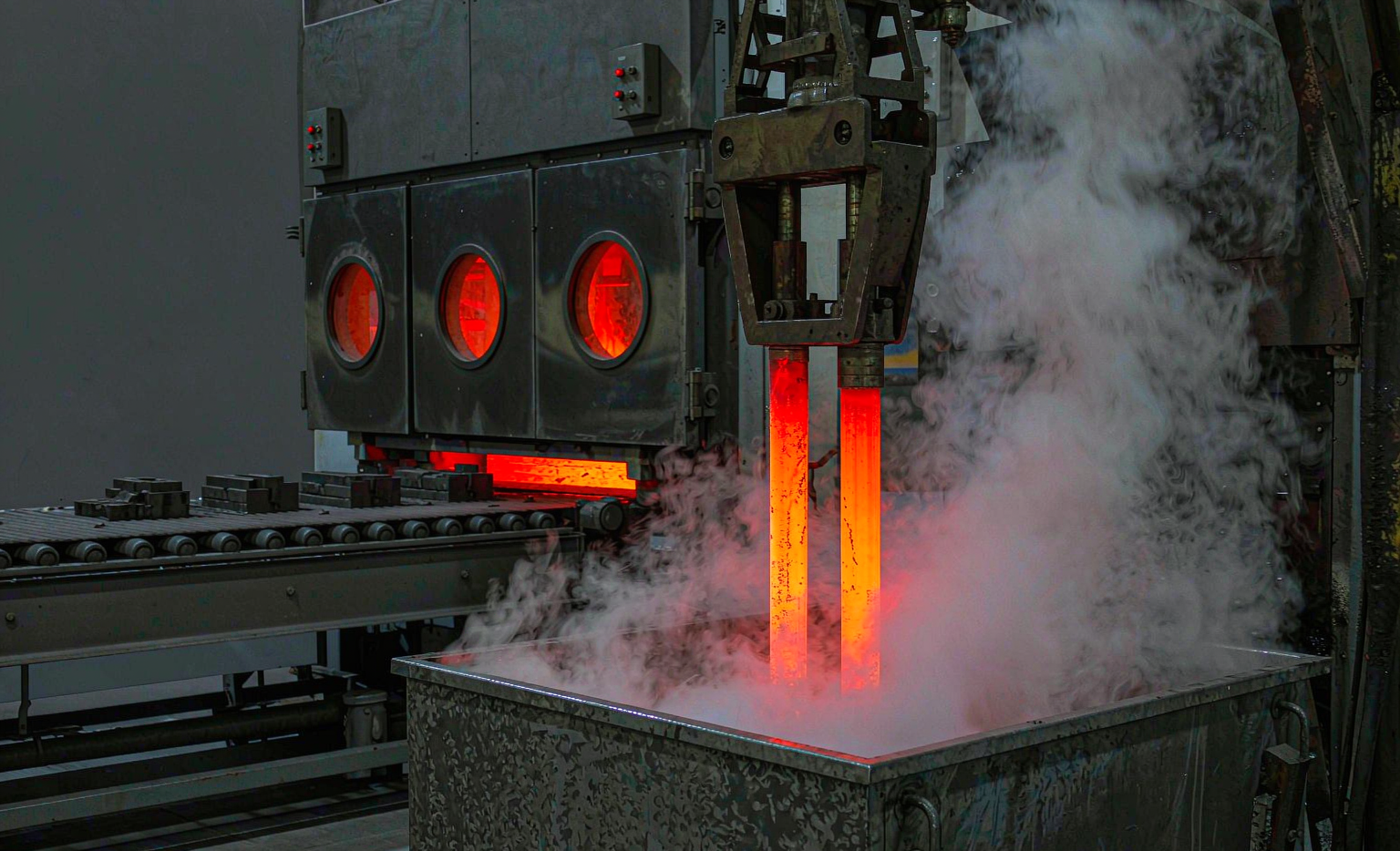
Quench severity is ranked by the Grossmann H-value: still oil ≈ 0.3, agitated oil ≈ 0.5, still water ≈ 1.0, agitated brine ≈ 2.0. Faster cooling hardens deeper but raises distortion and cracking risk:
| Medium | Cooling Severity | Typical Use | Risk |
|---|---|---|---|
| Brine / agitated water | H ≈ 1.5–2.0 | Plain low-carbon steel, simple shapes | Cracking, distortion |
| Still water | H ≈ 1.0 | C ≤ 0.3% steels, large sections | Moderate cracking risk |
| Polymer (PAG) | H ≈ 0.4–0.8 | Medium-carbon steels, induction-hardened parts | Concentration control needed |
| Oil (hot or cold) | H ≈ 0.3–0.5 | 1045+ carbon, 4140, spring steels | Fire hazard, smoke; slower surface cooling |
Practical buyer tip: water-quenching a 0.45% carbon steel in complex geometry is asking for quench cracks. If your drawing has sharp corners or section changes, require oil or polymer quenching in the purchase specification, and accept the slightly lower achievable hardness at the core.
4. Step 3 — Tempering: Temperature vs Resulting Hardness
Tempering is where the final property is decided. Approximate as-quenched hardness of 1045 is 55–58 HRC (surface); the tempering curve then looks like this:
| Temper Temp (1045) | Approx. Resulting Hardness | Typical Application |
|---|---|---|
| 200°C | 53–55 HRC | Wear parts, low-impact tooling |
| 300°C | 45–48 HRC | Axles requiring surface wear resistance |
| 400°C | 35–38 HRC | General machine parts |
| 500°C | 28–31 HRC | Shafts, gears (best toughness balance) |
| 600°C | 22–25 HRC | High-toughness structural parts |
Two cautions for buyers: first, avoid specifying tempering between roughly 250–400°C for higher-carbon steels if impact toughness matters — this is the tempered martensite embrittlement range. Second, for alloy steels like 4140, temper above 550°C and cool slowly if you must meet NACE MR0175 / ISO 15156 hardness limits (≤22 HRC) for sour service.
5. Grades Commonly Supplied in the Q&T Condition
- 1045 / C45: shafts, axles, rolls — Q&T to 28–32 HRC typical.
- 4140 / 42CrMo4 / SCM440: high-strength shafts, bolts, drill collars — 28–34 HRC or NACE 22 HRC max.
- 65Mn / 1066: spring washers, blades — 40–45 HRC.
- Q&T plate (A514, NM360–NM500): wear plates for dump bodies and buckets — 360–500 HB.
- A350 LF2 / A105: low-temperature and pressure-retaining flanges, Q&T or normalized per code.
6. Distortion, Cracking, and What It Means for Your Tolerances
Quenching moves metal. Long shafts bow, thin plates dish, and holes go oval. Budget for it:
- Leave machining allowance of 2–5 mm on diameter for Q&T before final grinding; never Q&T a finished ground surface.
- Straightening after tempering is normal for shafts over 1.5 m — require it in the spec and re-check runout after straightening.
- For tight-tolerance parts, consider induction hardening the surface instead of through-hardening; core stays soft and dimensionally stable.
- Require stress-relief (e.g. 550–600°C) after heavy rough machining, before final grinding, on precision shafts.
7. How to Specify Q&T on a Purchase Order
- State grade, delivery condition (“quenched and tempered”), and the hardness range (e.g. 28–32 HRC core), not just “heat treated”.
- State where hardness is measured (surface, 1/2 radius, core) and how many points per piece.
- Require EN 10204 3.1 certificate including tempering temperature and hardness results, plus furnace charts on request.
- For critical parts, add a Jominy end-quench test or a destructively tested witness piece from the same heat.
- Define rejection terms: hardness out of range, quench cracks (detected by MPI/UT), and decarburization depth limits (typically 0.25 mm max + 1.5× the scale allowance).
Frequently Asked Questions
What is the difference between normalizing and quenching and tempering?
Normalizing cools in still air and refines grain with modest strength gain; Q&T quenches in water/oil/polymer for martensite, then tempers for strength with real toughness. Normalized 1045 plate runs around 170–200 HB; the same steel Q&T’d reaches 28–32 HRC (≈270–300 HB).
Why do Q&T parts crack during quenching?
Common causes: too-severe media for the carbon level, sharp corners and section changes, parts quenched below the recommended austenitizing control, and unrelieved residual stress from prior forging. Good shops design fixtures, use delayed quench, and MPI-inspect 100% of cracked-prone geometries.
Can I get 4140 at 32–36 HRC with good toughness?
Yes — temper at 480–520°C. Below 30 HRC request 560–620°C. Confirm the supplier publishes the tempering temperature on the certificate; two suppliers delivering “32 HRC” can differ hugely in toughness depending on their temper practice.
How much does Q&T add to material cost?
Typical contract heat treating adds roughly USD 150–400 per metric ton depending on section size, media, and batch size — often 10–20% on top of bar price. Forging shops with in-house Q&T quote better than sending parts out twice.
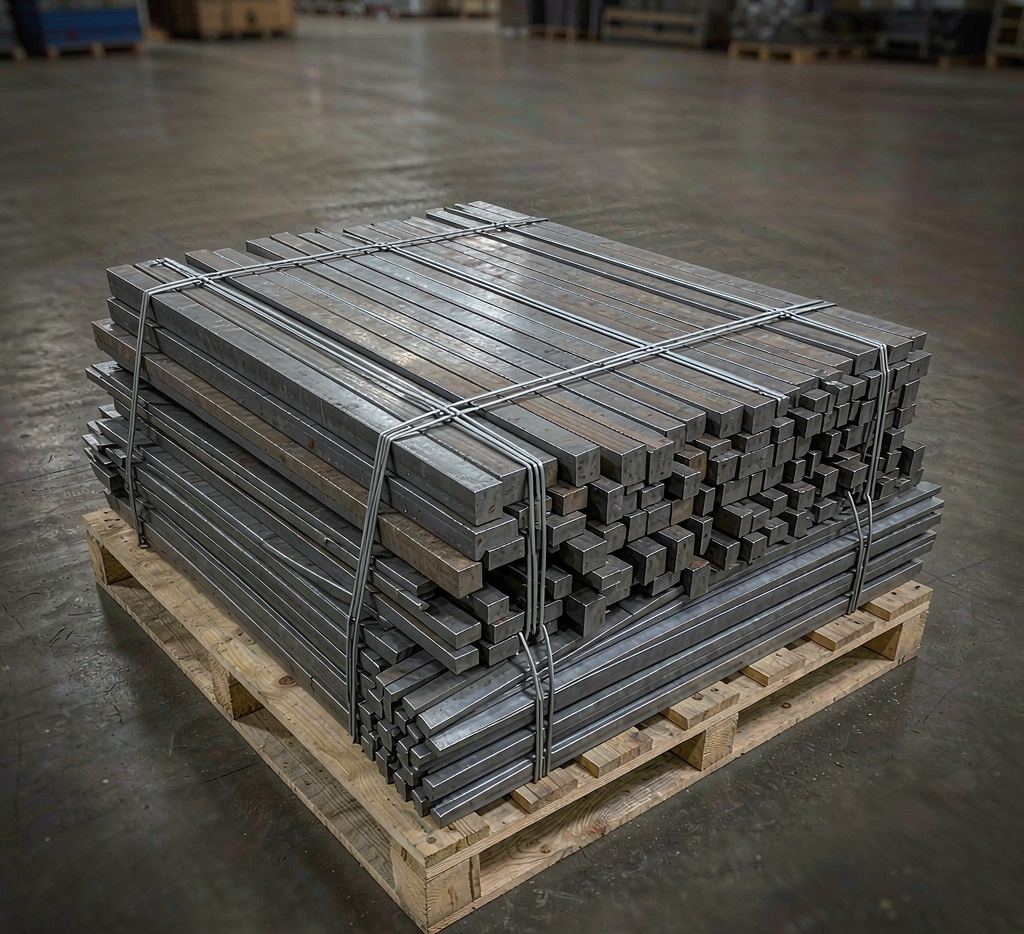
Source Q&T Carbon Steel Bars, Shafts and Plates
Huaxia-Steel supplies 1045, 4140, 65Mn and Q&T plate with in-house heat treatment, full hardness traceability, and EN 10204 3.1 certificates. Send your drawing and hardness spec for a factory-direct quotation.
Get a Quote