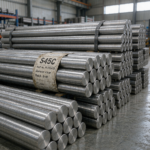
AISI 1045 vs S45C: Are They the Same Steel? Cross-Standard Comparison
AISI 1045 and JIS S45C show up on quotation requests interchangeably — buyers ask for “1045 or equivalent” and suppliers reply with S45C mill certs, or the other way around. In most cases that substitution is safe, but “mostly equivalent” is not the same as “identical,” and the differences matter once you put the bar through heat treatment, machining, or inspection. This guide compares 1045 vs S45C across chemistry, mechanical properties, standard coverage, heat treatment response, and sourcing practice, so you know exactly when you can swap them and when you should insist on the original designation.
1. Quick Answer: Are 1045 and S45C Interchangeable?
2. Chemical Composition Compared
| Element | AISI/SAE 1045 (%) | JIS S45C (%) | DIN C45E (%) |
|---|---|---|---|
| Carbon | 0.43–0.50 | 0.42–0.48 | 0.42–0.50 |
| Manganese | 0.60–0.90 | 0.30–0.60 | 0.50–0.80 |
| Silicon | 0.15–0.30 (typ.) | 0.15–0.50 | 0.40 max (residual) |
| Phosphorus max | 0.040 | 0.030 | 0.030 |
| Sulfur max | 0.050 | 0.035 | 0.035 (C45E: 0.020–0.035) |
Three observations buyers should act on. First, carbon ranges overlap almost perfectly — both steels quench to 55–60 HRC surface in water, so heat treatment behavior is the same family. Second, JIS S45C runs lower manganese (0.30–0.60% vs 0.60–0.90% for 1045), which marginally reduces hardenability and makes S45C slightly less prone to quench cracking in water on small sections. Third, the S and P limits are tighter in JIS, so S45C-certified material will usually satisfy a 1045 callout, but cheap 1045 may fail a S45C or C45E callout on sulfur. When in doubt, buy to the stricter standard and dual-certify — most reputable Chinese mills supplying export markets will certify against both JIS G4051 and SAE J403 from the same heat.
3. Mechanical Properties: As-Rolled and Heat Treated
| Condition | Property | 1045 (typ.) | S45C (typ.) |
|---|---|---|---|
| Hot-rolled / as-rolled | Tensile strength | 570–700 MPa | ≥ 570 MPa (spec min 569) |
| Hot-rolled / as-rolled | Yield strength | 310–450 MPa | ≥ 343 MPa |
| Hot-rolled / as-rolled | Elongation (A) | 12–16% | ≥ 17% (JIS test piece) |
| Normalized 830–870°C | Tensile strength | 620–780 MPa | 620–760 MPa |
| Q&T (quench + 540–680°C temper) | Tensile strength | 800–1000 MPa | 800–1000 MPa |
| Q&T | Hardness delivered | 229–302 HB | 229–302 HB |
| Water quenched surface | Hardness max | 55–60 HRC | 55–60 HRC |
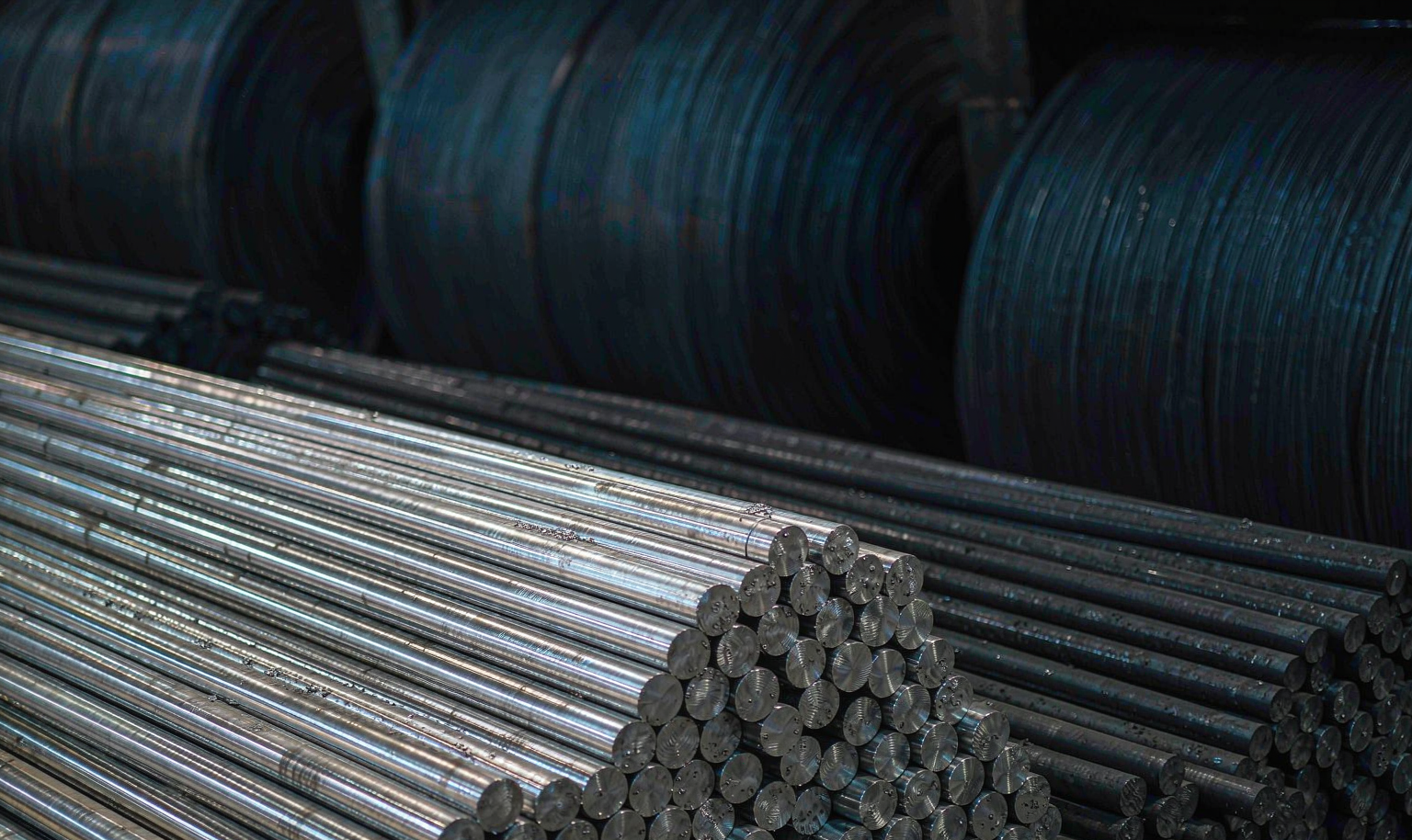
The takeaway: once heat treatment is applied, the two grades converge completely. What changes the result is not the designation but section size, quench severity (water vs oil), and temper temperature. A 40 mm 1045 bar oil-quenched and tempered at 600°C and an S45C bar through the identical cycle will land within a few points of each other on hardness and tensile. Buyers comparing quotes should therefore compare delivery condition — normalized, Q&T to a stated hardness band, or cold drawn — more than the grade letter.
4. Global Equivalent Designations
| Standard | Designation | Notes |
|---|---|---|
| SAE J403 / ASTM A29 | AISI 1045 | US market, bar & forgings |
| JIS G4051 | S45C | Japan / Asia machine parts |
| EN 10083-2 | C45 / C45E (1.0503 / 1.1191) | E = elevated S control for Q&T |
| GB/T 699 | 45# (45 steel) | Chinese domestic, very widely stocked |
| DIN 17200 (legacy) | C45 / CK45 | CK45 = higher cleanliness |
| ISO 683-1 | C45 | International harmonization |
Chinese 45# steel is the practical reason this substitution works so smoothly in export supply chains: the dominant mill capacity in Asia rolls to GB 45#, and that chemistry lands inside both the 1045 and S45C windows. The risk is not chemistry but certification discipline — a mill that certs everything as “45#” and lets the trader pick the label is a mill whose certificates you should audit.
5. Machining, Welding, and Process Behavior
Machinability: Both grade around 55–60% of B1112 free-machining steel, i.e. roughly 850–1000 SFM in carbide turning for as-rolled bar. Because both sit mid-band on carbon, tool life is driven by delivery condition: cold drawn or stress-relieved bar machines cleaner and more predictably than hot-rolled with decarburized surface. If your parts are small turned components, ask for peeled or cold-drawn delivery to h9/h10 — the extra cost per kg is trivial next to the scrap it saves.
Weldability: Both are medium-carbon steels with a carbon equivalent around 0.55–0.65, so both are weldable but not casual: preheat 200–300°C for sections above 20 mm, low-hydrogen electrodes, and slow cooling or immediate stress relief. S45C’s tighter sulfur makes it marginally friendlier for welds and for induction bending. If welding is in the process plan, buy C45E or S45C-certified material even if the drawing says 1045.
Induction hardening: Both respond excellently — surface hardness of 55–60 HRC at 1–3 mm case depth is routine on shafts and pins. This is the most common reason buyers pick this carbon family over 4140: for parts that need a hard skin but only moderate core strength, 1045/S45C at 60–70% of the alloy price is the rational choice.
6. Sourcing Pitfalls: What Goes Wrong in Cross-Standard Purchases
7. FAQ
Can I substitute S45C for 1045 without telling my customer?
Only if your quality system and the customer’s drawing allow “or equivalent.” Best practice: get written approval, ship with an MTC listing the actual standard, and keep traceability intact.
Which is better for quench-and-tempered shafts?
Neither intrinsically. Specify the delivery hardness band and, for thicker sections or impact requirements, move up to 4140/SCM440 — that is a hardenability decision, not a 1045 vs S45C decision.
Is 45# steel the same as S45C?
Chemically yes, within overlapping windows. Certification-wise no — insist the mill issues an MTC under the standard you purchased, not just GB/T 699.
Does S45C cost more than 1045?
In China ex-mill pricing they are effectively the same grade and trade at the same price. Premiums appear only for peeled, cold-drawn, or Q&T delivery conditions.
Need 1045 / S45C / C45E Bar or Forgings?
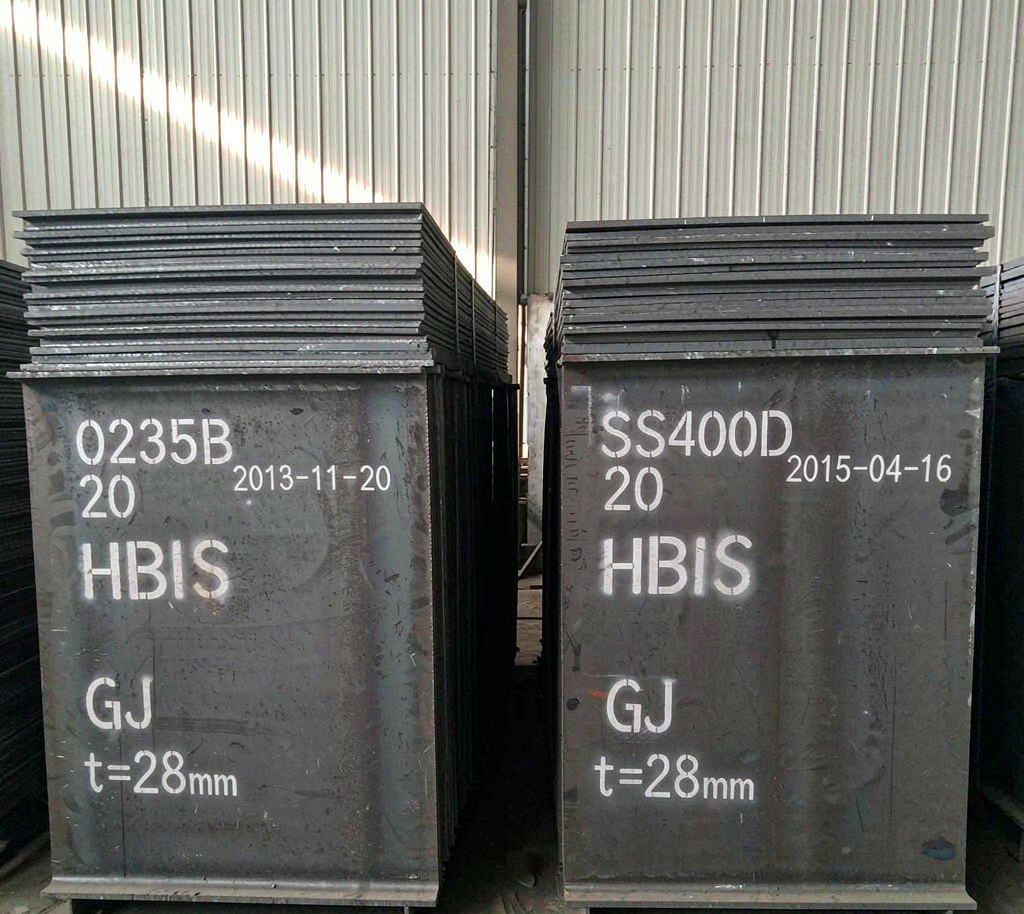
We supply round bar, peeled and cold-drawn bar, shaft forgings, and Q&T parts in 1045, S45C, and C45E with dual-standard EN 10204 3.1 certificates. Send your drawing and delivery condition — quotation within 24 hours.
Request a quote: Contact Huaxia-Steel.