1010 vs 1018 Steel: Chemical, Mechanical and Cost Differences
When buyers source low-carbon cold-finished or hot-rolled bar, two grades dominate the quotation list: AISI 1010 and AISI 1018. Both are plain carbon steels with less than 0.2% carbon, but the small chemistry gap creates meaningful differences in strength, machinability, weldability, and price. This guide compares 1010 vs 1018 steel across composition, mechanical properties, formability, machining, welding, cost, and typical applications, so you can specify the right grade for shafts, pins, brackets, and general machine parts.
Quick Summary: Which Grade to Choose
Choose 1010 when you need maximum cold formability, deep drawing, or excellent weldability without preheat, and when part strength is secondary to ductility and ease of fabrication. Choose 1018 when you need higher strength, better machinability, and slightly improved wear resistance, while still retaining good weldability and formability. For most general-purpose machined parts — pins, studs, light shafts, and brackets — 1018 is the default because it machines cleaner and carries about 15–20% higher yield strength at only a small premium.
Chemical Composition Comparison
| Element | AISI 1010 (%) | AISI 1018 (%) |
|---|---|---|
| Carbon (C) | 0.08 – 0.13 | 0.14 – 0.20 |
| Manganese (Mn) | 0.30 – 0.60 | 0.60 – 0.90 |
| Phosphorus (P) max | 0.040 | 0.040 |
| Sulfur (S) max | 0.050 | 0.050 |
| Silicon (Si) | 0.10 – 0.30 | 0.10 – 0.30 |
The carbon range is the headline difference. 1018 carries roughly 50% more carbon and nearly double the manganese. Those additions raise strength and hardness, but they also reduce the maximum cold reduction and deep-drawing depth before cracking. For buyers ordering cold-finished bar, 1018 typically arrives with a slightly higher hardness (BHN 126–149 vs 105–126 for 1010), which translates directly into better machined surface finish and longer tool life.
Mechanical Properties: Typical Values
| Property | 1010 (hot rolled) | 1010 (cold drawn) | 1018 (hot rolled) | 1018 (cold drawn) |
|---|---|---|---|---|
| Tensile strength (MPa) | 320 – 370 | 360 – 420 | 400 – 470 | 440 – 540 |
| Yield strength (MPa) | 180 – 220 | 290 – 340 | 220 – 290 | 370 – 440 |
| Elongation (% in 50 mm) | 28 – 32 | 20 – 25 | 22 – 28 | 15 – 20 |
| Hardness (HB) | 85 – 105 | 105 – 126 | 105 – 126 | 126 – 149 |
Cold drawing raises both grades significantly, but 1018 cold drawn can approach yield strengths of 400 MPa and above — sufficient for many light-load pins and studs without heat treatment. Buyers should note that hot-rolled 1010 is exceptionally soft; if your automatic screw machine or CNC lathe experiences burring or poor chip breaking, switching to 1018 or cold-drawn 1010 usually solves the problem.
Formability and Cold Working
1010 wins on formability. Its lower carbon and manganese content give a higher n-value (strain-hardening exponent) and r-value (plastic-strain ratio), which means it can be stretched and deep-drawn further before necking or tearing. Automotive stampers and appliance manufacturers often specify 1010 or equivalent DC01/SPHC for complex drawn shells, brackets, and covers. 1018 is still formable — it bends readily at room temperature and can be cold-headed for standard bolts — but it work-hardens faster, so multiple severe bends or very deep draws may require intermediate annealing.
Machinability Comparison
1018 machines better than 1010. The slightly higher carbon and manganese produce shorter, more brittle chips that break cleanly rather than forming long strings that wrap around tooling. In production turning on automatic bar machines, 1018 typically allows 15–25% higher cutting speeds and longer insert life compared with 1010. If your part requires extensive drilling, threading, or milling, 1018 is usually the more economical choice even if the bar price is a few percent higher, because machining time and tool replacement dominate the part cost.
Weldability and Fabrication
Both grades are excellent for welding. With carbon equivalents below 0.25, neither requires preheat for thin sections, and both produce ductile welds with standard ER70S-6 or E7018 filler. 1010 has a slight edge in weld ductility because its lower carbon produces a softer heat-affected zone; this matters when welded assemblies undergo subsequent bending or flanging. For structural brackets, frames, and housings welded by MIG or TIG, either grade performs well. Buyers should simply ensure mill scale is removed before welding and that filler metal strength matches the base metal — over-matching filler on 1010 can create hard weld metal that cracks during forming.
Cost and Availability
1010 is typically 3–7% cheaper than 1018 in standard bar and coil sizes, reflecting its lower alloy addition and slightly simpler rolling practice. However, the gap narrows for small-diameter cold-finished rounds because drawing and straightening costs dominate. In practice, the total part cost is usually lower with 1018 for machined components because of faster cycle times and reduced burr removal. For stamped or formed parts where material is the main cost driver, 1010 offers a small savings. Both grades are stocked globally in rounds, flats, hexagons, squares, and coils.
Common Applications
- 1010 typical uses: deep-drawn shells, appliance panels, automotive brackets, thin-wall tubing, general forming grades, welded furniture frames, and low-strength fasteners.
- 1018 typical uses: machined shafts, pins, studs, light gears, sprockets, hydraulic fittings, structural bolts, spacers, bushings, and general-purpose machine components.
FAQ
Can 1018 be case-hardened?
Yes. 1018 responds well to carburizing or carbonitriding to produce a hard wear-resistant case (58–62 HRC) over a tough, ductile core. 1010 can also be case-hardened but produces a slightly thinner case for the same cycle time.
Is 1018 stronger than 1010 after welding?
Yes, the base metal retains its higher strength, and the weld metal itself is comparable because filler selection governs weld strength. The HAZ in 1018 is marginally harder but still ductile.
Which grade is better for outdoor corrosion resistance?
Neither offers meaningful atmospheric corrosion resistance. Both will rust in outdoor service unless protected by paint, plating, or oil. For corrosion-prone environments, specify galvanized, plated, or weathering grades.
Can I substitute 1018 for 1010 without changing my process?
For machining and welding, usually yes. For deep drawing or severe forming, test first — 1018 may require slightly larger bend radii or an intermediate anneal.
What is the Chinese equivalent of 1010 and 1018?
1010 is close to 10# steel (GB/T 699 10钢); 1018 is close to 20# steel (GB/T 699 20钢) or Q195/Q215 in coil form. Exact equivalence depends on dimensional standard and delivery condition.
Request a Mill Test Certificate and Quote
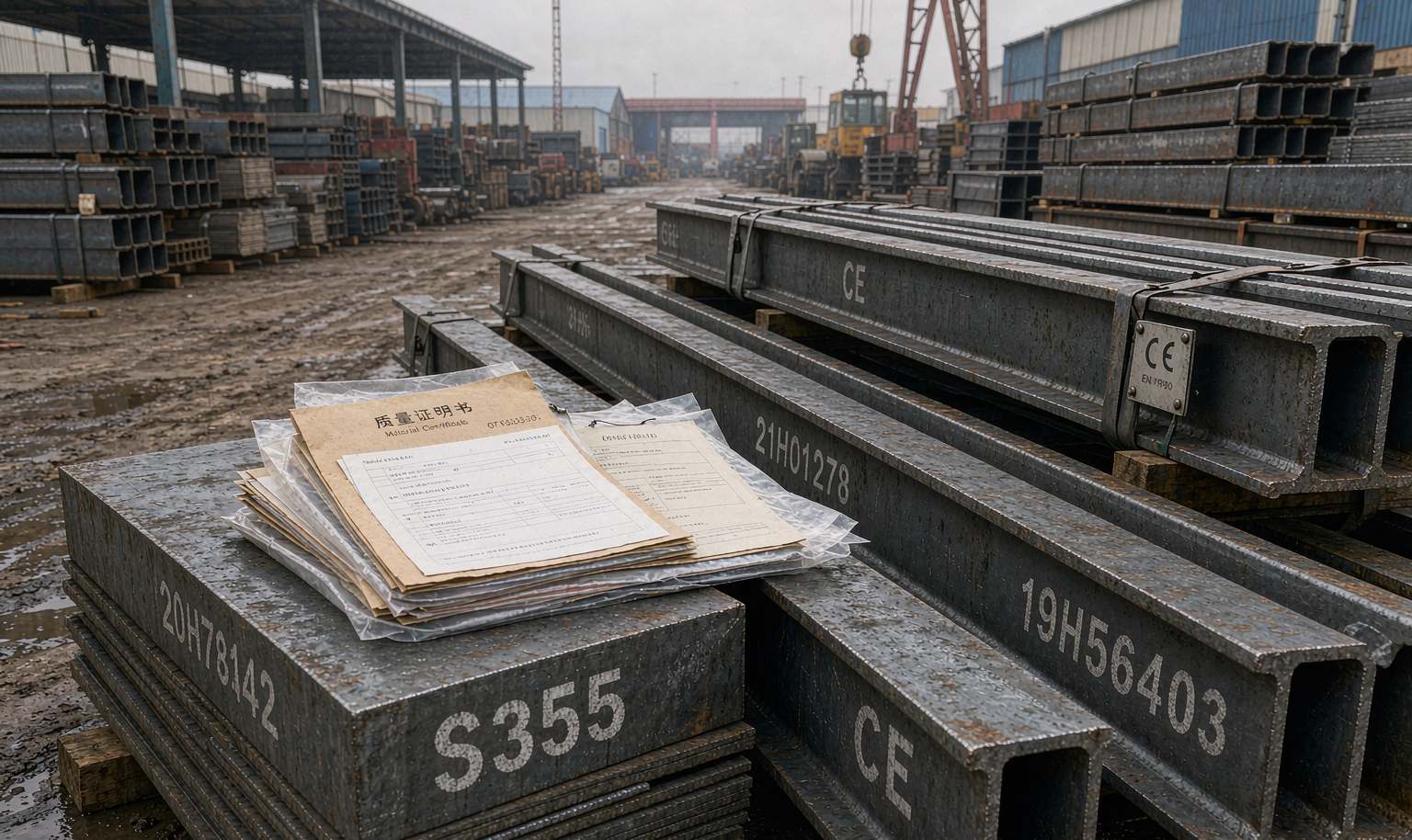
Huaxia-Steel supplies 1010 and 1018 carbon steel in rounds, flats, hexagons, squares, and coils with full MTC to ASTM A29 / GB/T 699. Contact us for a same-day quotation with chemistry, mechanical test values, and delivery schedule.